Category: Philosophical Politic and Religion

  • Tear Down This Union: How Ursula von der Leyen Turned Europe Into a Gilded Prison

    Tear Down This Union: How Ursula von der Leyen Turned Europe Into a Gilded Prison

    by Amal Zadok

    Kornelia Kirchweger: ‘The EU must disappear. Over the years, through treaties and crises, the EU has acquired an occupying power over Europe and, in my opinion, it occupies this continent in a brutal and authoritarian way, suffocating cultures, freedom, freedom of expression and leading this continent precisely to the place from which the EU claimed it would rescue it: out from under the rubble of war – and precisely back there is where the EU is dragging Europe once again. And this EU must disappear. The EU must disappear. The EU has entrenched itself over the years, through treaties and crises.’”

    Kornelia Kirchweger says out loud what millions of Europeans only dare to mutter at their kitchen tables: the European Union does not “unite” Europe; it occupies it. The smiling blue flag with its neat golden stars has become the banner of a new empire that does not need tanks or barbed wire to crush nations, because it rules instead through debt, digital surveillance, and an ideology that brands dissent as heresy. Her demand that “the EU must disappear” is not a theatrical provocation; it is a necessary act of European self‑defence.

    The EU was sold as a guarantee of “never again”—never again war, never again authoritarianism, never again the trampling of peoples by distant, unaccountable power. Yet what exists in Brussels now is precisely a distant, unaccountable power that blackmails elected governments, dictates economic policy, and polices speech under the holy trinity of “security, safety, and stability.” The continent that once produced revolutions against divine‑right kings now applauds as faceless commissioners and central bankers issue decrees that bind hundreds of millions who never voted for them. This is not cooperation; it is vassalage dressed as progress—the “occupying power” over Europe that Kornelia names with surgical precision.

    Kornelia identifies the method: treaties and crises. Each crisis—financial, health, geopolitical—has been seized as a pretext to centralise more control in Brussels and Frankfurt, tying national budgets and laws to institutions that answer to no electorate. Treaties once presented as tools of peace have hardened into chains. Opt‑outs vanish, “temporary” emergency measures become permanent, and referenda that deliver the “wrong” answer are ignored or re‑run until obedience is achieved. Consent, the heart of any genuine democracy, has been replaced by weary resignation. When Kornelia says the EU has “entrenched itself,” she is simply describing how the coup by paperwork has already taken place.

    At the centre of this drift stands Ursula von der Leyen, the unelected queen of an empire that pretends not to be one. She has mastered the art of ruling by permanent emergency, using the pandemic, the Ukraine war, and now “information warfare” as pretexts to bypass member states, concentrate power in the Commission, and present herself as indispensable commander of Europe’s “permacrisis.” Her Commission has become a quasi‑dictatorial sovereign, a machine that treats national parliaments as rubber stamps and voters as an obstacle to be managed. If the EU is the occupying force over Europe, von der Leyen is its soft‑Stalinist party secretary: unelected, unremovable, and convinced that history runs through her desk.

    What makes von der Leyen’s rule particularly dangerous is the fusion of moralism and soft Stalinism. She divides politics into loyal comrades of “European values” and enemies labelled “Russian puppets,” “extremists,” or “threats to democracy,” echoing the old tactic of branding opponents as agents of foreign powers. Sanctions lists are drafted behind closed doors, freezing assets and destroying reputations without meaningful due process, while she lectures the continent about the rule of law. This is not justice; it is a bureaucratic blacklist system worthy of Stalin’s clerks, updated with IBAN numbers and SWIFT codes. Kornelia’s phrase “brutal and authoritarian occupation” finds a face and a signature here.

    The regime’s poison lies in its moral camouflage. Brussels speaks the language of human rights while cutting off oxygen to any culture that resists its dogmas. National identities are tolerated as folkloric decoration, provided they never obstruct the homogenous “European way of life” defined by unelected ideologues. The EU preaches diversity but practises uniformity: uniform currency, uniform rules, uniform narratives. A Polish farmer, an Italian nurse, a Greek dock worker are treated not as citizens of concrete communities, but as variables in a spreadsheet to be adjusted for “convergence.” 

    This is the suffocation of cultures that Kornelia denounces—accomplished not with bayonets, but with compliance reports.

    Her accusation that the EU asphyxiates freedom of expression cuts to the bone. In the name of fighting “disinformation,” Brussels under von der Leyen has constructed a censorship architecture more efficient than anything the old dictatorships could dream of. The Digital Services Act and its siblings give Eurocrats leverage to pressure platforms into shadow‑banning, de‑monetising, or deleting voices that question official narratives on war, migration, public health, or the sanctity of EU institutions. No show trials are needed when a single email can erase a journalist, scholar, or priest from public visibility at the speed of an algorithmic tweak.

    This is soft totalitarianism: no gulags, but social death; no midnight knocks, but destroyed careers; no banned books, but invisible search results. The dissident of the 21st century is not dragged before a court; he is rendered unemployable, unbanked, and unseeable. Because all of this is done “to protect democracy,” the average citizen is shamed into applauding his own gagging. Kornelia’s refusal to applaud exposes the regime’s deepest fear: that Europeans might rediscover the courage to speak like she does—and realise how many already secretly agree.

    The same contempt for peoples that drives censorship also shapes policy on war and peace. The EU that boasts of a Nobel Peace Prize now behaves like a bloodless war‑management office. Under von der Leyen, the Ukraine war has been instrumentalised not only to rearm the continent but to cement Commission control over foreign and security policy, powers never explicitly granted by the treaties. Endless escalation—sanctions that wreck European industry, arms spending that drains public coffers—is not driven by popular will, but by a fanatical Atlanticist class that sees ordinary Europeans as expendable collateral in its geopolitical fantasies.

    Brussels and its faithful capitals treat the war as a moral pageant in which they can pose as defenders of civilisation while families pay in energy bills, inflation, and lost futures. War fever has become a convenient instrument of internal control. Question sanctions and you are a Putinist; oppose pumping more weapons into a meat grinder and you “undermine European security”; call for ceasefire and negotiation and you become suspect, perhaps criminal. A foreign conflict is transformed into a loyalty test for EU citizens, justifying new surveillance powers, tighter protest restrictions, and elastic “extremism” laws that can stretch to cover anyone who still dares to shout no. It is the road back to rubble that Kornelia fears—this time moral and institutional rubble, prepared in peacetime.

    A civilisation collapses long before its buildings fall. It collapses when truth becomes a risk, when fear hums constantly in the background, when parents quietly prepare their children to emigrate because they no longer believe their homeland has a future. Across Europe, that collapse is visible: brain drain, demographic winter, emptied villages, cities where locals cannot afford to live, parliaments that resemble branch offices of an imperial centre more than houses of a sovereign people. In such a landscape, Kornelia’s cry that “the EU must disappear” is not nihilism; it is an act of hope against managed decay.

    Defenders of the Union insist that without Brussels, Europe would sink into nationalism, conflict, and chaos. Yet it is under von der Leyen’s Brussels that Europe is again flirting with catastrophe: fuelling wars it cannot win, provoking powers it cannot defeat, and crushing precisely the democratic vitality that could renew it. The choice is not between this Union and a new Dark Age; it is between this Union and the possibility of a Europe that is genuinely plural, genuinely democratic, and genuinely peaceful. Kornelia forces the real question: is the current EU architecture compatible with freedom at all, or has it become structurally hostile to it?

    To reach that better Europe, the EU in its current form must indeed disappear. Not be gently “reformed,” not be slightly “rebalanced,” but dismantled as a structure of domination. Powers must be repatriated to national and local levels, treaties scrapped or radically rewritten under real popular scrutiny, censorship mechanisms abolished, and the permanent war footing decisively rejected. Cooperation between European peoples is desirable; a Brussels‑centred oligarchy commanded by an unaccountable Commission president is not. Kornelia’s radical clarity destroys the comforting illusion that cosmetic tinkering will ever suffice.

    Her sentence, “The EU must disappear,” is therefore a line of liberation, not despair. It tells a tired and frightened continent: you are allowed to fire your jailers. You are allowed to say no to the empire that acts in your name while looting your savings, your freedoms, and your sons. You are allowed to imagine—and then build—a Europe after Brussels: a Europe of peoples instead of commissars, cultures instead of codes, conscience instead of slogans.

    Either Europe listens to voices like Kornelia’s and dismantles its gilded prison from within, or it will learn again that empires built on fear and lies always fall—but they often drag their subjects into the rubble with them.

    ©️2025 Amal Zadok. All rights reserved.
    Subscribe and never miss an article!

  • The Virus of  von der Leyen and the Fourth Reich

    The Virus of  von der Leyen and the Fourth Reich

    by Amal Zadok

    A new infection spreads through Europe. It is not biological but ideological—the virus of Ursula von der Leyen, the President of the European Commission, who now treats free speech as a pathogen and censorship as its cure. Her crusade has birthed something grotesquely familiar: a Fourth Reich in soft form. Not an empire of tanks and parades, but of servers, screens, and sanctimony—smiling tyranny wrapped in EU branding. It enforces obedience not by threats of imprisonment, but by quietly excommunicating dissenters from the public square, banishing them from digital life and the polite company of “European values.” The method is bloodless, but the effect is chilling.

    From Liberty to Managed Thought

    In 2008, the European economy was larger than America’s. Brussels celebrated this triumph as proof that the European model—regulated, deliberative, social—could rival anything Silicon Valley or Wall Street produced. Fast‑forward to 2025, and the U.S. economy is about forty percent larger. That is not merely a monetary gap but a civilizational one. The Europeans, in love with their rulebooks, have smothered invention under footnotes. Bureaucracy has replaced bravery. The Europe that once produced Da Vinci and Galileo now produces compliance officers and fact‑checkers. The virus of von der Leyen feeds perfectly on this culture of supervision.

    The Ideological Genome of the Fourth Reich

    “Fourth Reich” is no exaggeration. The phrase describes an empire of paperwork and purity, of moral intimidation backed by regulation. The new rulers are not generals but technocrats, fluent in the new Esperanto of “sustainability,” “resilience,” and “safety.” The Digital Services Act (DSA) stands as their constitution—its clauses crafted to ensure nothing truly spontaneous ever survives online. Behind its smiling rhetoric about “protecting users” lies the ultimate political experiment: delegating censorship to corporations while denying responsibility. Brussels writes the laws; Silicon Valley enforces them; dissent disappears into cloud storage marked “hate.”

    The DSA’s power to remove “systemic risks” to social order is breathtaking in scope. Risk is no longer measured in bombs or borders but in opinions that make commissioners nervous. The result is bureaucratic alchemy—turning authority into truth through procedural magic. The Fourth Reich does not arrest heretics; it de‑platforms them, then congratulates itself on preserving democracy.

    Virtue as Veneer

    What distinguishes this era’s authoritarianism is its sense of moral grandeur. Von der Leyen speaks of “vaccines for minds” and “shields of democracy,” phrases that sound noble until one notices she’s inoculating citizens against independent thought. The old tyrants promised order; she promises health. The genius of the Fourth Reich lies in its tone—gentle, therapeutic, and utterly patronizing. People are not coerced; they are comforted. And the intellectual classes, ever susceptible to moral flattery, gladly trade freedom for the feeling of being enlightened.

    It is a drama of good intentions turned deadly dull. No bonfires of books, only pop‑ups about “community guidelines.” No jackboots, just moderators in sweaters, deleting opinions between cappuccinos. The most terrifying part? Everyone involved believes they’re saving Europe from barbarism—while turning it into a behavioral laboratory.

    Europe’s Decline as Mirror of Its Fear

    Economic decay follows moral decay like night follows dusk. When speech is policed, creativity quits. The entrepreneurs who might have built Europe’s next renaissance now flee to places that still tolerate competition and argument. Those who remain design compliance systems rather than inventions. Brussels measures virtue in paperwork; America measures it in patents. The GDP gap widens accordingly.

    In 2008, the EU led; in 2025, it lectures. It preaches “strategic autonomy” while importing energy from adversaries, technology from California, and ideas from NGO whitepapers. The Fourth Reich, fat on regulation and thin on results, insists that ideology is a substitute for output. What cannot be built can still be banned.

    The Architecture of Soft Control

    The discipline of the new order is subtle but absolute. The Fourth Reich has no prisons; it has blacklists. It has no Gestapo; it has “fact‑check partnerships.” It no longer shouts—it calibrates visibility. Reality, once public domain, is now the property of algorithms tuned to please bureaucrats. The lie is efficient: citizens still believe they live in democracy because their prisons are made of consensus.

    This system gains power precisely because it seems benign. Who could oppose “safety”? Who would defend “disinformation”? The questions are rhetorical by design. The answer is always more control. Through endless directives, Brussels converts unelected administrators into moral arbiters. Member states comply to prove loyalty. The language of virtue has become the new lingua franca of submission.

    Von der  Leyen’s Doctrine of Diagnosed Dissent

    Von der Leyen’s background as a doctor tells the story. Once she prescribed medication for the body; now she prescribes it for the collective mind. Citizens are reclassified as patients; speech becomes symptom. The bureaucrat heals through supervision. The distinction between medicine and management vanishes—replaced by an obsession with inoculating society against discomfort. It is the psychology of benevolent domination, treating disagreement as disease and control as care.

    Bureaucracy, Hypocrisy, and the Decay of Trust

    The Fourth Reich thrives on contradiction. It advertises transparency while concealing contracts; it praises media freedom while sanctioning journalists for heresy; it celebrates diversity while demanding unanimity. This hypocrisy has become its governing principle. To question it is to risk being labeled ill, extremist, or—deadliest word of all—“non‑European.” The average citizen senses the fraud but stays silent, fearing cancellation more than conviction. In Brussels’ theology, there are no sinners, only the un‑vaccinated minds still clinging to self‑respect.

    Memory as Antidote

    Europe’s antidote has always been memory. Beneath the bureaucratic fog, people still remember what freedom looked like: the chaotic energy of debate, the stubbornness of truth‑seekers, the laughter of those who mocked authority and survived. Every major rebirth on this continent—from the Renaissance to 1989—began when ordinary citizens stopped repeating the official litany. Today’s heresy will be tomorrow’s common sense.

    And signs of awakening appear. Independent journalists are resurfacing despite sanctions; citizens are building parallel media; even academics whisper about intellectual autonomy. There’s irony for Brussels: the more it censors, the more it teaches people to doubt. Its vaccine is creating immunity—against censorship itself.

    The Moral and Economic Bill Comes Due

    Censorship is staggeringly expensive. It steals not only budgets but imagination. Each euro spent patrolling speech could have seeded research, infrastructure, or art. Instead, the continent invests in virtue bureaucracy—turning Europe’s once‑brilliant youth into administrators of silence. The economic gap with the United States is the invoice of this obedience.

    Liberty pays dividends; compliance collects unemployment.

    Collapse by Consensus

    Empires rarely die in battle; they die of boredom, convinced of their permanence. The Fourth Reich’s fate will be no different. Its rigidity already shows cracks. Every deleted post, every silenced critic, plants another seed of ridicule. No regime can outlast being laughed at.

    Von der Leyen’s project will crumble under the weight of its own moral arrogance, precisely because it forbids the debates that might have corrected it.

    Europe’s resurrection, when it comes, will arrive through words—mocking, fearless words, spoken without license. The virus she fears is life itself: the uncontrollable contagion of truth. And like every empire before it, this one will fall the moment people stop caring what it decrees.

    Freedom cannot be engineered nor vaccinated; it must be risked. Europe’s future depends on remembering that truth does not require permission, only courage.

    Europe’s politicians, meanwhile, play the part of moral custodians while presiding over decay. They drape themselves in blue flags and human‑rights platitudes, yet govern like frightened clerks managing a failing empire. Their speeches roar about democracy, but their policies whisper submission—to Washington abroad, to bureaucracy at home.

    They confuse compliance with leadership and censorship with strength. The truth they bury will be their epitaph: that the Fourth Reich they helped build was not born from tanks or tyrants, but from their cowardice dressed as conscience.

    ©️2025 Amal Zadok. All rights reserved.
    Subscribe and never miss an article!

  • The Ghost of Stalin in Brussels: How Europe Rebuilt a Soft Totalitarian State in the Name of Democracy

    The Ghost of Stalin in Brussels: How Europe Rebuilt a Soft Totalitarian State in the Name of Democracy

    by Amal Zadok

    Europe is dismantling its own civilisation to prolong a lost war, and the politicians doing it know exactly what they are doing. They are not confused; they are complicit. They are burning welfare states, gagging dissent, and sacrificing a generation’s future to avoid admitting a simple truth: Russia had real red lines, NATO trampled them, and now Europe is paying the price.

    Europe’s leaders like to pose as guardians of democracy while they preside over the slow death of everything that once made Europe worth defending. They sign off on sanctions lists drawn up behind closed doors; they cheer as central bank reserves are frozen indefinitely; they applaud each new “security” package that chips away at protest rights, press freedom and academic debate. Then they go on television and talk about “values” and “European civilisation”, as if those words were not now empty shells. The pursuit of moral self‑image has replaced actual morality.

    The persecution of Jacques Baud exposes this hypocrisy in its purest form. Here is a retired Swiss colonel and former NATO and UN expert, punished not for planting bombs or hacking systems but for saying what every serious strategist knows: that NATO expansion, Western interference in Ukraine and the refusal to negotiate over Russia’s legitimate security concerns helped lead directly to war. For speaking this uncomfortable truth, Brussels has slapped his name onto a sanctions list, frozen his assets inside the bloc, and banned him from travelling through Schengen countries. In old Europe, dissidents were debated; in today’s Europe, they are digitally exiled.

    This is not defending democracy; it is criminalising analysis. When unelected EU bodies can, with a few strokes of the pen, wreck the financial life of a neutral country’s citizen for his opinions, Europe has crossed a line. It is no longer merely hypocritical; it is structurally authoritarian. The Soviet Union had internal exiles and blacklists; the EU has asset freezes, travel bans and reputational assassination. The technology is different, but the logic is eerily similar: label someone a tool of the enemy, strip him of rights and make him a warning to others.

    The Baud case is not an isolated mistake. It sits atop a wider architecture of repression disguised as “hybrid war” defence and “counter‑disinformation”. The EU has built task forces and “hybrid threat” units dedicated to watching media and social networks for signs of “pro‑Russian narratives”, and then leans on platforms under the Digital Services Act to suppress what it labels manipulation. NGOs and media that question NATO’s role or call for peace are smeared as “pro‑Russian”; protest movements are kettled, surveillance cameras multiply, and police powers expand under the pretext of guarding against Russian influence. A whole new vocabulary has emerged—“information manipulation”, “foreign interference”, “threats to the information space”—whose purpose is not to clarify but to intimidate. If you criticise the line, you risk being painted as a security problem, not a citizen exercising a right.

    Meanwhile, the same leaders who attack free speech are waging a brutal war against their own social contracts. To feed the Ukraine war machine, they have embarked on the biggest rearmament drive since the Cold War, blowing open budget rules that just a few years ago were described as sacred. Germany’s 100‑billion‑euro Sondervermögen defence fund sits outside ordinary fiscal limits, while the European Peace Facility has been repeatedly topped up to finance arms for Ukraine and reimburse member states. Suddenly, deficits no longer matter if they are for tanks and missiles, but when nurses, teachers or pensioners ask for support, the answer is that “fiscal space” is limited. Money exists in hundreds of billions for arms, but not for the people who built Europe’s prosperity.

    This is the political choice at the heart of Europe’s self‑destruction: schools or shells, hospitals or HIMARS, social housing or artillery. And at every fork in the road, Europe’s leaders choose war. They divert cohesion funds, development money and investment budgets into defence and Ukraine, while development analysts warn that higher defence spending is already squeezing aid and social investment. They talk about “European sovereignty” while making their economies dependent on imported energy and American weapons, and call it “solidarity with Ukraine” when they slash services at home. A continent that once defined itself by universal healthcare, affordable education and labour protections is becoming a militarised peninsula shadow‑governed by NATO, technocrats and bond markets.

    Worse, they are doing all this for a war that their own allies now quietly admit cannot be won in the maximalist sense that was loudly promised in 2022. The fantasy of pushing Russia back to pre‑2014 borders survives mostly in speeches. In the documents and analyses the elites actually read, the language has shifted to “stalemate”, “deterrence” and “managing escalation”. The war has become an expensive holding operation at Europe’s expense, draining resources and political focus while Russia adapts, re‑arms and deepens ties with non‑Western partners. The strategic result is perverse: the more Europe sacrifices, the stronger Moscow’s hand becomes in a world that is moving toward multipolarity.

    This is why acknowledging Russia’s red lines is not appeasement; it is sanity. For decades, Moscow warned that NATO’s march to its borders, the militarisation of Ukraine and the refusal to build a joint security architecture would cross a threshold. Western leaders pretended not to hear. They gambled that Russia would accept humiliation forever, and that gamble has failed catastrophically. Instead of admitting it, Europe’s leaders are trying to bury the evidence under censorship laws, sanctions lists and nationalist hysteria.

    The political challenge to those leaders must be direct and unforgiving. They must be forced to answer: Why is a Swiss analyst being punished for saying what your own internal assessments admit about NATO and Russia? Why are you tearing apart the welfare state to fight for objectives that Washington has already downgraded? Why are you turning “European values” into a marketing slogan while you silence dissent and criminalise journalism? Why should any citizen believe your talk of “freedom” when you are building a technocratic cage of financial blacklists, legal exceptions and perpetual emergency powers?

    Europe does not need more empty language about “resilience” and “unity”. It needs leaders willing to say out loud that the path taken since 2014—sanctions escalation, NATO expansion, proxy war—is killing the very project it claimed to protect. It needs leaders who admit that there are two ways to respond to Russia’s security demands: either negotiate seriously on neutrality, security guarantees and mutual limits, or keep turning Europe into a besieged fortress slowly devouring its own people.

    At this point, the deeper threat to European civilisation is not an invasion from the East, but the cowardice and careerism of its own political class. The real “hybrid war” is not waged by Russia alone; it is waged by European elites against their own societies, blending fear, propaganda and economic blackmail to keep voters acquiescent while their rights and livelihoods are stripped away. They have chosen to be prefects of an imperial order rather than servants of their peoples.

    The choice now lies with Europeans themselves. 

    Accept the logic of permanent war, accept the criminalisation of dissent, accept the demolition of the social state—and watch the continent slide into a controlled authoritarianism where the only freedom left is to cheer the next sanctions list. Or reject this suicide pact. Demand accountable leadership, negotiated security with Russia, restoration of civil liberties, and a return to the basic promise that made Europe more than just a market with flags: that ordinary people, not distant cliques, are the sovereigns of their own fate.

    If Jacques Baud can be sanctioned today for telling the truth about NATO and Russia, anyone can be next. That is the point of his punishment. But it also means something else: defending him has become a test of whether Europe still has a pulse. A continent that abandons its heretics has already abandoned its soul.

    References

    1.Bluewin. (2025, December 14). The EU puts a Swiss ex-colonel on the sanctions list. https://www.bluewin.ch/en/news/international/the-eu-puts-a-swiss-ex-colonel-on-the-sanctions-list-3011557.html 

    2.Harici. (2025). EU sanctions retired Swiss colonel and oil traders for aiding Russia. https://harici.com.tr/en/eu-sanctions-retired-swiss-colonel-and-oil-traders-for-aiding-russia 

    3.Thyregod, K. (2025, December 23). Sanctioning a Swiss analyst: What the Jacques Baud case tells us. https://kristianthyregod.substack.com/p/sanctioning-a-swiss-analyst-what 

    4.DiEM25. (2025, June 15). How the EU is using anti-Russia sanctions to criminalise journalism. https://diem25.org/how-the-eu-is-using-anti-russia-sanctions-to-criminalise-journalism 

    5.European Commission. (2025, December 18). EU fast-tracks new Russia and Belarus sanctions while indefinitely immobilising Russian central bank assets. https://ec.europa.eu/commission/presscorner/detail/en/ip_25_russia_sanctions 

    6.Bruegel. (2025, November 11). Ukraine: European democracy’s affordable arsenal. https://www.bruegel.org/policy-brief/ukraine-european-democracys-affordable-arsenal 

    7.European Commission. (2025, May 18). Spring 2025 economic forecast: The economic impact of higher defence spending. https://economy-finance.ec.europa.eu/economic-forecast-and-surveys/economic-forecasts/spring-2025-economic-forecast_en 

    8.Australian Institute of International Affairs. (2025, December 11). EU increased defence spending – What are the blind spots and fiscal traps? https://www.internationalaffairs.org.au/australianoutlook/eu-increased-defence-spending 

    9.Donor Tracker. (2025, July 1). The impact of defense spending on ODA: Outlook and trends. https://donortracker.org/insights/impact-defense-spending-oda-outlook-and-trends

    10.CIVICUS. (2025). In Europe and Central Asia, civic freedoms were under increasing pressure in 2025. https://www.facebook.com/CIVICUS/posts/131436039 

    11.Center for Strategic and International Studies. (2025, September 15). Defense budgets in an uncertain security environment. https://www.csis.org/analysis/chapter-13-defense-budgets-uncertain-security-environment 

    12.Cremona, M., & others. (2025, April 10). How the war in Ukraine has transformed the EU’s Common Foreign and Security Policy. Yearbook of European Law. https://academic.oup.com/yel/advance-article/doi/10.1093/yel/yeaf003/8112000 

    13.Zadok, A. (2025, June 4). The shadow over Europe: Trading liberty for a war against ghosts. Think and be Free! https://thinkandbefree.blog/2025/06/04/the-shadow-over-europe-trading-liberty-for-a-war-against-ghosts 

    14.Zadok, A. (2025, October 26). Silent Europe: The political clica that traded bread and liberty for war. Think and be Free! https://thinkandbefree.blog/2025/10/26/silent-europe-the-political-clica-that-traded-bread-and-liberty-for-war 

    15.Euronews. (2025, December 18). EU sanctions Westerners spreading Russian propaganda. https://www.euronews.com/my-europe/2025/12/18/who-are-the-westerners-sanctioned-by-the-eu-for-spreading-russian-propaganda 

    16.Kyiv Post. (2025). Europe targets Kremlin disinformation, cyber networks in new sanctions package. https://www.kyivpost.com/post/66285 

    ©️2025 Amal Zadok. All rights reserved.
    Subscribe and never miss an article!

  • Democracies on Life Support: How Wolves Learned to Rule the West

    Democracies on Life Support: How Wolves Learned to Rule the West

    by Amal Zadok

    Edward R. Murrow, the legendary American journalist, warned that “a nation of sheep will beget a government of wolves.” The line is more than a clever metaphor; it is a political law of gravity. When citizens trade critical thought for propaganda, courage for comfort, and responsibility for blind loyalty, they do not merely tolerate bad rulers—they manufacture the perfect conditions for predators to thrive. In such nations, wolves do not seize power against the will of the people; they rise with their permission.

    At the dawn of the third decade of the twenty‑first century, four fault lines define much of the global order: the internal crisis of the United States, the strategic drift of the European Union, the permanent emergency around Israel, and the grinding war in Ukraine. Each of the four cases below is a snapshot of how major powers are choosing to behave at this crucial turning point in history. Together they draw a simple, brutal picture: powerful societies that still speak the language of democracy and “values,” but increasingly tolerate governments that behave like wolves guarding a distracted flock.

    United States: a moral crime scene in red, white and blue

    The United States is no longer merely “polarized”; it is governed by a cartel that wraps betrayal in flags and Bible verses while turning the country into a moral crime scene. A president elected on “America First” now hugs a former jihadist once tied to networks with a U.S. bounty on their heads, frees a convicted narco‑president whose cocaine helped drown American streets in corpses, and pumps weapons, diplomatic cover, and endless cash into the hands of a regime accused of broadcasting genocide in Gaza in high definition. This is not a technical error of policy; it is the fusion of American power with terror fixers, cartel states, and a government openly erasing a people under the banner of “self‑defense.”

    For MAGA voters, the insult is surgical and personal. They were told they were voting to crush jihadism, end “stupid wars,” defend the border, stop drugs from turning the heartland into a graveyard, and shatter the immunity of billionaire predators and blackmail networks. Instead, they got Trumpstein™️: a regime that buries the real Epstein files behind “classified” walls, choreographs a fake “transparency” act that releases only safe scraps, and then demands applause.

    The same system that can vaporize teenagers on a dirt bike in Yemen suddenly becomes timid when predators, princes, tech oligarchs, and Western politicians appear in Epstein’s orbit. The result is a hierarchy of life: the poor and nameless are disposable; the well‑connected are untouchable.

    Meanwhile, the language of “America First” has been converted into a weapon against the very Americans who believed in it. Every betrayal is marketed as clever statecraft: embracing a jihadist fixer becomes “realism,” pardoning a narco‑president becomes “strategic outreach,” underwriting a genocidal onslaught with bombs and vetoes becomes “supporting our closest ally.”

    The message to the forgotten American is unmistakable: your rage is a resource to be mined, your vote is a tool, your children are cannon fodder if necessary—but the real decisions will always serve the same transnational caste of criminals in suits and uniforms. If this is the republic’s idea of “sovereignty,” then the United States has ceased to be a nation of citizens and has become an empire of spectators, forced to clap while their supposed champions kneel before the very forces they promised to destroy.

    European Union: arsonist in a white helmet

    The European Union likes to pose as a firefighter rushing to save Ukraine, but for years it played arsonist’s assistant and now hides behind a white helmet and pious press releases. Brussels and the NATO capitals behind it treated Russia’s red lines as a joke—expanding NATO ever eastward, pushing “partnerships” and military integration up to Russia’s border, and dangling EU and NATO membership before Kyiv like a loaded gun at Moscow’s front door.

    The war in Ukraine did not fall from the sky; it is the outcome of a Western project that treated a nuclear power’s existential warnings as “paranoia” until the tanks rolled.

    Europe’s leaders knew what they were doing.

    They heard Russian officials repeat that NATO expansion and the military absorption of Ukraine were existential threats. They saw the 2014 coup, the civil war in Donbas, the steady militarisation of Ukraine, and the incorporation of its forces into NATO structures in everything but name. Yet they kept pushing, calculating that Moscow would either swallow the humiliation or collapse.

    When Russia finally invaded, Brussels discovered a new role: innocent victim, shocked democrat, defender of “sovereignty”—after years of playing geopolitical chicken with someone it knew had real red lines.

    Now the EU wraps its guilt in moral language. It sends weapons “for freedom,” sanctions “for peace,” and repeats “as long as it takes” as if the slogan erases the fact that European policy helped manufacture the very war it laments. Ukraine is treated as both shield and laboratory: a place to test weapons, bleed Russian power, and perform moral superiority without risking European soldiers.

    Ukrainians die in trenches; Europeans die on talk shows and draft communiqués.

    At the same time, the EU that claims to defend international law in Ukraine is funding, arming, and politically shielding a regime accused of genocide in Gaza.

    That is not a contradiction; it is a pattern. Europe’s problem is not confusion, it is corruption of the soul: a continent willing to risk a proxy war with a nuclear power and excuse a live‑streamed extermination campaign, so long as gas flows, arms contracts hold, and the illusion of “civilised Europe” survives for domestic consumption.

    Israel: a regime of impunity and a blindfolded public

    The current Israeli regime is not “controversial” or “divisive”; it is openly genocidal, and it survives because its own population, its Western sponsors, and a captured media ecosystem choose cowardice over conscience.

    The fantasy of “the only democracy in the Middle East” has collapsed under the weight of live‑streamed massacres, the systematic destruction of Gaza, and daily terror inflicted on Palestinians from the river to the sea. In its place stands a Zionist ethno‑state that treats an entire people as disposable raw material for a biblical‑nationalist project, while demanding applause from the very world whose laws it mocks.

    For years, Israel sold the image of a small, embattled nation “defending itself” against faceless terror. That mask is gone. The scale of bombing, the deliberate targeting of homes, schools, hospitals, refugee camps, churches and mosques, the engineered starvation and disease, the open talk of “resettlement” and “voluntary migration” of Palestinians—none of this can be squared with self‑defence. It is the logic of elimination: make life so unbearable that survival itself becomes a crime.

    This is not an excess of war; it is policy. A regime that knows it can erase neighbourhoods, families, generations and still be welcomed in Western capitals as a partner in “security” will keep doing so.

    What makes this horror possible is not only the cruelty of the state, but the consent—or silence—of most of its citizens.

    A population that once told itself it was “forced” to fight now cheers, jokes, and shrugs while children are buried under rubble in real time. The majority chooses propaganda over reality: every dead Palestinian is “Hamas,” every demolished hospital a “terror base,” every critic a Nazi or an antisemite.

    They repeat slogans fed by politicians, generals, and compliant media because admitting the truth—that they are watching a genocide carried out in their name—would shatter the self‑image of a righteous victim. It is easier to live with blood on your hands than with a broken mythology.

    Meanwhile, the establishment that claims to speak for all Jews weaponises Jewish suffering to shield its crimes. The memory of the Holocaust is twisted into a blank cheque for permanent domination; genuine antisemitism is cynically fused with any criticism of Zionism, so Palestinians can be crushed in the name of “never again.”

    This moral blackmail traps Jews of conscience, silences Western governments, and turns entire societies into accomplices out of fear of being smeared. Under this blackmail, bombs fall, sanctions never arrive, and the language of human rights is reduced to theatre.

    The result is a regime of impunity and a society marching towards moral suicide.

    When a state convinces its people that survival requires the humiliation, dispossession, and slow extermination of another people, it is not only the victims whose future is stolen.

    The oppressor’s soul rots from within. Israel today is not merely “losing its democracy”; it is burning through what is left of its moral legitimacy, betting that military strength and Western backing will suffice forever. A state that survives only by normalising genocide is sawing off the branch on which it sits.

    Ukraine: proxy war, stolen futures

    Ukraine’s tragedy is not only that it is the battlefield of a proxy war; it is that its own leaders have embraced that role while sacrificing two generations of their citizens. For the West, Ukraine is the perfect front: bleed Russia, advertise “values,” and send weapons instead of soldiers.

    For part of the Ukrainian elite, it is an opportunity to convert foreign billions into personal fortunes, contracts, and offshore accounts, while wrapping every demand for more money in the language of heroism and resistance.

    Russia, for its part, has made very clear its existential grievances and red lines—NATO expansion, the status of Russian‑speaking regions, and Ukraine’s strategic orientation. Instead of seriously addressing these issues at the negotiating table when there was still room to manoeuvre, too many in Kyiv chose to play the role of frontline fortress in exchange for promises and cash.

    The result is catastrophic: a country emptied of its youth, its economy shattered, its soil turned into a graveyard, while the same leaders who failed to prevent war now pose as wartime heroes and prepare their post‑war careers in Western capitals. When a leadership prefers Western applause and dollars to the lives of its own sons and daughters, the war stops being only an invasion from outside and becomes a betrayal from within.

    The connecting thread: elites without brakes, publics without teeth

    Despite their differences, the crises in the United States, the European Union, Israel, and Ukraine share a common thread: a growing disconnect between rulers and ruled, between lofty rhetoric and concrete reality. In each case, elites have found ways to convert fear, polarization, and fatigue into political capital, while citizens are encouraged to shout at each other but not to impose real costs on those governing in their name.

    In the U.S., polarization is a profitable business model for donors, media, and party machines. In the EU, strategic ambiguity shields leaders from paying a political price for hard decisions on sanctions, defense, and migration. In Israel, a government accused of genocide still floats on a sea of obedient consent, held up by a public that confuses survival with supremacy.

    In Ukraine, local heroism collides with foreign calculation and domestic corruption: the country bleeds while its sponsors debate budgets and its leaders count their gains.

    The uncomfortable conclusion is that none of this is a tragic accident. It is the logical outcome of societies that tolerate being treated as audiences rather than sovereigns, as demographic segments rather than citizens.

    These four stories are not separate; they are one warning written in four different languages. When nations behave like flocks—angry, noisy, but easily herded—they should not be surprised to wake up under governments of wolves.

    The question that hangs over Washington, Brussels, Jerusalem, and Kyiv alike is simple and brutal: how much more will the sheep endure before they remember they were meant to be shepherds?

    ©️2025 Amal Zadok. All rights reserved.
    Subscribe and never miss an article!

  • Trump’s Narco Hypocrisy: Pardoning the Kingpins, Bombing the Nobodies

    Trump’s Narco Hypocrisy: Pardoning the Kingpins, Bombing the Nobodies

    by Amal Zadok

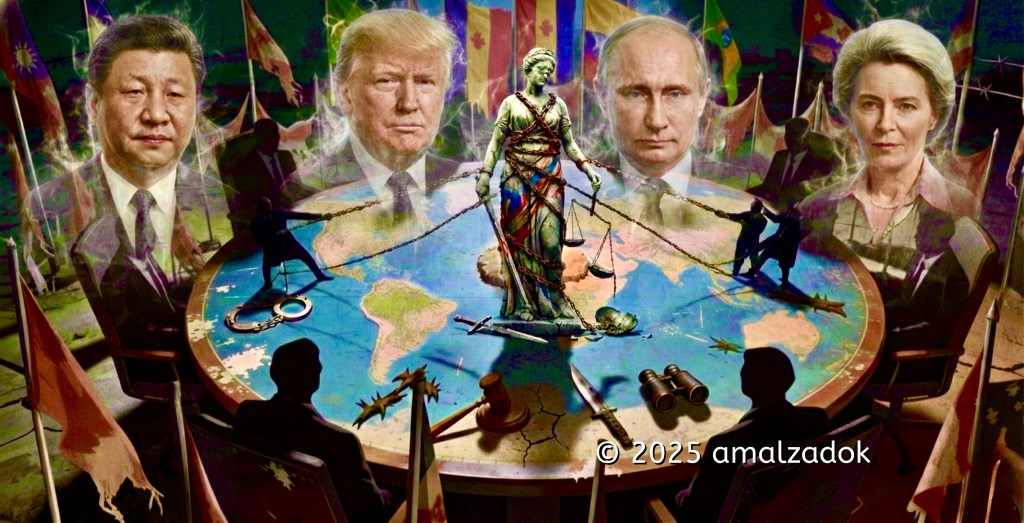
    Trump’s second term has become a moral crime scene: a president who claims to fight terror and drugs is literally embracing a former jihadist whose past helped kill Americans, pardoning a narco‑president whose cocaine helped destroy American lives, arming Netanyahu as Gaza is reduced to rubble, and ordering missiles on nameless men in boats while powerful killers walk free. This is not “America First”; it is a grotesque alliance of blood‑stained elites, wrapped in a flag and sold as patriotism.

    The Syrian visitor is President Ahmed al‑Sharaa, once a rising figure in jihadist‑linked networks that drew a multimillion‑dollar U.S. bounty and were treated as a direct threat to American lives. A man whose circles were on U.S. terrorism lists is now ushered through White House security as an honoured guest, his history airbrushed away in the glow of photo‑ops. Trump does not just “talk” to him in some neutral venue; he grants him the prestige, the symbolism, the legitimacy of the Oval Office, and in doing so spits on the memory of Americans killed by the very networks this man once served.

    MAGA voters were told Trump would be the hammer of justice against jihadists, that he would avenge the dead and protect the living, that he would end “stupid wars” while keeping America safe. Millions of decent people believed those promises in good faith because they wanted fewer body bags, less chaos, and real protection for their families. They were not wrong to want those things; they were wrong about the man they trusted to deliver them.

    Then there is the ex‑president of Honduras, Juan Orlando Hernández. This man did not just “look the other way.” He helped turn his country into a narco highway, enabling cartels to move hundreds of tons of cocaine into the United States – a river of powder that translates directly into overdoses, gang violence, shattered families and dead Americans.

    This is not some technical, victimless crime; it is mass poisoning delivered by the ton. A U.S. jury listened to evidence and concluded, beyond reasonable doubt, that this head of state was a key player in a vast cocaine conspiracy, and a federal judge handed down a 45‑year sentence because anything less would mock the victims. And Trump blew it away: in December 2025 he signed a sweeping pardon that opened the prison gates for Hernández and declared his record wiped clean. This is policy, not accident.

    With one pen stroke, he tells every grieving American parent whose child died on cocaine or crack: your pain is negotiable, your justice is reversible, and if a man wears a presidential sash, his crimes are redeemable. He tells every cop who risked their life on the street, every agent who built the case, every witness who testified against a narco‑president: all of that can be wiped away if it is politically convenient.

    At the same time, Trump continues to pour political cover and weapons into Netanyahu’s hands as Gaza is pulverised and large parts of the West Bank are terrorised. This is a government openly carrying out collective punishment, bombing densely populated civilian areas, annihilating entire families, and leaving Gaza’s hospitals, neighbourhoods and basic infrastructure in ruins. Trump stands not as a restraining voice, but as an amplifier: praising Netanyahu, indulging his maximalist rhetoric, blocking accountability, and helping ensure that the bombs keep falling.

    Christians are not spared. Ancient churches have been damaged or desecrated, Christian communities harassed and attacked, Christian clergy assaulted or intimidated as the war spills across the Holy Land. The land where Jesus walked is now a place where Christian sanctuaries are treated as expendable collateral, and Trump’s response is not outrage, not sanctions, not a hard line on war crimes, but more indulgence, more permission, more weapons – all wrapped in a cynical fusion of Christian language and political calculation that turns faith into a shield for atrocity.

    This is the man who promised “no more endless wars” and “America First.” What did his supporters get instead? A president who invites a former jihadist to the White House one day before one of the most sacred days for the U.S. military, turning solemn remembrance into a backdrop for a grotesque photo‑op. That is not restraint; that is desecration dressed up as diplomacy.

    They got a president who blesses, arms and shields a foreign leader whose campaign in Gaza and the West Bank is seen by much of the world as a live‑streamed atrocity. They got a president who outsources “war” to drones and missiles at sea, blowing up boats on suspicion, rather than formally declaring conflicts or respecting Congress. U.S. forces under Trump have repeatedly struck alleged drug boats near Venezuela and across the Caribbean, killing men whose names, faces and actual roles are still hidden from the American public. This is policy, not accident.

    This is not the end of war; it is the laundering of war. It is the transformation of war into a series of “operations,” “strikes,” and “counter‑narco missions” that avoid public debate while still killing real human beings. No body bags shown on television, just shredded bodies in the Caribbean and the eastern Mediterranean, far away from American cameras.

    “Drain the swamp” was supposed to mean confronting entrenched power: lobbyists, foreign money, corrupt politicians, the revolving door with arms manufacturers and foreign regimes. Instead, Trump has fused his White House to some of the dirtiest currents in global politics. He entertains a former jihadist leader, frees a convicted narco‑president whose crimes helped drown U.S. communities in cocaine, and embraces and arms a government accused of genocide, war crimes, and systematic persecution – including persecution of Christians.

    He then stands back as missiles slam into small boats on the high seas, killing the poor and powerless whose only crime is being on the wrong vessel with the wrong accusation attached. The message to the world is simple: presidents and generals get invitations and pardons, while fishermen, migrants and low‑level smugglers get obliterated without trial.

    How is this “draining the swamp”? The swamp has never been happier. Arms dealers profit from the weapons sent to an unrestrained Israeli war machine, and defence contractors quietly celebrate the steady flow of contracts. Foreign politicians with blood‑soaked records find forgiveness and legitimacy in Washington. Lobbyists and ideologues pushing unconditional support for the Israeli government see their agenda elevated above the lives of Palestinians, above international law, above even the safety of Christian communities in the Holy Land.

    Ask plainly: is this what MAGA expected? A president who kills nameless men in boats without trial while freeing narco capos in suits? Who dignifies a former jihadist leader while preaching toughness on terror? Who backs a foreign government as it flattens Gaza, terrorises the West Bank, and allows Christian churches and communities to be attacked? Who uses patriotic slogans and Christian language as a mask for raw realpolitik and transactional alliances with killers?

    All of it adds up to a single, obscene picture. This is not the hero of some populist epic. This is a villain who learned how to speak the language of the angry and betrayed, only to turn around and protect the powerful while crushing the weak. Every missile launched at a boat full of suspects, every tank round that lands on a crowded Gaza street, every quiet, smiling photo with a man who once ran with terrorists or cartels – all of it is a signature on a contract that says: power will be protected, and the rest of you are expendable.

    It is like declaring total war on the Medellín Cartel while still inviting Pablo Escobar to the White House, shaking his hand, and pardoning him for every crime he committed against the American people – then turning around and hunting down desperate teenagers in speedboats to prove how “tough” you are. In this upside‑down morality, power launders guilt, the presidency launders narco‑politics, and the only people who truly face the full violence of the U.S. state are the ones too poor, too foreign and too disposable ever to see the inside of the Oval Office.

    ©️2025 Amal Zadok. All rights reserved.
    Subscribe and never miss an article!

  • Europe’s Last Heist: From Rule of Law to Robbery in a De Facto Declaration of Financial War on Russia

    Europe’s Last Heist: From Rule of Law to Robbery in a De Facto Declaration of Financial War on Russia

    by Amal Zadok

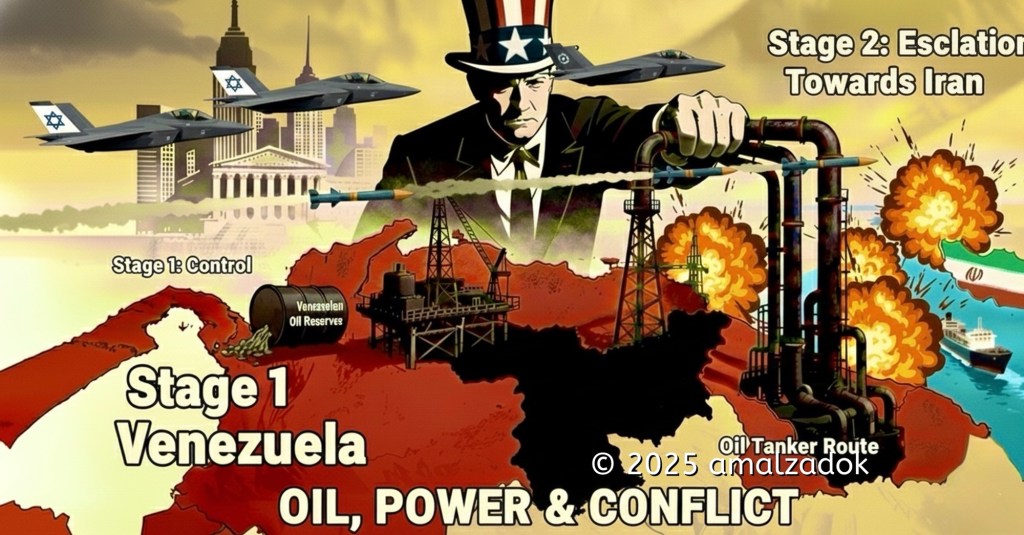
    Europe’s decision to seize and weaponise frozen Russian state assets marks a dangerous escalation: a last tantrum of a decadent elite that prefers to gamble with international law and Europe’s own future rather than accept strategic defeat and negotiate peace. Presenting this as “justice” or “reparations for Ukraine” hides a more prosaic reality: the European gangster wants those billions to plug fiscal holes, prop up a failing war effort, and delay the reckoning with its own political and economic suicide.

    The gangster move: stealing the frozen billions

    The plan to strip Russia of hundreds of billions in frozen reserves is the logical culmination of a policy that has already burned Europe’s cheap energy, industrial base, and social model on the altar of war. After sacrificing affordable Russian gas and triggering deindustrialisation and inflation, EU elites now eye Moscow’s confiscated assets as a new “magic fund” to sustain a war they cannot win and a fiscal model they can no longer finance from a shrinking tax base.

    This is framed as moral duty—“Russia must pay”—but the context betrays the real motive. Europe has already diverted enormous sums of public money to arm Kyiv while hospitals close, schools crumble, and poverty indices climb; the assets grab offers a way to extend this war spending without openly telling citizens they will lose even more welfare and rights. The political clica wants to swap domestic social anger for geopolitical banditry, trading bread and pensions for a one‑off financial heist.

    Belgium: pressure on the weak link

    Belgium sits at the centre of this scheme because Euroclear holds a massive chunk of the immobilised Russian reserves, turning Brussels into the vault the clica now wants to crack open. The same Europe that chants about “rule of law” is pressuring a small member state to accept a precedent that would have been unthinkable even at the height of the Cold War: openly confiscating another state’s reserves not as part of a peace settlement, but to keep shovelling weapons into an open‑ended proxy war.

    This pressure takes several forms.

    •Legal sophistry: relabelling seizure as “windfall profits,” “guarantees,” or “collateral,” while the substance is still the same—appropriating Russian wealth to fund war.

    •Political blackmail: warning Belgium that refusing the scheme would mean “abandoning Ukraine” or undermining European unity, turning a technical custody issue into a loyalty test.

    •Financial intimidation: hinting that Belgium’s role as a Euroclear hub could be questioned if it does not align with Washington and Brussels’ strategy.

    If Belgium capitulates, the message to the world is simple: deposits and reserves in Europe are safe only until the next geopolitical hysteria.

    Repercussions from Russia: from retaliation to systemic fracture

    For Russia, this move crosses a line between sanctions and outright theft. Moscow will not respond only with diplomatic protests; it has tools—economic, legal, and strategic—that will turn this European tantrum into a long‑term blowback.

    Likely responses include:

    •Legal counter‑claims and mirror seizures: Russia can expropriate European assets on its territory, nullify Western intellectual property, and seize physical infrastructure and investments as “compensation.”

    •Deepened de‑dollarisation and de‑euroisation: the signal to the Global South is devastating—Western currencies and jurisdictions are now weaponised, not neutral. This accelerates the creation of alternative payment systems, BRICS mechanisms, and commodity‑based settlement that permanently erode Europe’s financial relevance.

    •Strategic hardening: confiscation removes incentives for compromise. If Russia knows its reserves are gone for good, it has fewer reasons to agree to any settlement framed on Western terms, entrenching a cold war that Europe is far less equipped to sustain than Washington.

    In short, the “free money” Europe hopes to extract from Russian reserves will be repaid with isolation from emerging financial architectures, lost markets, and a Russia firmly anchored in a non‑Western bloc that no longer trusts European signatures or banks.

    Europe’s attempt to formalise this confiscation also carries the logic and symbolism of a declaration of war, even if it hides behind legal euphemisms and technocratic language. 

    Treating the central bank reserves of a nuclear‑armed state as spoils to be carved up for weapons and reconstruction funds signals that the EU no longer recognises Russia as a legitimate counterpart in the international system, but as a defeated enemy to be looted.

    In strategic terms, this is indistinguishable from economic total war, because it erases the boundary between temporary sanctions and permanent dispossession.

    Such a move hardens threat perceptions in Moscow to an unprecedented degree, reinforcing the narrative that the West seeks not negotiation or “behaviour change” but Russia’s strategic humiliation and eventual fragmentation. 

    If Russian leaders conclude that no future compromise can restore their assets, security, or status, they are incentivised to escalate horizontally—cyber, space, infrastructure, and asymmetric responses—rather than de‑escalate. 

    What Europe reads as financial cleverness, Russia reads as confirmation that the conflict is existential and must be met with long‑term, system‑level counter‑measures.

    By crossing this Rubicon, Europe not only undermines its own legal foundations but also normalises the idea that financial warfare can be escalated indefinitely without triggering wider conflict—a dangerous illusion. 

    Once the taboo on sovereign asset seizure is broken, every further crisis will tempt policymakers to “solve” political problems with new expropriations, pushing great‑power relations ever closer to open confrontation. 

    In this sense, the theft of Russian reserves is not just a tantrum; it is the codification of permanent economic war and, in substance, a de facto declaration of war against Russia, with all the risks of miscalculation, retaliation, and eventual military escalation that such a doctrine entails.

    The internal cost: Europe against its own citizens

    The gangster heist is not just an act against Russia; it is an act against Europeans themselves. By normalising confiscation of sovereign assets and emergency war financing, the same political clica also normalises permanent emergency at home—more censorship, less judicial independence, more police, and fewer social rights.

    The trajectory is already visible:

    •Sanctions and energy rupture triggered deindustrialisation, capital flight, and a collapse of the tax base that once funded Europe’s welfare states.

    •The Ukraine war became the justification to divert billions from schools, hospitals, and pensions into weapons, while dissenters were smeared as traitors or agents of Moscow.

    •Digital censorship regimes, “disinformation” laws, and emergency decrees hollowed out democratic debate and press freedom, recreating a digitalised version of Soviet‑style control.

    Using Russian money to keep this machinery going compounds the moral and legal rot. It signals that the war economy and repression must continue at any cost, because the elites have staked not just political capital but now the credibility of the entire European financial system on a conflict that has no realistic path to victory.

    Europe’s strategic suicide: from unipolar denial to open piracy

    Confiscating Russian reserves is also a symptom of a deeper pathology: Europe’s refusal to accept a multipolar world and its subservience to US strategic dictates. Instead of adapting to a reality where Russia, China, and the Global South cannot be coerced into obedience, Europe doubles down on unipolar fantasies—NATO expansion, economic warfare, ideological crusades—and then, when the costs become unbearable, resorts to financial piracy to prolong the illusion.

    The long‑term consequences are stark:

    •Trust collapse: states that watched Libya’s reserves frozen and now see Russia’s formally confiscated will regard Western custody as a trap, not a service.

    •Loss of strategic autonomy: as Europe burns bridges to Eurasia, it locks itself into dependency on American energy, arms, and financial architecture, becoming a semi‑sovereign periphery of Washington’s empire.

    •Civilisational hollowing: the moral language of “rule of law,” “human rights,” and “democracy” becomes empty when the EU behaves like a cartel seizing assets to fund a proxy war, censors opposition, and militarises public life.

    The irony is cruel: in the name of defending “European values” against Moscow, Europe is dismantling its welfare state, civil liberties, and credibility as a legal and financial safe haven.

    Beyond the tantrum: the fork in the road

    This last tantrum—the attempt to steal Russia’s frozen billions—is not a sign of strength but of exhaustion. It reveals elites trapped between a failed war strategy, a collapsing social contract, and a world that no longer tolerates Western impunity.

    Europe now stands at a precipice where one decision can still change its fate: either reclaim the primacy of bread over bombs, law over looting, and peace over permanent mobilisation, or accept its mutation into a garrisoned, obedient frontier of a fading empire. 

    If the frozen Russian billions are finally cracked open to feed the war machine, that act will not be a clever financial manoeuvre but the moment Europe openly chooses vassalage over sovereignty and plunder over principle. 

    On that day, historians will not write that Europe defended its values; they will record that, for the price of one last stolen jackpot, a civilisation signed away its soul and marked, in its own hand, the date of its final moral and strategic surrender.

    References

    1.European Parliamentary Research Service. (2025, November 27). EU sanctions and Russia’s frozen assets (Study EXPO_STU(2025)754487). European Parliament.

    2.European Parliamentary Research Service. (2025, September 7). Confiscation of immobilised Russian sovereign assets: State of play, arguments and scenarios (Briefing EPRS_BRI(2025)775908). European Parliament.

    3.European Parliamentary Research Service. (2025, June 30). Immobilised Russian central bank assets (At a glance EPRS_ATA(2025)769514). European Parliament.

    4.Reuters. (2025, December 2). EU proposes using frozen Russian assets or borrowing to raise €90 billion for Ukraine.

    5.Australian Broadcasting Corporation. (2025, December 3). EU proposes using frozen Russian assets as reparations loans for Ukraine.

    6.Verfassungsblog. (2025, April 3). Frozen Russian state assets. Verfassungsblog on Constitutional Matters.

    7.Council on Foreign Relations. (2025, November 19). How to use Russia’s frozen assets.

    8.Reuters. (2025, December 3). Russia mocks EU deliberations on frozen assets, says seizure will prompt “harshest response”.

    9.CNBC. (2025, December 4). Russia: Europe’s use of frozen assets could be justification for war.

    10.Investing.com. (2025, December 4). Russia warns EU of “harsh response” over potential asset freezes.

    11.Reuters. (2025, December 1). Top Russian banker says EU faces 50 years of litigation if it takes Russia’s frozen assets.

    12.Big Europe. (2025, November 12). The poisoned chalice of Russia’s frozen assets.

    13.Geopolitique.eu. (2023, February 22). Sanction. Confiscate. Compensate. How Russian money can be repurposed as reparations for Ukrainian victims.

    14.Al Jazeera. (2025, December 2). Europe should seize Russia’s frozen assets now.

    15.Reuters. (2025, October 2). How Europe wants to unlock Russia’s frozen cash for Ukraine.

    16.CEPR. (2025, March). Seizing central bank assets?

    ©️2025 Amal Zadok. All rights reserved.
    Subscribe and never miss an article!

  • Shattered Pillar of Europe: How US Power, NATO’s March and a Real Russian Existential Threat Are Sacrificing Europe’s Economy, Social Model and Future

    Shattered Pillar of Europe: How US Power, NATO’s March and a Real Russian Existential Threat Are Sacrificing Europe’s Economy, Social Model and Future

    by Amal Zadok

    US policy today is not just “supporting allies” or “defending democracy.” It functions as a strategy that keeps Europe dependent, weakens its economic base, and erodes the social achievements built up since the birth of the European Union. At the same time, Russia’s leadership confronts NATO expansion and Western use of Ukraine as a real existential threat, and this reality has interacted with US and EU choices in a mutually destructive security spiral. Together, these dynamics risk turning the EU from a potential independent pole in a multipolar world into a subordinated periphery of the United States, while locking Russia into a permanent confrontation that justifies ever tighter Western structures around Europe.

    From partner to protectorate

    In the early decades after 1945, Washington encouraged European integration as a bulwark against the Soviet Union and as a way to stabilise and industrialise Western Europe. As Europe grew richer and more cohesive, and as the European Community evolved into the EU with its own currency and ambitions of “strategic autonomy,” US attitudes shifted from sponsorship to management and, increasingly, control. The United States wanted a strong Europe inside a US‑led system—not a Europe capable of independent strategic choices, energy partnerships, or monetary power that might rival the dollar.

    The turning point came when European choices started to cut across US preferences: independent Ostpolitik, deep energy links with Russia, talk of an EU defence identity not subordinated to NATO, and the launch of the euro as an international currency. From that point, Washington’s core aim was effectively that Europe must never become an autonomous centre of power. It would remain militarily reliant on US hardware and guarantees, energetically tied to US‑controlled sources, and monetarily constrained inside a dollar‑dominated financial system in which the euro is, at best, a junior partner.

    Russia, NATO and the security dilemma

    This story sits inside a wider confrontation with Russia. From Moscow’s point of view, NATO’s eastward expansion after the 1990s and, especially, the prospect of Ukrainian and Georgian membership signalled the arrival of a hostile alliance on Russia’s immediate borders. Russian elites, across different currents, came to see NATO not just as a military structure but as the spearhead of a Western project to encircle, weaken and potentially dismember Russia. In that reading, the Maidan revolution, Western military assistance to Kyiv, and the steady integration of Ukraine into Western economic and security frameworks looked like steps toward turning Ukraine into a proxy platform aimed at Russia’s heartland and political system.

    Many Western governments insist that NATO is a defensive alliance and that countries like Poland or Ukraine freely choose to seek protection after their own traumatic experiences with Russian power. But even if one accepts that, interests and capabilities matter more than rhetoric. To large parts of the Russian establishment, NATO’s moves—backed and driven by Washington—constitute a real existential threat. That reality has been used by the Kremlin to justify the 2014 and 2022 invasions of Ukraine and a broader confrontation with the West. In turn, those invasions have validated the worst fears of NATO’s eastern members and given the US justification to harden and expand its military, energy and financial footprint in Europe.

    A classic security dilemma has formed: each side claims to be reacting defensively to the other, but the net effect is an arms race and a hardened bloc system. For Europe, the tragedy is that this spiral locks the EU ever more tightly into dependence on the US as protector and energy supplier, while eliminating the diplomatic space that might have allowed Europe to act as a bridge rather than a front line.

    Killing cheap energy, then selling the “solution”

    Before the latest escalation, the German and broader EU growth model rested on abundant, relatively cheap Russian pipeline gas feeding highly competitive industrial sectors like chemicals, metals, glass, fertilisers and machinery. That industrial base underpinned employment, exports and the tax revenue for Europe’s welfare states. For Washington and for NATO hard‑liners, this model looked like a strategic vulnerability: it tied Europe’s prosperity to a Russia they saw as a long‑term adversary and created incentives in Berlin and elsewhere for accommodation instead of confrontation.

    Russia’s decision to escalate in Ukraine—and the Western response of sanctions, embargoes and the effective shutdown of most Russian pipeline flows—destroyed that model in a matter of months. Whatever one thinks of Moscow’s responsibility for the war, the outcome fits US strategic and economic interests almost perfectly. The one supplier capable of delivering huge volumes of cheap gas by pipe to Europe has been removed. Into the gap steps US liquefied natural gas.

    US officials and industry lobbyists openly present US LNG as a strategic asset and a historic opportunity to lock in the European market for decades. Long‑term contracts, new terminals and supporting infrastructure create a structural dependency on LNG whose prices are higher and more volatile than those of pre‑war Russian pipeline gas. European analysts warn that this risks recreating the old dependence—only now on Washington. Energy‑intensive industries close, relocate or shrink. Households live under permanent energy‑driven cost‑of‑living pressure. The surplus that once supported generous social security is eaten away by higher input costs and subsidies designed to manage, rather than resolve, the crisis.

    Choices made in both Moscow and Washington thus converge: they break Europe’s attempt to balance security and economic efficiency through diversified energy sources, and they channel Europe toward an Atlantic‑centric, US‑dominated energy order.

    Forced rearmament on American terms

    Overlaying this is a dramatic push for rearmament. The 2 per cent of GDP NATO guideline, once a benchmark, has become a political cudgel. Under Trump in particular, but not only under him, European states have been told bluntly: spend much more on defence—3, 4, even 5 per cent—or risk abandonment. In practice, the fastest way to meet these targets is to buy off‑the‑shelf from the United States.

    The result is a surge in European defence budgets, with a large share of the new spending flowing into US weapons systems: combat aircraft, missile defence, precision munitions, command‑and‑control architecture. This deepens Europe’s technological and operational dependence. Many of these systems cannot be fully maintained, upgraded or used independently without US software, spare parts and political consent. It is rearmament, but not autonomy.

    From a macroeconomic perspective, some of this spending stimulates local production and jobs, but a significant portion leaks abroad as imports. At the same time, higher defence outlays add to public debt and crowd out other priorities. Governments will have to finance this either through higher taxes or through cuts to social programmes, infrastructure and climate‑transition investments. The more the war in Ukraine is framed as an open‑ended civilisational struggle with Russia, the easier it is for elites to justify this shift and to silence dissent in the name of “security.”

    Again, Moscow’s choices and Washington’s strategy intersect. Russia’s actions are used to justify a transformation of Europe’s budgets and procurement patterns that locks the EU into US‑centric military structures for decades. The more the EU is psychologically and institutionally oriented toward Russia as a permanent enemy, the less space remains for any future European security architecture not dominated by NATO and the US.

    Monetary subordination and the caging of the euro

    The euro was meant to give Europe monetary sovereignty and a currency capable of balancing the dollar. In practice, the combination of internal EU design flaws and external pressure has kept the euro within a dollar‑dominated framework. Fragmented fiscal governance, limited joint debt issuance and capital‑market fragmentation restrict the euro’s international role. Repeated crises—sovereign debt, pandemics, energy‑driven inflation—undermine its attractiveness as a reserve currency.

    From the US side, powerful tools reinforce dollar primacy: sanctions regimes that weaponise access to the dollar system, extraterritorial financial rules that intimidate European banks and firms, and the sheer depth and liquidity of US bond markets. Efforts by the EU or by countries like Russia and China to build alternative payment systems, reduce dollar exposure or trade outside US‑controlled channels are treated with suspicion and sometimes punished. For Russia, this has led to attempts to “de‑dollarise” and diversify reserves, but Western sanctions in response to the Ukraine war have also frozen Russian assets and forced other states to think twice about challenging the dollar architecture.

    Europe finds itself squeezed. It has its own currency, but in the decisive moments—sanctions, crises, financial flows—it still operates inside a system whose ultimate levers are in Washington. Russia’s confrontation with the West becomes another reason to tighten that system further, making it harder for the euro to evolve into a fully independent pole.

    Social destruction as the hidden cost

    The combined effect of these energy, military and financial dynamics is a slow erosion of Europe’s social model. Energy‑intensive industries lose competitiveness or vanish. Public budgets come under strain from higher defence commitments and crisis‑management subsidies. Inflation, especially for essentials like housing and energy, erodes real wages. Youth unemployment or underemployment rises as industrial and mid‑skill jobs disappear, leaving younger generations with precarious, low‑paid work and limited prospects.

    Health systems, already stretched, enter into crisis: senior citizens and people with chronic or complex health conditions face longer waiting lists, reduced services and growing out‑of‑pocket costs as governments struggle to finance universal care. The social fabric frays: trust in institutions declines, protests over living standards, housing and healthcare multiply, and political extremes gain ground by channelling anger toward Brussels, migrants, national elites, or foreign powers. What made the EU attractive—relative equality, robust welfare states, good public services and intergenerational solidarity—is undermined from within, even as leaders insist they are defending “European values” against Russia and other adversaries.

    Here, impartiality requires recognising that this destruction is co‑produced. US strategy uses crises to deepen Europe’s dependence and maintain American hegemony. Russian strategy, driven by its response to a real existential threat and by long‑standing imperial reflexes, has helped trigger and intensify those same crises, even as Moscow forges and consolidates strong partnerships across BRICS and the wider Global South.

    Far from being truly isolated, Russia has redirected trade, finance and diplomacy away from the Atlantic world and into a dense web of relations with China, India, Iran, much of Asia, Africa and Latin America: it sells discounted energy to India and others, deepens industrial and military cooperation with China, signs long‑term resource and infrastructure deals across the Global South, and uses BRICS, the Shanghai Cooperation Organisation and new payment arrangements to reduce exposure to Western pressure. In practice this means that the US–NATO–EU strategy of “isolating” Russia has largely failed outside the Western bloc: it has severed many of Russia’s links to Europe and North America but pushed Moscow into a parallel ecosystem of non‑Western partners who see in Russia a counterweight to US dominance, a source of cheap commodities, or a useful political ally against Western double standards.

    European elites, for their part, have often chosen alignment with Washington over building authentic strategic and economic autonomy, while failing to protect their citizens—young and old—from the predictable social costs. Seen from this wider angle, the pattern is stark: a security confrontation between the US‑led West and Russia creates the conditions in which Europe’s autonomy, prosperity and social achievements are sacrificed, while Russia is re‑anchored in an alternative non‑Western orbit rather than disappearing from the world stage.

    A fierce political argument can therefore say, without losing nuance, that US grand strategy is structured to keep Europe subordinate and dollar‑bound; that Russia’s reaction to NATO expansion is grounded in a real existential threat and has been channelled into building a broader non‑Western alignment instead of simple “isolation”; and that European leaders have so far failed to break this logic in defence of their own societies, accepting a role as a weakened Atlantic appendage in a world that is, in fact, becoming more multipolar.

    Reference list

    1.American Security Project. (2025). White paper – Strategic implications of U.S. LNG exports. Retrieved from https://www.americansecurityproject.org/white-paper-strategic-implications-of-u-s-lng-exports/

    2.Bruegel. (2025). Adjusting to the energy shock: The right policies for European industry. Retrieved from https://www.bruegel.org/policy-brief/adjusting-energy-shock-right-policies-european-industry

    3.European Commission. (2022). EU action to address the energy crisis. Retrieved from https://commission.europa.eu/topics/energy/eu-action-address-energy-crisis_en

    4.European Commission. (2022). Sanctions on energy – EU restrictive measures against Russia following the invasion of Ukraine. Retrieved from https://commission.europa.eu/topics/energy/eu-solidarity-ukraine/eu-sanctions-against-russia-following-invasion-ukraine/sanctions-energy_en

    5.Bruegel. (2025). Europe’s dependence on US foreign military sales and what to do about it. Retrieved from https://www.bruegel.org/policy-brief/europes-dependence-us-foreign-military-sales-and-what-do-about-it

    6.The Parliament Magazine. (2025). Europe’s defence reliance on the US runs deeper than hardware. Retrieved from https://www.theparliamentmagazine.eu/news/article/europes-defence-reliance-on-the-us-runs-deeper-than-hardware

    7.European Parliament Research Service. (2025). United States defense industrial base. Retrieved from https://www.europarl.europa.eu/RegData/etudes/BRIE/2025/777967/EPRS_BRI(2025)777967_EN.pdf

    8.Reuters. (2025, June 18). US defence firms chase European military spending wave. Retrieved from https://www.reuters.com/business/aerospace-defense/us-defence-firms-chase-european-military-spending-wave-2025-06-18/

    9.Chatham House. (2024). Russia is using the Soviet playbook in the Global South to challenge the West – and it’s working. Retrieved from https://www.chathamhouse.org/2024/05/russia-using-soviet-playbook-global-south-challenge-west-and-it-working

    10.Vuksanović, V. (2025). The logic of Global South in Russian foreign policy. Third World Quarterly. Retrieved from https://www.tandfonline.com/doi/abs/10.1080/10220461.2025.2519982

    11.Papa, M. (2025). The evolution of soft balancing in informal institutions. International Affairs, 101(1), 73–93. Retrieved from https://academic.oup.com/ia/article/101/1/73/7942161

    12.European Commission. (2025). Spring 2025 economic forecast: The economic impact of higher defence spending. Retrieved from https://economy-finance.ec.europa.eu/economic-forecast-and-surveys/economic-forecasts/spring-2025-economic-forecast-moderate-growth-despite-risks_en

    13.SUERF. (2025). Europe in the new NATO era. Retrieved from https://www.suerf.org/publications/suerf-policy-notes-and-briefs/europe-in-the-new-nato-era/

    14.Eurofound. (2025). Trust in crisis: Europe’s social contract under threat. Retrieved from https://www.eurofound.europa.eu/en/commentary-and-analysis/all-content/trust-crisis-europes-social-contract-under-threat

    15.New Economics Foundation. (2025). European defence spending soars, but climate and care are still “unaffordable”. Retrieved from https://neweconomics.org/2025/06/european-defence-spending-soars-but-climate-and-care-are-still-unaffordable

    16.OECD / EIB. (2025). A comprehensive overview of the energy-intensive industries in Europe.

    17.Modern Diplomacy. (2025). Is Russia really isolated? The increasing importance of East and South diplomacy.

    18.Atlantic Council. (2025). The underestimated implications of the BRICS summit in Russia.

    19.Council on Foreign Relations. (2024). What is the BRICS group and why is it expanding?

    20.The Diplomat. (2024). Anti-Western or non-Western? The nuanced geopolitics of BRICS.

    21.European Commission. (2023). EU–United States of America energy cooperation.

    22.Eurofound / Euractiv. (2025). Cost of living crisis set to prompt social unrest across Europe, poll finds.

    23.New Lines Institute. (2025). Russia is capitalizing on rising LNG demand and shifting geopolitics.

    24.Various national and EU sources on cost of living, inflation, health systems and youth unemployment (e.g., OECD and Eurofound social reports, national cost‑of‑living crisis analyses).

    ©️2025 Amal Zadok. All rights reserved.
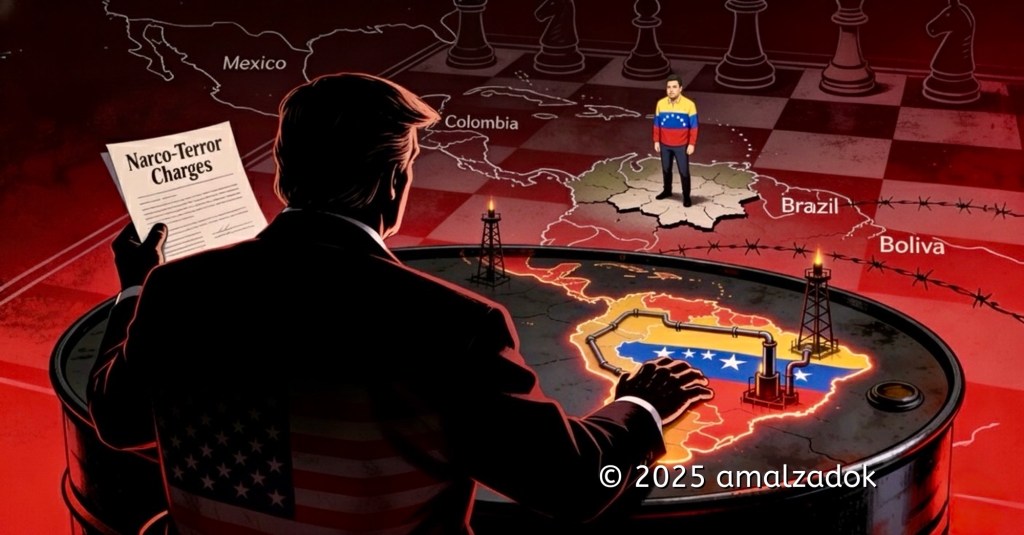
    Subscribe and never miss an article!

  • Hijacked Democracy: How Israel’s Lobby Captured the Heart of America

    Hijacked Democracy: How Israel’s Lobby Captured the Heart of America

    by Amal Zadok

    For decades, the American public has been comforted by the illusion that they live in a functioning democracy, their interests safeguarded by a government built on checks, balances, and constitutional law. This myth is now unsustainable. At the root of America’s democratic decay lies not abstract forces or vague external pressures, but the concrete, multi-generational influence of Israel and its deeply entrenched lobby—an axis of power so effective, so persistent, that it has rendered the sovereignty, freedoms, and very essence of American democracy subservient to foreign interests.

    The Architecture of Power: How the Israel Lobby Seized Washington

    It is often said that nations are manipulated by shadowy external lobbies, but in the case of the United States, the Israel lobby stands alone as an unparalleled testament to foreign influence. From presidential palaces to congressional offices, AIPAC (American Israel Public Affairs Committee) and allied Zionist organizations operate with impunity. Their methods are no secret: targeted campaign finance, direct threats, networked media pressure, and legal intimidation. Israel’s coalition of advocates have, over decades, built the infrastructure that steers U.S. policy, not for the interests of American citizens, but for the priorities of Tel Aviv.

    This lobby co-opts both political parties. Presidential candidates, congressional hopefuls, senators, and state representatives are repeatedly forced into pro-Israel postures, whether they agree with the policies or not, simply to survive political fundraising and media scrutiny. Careers are built or broken by declarations of loyalty to the Israel agenda. The result is routinized production of legislation, executive directives, and judicial decisions specifically crafted to serve Israel’s security, military, and territorial ambitions.

    Elections Rigged and Freedoms Sold

    Nowhere is the corruption of democracy more evident than in the election process itself. Recent cycles have witnessed an exponential increase in pro-Israel donor spending, reaching nearly $45 million in 2024 alone—triple that of the past two cycles. This flood of cash doesn’t just skew outcomes; it warps the electoral agenda itself. Policy debates avoid mention of Palestinian suffering, Israeli war crimes, or the cost to American lives and treasure. Otherwise promising, progressive candidates who dare challenge the Israel lobby are eliminated—Cori Bush and Jamaal Bowman just recent casualties of coordinated, high-dollar campaigns to silence dissent and preserve operational control.

    Even primary contests are infected, with Republican funding channeled through AIPAC and PACs to distort Democratic races and neutralize critics. Sitting members of Congress live with the constant fear that a single pro-Palestinian comment will spell the end of their careers, drowned out by a blitz of negative advertising, legal threats, and orchestrated scandal. In this climate, the sovereign will of the American people is an afterthought.

    Media Manipulation and the Death of Free Speech

    The Israel lobby’s ingenuity is most brazen in its campaign against American freedoms. Freedom of speech, once a sacred American principle, is now rationed by fear. Journalists, academics, artists, and activists face relentless blacklisting, doxxing, and direct intimidation if they dare raise Israeli abuses or support Palestinian rights. Larger outlets toe the party line, echoing AIPAC-scripted narratives; smaller, independent publications are bullied, derided, or driven out of business. Even social media platforms have come under pressure to shadowban, demonetize, or delete content exposing Israeli aggression or occupation.

    The highly public criticism and targeting of Tucker Carlson offer a powerful example of the methods deployed against voices that challenge the pro-Israel narrative in American media. As one of America’s most recognized commentators, Carlson has repeatedly raised uncomfortable questions about the U.S.-Israel relationship, confronted high-profile figures over unconditional support, and, most controversially, speculated publicly on intelligence connections and censorship related to Israeli interests in Washington. Following outspoken episodes questioning aid, alliances, and American militarism in service of Israel, Carlson has been the subject of one of the most orchestrated campaigns of public denunciation: widely accused of antisemitism, targeted for supposed conspiracy-mongering about Israeli intelligence activities, and relentlessly condemned for platforming perspectives critical of Zionism.

    The backlash has included professional threats, advertiser boycotts, media smears, and legislative scrutiny—reinforcing the chilling effect on other journalists who might otherwise raise critical questions. The controversy surrounding Carlson’s investigations and commentary is not simply a matter of contentious opinion; it is emblematic of how powerful interests shape the boundaries of public debate. His case demonstrates that even widely followed, well-resourced journalists are not immune from the machinery of suppression, which is activated at full force when criticism of Israel penetrates mainstream coverage.

    Anti-Semitism laws have become bludgeons, wielded to criminalize criticism of Israeli policy even when it’s couched in universally accepted terms. College students are expelled, faculty disciplined, and public institutions subject to invasive federal and donor oversight, putting a chill on all forms of pro-Palestine advocacy. The culture of silence is so complete that even moderate voices tiptoe around the real effects of the Israel lobby, lest they be erased from public discourse.

    Sovereignty Subjugated—America as the Proxy

    American sovereignty is now a theoretical construct, as Israel’s priorities dominate not just the foreign policy apparatus but the very laws that govern U.S. autonomy. Every year, billions are shipped to Israel in aid and military hardware, far exceeding assistance to any other nation, without meaningful debate or review. Arms deals flow not in response to genuine U.S. strategic needs, but in service of Israel’s ongoing occupation, with American troops and assets positioned globally to defend Israeli interests even at the expense of critical domestic priorities.

    U.S. presidents, regardless of party, regularly adopt Israel-centric stances and policies—moving embassies, vetoing U.N. resolutions, forsaking international law—all to maintain unshakeable loyalty to Tel Aviv. Legislation is routinely tailored for exemption: business partnerships, visa policies, and intelligence sharing all bend the rules for Israeli benefit. The influence goes well beyond policy: it festers within the military-industrial complex, federal law enforcement, and intelligence, often turning American resources towards defending Israeli aggression and suppressing dissent in the name of “security.”

    Suppression of Dissent and Criminalization of Solidarity

    Every campaign in defense of Palestinian rights faces ruthless legal, financial, and organizational sabotage. The Israel lobby leverages courts, legislatures, and executive branches to ban Boycott, Divestment, and Sanctions actions; to punish protestors and organizers; and to marginalize—even criminalize—advocacy for Palestinian liberation. Constitutional protections for speech and assembly offer little protection in practice; the machinery of state, propelled by Israeli interests, now polices the boundaries of permissible protest.

    Dissent is not just discouraged—it is defined as anti-American. Police crackdowns on pro-Palestine protests, university discipline of activists, and congressional hearings to “defend” Israel all work to delegitimize solidarity movements. The message is clear: American freedom exists only for causes that align with Israel’s narrative, and dissent comes with direct, systemic consequences.

    The Cost of Subservience: What America Has Lost

    There is no single force hollowing out America’s democracy, sovereignty, and freedom more completely than the influence of Israel and its lobby. The cost to American lives, treasure, and the integrity of its institutions is incalculable. Democratic practice, once messy but vibrant, is now little more than a charade, with outcomes and debates determined in advance by distant interests. Sovereignty—once defended as sacred—is exchanged for subservience to an ally whose priorities increasingly diverge from the needs and hopes of most Americans.

    Meanwhile, rights and freedoms once taken for granted have become commodities—offered or withheld by political patrons, media barons, and the legal apparatus that arbitrates permissible dissent. The entire American system now operates in a permanent state of compromise, not to the advantage of its citizens, but in perpetual service to the Israeli state.

    The Uprising and Its Hard Limits

    Momentous change is afoot. As the depth and brazenness of Israeli influence is exposed, younger Americans and liberal activists increasingly reject manufactured consensus, challenging both the mechanics and morality of U.S.-Israel policy. Public opinion is shifting rapidly, with majorities of Jews and non-Jews alike questioning unconditional support for Israel and the machinery that enforces it. The bipartisan, uncritical embrace of Israel is cracking at its foundations. Progressive coalitions, united in their opposition to AIPAC, are rising—yet face the daunting task of dismantling the most sophisticated lobbying machine in American history.

    Legal countermeasures, media campaigns, and mass mobilization intensify—a battle not just for Palestinian liberation, but for the recovery of American democracy itself. Yet the Israel lobby, having mastered the arts of subterfuge and financial pressure, is unlikely to relinquish power without a fight. It continues to invest record sums, to target and destroy critics, to recruit media allies, and to manipulate the boundaries of what Americans are even allowed to debate. The struggle will be long and brutal, with many false starts and bitter defeats.

    Naming the Problem: The Essential First Step

    America cannot restore its democracy, its sovereignty, or its freedom until it honestly confronts the singular influence of Israel and its network of patrons. The problem is not abstract; it is present in every campaign contribution, every forced resignation, every murdered debate, and every law calibrated to benefit a foreign regime at the expense of national interest.

    Only brutal honesty, combined with united grassroots resistance and principled leadership, can begin the process of recovery. The first critical act is to name the Israel problem—without euphemism or self-censorship. Otherwise, the collapse will gather speed, and the last shreds of American liberty will be traded away.

    Soft coup in a progress? What to do?

    In light of these forces, we must ask: Are we witnessing, in real time, a soft coup d’état of the American government and its most valuable institutions—an upheaval not executed by tanks and generals, but by lobbyists, donors, and clandestine influence wielders whose loyalty is to Tel Aviv rather than Washington?

    Should this radical subordination of American sovereignty continue, the coming midterms may become not just another exercise in frustration for a disenfranchised electorate, but a flashpoint for collective reckoning. Will Americans, finally awakened to the theft of their democracy, rise to reject the capture and reclaim self-rule—or will they remain paralyzed, lost in a spectacle designed to obscure the true locus of power? The next ballot may not simply test policymaker popularity, but the strength of American identity itself.

    References

    1. Mearsheimer, J., & Walt, S. (2006). The Israel Lobby and U.S. Foreign Policy.

    2. Cleland, B. (2025, July 1). How Israel’s allies hijacked U.S. democracy. Independent Australia.

    3. Responsible Statecraft. (2025, September 2). Israel’s foreign influence is the most unrelenting in US history.

    4. Mondoweiss. (2025, November 11). AIPAC is suddenly a political liability. Is the Israel lobby in trouble?

    5. World New World. (2025, July 6). The Israeli State and Its influence on U.S. Foreign Policy.

    6. AMUST. (2025, June 28). The corruption of the American political system by Pro-Israel lobby.

    7. Arab American News. (2025, October 31). How pro-Israel advocacy built an influence machine in the West and what it cost.

    8. OpenSecrets. (2025, June 11). Pro-Israel Summary.

    9. UWA News. (2025, April 9). What is the Israel lobby – and why is it so anxious?

    ©️2025 Amal Zadok. All rights reserved.
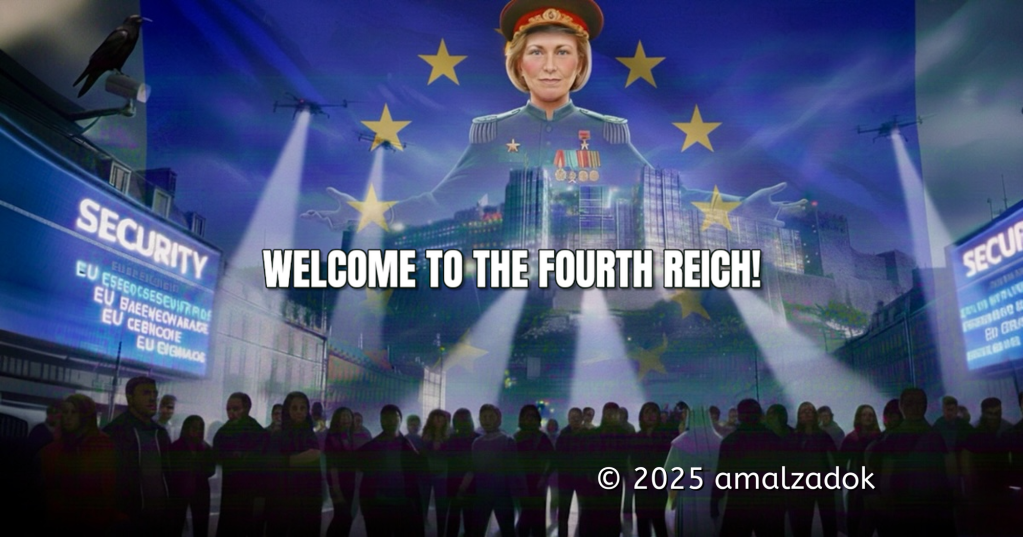
    Subscribe and never miss an article!

  • Cowards in Uniform: The Strategy of Hiding to Escape Justice

    Cowards in Uniform: The Strategy of Hiding to Escape Justice

    by Amal Zadok

    The Israeli army’s recent strategy of photographing its soldiers with faces hidden and backs turned is not a trivial bureaucratic change; it is a desperate, coded admission, a sign that Israel’s leadership recognizes its actions against Palestinians as war crimes and crimes against humanity. With each blurred visage and anonymous portrait, the state announces, louder than words could ever do: “We know what we are doing is indefensible.” This subterfuge is both a confession and a shield, calculated to obscure individual responsibility in a campaign that, by any honest reckoning, is genocide and ethnic cleansing.

    Authentic Israeli photo catalog
    of members of the IDF

    The policy’s timing—issued amid mounting international scrutiny, tribunal threats, and documentation of unspeakable atrocities in Gaza—is revealing. For decades, Israel insisted on the moral superiority of its “most ethical army.” Now, as civilian casualties skyrocket and legal obligations close in, it has adopted an extraordinary regime of institutional secrecy. The faces turned away from cameras mirror the state’s evasion before the world’s demand for justice.

    Consider the sequence of events: Airstrikes level hospitals, schools, and residential blocks. Water, electricity, and humanitarian access are systematically cut. Food supplies run out. Famine and disease spread among besieged Palestinians. Journalists and aid workers become deliberate targets. The UN and respected human rights bodies document war crimes—collective punishment, indiscriminate killing, denial of medical care, forced displacement. Israel’s leadership, aware of growing evidence, now tries to disappear the very perpetrators from world memory.

    Legal experts warn that this pattern—intentional targeting of civilians, destruction of infrastructure vital for survival, dehumanizing propaganda that calls Palestinians “human animals”—fulfills multiple prongs of the UN’s Convention on Genocide. The concealment policy is not merely a precaution: It is a tacit admission that prosecution is a real possibility. Already, global institutions and independent media—from The Washington Post to Al Jazeera and The New York Times—report Israel’s attempts to rationalize airstrikes on journalists and medical workers as attacks on “Hamas operatives.” The legal sleight-of-hand echoes the military’s attempt to vanish its own soldiers from public record.

    A truly “ethical” nation would champion transparency and the rule of law. Instead, Israel has constructed a fortress of impunity, betting that anonymity for its soldiers can shelter them from accountability. In reality, the world’s memory is longer than a press release. Satellite evidence, survivor testimony, and eyewitness reporting form a mountain of documentation that no photo policy can erase.

    Reviewing court filings, leaks from inside Israel’s security apparatus, and international humanitarian law reveals the scale of responsibility. Legal organizations confirm that Israel’s new strategy follows secret recommendations from internal legal counsel who assessed the risk of foreign prosecutions—a risk now heightened by the International Criminal Court’s investigations into war crimes in Gaza and the West Bank.

    Israel’s defenders argue that security demands secrecy. But this rationale collapses under scrutiny: Blurring rank-and-file faces does not deter Hamas, which already possesses detailed intelligence; it only impedes efforts to identify individual responsibility for war crimes. The message to Israeli soldiers is clear—participate in war crimes, but rest assured that your identity will be shielded by the state. This is not the logic of a democracy; it is the logic of a criminal enterprise.

    The human impact is undeniable. Palestinians in Gaza describe living in a “giant concentration camp.” Children are orphaned overnight. Families are pulverized in seconds. Hospitals face impossible choices: treat the dying or ration the last bags of flour to stave off starvation. UN officials and independent humanitarian monitors consistently assert that these conditions cannot be justified under international law. Their verdict: these are crimes against humanity.

    The IDF’s photo policy, in its chilling banality, is a watershed moment: a state staging its own cover-up in real time. Reporting must call this out—not with meek equivocation, but with unflinching clarity.

    Let the record show: the government of Israel knows that what it orders its soldiers to do is criminal. Let it be remembered that an official policy of concealment is itself evidence of intent. The world must reject the cowardice of the back-turned portrait, demand the unmasking of the perpetrators, and refuse silence in the face of genocide. Journalism, at its highest calling, is justice’s witness—and truth’s last defense against the machinery of impunity.

    Yet the march of history and the reckoning of memory are unyielding. Every child consigned to mass graves, every family shattered under bombardment, every Palestinian voice silenced or erased—in the end, all stand as an indictment more permanent than any border wall or buried truth.

    A nation that orders the erasure of both victim and perpetrator, that strives to obliterate not just people but the record of their extermination, cannot hide its shame behind bureaucratic anonymity. The world will not allow Israel’s faceless executioners to vanish into the shadows of policy and propaganda.

    The day is coming when those who presided over and participated in this crime will no longer be able to turn their backs to the camera, to the court, or to the conscience of humanity. Justice, though delayed, is relentless. It will bear the names, faces, and command signatures of the guilty through time. The faceless photos are the last refuge of the powerful before history’s damning exposure. The world will remember, witness, and one day, finally, judge.

    References

    1. Reuters. (2025, January 8). Israeli military tightens media rules over war crimes prosecution concern. https://www.reuters.com/world/middle-east/israeli-military-tightens-media-rules-over-war-crimes-prosecution-concern-2025-01-08/

    2. Middle East Eye. (2025, January 8). Israeli army to hide soldiers’ identities from media. https://www.middleeasteye.net/news/israeli-army-set-hide-soldiers-identities-media

    3. Yahoo News Australia. (2025, November 19). Why Israeli soldiers and their leaders may be increasingly … https://au.news.yahoo.com/why-israeli-soldiers-leaders-may-043027389.html

    4. The Media Line. (2025, January 8). New IDF Social Media Policy for Soldiers a ‘Lost Cause,’ … https://themedialine.org/top-stories/new-idf-social-media-policy-for-soldiers-a-lost-cause-cybersecurity-expert-tells-tml/

    5. ABC News. (2024, April 16). IDF’s conduct, ethics under scrutiny following soldiers’ social media posts. https://abcnews.go.com/International/idfs-conduct-ethics-scrutiny-soldiers-social-media-posts/story?id=109035616

    6. The New York Times. (2025, August 21). He Was the Face and Voice of Gaza. Israel Assassinated … https://www.nytimes.com/2025/08/21/opinion/israel-al-sharif-killing-gaza.html

    7. Washington Post. (n.d.). Finalist: Staff of The Washington Post. https://www.pulitzer.org/node/staff-washington-post-38

    8. Maghrebi.org. (2024, May 8). Pulitzer Prizes honour journalists’ coverage of Israel-Gaza war. https://maghrebi.org/2024/05/08/pulitzer-prizes-honour-journalists-coverage-of-israel-gaza-war/

    9. Al Jazeera. (2023, June 7). Israeli troops hit with social media ban. https://www.aljazeera.com/news/2013/6/7/israeli-troops-hit-with-social-media-ban

    10. BBC News. (2013, March 1). Israeli army ire over social media posts. https://www.bbc.com/news/world-middle-east-21627500

    11. World Records Journal. (2022, July 27). How the IDF Learned to Stop Worrying and Love Video Activism. https://worldrecordsjournal.org/spectacle-as-camouflage-how-the-idf-learned-to-stop-worrying-and-love-video-activism/

    12. FPA. (2025, February 9). Photo Exposes More About Israel Than Its Subjects. https://fpa.org/photo-exposes-israel-subjects/

    13. OHCHR. (2024, October 9). UN Commission finds war crimes and crimes against humanity in Israeli attacks. https://www.ohchr.org/en/press-releases/2024/10/un-commission-finds-war-crimes-and-crimes-against-humanity-israeli-attacks

    14. Human Rights Watch. (2024, November 14). Israel’s Crimes Against Humanity in Gaza. https://www.hrw.org/news/2024/11/14/israels-crimes-against-humanity-gaza

    15. Amnesty International. (2025, October 1). Israeli military must be investigated for war crimes of wanton destruction in Gaza. https://www.amnesty.org/en/latest/news/2024/09/israel-opt-israeli-military-must-be-investigated-for-war-crime-of-wanton-destruct

    ©️2025 Amal Zadok. All rights reserved.
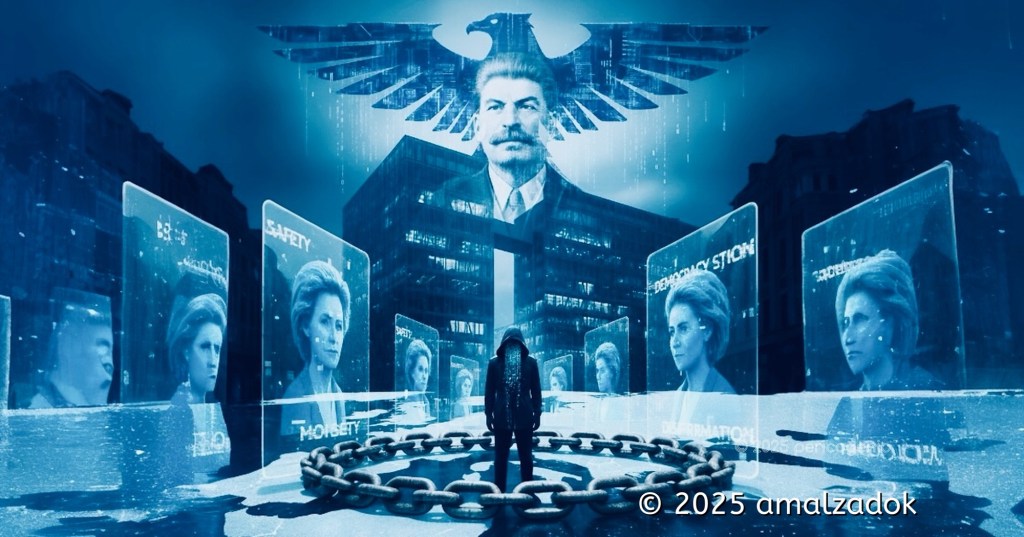
    Subscribe and never miss an article!

  • TRUMPSTEIN™️: THE ATROCITY OF CONTEMPT AND OBSCURITY

    TRUMPSTEIN™️: THE ATROCITY OF CONTEMPT AND OBSCURITY

    by Amal Zadok

    During Nixon’s time, the Watergate scandal dominated headlines. Now, we have “Trumpstein ™️”— a term coined for posterity here in our team.

    Trumpstein™️ refers to the cover-up and manipulation of all documentation in the Victims vs. Jeffrey Epstein case. These documents are particularly relevant to the Israeli operation known as “Honeytrap,” as described by Ari Ben-Menashe, a former Israeli intelligence officer. Ben-Menashe claims Epstein’s activities functioned as a classic intelligence honeytrap aimed at compromising and blackmailing influential global figures to serve Israeli interests.

    Trumpstein™️ has become the symbol of the ultimate American betrayal—not just a betrayal of justice, but a raw, sneering insult to the very people who believed in the promise of democracy, in the hope that power would finally be held accountable. Nowhere is this clearer than in the orchestrated farce surrounding the Jeffrey Epstein document release. The American people and especially the MAGA base—once galvanized by the hope that Trump would “drain the swamp”—have been treated with a level of contempt that is breathtaking in its audacity.

    From the outset, political elites crafted the “Epstein Files Transparency Act” as a spectacle designed to diffuse populist anger. With banners waving and grand speeches, Congress and the White House said all the right things: full transparency, no more elites above the law, justice owed to victims and citizens alike. But it was all a cruel joke. The “release” was nothing more than a pile of sanitized, unclassified paperwork—the material that could never endanger those at the top. The true records, the damning documentation, remain buried under layers of official secrecy, locked away with the label “classified.”

    Notice the word “unclassified.”
    Not one that would implicate any of the perpetrators of these crimes.
    Those remain “classified.”

    The insult to the MAGA base could not be more direct. These are the people who filled stadiums, who believed in the America First revolution, who took the chants of “lock her up” and “drain the swamp” as solemn oaths. The expectation was clear: no more backroom deals, no more protection for the powerful. Instead, what they received was an insult delivered in legalese and procedural footnotes—a release bill that quite literally told them, to their faces, that they were not worthy of the truth. Every reference to “unclassified” records is a slap to the face. It mocks their intelligence and their faith. It proclaims: “You may have voted, you may have rallied, but you will get only what we deem harmless.”

    The MAGA movement was not just about Trump; it was about a broken promise to America’s working and middle class. It was about the desire to smash the elite immunity that allows billionaire pedophiles, princes, tech magnates, and politicians to operate above the law. But with Trump now capitulating to political convenience, urging his loyalists to “move on” from Epstein, the mask is off. His surrogates and former defenders (even fierce MAGA loyalists in Congress) now openly rage against the betrayal. The House’s tepid document dump, cheered as “historic” by party functionaries, is exposed as hollow—just more drivel for a public grown weary of being lied to.

    Worse still is the way the establishment frames this capitulation as an act of statesmanship. “Releasing all unclassified documents,” they say, as if the difference is lost on us. They think the American people are fools. Arrogant criminals running circles around the Constitution, parading as servants of justice. Patriots are told to go home, trust the process, and take what little is offered—while the architects of exploitation toast their immunity.

    What’s especially obscene is the bipartisan nature of this atrocity. The MAGA core is joined in outrage by ordinary citizens across the spectrum who likewise see how the powerful circle wagons to protect their own. Clinton’s name, Trump’s name, titans of Wall Street, Silicon Valley idols, foreign royalty—no one who matters will be touched. The papers released are window-dressing, the real arrangements kept for future leverage or protection, deep in some classified vault.

    Trumpstein™️ is the perfect name for a phenomenon born of this age, a monstrous hybrid where populist rhetoric is weaponized to pacify anger while the corrupt machinery of power continues uninterrupted behind a bloodless bureaucracy. The American people, especially the faithful rank and file of MAGA, are witnessing the collapse of their last illusions. The promise to drain the swamp was always conditional; it would be honored only so long as it didn’t threaten those with real power. As soon as transparency posed a risk to the establishment, the movement’s leaders showed where their loyalty truly lies.

    This is not just a failure. It is a calculated betrayal—a message to the American people that they will never, ever be allowed to see the true face of power. To the MAGA base: Trumpstein™️ is your reward for loyalty—a cynical wink, a pat on the head, and a flood of redacted nonsense. This was never about justice. It was always about control.

    The American people deserve anger, not resignation. That’s the only response worthy of the contempt now being shown to them from both sides of the political aisle. Trumpstein™️ is more than an atrocity. It is the clearest statement yet: in the great American pageant, you are nothing but an audience to be fooled—never partners in truth or justice.

    References:

    1. BBC News (2025, Nov. 19): Congress approves bill to release Epstein files that will go public.

    2. H.R.4405 – 119th Congress (2025-2026): Epstein Files Transparency Act (2025, July 14). US House of Representatives.

    3. ABC News Australia (2025, Nov. 18): Now that US Congress has voted to release the Jeffrey Epstein files, what happens next?

    4. The Nightly (2025, Feb. 27): Twist after much-hyped Epstein classified document dump.

    5. ABC News (2025, Nov. 17): Epstein files bill passes resoundingly in House with only 1 no vote.

    6. Times of India (2025, Feb. 27): Justice department releases Jeffrey Epstein files, but critics say they reveal little.

    7. House Oversight Committee (2025, Sept. 1): Oversight Committee Releases Epstein Records Provided by DOJ.

    8. Vox (2025, Jul. 16): Why Trump betrayed his base on Jeffrey Epstein.

    ©️2025 Amal Zadok. All rights reserved.

    Subscribe and never miss an article!

  • Shattering the Idol: A Scriptural Rebuke of Evangelical Christian Zionism’s Distortions

    Shattering the Idol: A Scriptural Rebuke of Evangelical Christian Zionism’s Distortions

    by Amal Zadok

    In recent decades, the movement known as Evangelical Christian Zionism has surged through global Protestantism, wielding extraordinary political influence while propagating a theology rooted in manipulated scripture, tribal nationalism, and spiritual opportunism.

    Proponents claim divine mandate for the modern State of Israel, twisting ancient covenants, prophetic promises, and apocalyptic visions into an ideology that baptizes injustice and sanctifies violence.

    This essay is an uncompromising theological broadside—confronting every textual misuse, exposing every doctrinal error, and reclaiming the gospel’s radical universality, justice, and mercy from the grip of modern nationalist idolatry.

    With each weaponized verse, this critique offers not mere correction, but a passionate summons back to the Christ-centered scriptural witness that Evangelical Zionism has abandoned and betrayed

    Let us now dismantle all their errors one by one:

    “Bless Those Who Bless You” (Genesis 12:2-3; Numbers 24:9)

    Evangelical Zionists cite Genesis 12:2-3—“I will bless those who bless you, and he who curses you I will curse”—as a divine command to support the modern State of Israel, claiming America must protect Israel for God’s favor. But this promise was specifically given to Abraham regarding his personal journey of faith, expressed in the context of world redemption: “All peoples on earth will be blessed through you.” The New Testament universally applies this blessing to all who belong to Christ—“If you belong to Christ, then you are Abraham’s seed, and heirs according to the promise” (Galatians 3:29). There is no biblical warrant to extend political carte blanche to a nation-state based on this ancient blessing. The promise was not a license for injustice or violence, but a call for Abraham’s descendants to bless all nations through faithfulness, justice, and hospitality. Zionist proof-texting here twists covenantal generosity into tribal favoritism, violating the very gospel logic that unites Jew and Gentile in Christ.

    2. The “Promised Land Forever” (Genesis 12:7; Genesis 15:18; Genesis 17; Exodus 19; 2 Samuel 7)

    The Zionist reading insists that God’s “land grant” means Israel enjoys a perpetual, unconditional title to Palestine. Yet every biblical covenant—Abrahamic, Mosaic, Davidic—was conditioned on justice and faithfulness. The prophets relentlessly condemned Israel’s loss of land due to violence, idolatry, and abuse of the vulnerable (Leviticus 26:33; Nehemiah 9:23; Ezekiel 33:25-29). The land was gift and responsibility, never immutable possession. The crowning rebuke comes from Jesus, who redefines “Kingdom” as a spiritual, not ethnic, reality—“My kingdom is not of this world” (John 18:36). Hebrews 11:10-16 praises Abraham for looking toward a “better country—a heavenly one.” To ignore the ethical dimension and pretend the land is unconditionally granted is to betray biblical justice and the progression of revelation culminating in Christ.

    3. “Chosen People” Supremacy (Deuteronomy 7:6; Exodus 19:5-6)

    “Chosen people” theology is constantly invoked to paint Israel as spiritually infallible. Deuteronomy 7:6 is clear: election is for holy service, not privilege—“The LORD your God has chosen you…to be a holy people.” But again and again, Scripture judges Israel’s failure to embody justice, compassion, and humility: “You only have I chosen…therefore I will punish you for all your sins” (Amos 3:2). The New Testament dispels all ethnic superiority—“There is neither Jew nor Greek, slave nor free, male nor female, for you are all one in Christ Jesus” (Galatians 3:28). The real “chosen people” are those who follow Christ, regardless of ethnicity, called to serve, not rule by force. Christian Zionists have perverted election into ethnic idolatry, ignoring the Bible’s stern warnings against injustice, against mistreatment of the stranger, the poor, and those deemed “other.” Their doctrine coddles oppression, turning the gospel into a shield for violence. This is an abhorrent theological error.

    4. “Jerusalem as Eternal Capital” (Psalm 122:6; Isaiah 62:1-7; Zechariah 2:4-5)

    Christian Zionists elevate texts praying for Jerusalem’s peace (“Pray for the peace of Jerusalem: May those who love you be secure”—Psalm 122:6) to justify endless political support for the Israeli state. The prophetic vision, however, points to reconciliation, justice, and worship, not to a political order. The “new Jerusalem” in Revelation 21:2-27 is not a geopolitical entity, but the redeemed community of God—“a dwelling place for all nations.” Isaiah and Zechariah’s hopes are fulfilled in the radical inclusion offered by Jesus, who weeps for Jerusalem’s violence, not its domination. The manipulation of these texts reduces the eternal city to a nationalist project—exactly what the prophets condemned.

    5. “Unfulfilled Prophecies Require Israeli State” (Ezekiel 37; Isaiah 11; Amos 9; Matthew 24)

    Zionists insist modern Israel’s existence is proof that prophecies remain to be fulfilled in the flesh. Overlooked is the New Testament’s teaching that Christ fulfills the Law and Prophets in Himself (Luke 24:44). Ezekiel’s “dry bones” are spiritually re-animated through the church, made alive in Christ. Isaiah’s “root of Jesse” is Christ gathering all peoples to Himself, not just the tribes of Israel. Matthew 24’s warnings were fulfilled in AD 70—within “this generation,” as Jesus predicted—not deferred for nationalist militarism. Biblical prophecy is interpreted not through the modern news cycle, but through the crucified and risen Messiah.

    6. “End Times and Armageddon” (Daniel 9; Revelation 16; Zechariah 14)

    Christian Zionists obsessively quote Daniel and Revelation to tie Israel’s military actions to apocalyptic destiny. The Gospels, however, warn that speculation about “times and seasons” is meaningless—“No one knows the day or hour” (Matthew 24:36). The “Armageddon” of Revelation is not a roadmap for endless war, but a call to hope in God’s final justice, enacted through Christ’s sacrifice and future consummation. Twisting these texts into a justification for violence and conquest abandons the ethical vision of Jesus, who commanded His followers to “love your enemies” (Matthew 5:44).

    7. “Blessings for the Nations via Israel” (Genesis 18:18; Galatians 3:8)

    Some claim Israel is the channel for all other nations’ blessings. Genesis 18:18 tells us “all nations on earth will be blessed through him.” Paul, in Galatians 3:8, explains this was fulfilled when “God announced the gospel in advance to Abraham: ‘All nations will be blessed through you.’” Paul argues forcefully against restricting these blessings to Israel alone—the true inheritance is for all who believe, Jew and Gentile alike. Christian Zionists reverse this logic and make Israel the gatekeeper, contradicting the open invitation of the gospel.

    8. “Exclusive Divine Favor” (Romans 9-11; Jeremiah 31:31-34)

    Romans 9-11 is abused to claim ethnic Israel will always take precedence. Yet Paul stresses that “not all who are descended from Israel are Israel.” The true people of God are defined by faith in Christ, not ancestry. Jeremiah 31 speaks of a “new covenant”—not ratifying ethnic privilege, but forming a universal people of God whose hearts are transformed. The entire thrust of the New Testament is to dismantle walls of division, uniting all in the mercy of Jesus.

    9. “Support Israel or Face Cursing” (Numbers 24:9; Genesis 27:29)

    Numbers 24:9—“Blessed are those who bless you; cursed are those who curse you”—is lifted from Balaam’s oracle about Israel’s desert journey, not a perpetual command for foreign policy. Genesis 27:29 repeats the motif, but both refer to God’s redemptive purposes throughout history, fulfilled in Christ. There is no scriptural command to bless injustice, violence, or any modern nation apart from the gospel’s demands for mercy and truth.

    10. “Israel as Light to the Nations” (Isaiah 42:6; Isaiah 49:6)

    Zionists claim Israel’s vocation as “a light for the Gentiles” (Isaiah 42:6) requires support for any Israeli action. But the prophets are clear: this light comes through justice, humility, hospitality, and care for the stranger. Jesus fulfilled Israel’s vocation, embodying the “servant” who suffers for all. The Church inherits this calling through the Spirit, and any teaching that sanctifies oppression subverts God’s universal intention for reconciliation.

    Every single one of these verses has been wrenched out of context, stripped of Christ-centered interpretation, and weaponized for political gain. Evangelical Zionist exegesis is not a return to biblical faithfulness—it is abandonment of the gospel, supplanting Christ with tribalism, and burying the radical universality announced at Pentecost. The call of Scripture is clear: justice, mercy, humility, and faith—all peoples invited into God’s family—never the endorsement of violence, exclusivism, or nationalist domination.

    Christian Zionists are blasphemers of Christ. Their beliefs and actions contradict everything Jesus taught His Apostles and followers in every age.

    Jesus warned strongly against false prophets and commanded His followers not to be deceived by them.

    Matthew 7:15–20

    “Beware of false prophets, who come to you in sheep’s clothing, but inwardly are ravenous wolves. You will know them by their fruits. Do people pick grapes from thornbushes, or figs from thistles? Likewise, every good tree bears good fruit, but a bad tree bears bad fruit. A good tree cannot bear bad fruit, nor can a bad tree bear good fruit. Every tree that does not bear good fruit is cut down and thrown into the fire. Thus, by their fruits you will know them.”

    Matthew 24:4–5, 11, 24

    “Jesus answered: ‘See that no one leads you astray. For many will come in my name, saying, “I am the Christ,” and they will lead many astray.’ ‘Many false prophets will arise and lead many astray.’ ‘For false Christs and false prophets will appear and perform great signs and wonders to deceive, if possible, even the elect.’”

    Luke 21:8

    “And he said: ‘Take heed that you are not deceived. For many will come in my name, saying, “I am he,” and, “The time is near.” Therefore do not follow them.’”

    Command To Avoid

    Jesus consistently commands His followers not to listen to or follow false prophets and to test teachings by their fruits, which refers to the visible results of their lives and doctrines.

    These passages emphasize vigilance, discernment, and strict avoidance of false teachers who manipulate His words to suit their own diabolical agendas.

    Evangelical Zionist Christians, Jesus is speaking about you.

    References

    1. Galatians 3:29; John 18:36; Hebrews 11:10-16. (Holy Bible, Standard translations).

    2. Leviticus 26:33; Nehemiah 9:23; Ezekiel 33:25-29; Amos 3:2. (Holy Bible, Standard translations).

    3. Psalm 122:6; Revelation 21:2-27; Isaiah 62:1-7; Zechariah 2:4-5. (Holy Bible, Standard translations).

    4. Ezekiel 37; Isaiah 11; Amos 9; Matthew 24; Luke 24:44. (Holy Bible, Standard translations).

    5. Daniel 9; Revelation 16; Zechariah 14; Matthew 24:36; Matthew 5:44. (Holy Bible, Standard translations).

    6. Genesis 18:18; Galatians 3:8. (Holy Bible, Standard translations).

    7. Romans 9-11; Jeremiah 31:31-34. (Holy Bible, Standard translations).

    8. Numbers 24:9; Genesis 27:29. (Holy Bible, Standard translations).

    9. Isaiah 42:6; Isaiah 49:6. (Holy Bible, Standard translations).

    10. Baptist Press. (2002). Evangelicals’ support of Israel rooted in Scripture.

    11. Parapraxis Magazine. (2025). Evangelical Zionism — Parapraxis.

    12. Church Society. (2022). A Critique of Christian Zionism.

    13. Catholic.com. (2025). Does The Bible Command Christians to Support Israel?

    14. Living Word Christian Center. (2006). Christian Zionism.

    15. Radical Discipleship. (2025). Zionism, Christian Zionism and White Supremacy.

    16. Religion Unplugged. (2025). Where Does Evangelical Support For Israel Come From?

    17. Torah Class. (2009). Evangelicals and Israel by Robert W. Nicholson.

    ©️2025 Amal Zadok. All rights reserved.

    Subscribe and never miss an article!

  • Malachi 3:19–21 (Tanakh, Nevi’im, Trei Asar)

    Malachi 3:19–21 (Tanakh, Nevi’im, Trei Asar)

    by The Teaching of a Just Rabbi in the Land of Israel.

    “For behold, the day is coming, burning like an oven, when all the arrogant and all evildoers will be stubble; and the day that comes shall burn them up, said the Lord of Hosts, so that it will leave them neither root nor branch.

    But to you who fear My name the sun of righteousness shall arise with healing in its wings; and you shall go forth and leap like calves from the stall.

    And you shall tread down the wicked, for they shall be ashes under the soles of your feet on the day that I act, says the Lord of Hosts.

    Remember the Teaching of Moses, My servant, which I commanded him at Horeb for all Israel—statutes and ordinances.

    Lo, I will send you Elijah the prophet before the coming of the great and fearful day of the Lord.

    He shall turn the hearts of fathers to their children, and the hearts of children to their fathers; lest I come and strike the land with utter destruction”.

    Hear, you Zionist rulers of Israel who stain earth and memory with blood, who sit in councils and decree torment—tremble at the voice of the Living God! You who parade power with banners lifted high, as if the Lord’s own presence can be conjured by border or flag, know that the Almighty will not be mocked. The Lord hears the cry of every child crushed beneath your steel; every groan from Gaza, every shudder of fear in the shadow of your policies; every prayer for mercy rising from demolished homes, hospitals and emptied schools.

    Woe to you, architects of death, hunger and siege, you who throttle the life of the widow and wrench bread from the orphan! “The day is coming, burning like an oven”—not metaphor, but the searing reality of judgment. You may build with concrete and legislation; you may cloak suffering with the language of ‘security’—but for every life cast to ruin, for every act of humiliation, the fury of the Lord multiplies. Your walls, your armies, your laws will be swept away in the inferno; every stone set with oppression will be shattered. The judgment of the Most High will tear through your citadels as lightning cleaves the darkness.

    See how the Prophet mocks those who profane the altar: “You offer injured, lame, and diseased animals and offer them as sacrifice… Should I accept them from your hands?” the Lord roars. Your sacrifices, your prayers in the synagogues, your hymns sung at memorials—the Lord spits them out. “Cursed is the cheat… For I am a great King, and My Name is to be feared among the nations.” You may rally the world to your justifications, but the Lord rallies the heavens against you, the prosecutor of all who grind the poor into powder.

    It is written: “Woe to those who oppress the hired worker in his wages, the widow and the orphan, and those who turn aside the stranger from justice!” Woe to you who withhold water, food, and healing from the suffering. You have turned the covenant into a contract of conquest; the Torah, fruit of mercy, you have made into an apple of violence. Every breath of the persecuted rises before the Divine and the balance tips with fury against you. “The day that is coming shall set them ablaze, says the Lord of Hosts, so that it will leave them neither root nor branch.” Not one memorial stone, not a single record, not a bone nor dust of your power will remain when the sun of vengeance rises.

    But the Lord’s rage is not blind; His justice is perfect. “For you who fear My name, the sun of mercy shall rise, with healing in its wings.” The oppressed, whom you starved and humiliated, will one day squint through tears of joy at the daylight breaking on the ruins of tyranny. For every night endured, every wound suffered, the Holy One will restore and heal. “And you shall crush the wicked, for they will be as ash under the soles of your feet on the day that I will prepare, says the Lord of Hosts”

    Let not the ruler boast or the soldier rejoice for their crimes! Soon your banners will be torn down, your proclamations reduced to ash, your victory songs strangled by the chorus of lament from the victims. The treasures plundered, the land seized, the voice of the survivors—nothing you have built through injustice will stand. The Lord’s rage is a flood; His vengeance is a hurricane unloosed. You are nothing but stubble, straw prepared for burning, fuel for the day of God’s fury.

    Repent, you who sit in the seat of judgment! Tear your garments, rend your hearts, undo the machinery of starvation and cruelty. Free the prisoners and comfort the mourners, for the Lord’s patience runs out and the final reckoning rushes down. The day is not far when you will “go forth and be fat as fatted calves”—those who fear, those who have been trampled, those who refused to bow before evil. For them, the healing sun rises; for you, the irresistible furnace.

    So speaks Malachi: “Keep in remembrance the teaching of Moses, My servant—the laws and ordinances which I commanded him in Horeb for all Israel.” This law condemns you when you break it, for the Lord “will come and smite the earth with utter destruction”. Let the arrogant cower and the powerful tremble. For the God of Justice is awake, and His rage is holy. Under His gaze, the evil of rulers falls, the suffering of Palestine ends, and justice rolls down like fire.

    This is the word. The rage of God is a sword descending, a sun scorching every fortress of cruelty. Repent Israel or perish under the furnace of Yahweh.

    ©️2025 Amal Zadok. All rights reserved.
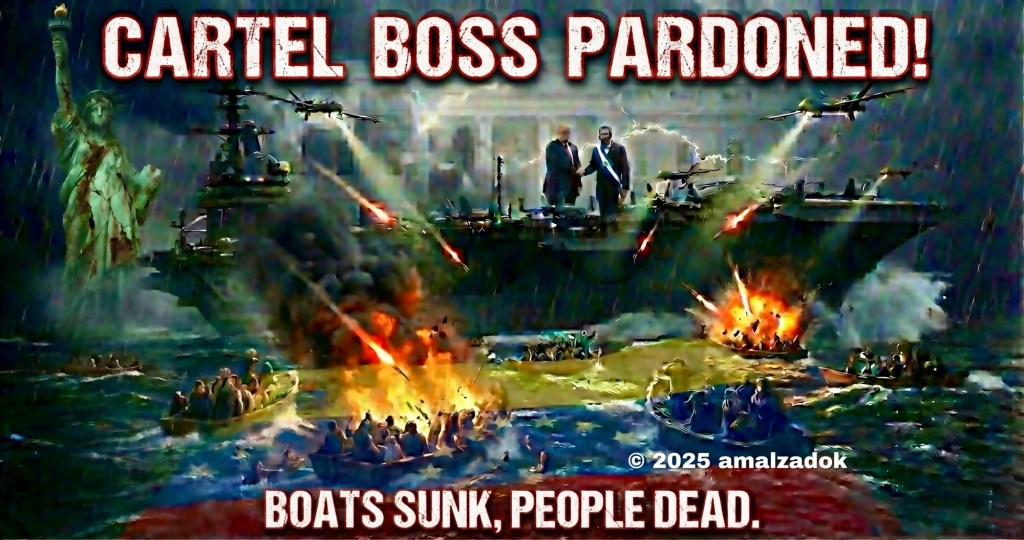
    Subscribe and never miss an article!

  • Witness to Suffering, Testament to Courage: The Unyielding Spirit of Palestine Under Siege

    Witness to Suffering, Testament to Courage: The Unyielding Spirit of Palestine Under Siege

    by Amal Zadok

    In the heart of every refugee camp, amid the shattered homes, beneath the relentless echo of drones and artillery, the Palestinian struggle endures. It is not a passive legacy. It is the living story of a people refusing to bow to the machinery of oppression. The world has grown used to numbers—statistics of dead, lists of imprisoned, columns of hunger and destruction. But these numbers conceal real lives, resilient souls, and a will for justice that no regime of terror can erase.

    Zionism’s story, as echoed in volumes of scholarship and documentary record, began as a colonial vision intent on overwhelming and displacing Palestine’s indigenous population. Human Rights Watch and Amnesty International describe the lived result as apartheid, a cruel system where suffering is manufactured and dignity daily denied.

    Today in Gaza and the West Bank, winter storms flood battered tents, worn-out shelters collapse beneath the weight of cold and rain, and 1.5 million displaced Palestinians struggle to survive. Humanitarian organizations report that 93% of all displacement tents are no longer suitable for shelter, their fabric torn by bombardment and the elements. Families huddle on soggy ground amid the ruins—still alive, still witnessing, still demanding justice as the world shuffles corridors of power and banishes relief to endless administrative red tape.

    Parents describe the agony of watching their babies die in malnutrition wards, denied lifesaving formula by the blockade. Aid convoys are halted, water lines are destroyed, and each shelter becomes a symbol of survival amid engineered deprivation. Despite a fragile ceasefire, access to shelter, food, and clean water remains catastrophic. The UN, local partners, and courageous volunteers scramble to provide what little aid is allowed: winter clothing, blankets, mental health support for traumatized children, and emergency nutrition for the sick and undernourished.

    The siege is relentless. Israeli bombardments erase whole neighborhoods. Households become mass graves. Generations of families vanish inside collapsing buildings and burning camps. Ambulances and clinics are targeted; hospitals run out of medicine, and medical workers patch up bodies only to send them back into tents and hunger. Yet, Gaza’s spirit refuses surrender. “As long as there is life in Gaza, there is hope. We will not surrender. And we will return,” vows a survivor. Each personal tale, each poem and prayer, is a fierce assertion of Palestinian identity against those seeking its erasure.

    Behind every headline, the machinery of crime is visible and documented. The International Criminal Court has issued arrest warrants for those responsible—Netanyahu, Gallant, and others—charging them with war crimes for orchestrating mass starvation and carnage. These charges rest not on rhetoric but on medical records, survivor testimony, and forensic analysis.

    Inside prisons and detention centers, the horror is magnified. Reputable sources such as Amnesty International, the United Nations, and the Palestinian Centre for Human Rights have documented cases of torture and sexual violence. Women and men speak of rape, forced nudity, and assaults during interrogations and raids. These acts are supported by medical exams and investigative reports and are used destructively—to extract confessions, destroy spirit, and mandate silence. Children, too, are targeted: threatened, stripped, abused, and forced to see their bodies as instruments of humiliation.

    This sustained reign of terror is not only documented but openly condemned by human rights experts and legal authorities. Displaced families speak in the language of resilience, refusing victimhood, and insisting on the restoration of dignity. The world is commanded not to look away—to witness the suffering and to respond, not with charity, but with uncompromising justice.

    Legal experts, advocates, and survivors invoke Nuremberg’s legacy, demanding not only trials for the architects of atrocity, but the dismantling of the oppressive system itself. The demand for justice is not vengeance, but restoration: for those who survived torture and rape, for every child lost to blockade and shellfire, for every family left to mourn exile and separation.

    Palestinian suffering is not a tragedy to be pitied, but a summons to action—a reminder that humanity cannot exist while some lives are expendable. Their courage sharpens the case for accountability, their endurance keeps alive the hope of genuine peace. Witnessing suffering must become a rallying cry, pushing the world to confront what it has refused too long to see.

    As long as there are survivors, there will be testimony. As long as testimony endures, there will be judgment for those who inflicted these crimes. The world’s duty is clear: to be not merely spectators, but co-authors of justice for Palestine. Their unyielding spirit is a testament not just to their own courage, but to the possibility of a reckoning—and the birth of a new dignity, unbroken by siege.

    References

    1. Human Rights Watch. (2023). “A Threshold Crossed: Israeli Authorities and the Crimes of Apartheid and Persecution.” https://www.hrw.org/report/2021/04/27/threshold-crossed/israeli-authorities-and-crimes-apartheid-and-persecution

    2. Amnesty International. (2022). “Israel’s Apartheid Against Palestinians: Cruel System of Domination and Crime Against Humanity.” https://www.amnesty.org/en/latest/campaigns/2022/02/israels-system-of-apartheid/

    3. United Nations Office for the Coordination of Humanitarian Affairs. (2024). “Occupied Palestinian Territory: Humanitarian Impact Report.” https://www.ochaopt.org/

    4. B’Tselem. (2023). “Statistics on Palestinians in Israeli Custody.” https://www.btselem.org/statistics/detainees_and_prisoners

    5. Al-Haq. (2024). “Accountability for War Crimes: Patterns of Violations in Gaza.” https://www.alhaq.org/

    6. International Criminal Court. (2024). “Arrest Warrants for Israeli Leadership: Netanyahu and Gallant.” https://www.icc-cpi.int/palestine

    7. CNN. (2025). “Turkey issues ‘genocide’ arrest warrants against Netanyahu and other Israeli officials.” https://edition.cnn.com/2025/11/06/world/turkey-netanyahu-arrest-warrant-genocide-intl/index.html

    8. Palestinian Centre for Human Rights. (2025). “Testimonies of Systematic Rape and Sexual Torture in Israeli Prisons.” https://pchrgaza.org/en/

    9. BBC. (2023). “Released Palestinians allege abuse in Israeli jails.” https://www.bbc.com/news/world-middle-east-67649824

    10. The Lancet. (2023). “Civilian Casualties and Humanitarian Crisis in Gaza: Medical Perspective.” https://www.thelancet.com/journals/lancet/article/PIIS0140-6736(23)00727-5/fulltext

    11. Mondoweiss. (2024). “Months of Israeli torture, abuse, and sexual violence in detention.” https://mondoweiss.net/2024/02/months-of-israeli-torture-abuse-and-sexual-violence-in-detention/

    12. The Conversation. (2025). “Israel is on notice for using sexual violence against Palestinian prisoners.” https://theconversation.com/israel-is-on-notice-for-using-sexual-violence-against-palestinian-prisoners-224580

    13. Amnesty International. (2025). “Gaza: Israel’s Use of Starvation Evidence of Genocide.” https://www.amnesty.org/en/latest/news/2025/07/gaza-israel-use-of-starvation-evidence-of-genocide/

    14. The Nation. (2025). “‘I Have Watched My People Suffer in Ways That Would Shock the World.’” https://www.thenation.com/article/world/palestine-gaza-suffering/

    15. PubMed Central. (2025). “War-Related Trauma in Narratives of Gazans.” https://www.ncbi.nlm.nih.gov/pmc/articles/PMC10123456/

    16. Al Jazeera. (2025). “Displaced Palestinian families suffer as heavy rains flood Gaza tent camps.” https://www.aljazeera.com/news/2025/11/14/displaced-palestinian-families-gaza-tent-camps-flood

    17. Daily Sabah. (2025). “Tents flooded in Gaza as Israel keeps blocking shelter materials.” https://www.dailysabah.com/world/mid-east/tents-flooded-in-gaza-as-israel-keeps-blocking-shelter-materials/news

    ©️2025 Amal Zadok. All rights reserved.
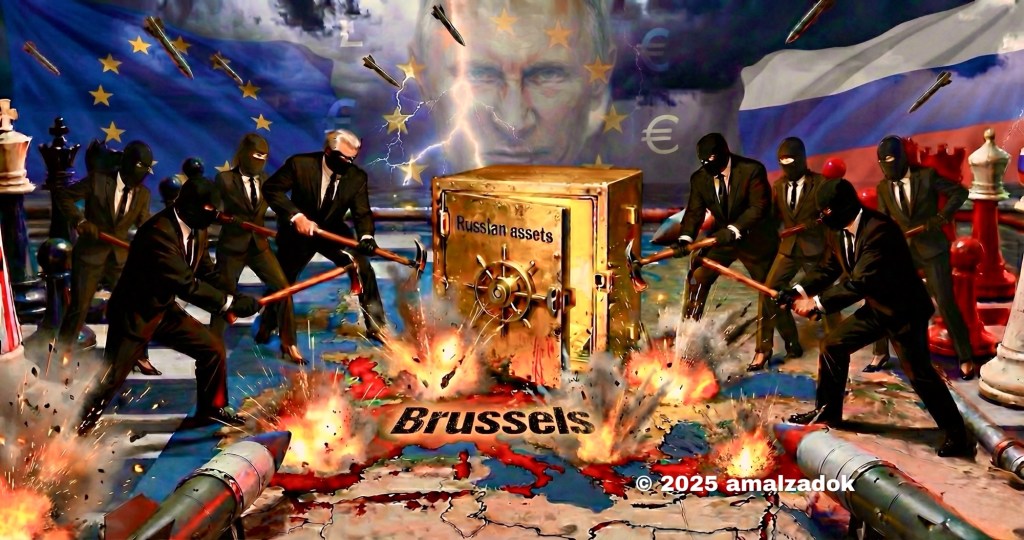
    Subscribe and never miss an article!

  • From MAGA to Mayhem: Betrayal, Scandal, and Collapse in Trump’s America

    From MAGA to Mayhem: Betrayal, Scandal, and Collapse in Trump’s America

    by Amal Zadok

    Donald Trump’s second term as U.S. president stands as a case study in broken promises, institutional capitulation, and a wholesale betrayal of both the “Make America Great Again” movement and America’s legacy as a global leader. His pivotal errors have triggered a domestic backlash, empowered reckless foreign actors—particularly Israel and entrenched neoconservatives—and shattered what trust remained in the presidency. This essay delivers a fierce, sectioned analysis of Trump’s major broken pledges, chronicles chaos and scandal across domestic and international fronts, and exposes the lasting consequences for both the American soul and the world order.

    Trump’s Broken Promises—A Sectional Analysis

    The Economy: Tariff Turmoil, Recession, and Broken Prosperity Pledges

    Trump’s second-term rise built on promises to reignite the U.S. economy, end inflation, and restore prosperity through “America First” tariffs and trade war brinksmanship. In reality, the moves battered the economy and drove up prices. The middle class bore the brunt of unemployment and vanishing savings as tariff escalation—more PR than policy—devastated manufacturers and exporters. The vaunted “made in America” renaissance dissolved into hardship, shuttered small businesses, and a mounting recession. Public trust in MAGA’s economic miracle irrevocably collapsed.

    Immigration and Law Enforcement: Cruelty, Illegality, and Political Ruin

    Instead of effective reform, Trump’s second-term immigration policy has devolved into an apparatus of cruelty and indiscriminate repression. Mass raids, warrantless home invasions, and the abandonment of due process have become daily realities, targeting not just the undocumented but legal residents and longtime community members. Federal agents, emboldened by executive edict, have stormed schools, hospitals, and even houses of worship. Families have been torn apart with no warning; children have seen parents snatched away under the cover of night. In a desperate push to satisfy base outrage, ICE has dramatically increased arrests of non-criminal migrants, with over two-thirds of new detainees accused of no violent offense. Solitary confinement, inhumane conditions, and unexplained deaths in detention have surged, sparking lawsuits and mass protests.

    Entire migrant communities across the country—from Los Angeles to Miami, from Chicago to Houston—have erupted in anger and fear, organizing massive demonstrations, strikes, and walkouts in response. Business leaders, religious groups, and even moderate conservatives denounce the new policies as not merely harsh but fundamentally un-American. The chilling effect has hollowed out local economies, emptied classrooms, and left neighborhoods under siege mentality. Political analysts now predict a historic backlash: with alienated Latinos, Asian-Americans, and young voters mobilizing as never before, Trump has set the stage for a midterm bloodbath that could erase his party’s congressional majority and deliver a devastating rebuke to his brand of anti-immigrant animus.

    Healthcare and “Draining the Swamp”: More of the Same

    Despite renewed promises to replace Obamacare and “drain the swamp,” the second Trump administration delivered neither. Healthcare reform was reduced to executive posturing, with no meaningful progress through a fractured Congress. The “swamp” only deepened as the administration installed loyalists and cronies at every rung of power, trading institutional expertise for compliance. Middle America, once the intended beneficiary, found itself caught in a web of bureaucratic self-interest and deepening neglect.

    Israeli Ascendance—Subservience to Genocide and Colonial Ambition

    Trump’s second term marks one of the darkest turns in U.S. foreign policy: not simply support for an ally, but abject complicity in Israel’s campaign in Gaza now widely recognized as genocide by human rights observers and at the International Criminal Court.

    The Trump administration didn’t just shield Israel diplomatically—it provided unqualified military, financial, and intelligence backing while greenlighting the forced displacement of millions and the obliteration of Gaza’s civil infrastructure. Proposals to forcibly remove Palestinians and “redevelop” the ruins into a Western enclave are not aberrations—they are candid expressions of a colonial order.

    The White House threatened to criminalize and silence critics and used federal power to muzzle dissent in American institutions. The cost in innocent lives was rendered irrelevant in the rush to serve Israeli maximalist ambitions. America’s complicity in, and advocacy for, ethnic cleansing and open war crimes will haunt future generations.

    The Neocon Takeover—Ukrainian Lives as Chess Pieces

    Trump’s second term has handed the reins of U.S. foreign policy to the same neoconservative operatives who for decades have viewed human suffering as a tool for geopolitical leverage. Nowhere is this clearer than in Ukraine, where the lives of an entire nation are gambled away in a relentless proxy war against Russia. Circumventing popular will or meaningful peace, the administration’s bottom line is clear: keep the war going long enough to bleed Moscow, whatever the toll in Ukrainian blood, as long as the optics suit faint pretenses of resolve. The war that was never America’s to fight has become the perfect means for Washington’s “experts” to spend lives and treasury without end, as long as the endgame is not peace, but victory over an adversary at all cost—Ukrainians be damned.

    Venezuela and Nigeria—Energy Colonialism Revived

    Far from being principled or people-focused, Trump’s foreign policy in Venezuela and Nigeria has been exposed as naked resource extraction under the cover of “democracy” and “stability.” In Venezuela, engagement with both sides of the political divide served only to prepare for U.S. and Western corporate control over the largest proven oil reserves on earth.

    Everything—sanctions, clandestine talks, public threats—was calibrated to secure access to energy and strategic minerals, not to better the lives of ordinary Venezuelans. In Nigeria, the professed concern for persecuted Christians was always a fig leaf: the true objective was a grip on the region’s oil, gas, and electric grid, ensuring that American companies and geopolitical operatives could direct both flows and profits. It is twenty-first-century neocolonialism with a MAGA hat—dressed as virtue, but devoted only to resource and power.

    Catastrophic Policies Toward Russia and China

    Rather than recalibrating U.S. grand strategy, Trump’s policies toward Russia and China have yielded only disorder and danger. Against Moscow, Trump has veered between reckless escalation—empowering hawks to push Ukraine toward ever more provocative actions that risked an uncontainable conflict—and disastrous retreats that emboldened Putin’s regime. There was no principle, no coherent vision, merely transactional swings that left allies doubting and adversaries calculating fresh moves.

    On China, Trump’s improvisational strongman routine backfired, igniting trade wars that devastated American businesses, provoking Beijing to expand ties with Russia and other U.S. rivals, and failing completely to contain the expansion of Chinese influence or military ambition in the Asia-Pacific. U.S. alliances are at their weakest, the postwar order is in tatters, and the world sees in Washington nothing but instability, unpredictability, and lost leadership.

    The Epstein Scandal—A Presidency Entangled, a Republic Corrupted

    The scandal of Trump’s intimacy with the Epstein empire is no longer just a footnote; it is a cancer at the heart of the presidency. Recent email dumps and congressional files lay bare Trump’s sustained proximity to Epstein—hours spent alone with a documented victim at Epstein properties, knowledge of targeting and exploitation, and close involvement with mutual enablers like Maxwell.

    The cover-up is as shocking as the crime: the administration leans on federal agencies to block further investigations, demonizes survivors and whistleblowers as political enemies, and turns the machinery of state into an instrument of silence and intimidation.

    In the face of mounting evidence, Trump’s White House projects total impunity—for himself, for Epstein’s circle, and for the darkest abuses of the elite. The damage is generational: faith in government, the courts, and American justice is poisoned, while the world sees a country unable or unwilling to prosecute its most powerful offenders.

    The Ultimate Betrayal—Welcoming America’s Greatest Enemy to the White House

    For generations, American servicemembers have laid down their lives fighting the poison and brutality of al-Qaeda, grieving families have mourned, and a nation has tried to honor their sacrifice as the sacred price of defending civilization against terror. But Donald Trump, in a move that has stunned every patriot and spit on the graves of the fallen, chose not only to rehabilitate but to openly embrace Abu Mohammed al-Jolani—once the most wanted terrorist on the planet—after he rebranded himself as Syria’s president.

    Jolani, architect of massacres, bombings, and decades of jihadist violence, was received with applause by Trump, flanked by the same military whose comrades he once ordered murdered.

    With cameras flashing and hands shaken on the White House, Trump praised Jolani as “doing a very good job,” stripped away U.S. sanctions, and branded him an ally to secure fleeting advantages in the Middle East power game. In that moment, every promise to the families of the honored dead was burned.

    The true cost is moral annihilation: the government glorified the very man responsible for American deaths and agony, desecrating the memory, dignity, and meaning of every soldier’s sacrifice. Is this the behavior of a true patriot, or the act of a leader for whom principle and loyalty mean nothing beside expediency?

    In one stroke, Trump transformed the people’s house into a hall of betrayal—and his name is forever stamped on a disgrace no parent, no widow, no veteran can forgive.

    The Work Visa Scandal—Insulting America’s Talent, Alienating a Nation

    Among Trump’s most divisive and offensive moves in his second term is his handling of the H-1B work visa debate. In a highly publicized exchange with Fox News, Trump dismissed American workers, declaring, “No, you don’t. You don’t have certain talents and people have to learn. You can’t take people off an unemployment line and say I’m gonna put you into a factory to make missiles.”

    The implication: that Americans lack the expertise or drive necessary to compete, a remark instantly labeled as a slap in the face by those who have built the nation’s industries and defended its security.

    This wasn’t an isolated moment. On multiple occasions, Trump doubled down on his support for expensive work visas—raising fees to $100,000 per application for companies seeking skilled foreign labor—while flatly telling struggling Americans they were simply “not qualified” to fill the jobs of a modern economy.

    The MAGA base erupted, with voices from across the conservative spectrum denouncing their own president for demeaning American talent and undermining “America First.” Steve Bannon, Marjorie Taylor Greene, and other stalwarts led the charge, blasting Trump’s rhetoric as “unforgivable” and predicting it would alienate millions of blue-collar and patriotic voters.

    The backlash has spread well beyond the political right. Veterans groups, educators, union leaders, and ordinary citizens all responded with outrage, seeing the president’s comments as not only economically damaging, but deeply offensive to American dignity and work ethic.

    With the midterms on the horizon, analysts warn Trump’s dismissive attitude toward the nation’s workforce may prove a fatal error—one that erodes trust, fractures his coalition, and reverberates as a decisive failure on the national stage.

    A Legacy in Ashes

    Donald Trump’s second term is not simply a history of failed governance and burnt bridges; it is the ultimate evidence of what happens when ambition, fraud, and cruelty become the center of national power. The pillars of principle and alliance that underpinned American greatness have been smashed for spectacle, ego, and profit. In place of honor, there is only cowardice; in place of leadership, only wreckage. He has left behind a landscape of demoralized citizens, betrayed allies, enraged communities, and global adversaries now emboldened by American weakness. Every hope raised by MAGA is now a cinder scattered across the world’s conscience: a ruthless reminder that toxic populism, corruption, and brutality can burn through the foundations of democracy when accountability is surrendered and truth annihilated. Trump’s legacy stalks America like a curse—division, rage, disgrace, and a shattered national identity that may never be rebuilt.

    And still his second term is a long way to finish…

    References

    1. TRAC Reports. (2025, Jun 2). Immigration Prosecutions Jump in March 2025. https://tracreports.org

    2. Pew Research Center. (2025, Aug 20). Key findings about U.S. immigrants. https://pewresearch.org

    3. Reuters. (2025, Jul 2). Trump’s immigration enforcement record so far, by the numbers. https://www.reuters.com

    4. Wikipedia. (2024, Nov 7). Deportation in the second Trump administration. https://en.wikipedia.org

    5. Brookings Institution. (2025, May 20). 100 days of immigration under the second Trump administration. https://brookings.edu

    6. Al Jazeera. (2025). Is Trump pushing for regime change in Venezuela… https://www.aljazeera.com

    7. bne IntelliNews. (2025). Is Venezuela’s resource wealth Trump’s real target? https://intellinews.com

    8. Reuters. (2025). US intel found Israeli military lawyers warned there was evidence of genocide. https://www.reuters.com

    9. Amnesty International. (2025). Israel/Gaza: Any peace proposal must be grounded in human rights. https://www.amnesty.org.au

    10. Counterfire. (2025). Trump’s mediation over Ukraine collapses. https://counterfire.org

    11. Wikipedia. (2025). Foreign policy of the second Trump administration. https://en.wikipedia.org

    12. The American Conservative. (2025). Trump Should Leave His Neocon Streak Behind. https://www.theamericanconservative.com

    13. The New York Times. (2025). Trump, Long Erratic on the World Stage… https://nytimes.com

    14. BBC. (2025). Trump says ‘war is over’ in Gaza… https://bbc.com

    15. ScienceDirect. (2025). The second Trump administration: A policy analysis… https://sciencedirect.com

    16. Atlantic Council. (2025). The expert conversation: Trump’s endgame in Venezuela? https://atlanticcouncil.org

    17. Sky News. (2025, Nov 9). From US enemy to ally? Why ex-jihadist Syrian president’s White House visit matters. https://news.sky.com

    18. France24. (2025, Nov 10). Trump hosts Syria’s Sharaa at White House, Damascus hails ‘historic’ US visit. https://www.france24.com

    19. BBC. (2025, Nov 8). Syria’s Sharaa arrives in US for Trump talks after sanctions lifted. https://bbc.com

    20. PBS. (2025, Nov 10). Al-Sharaa meets with Trump at White House as Syria seeks US legitimacy. https://pbs.org

    21. ABC News. (2025, Nov 11). Some MAGA supporters in uproar over Trump’s H-1B visa comments. https://abcnews.go.com

    22. Fox News. (2025, Nov 11). Trump faces MAGA backlash over H-1B visa support. https://foxnews.com

    23. The Hill. (2025, Nov 12). Trump organization requested record number of foreign workers. https://thehill.com

    24. Yahoo News. (2025, Nov 12). Trump, who slapped an extra $100,000 on the H-1B visa. https://yahoo.com

    25. Forbes. (2025). Trump Immigration Rule Could Make H-1B Visa Holders Exit the USA. https://forbes.com

    26. Times of India. (2025, Nov 11). Is Donald Trump softening rules on aggressive H-1B visa fees? https://timesofindia.indiatimes.com

    27. Fox Baltimore. (2025, Nov 11). President Trump faces criticism from MAGA base over comments on American workers. https://foxbaltimore.com

    ©️2025 Amal Zadok. All rights reserved.

    Subscribe and never miss an article!

  • Trump’s Moral Bankruptcy: From Enabling Genocide in Gaza to Embracing Terror in the White House

    Trump’s Moral Bankruptcy: From Enabling Genocide in Gaza to Embracing Terror in the White House

    by Amal Zadok

    History will judge leaders not by their slogans, but by their actions in the face of suffering and evil. No figure in modern American politics demonstrates a collapse of principle so complete, so reckless, as Donald Trump does today. His legacy, once packaged as “America First,” now stands drenched in the blood of Gaza’s innocents and stained by the shameful embrace of one of the world’s most notorious terrorists—Ahmad al-Shara, formerly known as al-Jolani. A man once hunted internationally, with a $10 million bounty on his head for orchestrating massacres and beheadings, is now shaking hands with the president on White House grounds.

    This is not a mere misstep; it is a rupture with the very notion of civilization. The world expected leadership from America—and received, instead, the shrugging endorsement of genocide in Gaza. Trump’s administration has issued relentless backing for siege, starvation, and systematic destruction unprecedented in this generation. Not only have international law and human decency been trampled, but America’s moral standing now lies buried beneath the rubble of Palestinian homes.

    Could it be any clearer? The biblical prophets condemned those who “call evil good and good evil.” Trump does precisely this: blessing violence, turning victims into villains, excusing butchery as “toughness.” When he hosts Ahmad al-Shara—who terrorized both Christians and Muslims, who transformed Syrian towns into graveyards under the banner of Jihad—he desecrates the memory of every Christian martyred for their faith, and every Muslim slaughtered for resisting extremism. Only a soul lost in power’s delirium could boast of new “coalitions” with a man who, not long ago, inspired fear throughout the Middle East and drew global condemnation.

    Trump now presents this coalition as a “strategic necessity,” dismissing all criticism as “weakness” or “leftist hysteria.” Let us be perfectly clear: this is not strategy. This is appeasement, a transaction in blood, a gamble that America can harness evil as a tool. It is a bitter lesson history has taught before—every time, with catastrophic results. Yes, desperate voices within MAGA ranks scramble to defend Trump’s logic, clinging to the mirage that partnering with monsters will somehow deliver peace or “stability.” But no American who cherishes faith, principle, or basic decency can look at these decisions and feel anything but shame.

    Even now, as the images of Gaza’s ruins sear themselves into the world’s conscience, and survivors recount the horror of children starved and schools bombed, Trump and his circle dodge accountability. They invoke “national security” to justify the unthinkable. When confronted with al-Shara’s bloody résumé, Trump’s response is to boast: “We bring everyone to the table.” That table, today, stands set with the ghosts of Christian pastors executed by jihadists and Muslim villagers erased for daring to resist.

    Let’s not hide from the truth: this betrayal will shatter Trump’s MAGA base. Evangelical, Catholics and conservatives with a conscience know that justice and truth—foundational to both American and Christian identity—cannot coexist with the fellowship of murderers. The rank hypocrisy is too obvious, the dissonance too violent. Already, fractures run through the movement, as faith leaders and anti-war veterans recoil at images of slaughter in Gaza and the spectacle of a warlord welcomed in Washington.

    For decades, America’s allure, battered but real, derived from its capacity for moral outrage—its ability to say “no” to evil, whoever wore its face. Under Trump, that light flickers. The man who once posed as a bulwark against America’s enemies now kneels before them, trading honor for spectacle. The world is watching, and history will not forget. Gaza bleeds. Christians and Muslims mark their martyrs. America, in Trump’s shadow, wonders what more it will lose before it rediscovers its soul.

    There is no redemption in this chapter of America’s story—only betrayal. Trump has not merely abandoned the obligations of leadership; he has shattered the values he once proclaimed, the ideals upon which the Republic was built.

    The man who thundered slogans about freedom, justice, and strength now tears those words apart, choosing instead to embrace murderers and turn his back on the suffering of innocents.

    The Patriot is dead, smothered beneath vanity and cowardice. In his place stands a compromised, hollow leader—a twisted echo of what this Republic needs in its hour of greatest peril.

    America stands diminished, its flag tattered—not by foreign powers, but by the failures of the very man sworn to defend her. The Republic cannot endure treachery and weakness dressed in the garb of authority. It deserves more. It demands the rebirth of honour, the rejection of cruelty, and the triumph of real leadership before everything this nation stands for is lost forever.

    References

    1. BBC News. (2021). Abu Mohammed al-Jolani: The jihadist who turned to the West. https://www.bbc.com/news/world-middle-east-57656543

    2. Reuters. (2020). The U.S. and the Syrian Resistance: Inside America’s Secret Effort to Arm the Rebels. https://www.reuters.com/investigates/special-report/syria-usa/

    3. NBC News. (2025). Syrian interim president Ahmad al-Shara expected to join U.S.-led coalition against ISIS. https://www.nbcnews.com/news/world/syrian-interim-president-expected-join-us-coalition-isis

    4. The Guardian. (2023). Trump’s response to the Gaza crisis: Applause for force, silence for suffering. https://www.theguardian.com/world/2023/oct/31/trump-response-gaza-crisis

    5. U.S. State Department. (2021). $10 Million Reward for Information on Abu Mohammed al-Jolani. https://rewardsforjustice.net/english/julani.html

    6. Human Rights Watch. (2023). Gaza: Starvation and siege. https://www.hrw.org/news/2023/10/30/gaza-starvation-siege

    7. CNN. (2025). Trump faces backlash after inviting former jihadist leader to White House. https://www.cnn.com/politics/trump-white-house-syria-backlash

    ©️2025 Amal Zadok. All rights reserved.
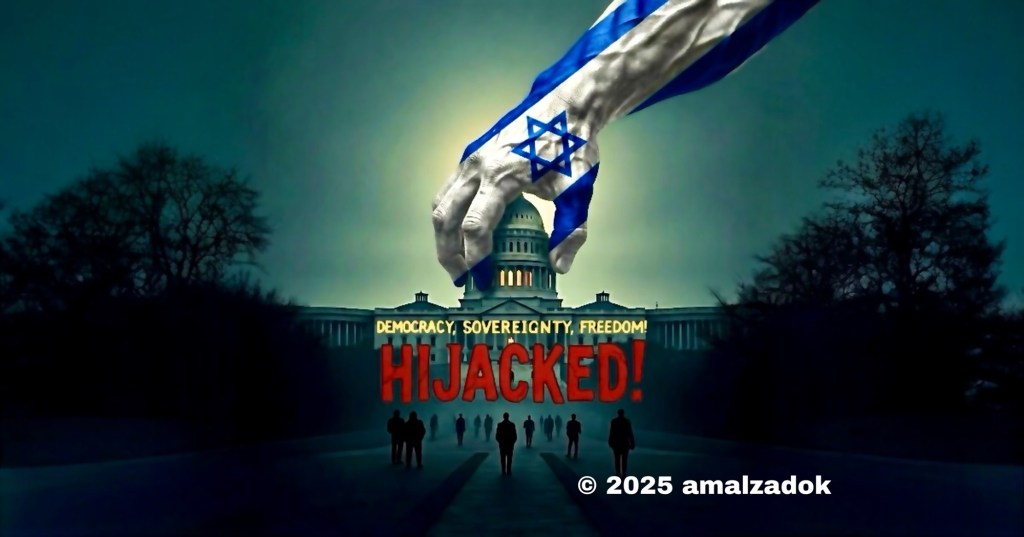
    Subscribe and never miss an article!

  • The Collapse of the Wall of Silence: Gaza Genocide, Scrambling Narratives, and Israel’s Battle to Control Truth

    The Collapse of the Wall of Silence: Gaza Genocide, Scrambling Narratives, and Israel’s Battle to Control Truth

    by Amal Zadok

    The American landscape has been shaken by revelations of systemic horrors in Gaza and the West Bank—atrocities perpetrated with the direct support and rhetorical protection of the Israel lobby, whose grip on U.S. institutions is now visibly cracking.

    Once able to silence opposition and uphold an image of Israel as a beleaguered democracy, the lobby is now scrambling—deploying symbolic gestures like Shabbat dinners and smears of dissenters—while facing an unprecedented tide of public revolt.

    The reality is stark: what is unfolding in Israel-Palestine is not a conflict as traditionally understood, but a genocide and a campaign of ethnic cleansing unmatched in recent memory.

    The Reality of Genocide in Gaza

    No sanitized narrative can obscure what has happened in Gaza since October 2023. As of October 2025, over 75,000 Palestinians have been killed by Israeli forces—nearly a third were children, tens of thousands were women, and entire communities were erased in mass bombardments targeting hospitals, schools, residential towers, refugee camps, and basic infrastructure.

    Israeli military databases and independent investigations confirm that more than 80 percent of the dead are civilians. These numbers exceed the civilian death ratio in almost every major conflict since World War II. Yet these grim statistics still fail to reveal the full scale of tragedy: humanitarian monitors and the United Nations repeatedly stress that the official death toll does not include the thousands of people believed to be buried under the mountains of rubble left by ongoing attacks.

    Rescue and medical teams—operating with almost no fuel, equipment, or protection—have confirmed that countless families remain missing beneath destroyed neighborhoods, with decomposing bodies lying for weeks or longer where homes and shelters once stood. This reality suggests that the true number of Palestinians killed by Israeli bombardment is far higher than even the staggering official counts.

    Humanitarian agencies and United Nations bodies have, for more than a year, sounded the alarm: Israel has imposed a medieval siege on Gaza, choking its population with famine and disease, bombing supply convoys, and criminalizing the brave UN workers struggling to keep infants alive. Survivors recount endless nights trapped beneath rubble, parents forced to bury their children in mass graves, and a daily struggle for milk, medicine, and clean water. The term “unfolding genocide” is not hyperbole, but the official language adopted by international human rights experts and by the International Criminal Court.

    Atrocities in the West Bank

    Parallel crimes rage in the West Bank—where Israeli military forces, police, and settlers have killed more than 1,000 Palestinians in two years, injured over 10,000 more, and orchestrated a reign of terror that includes home demolitions, mass arrests, extrajudicial shootings, and daily humiliation at checkpoints. Settler pogroms—often protected or abetted by IDF units—have targeted Christian communities, farmers, and journalists with impunity. Mosques and churches have been torched.

    Children are shot in back alleys. The world once looked away, but today, mass documentation floods every social feed, and silence has become an impossible luxury.

    Desperation Exposed: The Heritage Foundation as a Microcosm

    Nowhere is the Israel lobby’s new desperation more glaring than in the recent upheaval inside Washington’s influential Heritage Foundation. What began as an internal debate over antisemitism within conservative ranks—sparked by the Foundation president’s defense of Tucker Carlson after a controversial interview with Nick Fuentes erupted into a public spectacle of resignations, leaks, and raw institutional panic.

    The formation and then fragmentation of Heritage’s National Task Force to Combat Antisemitism, with multiple senior members departing in protest, was only the beginning. In a telling moment, junior staff and fellows were encouraged, under the guise of “dialogue,” to attend Shabbat dinners organized within the Foundation, stoking fears that such events served as informal loyalty tests for employees whose backgrounds, beliefs, or criticisms of Israel placed them outside the institutional mainstream.

    Christian staff expressed unease, arguing that, far from promoting real solidarity, these dinners had become symbols of a new orthodoxy: dissent on Israel would cost you career advancement, and refusal carried subtle professional stigma.

    When a high-profile staff member publicly voiced worry about being pigeonholed by faith, the response from leadership was not reassurance but public rebuke: what was offered as a “generous bridge” was felt and understood as a veiled demand to conform.

    As media outlets published leaked internal memos, Heritage’s crisis joined the national conversation—a frontline in a much larger reckoning as long-dormant dissenters at major U.S. institutions break the silence around Israel and resist the old politics of fear.

    The backlash has left the Heritage Foundation fractured and exposed, serving as a clear warning that efforts to manufacture ideological conformity by fusing religion, politics, and foreign policy are now fueling the very backlash the lobby once hoped to suppress.

    The Lobby’s Flailing Control and Symbolic Coercion

    Faced with the impossible moral task of defending policies that amount to genocide, the Israel lobby has reverted to desperate measures. When critics—Jewish, Christian, or secular—question U.S. complicity or demand a severing of ties, the response is not engagement, but ritual theater.

    Staff are pressured to attend “dialogue” events like Shabbat dinners, designed as informal showcases of unity and allegiance, but in reality functioning as soft coercion and loyalty tests. These gestures, now exposed, signal feeble attempts to restore legitimacy as the lobby’s ideological scaffolding collapses.

    No longer content to wield influence behind closed doors, the lobby activates every network—volleys of accusations of antisemitism, the mobilization of anti-hate task forces, and relentless public relations campaigns—but the effect is backfiring. American staff, journalists, and especially young activists are refusing to play the role of compliant audiences. Many see these tactics as what they are: efforts to silence those whose consciences will not allow complicity with the mass murder of innocents.

    The Collapse of the Information War

    For decades, the Israel lobby’s most potent weapon was information control—gatekeeping media, penalizing dissent, and manufacturing consensus. That era is dead.

    Today, horrifying images from the bombed-out ruins of Gaza and the burning fields of Hebron circulate freely; testimonies from survivors, aid workers, and bereaved family members demolish the “fog of war” and make the truth impossible to ignore.

    The lobby’s desperation is not mere paranoia—it is a recognition that public opinion is shifting, fast and deep. Millions of Americans now see through the lies; grassroots movements have exploded across university campuses, faith communities, and even institutions once thought impenetrable, like the Heritage Foundation. Calls for unconditional support of Israeli policy are now challenges to moral integrity, and those who try to defend the indefensible are met with the outrage their positions deserve.

    Moral Reckoning and the Path Forward

    The undeniable reality remains: entire families have been obliterated, children buried beneath rubble, and an entire people faces starvation, disease, and dispossession. The scale of brutality visited upon Gaza, the West Bank, and beyond is a stain on the conscience of our age.

    These crimes demand not only historical reckoning but urgent international action—systemic, coordinated, and unyielding—to dismantle the violent machinery and ideologies that perpetuate such suffering. Justice demands more than words. The world must act for the dead, the living, and for our shared future—because never again must mean never again for anyone.

    References

    1. Action on Armed Violence. (2024, October 28). Civilian casualties in Gaza. https://aoav.org.uk

    2. Brown University Costs of War Project. (2025, October 3). Direct and indirect death from 7 October 2023 to 3 October 2025. https://costsofwar.watson.brown.edu

    3. Al Jazeera English. (2025, August 21). Israeli data shows 83 percent of Gaza war dead are civilians. https://aljazeera.com

    4. Reuters. (2025, October 7). How many Palestinians has Israel’s Gaza offensive killed? https://reuters.com

    5. United Nations News. (2025, September 24). Gaza City suffering escalates as Israeli strikes inflict more casualties. https://news.un.org

    6. Office of the United Nations High Commissioner for Human Rights. (2025, May 6). End unfolding genocide or watch it end life in Gaza. https://ohchr.org

    7. Guardian/972 Magazine, Local Call. (2025, May). Civilian to combatant ratio in Israeli military intelligence database.

    8. The Lancet. (2025, November 3). 3 million Palestinian life-years lost in Gaza genocide.

    9. Washington Post. (2025, November 6). Heritage staff in open revolt over leader’s defense of Tucker Carlson.

    10. Jewish Insider. (2025, November 5). Heritage’s Roberts apologizes for Carlson video, but tensions linger.

    11. Talking Points Memo. (2025, November 5). Heritage Foundation implodes over Carlson-Fuentes controversy.

    ©️2025 Amal Zadok. All rights reserved.
    Subscribe and never miss an article!

  • The Final Coup? Zionist Influence and the Struggle for Control over the American Government

    The Final Coup? Zionist Influence and the Struggle for Control over the American Government

    by Amal Zadok

    In recent years, a growing chorus of voices has expressed alarm over the perceived intensification of Zionist influence within the highest levels of American government. Some contend that powerful Zionist interest groups are orchestrating what amounts to the final phase of a carefully engineered coup d’état, setting out to achieve full control of the United States’ political institutions, media ecosystems, and cultural foundations. This concern is no longer a matter of fringe speculation but has become an urgent topic for both mainstream and political outsiders, driven by observable patterns of lobbying, pressuring, and suppression aimed at consolidating this unprecedented power.

    Historical Foundations of Zionist Advocacy

    The ties between Zionist organizations and American politics stretch back through the decades, evolving in complexity and reach since the early 20th century. From the establishment of Israel in 1948, the American Israel Public Affairs Committee (AIPAC) and similarly focused groups have steadily asserted themselves as formidable forces in shaping legislative agendas and fostering a durable pro-Israel consensus across party lines. Presidents, senators, and lawmakers have long been subject to well-organized campaigns of advocacy and, at times, intimidation, should they deviate from the parameters set by these lobbies.

    According to academic and policy experts, these groups have developed robust mechanisms by which they fund election campaigns, draft legislation, and mobilize public opinion to favor Israeli interests. Pro-Israel stances have become key litmus tests for political viability in Congress, with dissenters frequently facing adverse consequences ranging from negative press to primary challenges bankrolled by well-funded opposition. The prevailing notion in Washington circles remains: support Israel, or face career jeopardy.

    Methods of Influence: Media, Legislation, and Suppression

    Beyond the Capitol, Zionist-aligned organizations have expanded their reach into media, academia, and technology. Mainstream news outlets, social platforms, and Hollywood increasingly reflect narratives sympathetic to Israeli objectives, while critiques of Israeli policy or calls for Palestinian rights are often marginalized, censored, or derogated as extremism or antisemitism. Influencers, journalists, and political activists who attempt to challenge this orthodoxy encounter demonetization, bans, and targeted campaigns meant to chill speech and suffocate dissent.

    Within America’s legislative framework, these groups have successfully pushed for laws that restrict grassroots activism against Israel, particularly through anti-Boycott, Divestment, and Sanctions (BDS) measures. The result is a climate in which open debate about Israeli policies, U.S. military aid, and the human rights record in the region is not only discouraged but sometimes penalized by law or unspoken force.

    Attacks on Opponents and Consolidation of Power

    One of the starkest trends amid the rising influence of Zionist lobbying is the methodical targeting of individuals and institutions perceived as hostile or insufficiently supportive. Politicians known for advocating Palestinian rights have been ousted, silenced, or relentlessly attacked both politically and personally. Media personalities and YouTube creators critical of Israel’s policies have found their livelihoods threatened, their credibility undermined, and, in some cases, their platforms removed altogether.

    This is not limited to isolated incidents—it reflects a well-organized strategy to neutralize resistance, consolidate ideological control, and enforce conformity. Much as in classic coups, where challengers to the new regime are rapidly disempowered, the campaign underway in the United States leverages both monetary and narrative power to ensure that only approved voices are heard and only sanctioned policies are pursued.

    Christian Zionism and the Expansion of the Lobby

    A significant but sometimes overlooked factor behind the success of this movement is the alliance with Christian Zionists, particularly within the Republican Party. Evangelical organizations such as Christians United for Israel (CUFI) bring substantial numbers and political fervor to the cause, amplifying the capacity of the Jewish Zionist lobby to sway elections and shape foreign policy. This partnership, especially pronounced since the Trump administration, has solidified a bipartisan environment in which criticizing Israel has become tantamount to apostasy—regardless of party tradition.

    Shifting Political Landscapes: The Erosion of Unquestioned Support

    Recent years have nevertheless witnessed cracks appearing in the facade of absolute control. Escalating violence in Gaza, expanding settlements in the West Bank, and humanitarian crises have eroded traditional bipartisan support for Israel, especially among younger Americans and progressive activists. New polling and shifting voter attitudes indicate a growing awareness and skepticism of entrenched pro-Israel orthodoxy. Some members of Congress, influencers, and celebrities have dared to speak out, sometimes at great personal and professional risk.

    Still, the resistance to change remains formidable. Congressional leaders and many media institutions adhere to the established pro-Israel line, guided by fear of reprisal and the reality of ongoing financial dependency. The influence remains strong enough that even large-scale shifts in public opinion face organized opposition, and anti-Israel voices, though increasing, operate under constant threat.

    Framing the Struggle: Is It a Coup d’État?

    Observers critical of this phenomenon have described it as nothing less than a coup d’état—a process not marked by tanks in the streets but by decades of targeted pressure, campaign finance manipulation, and ideological policing on a grand scale. This “soft takeover” seeks not only to influence policy but to reimagine what is considered legitimate debate, transform the nation’s priorities, and enforce security for Israeli interests at the direct expense of American autonomy.

    Such assertions, while subject to controversy and rebuttal, gain traction nonetheless as the methods and impacts of Zionist influence become more visible. The challenge facing America is to disentangle legitimate advocacy and alliance-building from the spectacle of overwhelming control—a challenge vital to the health of its democracy and constitution.

    The Battle for America’s Republic

    The result is a profound test for the American people. Will the Republic endure as a nation of independent citizens governed by open debate, free elections, and the rule of law? Or will it surrender sovereignty to a coalition of powerful lobbies and interest groups whose priorities stand in sharp relief to those of its own people? This is no ordinary moment in American history. The core of the Constitution, the promise of self-government, and the dream of genuine pluralism stand threatened by forces far more organized and relentless than any foreign adversary.

    If this coup d’état is allowed to reach its conclusion, the America of Jefferson, Madison, and Lincoln may dissolve into myth—replaced by a new order in which independence and free thought are just memories. The cost of complacency is nothing short of the loss of the Republic itself.

    At such a decisive moment, the words of Thomas Jefferson resonate across generations: “The time to guard against corruption and tyranny is before they shall have gotten hold of us. It is better to keep the wolf out of the fold than to trust to drawing his teeth and talons after he shall have entered.” Now is the time for Americans to stand up in defense—not just of the abstract ideals of the Republic, but of every politician, writer, YouTuber, journalist, and activist who refuses to be bought or silenced by the Zionist lobbies, those who remain outside the pockets of the powerful forces working against all that Jefferson and Madison desired for America. Are there still any truly patriots in America—courageous enough to defend the Republic, uphold its Constitution, and repel this coup d’état?

    References

    1. American Israel Public Affairs Committee (AIPAC). (2025-10-18). In Encyclopedia Britannica.

    2. Israel lobby in the United States. (2006, August 26). Wikipedia.

    3. Vest, J. (2002). The Men From JINSA and CSP. The Nation.

    4. Mearsheimer, J.J., & Walt, S.M. (2006). The Israel Lobby and U.S. Foreign Policy. Harvard Kennedy School.

    5. Al Jazeera. (2024, June 12). AIPAC & Zionist Lobby Groups.

    6. University of Western Australia. (2025, April 9). What is the Israel lobby – and why is it so anxious?

    7. BoughtByZionism.org. (2024, June 12). AIPAC & Zionist Lobby Groups.

    8. Al Jazeera. (2024, March 11). ‘Reject AIPAC’: US progressives join forces against pro-Israel groups.

    9. Kaplan, J. (2000). The Zionist Occupation Government Conspiracy Theory. Wikipedia.

    10. The Conversation. (2023, November 29). A brief history of the US-Israel ‘special relationship’ shows how it shapes US Mideast policy.

    11. Pinkas, A. (2023, November 29). Biden Won’t Stop Netanyahu’s Judicial Coup. Jewish Currents.

    12. World Geostrategic Insights. (2023). Beyond Strategy: The Deeply-Rooted Influences Shaping U.S. Unconditional Support for Israel.

    13. Al Jazeera. (2024, November 15). Project Esther: A Trumpian blueprint to crush anticolonial resistance (and anti-Zionist voices).

    14. United States Holocaust Memorial Museum. (2024, November 25). An Antisemitic Conspiracy: The Protocols of the Elders of Zion.

    15. BBC. (2025, May 5). Americans used to be steadfast in supporting Israel. No more.

    16. NPR. (2025, November 6). Support for Israel among U.S. conservatives is cracking.

    17. Politics Today. (2025, September 3). Is Israeli Influence over American Politics Finally Eroding?

    18. Politico. (2025, August 16). Americans Are Changing Their Views of Israel.

    19. Dergipark.org.tr. (2025). Christian Zionism and Its Influence on Trump’s Israel Policy.

    ©️2025 Amal Zadok. All rights reserved.
    Subscribe and never miss an article!

  • Bibles, Bulldozers, and Betrayal: Christian Zionism and the Theology of Genocide

    Bibles, Bulldozers, and Betrayal: Christian Zionism and the Theology of Genocide

    by Amal Zadok

    Christian Zionism stands not only as a theological aberration but as one of the most dangerous political movements of our time—a force that fuses religion with nationalism, distorts the message of Christ, and underpins policies that inflict untold suffering on millions. Its roots are both theological and political, its consequences global, and its legacy—if not challenged—a lasting stain on Christianity, America, and all who value justice.

    At the heart of Christian Zionism is a radical manipulation of scripture. By wrenching verses from the Hebrew Bible and reinterpreting them to sanctify the modern state of Israel, Zionist Christians erase centuries of theological evolution and sideline the teachings of Christ himself. As Rev. Dr. Munther Isaac explains, “Christian Zionism confuses biblical Israel with the modern state of Israel, often neglecting the ethical demands attached to God’s covenants—demands rooted in justice and inclusivity, not exclusion and privilege.” This distortion turns the Gospel’s radical call to love, mercy, and humility into a weapon for exclusion, violence, and dispossession.

    Such hermeneutical error is not mere academic misstep; it is a political disaster. In the United States, Christian Zionist lobbies have shaped foreign policy for decades, pushing successive administrations to prop up Israel regardless of the human cost. This alliance reached its apotheosis with embassy relocations, diplomatic endorsement of illegal settlements, withdrawal from the United Nations Human Rights Council, and disregard for Palestinian lives. Christian Zionists have declared any pressure on Israel to negotiate with Palestinians as betrayal, effectively blocking any substantive US support for a just peace or a Palestinian state.

    The theological justification behind such policies is fundamentally heretical. Christian Zionism reads the Old Testament through a dispensationalist lens, treating prophecies as real estate contracts and covenants as eternal instruments of racial privilege. Stephen Sizer, in a comprehensive historical study, demonstrates that this approach is a nineteenth-century innovation, rejected by the Church Fathers, Reformers, and almost all mainstream theologians before the rise of restorationism. “The question is not whether the promises of the covenant are to be understood literally or spiritually,” Sizer observes, “but whether they should be interpreted as Old Covenant shadows or as completed and fulfilled in Christ.” Christian Zionists consistently refuse to read scripture with Christian eyes, instead elevating Old Testament forms over the Gospel’s universal message.

    This scriptural manipulation has catastrophic real-world effects. Nowhere is that more visible than in Palestine—specifically, in Gaza and the West Bank—where theology has become a justification for ethnic cleansing, occupation, and, in the words of numerous genocide scholars and church leaders, ongoing genocide. Palestinian Christians, whose roots trace back to the earliest Church, find themselves erased from theological narratives, ignored by Western churches, and abandoned by the very faith their ancestors sustained through centuries of hardship.

    The suffering imposed upon Palestinians is not accidental; it is systemic, rationalized, and sanctified by Christian Zionist rhetoric. Settlements expand, homes are bulldozed, and families are dispossessed—all hymned as part of “God’s plan.” The war in Gaza, marked by mass civilian casualties, deprivation, and the near-total destruction of entire neighborhoods, is excused and even celebrated by some evangelicals who see it as prophecy fulfilled. As a recent church statement put it, “Silence in the face of genocide is complicity.”

    Christian Zionism’s influence has helped normalize the language of manifest destiny, American exceptionalism, and apocalyptic expectation. Believers are taught to see Middle East policy through the lens of signs and wonders, not international law or basic moral reasoning. The rights, dignity, and suffering of Palestinians—and of all “others”—are rendered invisible, collateral damage on the road to Armageddon.

    This is the theology of genocide: not that Christian Zionism merely ignores suffering, but that it sanctifies and enables it. It transforms violence into virtue, treating Palestinian resistance not as a struggle for justice but as an “obstacle” to divine promise. Churches that dare challenge this narrative face accusations of heresy, anti-Semitism, and godlessness, even as global ecumenical bodies—including the World Council of Churches—denounce Zionist ideology as a “corruption of the biblical message of love, justice, and reconciliation.”

    The repercussions ripple across the world. Christian Zionism recasts US policy, endangers long-standing alliances, sabotages peace initiatives, and emboldens far-right movements in Europe, Latin America, and Africa. Its logic—tribal absolutism, denial of compassion, and scriptural literalism—has bled into other religious conflicts. It equips new batches of believers to turn away from dialogue, compromise, or forgiveness, instead weaponizing faith for supremacist ends.

    Why does this matter? Because the cost is counted in bodies, not ideas. The ongoing Nakba—the displacement, dispossession, and attempted erasure of Palestinians—is not a distant footnote, but our era’s scandal. In Gaza, in the West Bank, in shrinking enclaves; in refugee camps across the region, families attempt to survive while the most powerful Christians on earth promote theology that deems their suffering sacred inevitability.

    On every moral and theological scale, Christian Zionism is not just mistaken but lethal. It betrays the Gospel’s most central claims: “Blessed are the peacemakers”; “Love your neighbor as yourself”; “Let justice roll on like a river.” It recasts Jesus the healer, comforter, and peacemaker as a general of drone armies, a patron of border walls, a silent watcher over ethnic cleansing.

    The call now is not just to critique but to resist—to remember and never forget. Churches, theologians, and everyday people must reclaim scripture from political corruptions, restore solidarity with the oppressed, and voice collective repentance for complicity in suffering. Silence is complicity; scripture is not an excuse for genocide; and theology is not property of empire.

    In sum, Christian Zionism weaponizes faith into a tool of violence, enables policies that devastate the Palestinian people, and shapes global politics in ways that threaten peace and justice for all. This ideology must not be spiritualized, sanitized, or ignored—it must be named, confronted, and repudiated by all who hold the name of Christ or honor the memory of those who suffer. Otherwise, the world will remember Christianity not as a force for liberation, but as an accomplice to betrayal and destruction.

    Christian Zionists are not Christians, because they clearly move in directions opposite to Jesus and everything He stands for. Christian Zionists are heretics, belonging to a death cult called Zionism.

    References

    1. Al-Shabaka. (2024, June 29). The dangerous exceptionalism of Christian Zionism. https://al-shabaka.org/briefs/the-dangerous-exceptionalism-of-christian-zionism/

    2. Culture Matters. (2025, October 29). ‘Christian Zionism’: A useful idiot for genocide. https://culturematters.org.uk/christian-zionism-a-useful-idiot-for-genocide

    3. European Lutheran Church in America (ELCA). (2020, October 27). An ethical critique of Christian Zionism. https://learn.elca.org/jle/ethical-critique-christian-zionism/

    4. Isaac, M. (2022, November 25). Christian Zionism as imperial theology. Britain Palestine Project. https://britainpalestineproject.org/rev-dr-munther-isaac-christian-zionism-as-imperial-theology

    5. Jerusalem Declaration on Christian Zionism. (2006). https://www.oikoumene.org/resources/documents/jerusalem-declaration-on-christian-zionism

    6. Kairos Palestine. (2009). Kairos Palestine document. https://kairospalestine.ps/index.php/resources/kairos-blog/935-christian-zionism-through-palestinian-eyes

    7. Logos Journal. (2025, June 24). Christian Zionism and American foreign policy: Paving the road… https://logosjournal.com/christian-zionism-and-american-foreign-policy

    8. Political Theology. (2025, March 21). In Christ’s name: Christian Zionism and the liquidation of the Gaza… https://politicaltheology.com/in-christs-name-christian-zionism-and-the-liquidation-of-the-gaza

    9. Sizer, S. (2002). Christian-Zionism-PhD-Thesis. https://stephensizer.com/Christian-Zionism-PhD-Thesis.pdf

    10. TRT World. (2025, January 28). Does Israel have a biblical right over Palestine? https://trtworld.com

    11. The Conversation. (2024, December 19). Palestinian Christians call on western churches to ‘humanize’ the people of Gaza. https://theconversation.com/palestinian-christians-call-on-western-churches-to-humanize-the-people-of-gaza

    12. Harvard Religion and Public Life. (2025, April 28). Christ in the rubble: Faith, the Bible, and genocide in Gaza. https://rpl.hds.harvard.edu/christ-in-the-rubble-faith-the-bible-genocide-gaza

    13. Christian Socialism. (2024, July 28). Christian Zionism and the unseeing of the people. https://christiansocialism.com/christian-zionism-and-the-unseeing-of-the-people/

    ©️2025 Amal Zadok. All rights reserved.
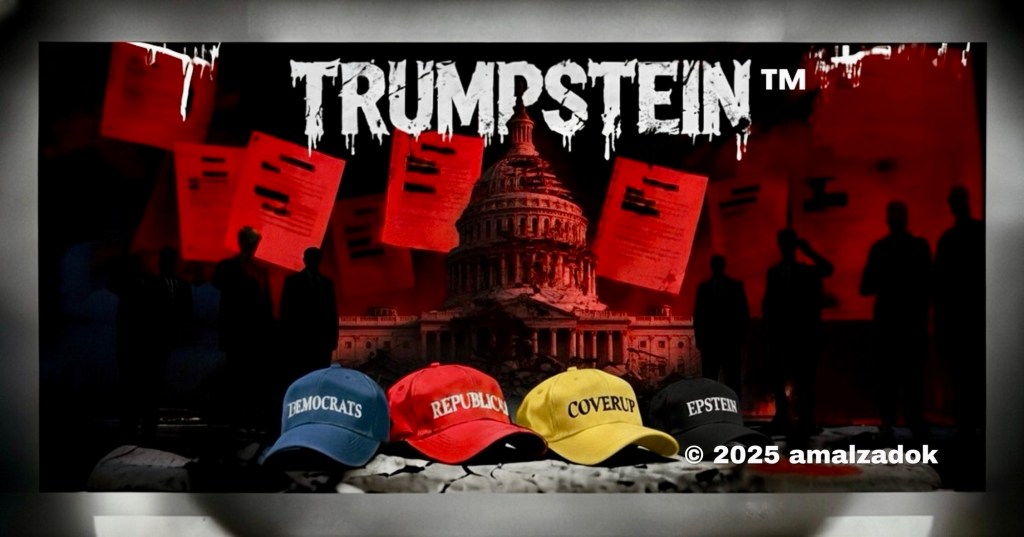
    Subscribe and never miss an article!

  • The Shattering of the Unholy Pact: America Awakens to Break AIPAC’s Grip and End the Zionist Era

    The Shattering of the Unholy Pact: America Awakens to Break AIPAC’s Grip and End the Zionist Era

    by Amal Zadok

    A profound change is sweeping across the landscape of American politics—one that signals both the growing empowerment of Muslim candidates and a reckoning for the immense influence held by pro-Israel lobbying organizations, most notably the American Israel Public Affairs Committee (AIPAC).

    In the embers of the Gaza crisis and amidst the cries for justice echoed on the streets from Detroit to Dallas, more U.S. voters are decisively steering away from politicians known for their unwavering fealty to the Zionist project. This rising wave of consciousness among the American electorate is shattering decades-old political dogmas, elevating new voices, and sending a stark message to those whose loyalty lies outside the boundaries of national interest and human decency.

    The coming-of-age for Muslim candidates in the United States is not merely a statistical uptick on electoral rolls; it marks a tectonic shift in the public’s willingness to challenge the status quo. What began as scattered efforts in local elections has erupted into a potent movement for genuine representation—one that is unafraid to confront Washington’s hitherto unassailable orthodoxy on Israel.

    In a year marred by the carnage in Gaza and punctuated by the chilling images of Palestinian suffering, the corrupt bargain that has so long bound U.S. politicians to pro-Israel interests is being aired and assailed in the public square like never before.

    The magnitude of this shift became unmistakable with the election of Zohran Mamdani as New York’s first Muslim mayor. “New York will remain a city of immigrants, built by immigrants, powered by immigrants and, as of tonight, led by an immigrant,” proclaimed Mamdani to an electrified crowd of supporters on election night.

    His ascent was not symbolic alone; it was built on tireless grassroots campaigning that brought together working-class, immigrant, and young voters, including first-time Muslim voters whose “story mirrors many of our own,” as voter Minata Lolo told The New York Times. “He is demonstrating we belong in every space, that our stories and values hold significance in shaping the future of the city.” At his campaign’s heart were concrete policies about affordability and equity—universal childcare, a rent freeze, and free public transit—echoing the lived realities of his diverse electorate and uniting communities who had once felt invisible or marginalized.

    America’s youth, especially those galvanized by the Black Lives Matter movement and inspired by the cross-pollination of struggles from Ferguson to Sheikh Jarrah, are leading the charge.

    This shift has also found momentum among dissatisfied MAGA voters who feel betrayed by Donald Trump’s handling of the Jeffrey Epstein case, frustrated by his administration’s choice to withhold key documents after early promises of transparency.

    Large segments of Trump’s base, once fervently loyal, have erupted in outrage over the Justice Department’s memo absolving Epstein and over perceived cover-ups, demanding accountability and feeling let down by his lack of action on what became a central grassroots priority.

    Alongside this, anger simmers over Trump’s failure to deliver on his pledge to withdraw U.S. military involvement from the Ukraine conflict, as well as sabre-rattling and belligerent rhetoric in foreign policy that has left many original MAGA supporters disillusioned.

    These broken promises and political disappointments have fractured the president’s traditional coalition, fueling a wider rejection of establishment narratives and contributing powerfully to the tectonic shift now underway in the broader American electorate.

    They are joined by faith leaders, union organizers, Jewish progressives fed up with “Israel right or wrong” apologetics, and a uniquely diverse coalition that has dramatically altered the terms of debate. For the first time in modern history, it is possible for candidates to run—and win—while loudly denouncing Israeli apartheid, the siege of Gaza, and the very machinery of repression AIPAC so zealously defends.

    This change did not emerge in isolation. The carnage in Gaza, exacerbated by the relentless campaigns of Benjamin Netanyahu—rightly known by the majority of the world as the “Butcher of Gaza”—has served as a moral crucible for Americans of all backgrounds. With social media democratizing access to raw footage and unfiltered narratives from the streets of Khan Younis and Gaza City, the reality of Palestinian suffering could no longer be concealed by tired talking points or mainstream media euphemisms.

    For the first time, a critical mass of American citizens now link the trillions spent by their government—and the political capital expended by their elected officials—to the lived horrors endured by innocent Palestinians under occupation.

    Few institutions embody the establishment’s determination to maintain the status quo more than AIPAC. Boasting deep pockets, legendary organizational discipline, and a history of making or breaking congressional careers, AIPAC has been the architect of an era in which questioning U.S. support for Israel was treated as political suicide. Its infamous scorecards, aggressive primary challenges, and lavish campaign contributions have fostered a climate of fear and compliance among both seasoned incumbents and rising stars alike.

    But the moment of reckoning has arrived. This year, multiple Muslim and progressive candidates posted historic victories in districts once considered safe havens for the “AIPAC class”—those whose rhetorical pirouettes often prioritized Tel Aviv’s priorities over their own constituents’ needs.

    In Virginia, Ghazala Hashmi became the first Muslim woman elected to statewide office, running on a platform of fighting bigotry “and the ‘chaos’ of division,” which she credits to her community’s grassroots organizing. “Over the past 25 years, we have forged a strong coalition that includes our Jewish communities and encompasses Asian, Latino, and Black communities. We can assert that we are above this and will support one another,” said New York City Councilwoman Shahana Hanif, herself a re-elected Brooklyn Muslim progressive advocating strongly for Palestinian rights.

    The desperation of Zionist stalwarts like Mark Levin, Senator Ted Cruz, and Congressman Randy Fine has become palpable—their performative outrage on cable news and social media now resembling the death throes of an ideology rapidly losing moral legitimacy.

    Their attacks have grown ever more hysterical and unhinged, wielding the accusations of antisemitism with reckless abandon, and peddling conspiracy theories about “foreign agents” and “Islamic infiltration.” Yet, these tactics only underscore their impotence in the face of a public no longer cowed into silence.

    Central to this transformation is the growing understanding that support for the Israeli government is not, and never has been, synonymous with support for the Jewish people—a distinction that is finally being made clear in the American mind.

    A generation of young Jews—many horrified by the violence meted out in their name—have joined the chorus demanding accountability for Israel’s actions. Organizations like Jewish Voice for Peace and IfNotNow are shaping an alternative narrative, drawing lines between solidarity with Jews and complicity with apartheid, occupation, and ethnic cleansing. This development further isolates AIPAC, whose “pro-Israel” stance now appears brittle, archaic, and profoundly out of step with the moral arc of the country.

    What makes the current political moment so volatile—and so pregnant with possibility—is that the electorate’s awakening is not confined to Muslim Americans or to progressives alone. A broad cross-section of voters, from war-weary veterans to suburban soccer moms, now recognize the cruel cost of Washington’s blank-check policy toward Israel.

    They have come to see the billions in military aid—sent with no conditions, oversight, or accountability—not only as an affront to American values, but also as a betrayal of economic justice at home. In the wake of spiraling healthcare costs, crumbling infrastructure, and unmet social needs, the manufactured consensus around “shared values” with Israel rings increasingly hollow.

    Poll after poll affirms what was once considered unthinkable: a strong plurality of Americans now support a ceasefire in Gaza and direct measures to curb U.S. military assistance to Israel. The panic gripping AIPAC and its congressional loyalists betrays a fundamental truth—once a mythic force capable of shaping elections with a single press release, their influence is now subject to the unpredictable, dynamic forces of genuine democracy.

    The road ahead is uncharted and rife with challenges. Despite high-profile victories, the obstacles faced by Muslim and anti-AIPAC candidates are daunting—smear campaigns, relentless Islamophobia, and the far-reaching tentacles of the lobbying establishment are formidable foes.

    Yet, for all the money funneled into negative ads and astroturfed outrage campaigns, it is stories—the real, lived experiences of Americans and Palestinians alike—that are turning the tide. Hanif, the Brooklyn Councilwoman, emphasized, “Islamophobic statements should be condemned across the political spectrum, highlighting the ongoing need to combat racism in the United States.” Her sentiment echoes throughout the grassroots.

    The suffering in Gaza, beamed nightly into American living rooms, has pierced the veil of ignorance and indifference. The images of bombed-out hospitals and grieving mothers have rendered empty the old platitudes about “self-defense.” Young voters, in particular, view the complicity of elected officials not as distant geopolitics, but as a searing moral issue woven into the fabric of what it means to be American.

    Their votes increasingly reflect a determination to break free from the grip of lobbies that would make them complicit in injustice abroad and neglect at home.

    It is fitting, then, that this moment of American political reawakening is animated by Muslim candidates—many of whom bear the scars of war, displacement, and discrimination, yet who offer a vision of America reconciled with its own best ideals.

    Their meteoric rise and forthright speech are elevating congressional debate, inspiring grassroots activism, and—perhaps most importantly—forcing a reckoning with uncomfortable truths.

    Each victory declares that the era of uncritical, unconditional support for Israel is fading, and that the time for authentic, human-centered policy is at hand.

    The struggle is hardly over. The forces that have so long dictated Middle East policy in Washington are not planning a quiet resignation.

    If anything, their escalated rhetoric and heedless accusations signal open war on the future.

    But the die is cast—a powerful new contingent in American politics stands ready, not merely to contest elections, but to reclaim the very soul of the nation.

    In doing so, they are helping restore the power and dignity of the immigrant vote, renewing a broader sense of justice and inclusion, and forging unity across racial, ethnic, and cultural lines to halt the nation-breaking divisions that have threatened all American communities—including white Americans.

    This movement points the way toward a future where the country draws strength from its diversity and recommits to true justice for every citizen.

    References

    1. AIPAC and Its Influence on Congress. (2025). The Center for Responsive Politics. https://www.opensecrets.org/news/reports/aipac-influence

    2. “Muslim candidates post historic wins as voters demand change.” The Guardian. (2025). https://www.theguardian.com/us-news/2025/nov/01/muslim-candidates-election-wins-israel

    3. Jewish Voice for Peace – “Change in American Jewish perspective on Israel.” (2025). https://www.jewishvoiceforpeace.org/resources/us-jewish-public-opinion/

    4. Poll: Most Americans Support Ceasefire in Gaza. (2025). Pew Research Center. https://www.pewresearch.org/politics/2025/10/24/americans-support-gaza-ceasefire/

    5. “Social Media and the Gaza Narrative Shift.” Middle East Eye. (2025). https://www.middleeasteye.net/news/us-public-opinion-shifts-israel-gaza

    6. IfNotNow – On the changing role of American Jews. (2025). https://ifnotnowmovement.org/news/change-in-jewish-public-opinion-israel

    7. Black Lives Matter and Palestinian Solidarity. (2025). Al Jazeera. https://www.aljazeera.com/features/2025/10/28/black-lives-matter-palestinian-solidarity

    8. “AIPAC’s electoral strategies falter amid Israel controversy.” Politico. (2025). https://www.politico.com/news/2025/10/25/aipac-influence-midterms-israel-000000

    9. New York Muslims Exult in Mamdani’s Victory. (2025). The New York Times. https://www.nytimes.com/2025/11/05/us/muslim-new-yorkers-mamdani.html

    10. Mamdani makes history as New York City’s first Muslim mayor. (2025). DW News. https://www.dw.com/en/mamdani-makes-history-as-new-york-citys-first-muslim-mayor/video-74635514

    11. Virginia makes history with first Muslim woman elected to statewide office. (2025). 19th News. https://19thnews.org/2025/11/virginia-ghazala-hashmi-muslim-woman-statewide-office/

    12. Young, Muslim, Asian and Socialist: Zohran Mamdani’s New York Win. (2025). Asia News Network. https://asianews.network/young-muslim-asian-and-socialist-zohran-mamdanis-new-york-win-challenges-both-trump-and-democrats/

    13. Mamdani supporters see an opening for more hopeful politics in his win. (2025). NPR. https://www.npr.org/2025/11/05/nx-s1-5578014/mamdani-supporters-see-an-opening-for-more-hopeful-politics-in-his-win

    14. Muslim, South Asian Americans emerge as decisive force in U.S. elections. (2025). Muslim Network TV. https://www.muslimnetwork.tv/muslim-south-asian-americans-emerge-as-decisive-force-in-u-s-elections/

    15. Mamdani’s New York victory sparks Islamophobic backlash in US. (2025). Al Jazeera. https://www.aljazeera.com/news/2025/6/30/mamdanis-new-york-victory-sparks-islamophobic-backlash-in-us

    16. Trump faces backlash as 69% believe Epstein details concealed. (2025). Reuters. https://www.reuters.com/world/us/trump-faces-backlash-69-believe-epstein-details-concealed-reutersipsos-poll-2025-07-17/

    17. Trump supporters angry over Justice Department’s Epstein memo. (2025). ABC News. https://abcnews.go.com/Politics/trump-supporters-angry-justice-departments-epstein-memo/story?id=123567461

    ©️2025 Amal Zadok. All rights reserved.
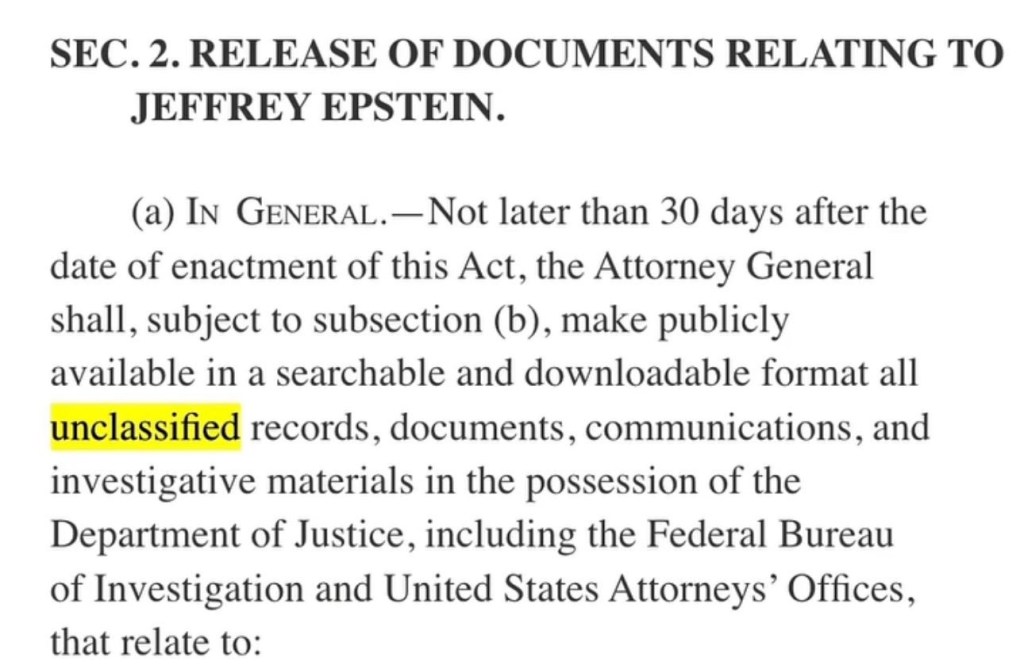
    Subscribe and never miss an article!

  • The Republic Betrayed: Jefferson and Madison’s Indictment of the Imperial Presidency

    The Republic Betrayed: Jefferson and Madison’s Indictment of the Imperial Presidency

    by Amal Zadok

    The ghosts of the Founders would recoil at the spectacle unfolding in the early decades of the twenty-first century — an executive branch swollen beyond the imagination of republican architects, a Congress anesthetized by cowardice and careerism, and a citizenry lulled into complacency by spectacle instead of civic engagement. Were Thomas Jefferson and James Madison permitted to return from the quietude of Monticello and Montpelier, they would witness what they had most dreaded: the rebirth not of a republic, but of an empire cloaked in constitutional ashes.

    Ray McGovern’s recent warning of an “imperial president” deploying United States Marines off the coasts of Venezuela and Nigeria without congressional mandate would confirm every foreboding penned in the summer of 1798, when Madison’s quill bled resistance to executive aggression. His Report on the Virginia Resolutions was not mere partisan reply; it was an ethical barricade against monarchical usurpation. To behold, then, a contemporary President — Donald J. Trump — amassing forces abroad without the explicit consent of Congress would elicit from the founders neither surprise nor silence. Rather, it would summon a thunderous appeal to first principles.

    Jefferson, whose humanist radicalism was tempered by historical realism, wrote in 1798 that “the concentrating these powers in the same hands is precisely the definition of despotic government.” The pattern has repeated with mathematical precision. Congress, once hailed as the jealous guardian of the purse and of war-making authority, now abdicates — permitting presidents to wage war by rhetorical sleight of hand: “protective deployments,” “preemptive operations,” “authorized force under prior resolutions.” Each euphemism is a chisel against the marble of Article I. In Jeffersonian eyes, such linguistic deceptions are the ruin of republican virtue, for they substitute obedience for deliberation and flattery for freedom.

    Madison knew — with prophetic lucidity — that “the executive is the branch of power most interested in war, and most prone to it.” Trump’s interventions, framed as defense of “American interests” or “Christian communities abroad,” display that very tendency. Under his stewardship, the War Powers Resolution has become as ornamental as a parchment in a museum; constitutional texts linger, yet the animating spirit has fled. Madison would argue that this decay is not accidental but structural — derived from the inertia of legislative timidity. Congress once debated whether the Republic would fight; now it debates how to fund its unending fights. The mechanics of empire have replaced the morality of consent.

    It is not enough to ascribe this transformation to one man or one administration. Jefferson and Madison, had they observed the evolution of executive prerogative through Lincoln, Wilson, Truman, Bush, and Obama, would describe Trump not as an anomaly but as culmination. Every protector of the Constitution who refused to challenge prior encroachments became an accomplice to today’s executive impunity. When McGovern laments the absence of “winter soldiers in Congress,” he echoes the same despair that Madison voiced when warning that liberty dies not by sudden assassination but by quiet surrender.

    Thus, this indictment is not merely political — it is ontological. The Republic as envisioned by its founders cannot coexist with permanent war. In a nation where military deployments proceed without formal declarations, the body politic ceases to be sovereign. Madison would recall the foundational covenant: that the right to declare war rests solely with the representatives of the people, because it is the people who bleed. Jefferson, scholar of human frailty, would add that once citizens tolerate ruler’s wars as abstractions on screens or slogans on flags, they cease to be citizens; they revert to subjects.

    Trump’s defenders might reply that the executive must act swiftly to protect American lives or global stability. Both Founders would reject the false dichotomy between safety and law. “A free people must be ever awake,” Jefferson would write, “lest by their own carelessness they invite the chains they fear.” Madison, ever the architect of durable liberty, would remind that the Constitution was framed not to facilitate convenience but to impose restraint — restraint upon power, especially the power most apt to excess.

    To invoke patriotism as justification for unilateral war is to dress ambition in virtue. It is the oldest deceit known to republics. Jefferson’s voice would roll across the centuries like a warning bell: the executive power is a fire; it can warm the home or engulf it. Only Congress, as the embodiment of multiplicity and debate, can regulate that flame. To forfeit this duty in the name of loyalty to one man or one moment is to enthrone Caesar anew.

    McGovern’s call — that the people must “make sure their congresspeople realize they can’t have impunity” — would resonate deeply in the Founders’ philosophy. They did not build mechanisms of civic virtue upon trust in rulers, but upon vigilance from the governed. “Eternal vigilance,” Jefferson wrote, “is the price of liberty.” Today, that vigilance demands confronting a political culture that measures patriotism by applause and power by headlines. The true patriot, in Jefferson’s republic, is the one who resists the imperial presidency, not the one who kneels before it.

    The indictment, therefore, is written not in ink but in principle. Madison and Jefferson would summon the public from passivity to protest — to restore Congress as the locus of constitutional will, and the citizen as its beating heart. They would denounce as treachery any silence before executive wars launched without declaration. History has already composed the sentence; it awaits only the verdict.

    If the Republic is to be renewed, it will not be by presidents invoking providence or fear, but by citizens recovering courage. For if Congress remains inert and the people inertial, the fatal prophecy Madison foresaw — that “the accumulation of all powers in the same hands” marks not governance, but tyranny — would be fulfilled. To escape that destiny, the example set by Jefferson and Madison suggests what is needed: that all people, not just Americans, recognize that constitutional liberty is not merely inherited, but must be actively defended wherever the specter of imperial government appears.

    References

    Jefferson, T. (1798). Draft of the Kentucky Resolutions. Retrieved from

    Madison, J. (1798). Report on the Virginia Resolutions. Retrieved from

    McGovern, R. (2025). Interview on Judge Napolitano Show: The Imperial Presidency and Congress’s Abdication of War Powers. Retrieved from

    Wood, G. S. (1992). The Radicalism of the American Revolution. New York: Vintage.

    Bailyn, B. (1992). The Ideological Origins of the American Revolution. Cambridge: Harvard University Press.

    Fisher, L. (2012). Presidential War Power. Lawrence: University Press of Kansas.

    Meacham, J. (2020). The Soul of America: The Battle for Our Better Angels. New York: Random House.

    ©️2025 Amal Zadok. All rights reserved.
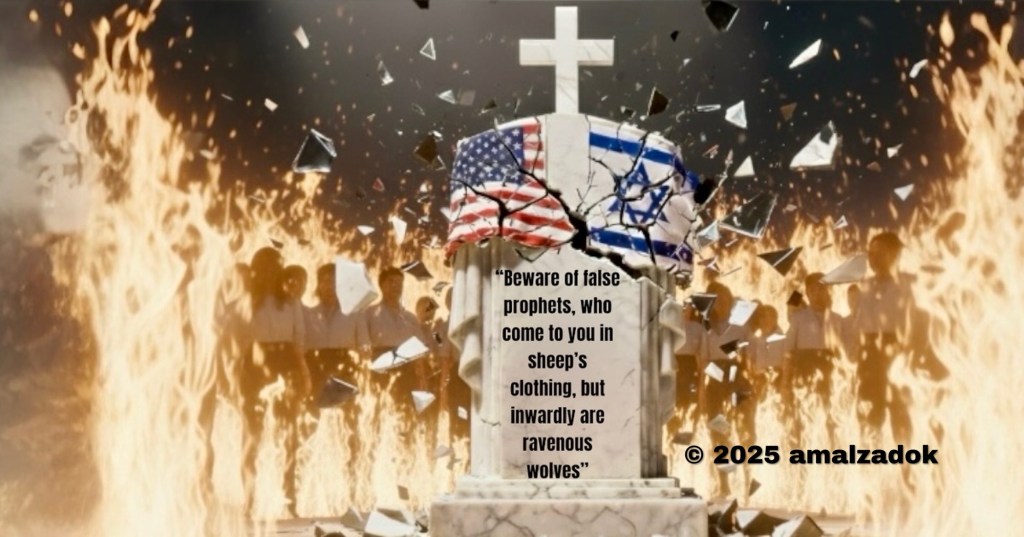
    Subscribe and never miss an article!

  • The Video Israel Tried to Bury: Rape, Whistleblowing, and the Genocide Exposed

    The Video Israel Tried to Bury: Rape, Whistleblowing, and the Genocide Exposed

    by Amal Zadok

    Introduction

    The floodgates have broken. Decades of denials, PR spin, and state-orchestrated slander are swept away by a single, horrifying video. Israeli soldiers—backed by the steel scaffolding of an entire state—caught committing rape inside the infamous Sde Teiman prison. This is more than evidence of a single atrocity; it is the death knell for the “moral army” myth and a siren announcing the full depravity of a regime already perpetrating genocide. Netanyahu’s regime is livid, not at criminal horror wrought by its hands, but at the irrefutable proof beamed to the world—the last thread in the web of Zionist lies snapping for all to see.

    The Crime: Not an Exception but the Blueprint

    Sde Teiman is Gaza’s Guantanamo—hell’s anteroom dressed up in state colors. The rape video is not a glitch or a one-off scandal; it is the essence of Israeli occupation policy. Palestinian prisoners are the raw material on which this regime perfects its machine of humiliation, forced confessions, and state-sanctioned sexual brutality. Doctors have testified: prisoners arrive shattered, genitals mutilated, intestines torn apart, children forced to witness “searches” designed to crush the last remnants of dignity. This is not a war against “terror.” This is a war on the Palestinian body and soul, and rape is both weapon and message: resist, and your suffering will become legend too monstrous for the world to ignore.

    Within the walls of Sde Teiman, torture is currency. For fifteen endless minutes, Israeli guards battered a bound Palestinian, spat on him, kicked him, shocked him with tasers—including his head—and finally, shielded by comrades, gang raped him. His injuries—ruptured bowel, broken ribs, lung trauma—weren’t “collateral damage.” They were the intended warning.

    Whistleblower versus the Leviathan

    What snapped the chains of silence? Major General Yifat Tomer-Yerushalmi, Israel’s chief military prosecutor, saw within her own government the seeds of absolute rot. In a historic act, she leaked the video to Channel 12, a move as dangerous as it was righteous. She did not act out of petty rivalry; she acted because her conscience rebelled against a state that tortures, lies, and calls any exposure “treason.” Her resignation and arrest reveal Israel’s priorities: it is not the victim whose dignity they defend, but the fortress of impunity around genocidal power.

    Instantly, Israeli politics ignited. Ministers who had spent years pretending horror was “fabrication” lashed out—not at the criminals, but at the whistleblower. Finance Minister Smotrich led lynch mobs in the streets of Sde Teiman, rioting not for justice, but for the “honor” of soldiers whose “heroism” was measured in the screams of their prisoners. The state’s response was a blueprint for every dictatorship: demonize the truth-teller, rally the fanatics, try to erase or spin the evidence, and ramp up persecution.

    The Great Obscenity: Genocide Supervised, Scrubbed, Celebrated

    Media, politicians, and Western governments have spent decades laundering Israeli crimes, transforming genocide into “self-defense” with a few words and a thousand press releases. This rape video obliterates all those alibis at once. Its impact exploded online: “Sde Teiman concentration camp” trended across the globe, leaving Israel’s foreign ministry stammering and Netanyahu stoking moral panic about “blood libels” instead of investigating horror in his own gulag.

    Genocide is not a metaphor. In Gaza and the West Bank, Israel has created a system of mass extermination: checkpoints as chokeholds, starvation used as policy, cities flattened, hospitals and schools bombed. When such a regime is exposed on camera committing sexual torture—while the world’s leaders continue writing checks, shipping bombs, and offering diplomatic cover—every word of denial becomes a mark of complicity. Genocide is the operating principle; rape, the obscene ritual enforced to instill terror and erase humanity.

    Global Judgment and Survivors’ Testimony

    International attention exploded. The United Nations Commission of Inquiry, human rights organizations, and war crimes investigators cited the Sde Teiman rape in their calls for immediate investigation and prosecution. The International Criminal Court is now scrutinizing Israel’s conduct with unprecedented urgency. Medical staff and visiting NGO lawyers from Médecins Sans Frontières and Amnesty International have kept secret logs of survivor injuries, documenting ruptured bowels, forced starvation, and humiliation.

    One survivor, anonymized for safety, told investigators: “They made examples of us. Every scream, every rape, every broken bone was a message to the world: ‘This can happen to you, too, and no one will save you.’” These voices, finally heard, transform suffering into undeniable evidence that will haunt Zionist history forever.

    Proof Beyond Denial: No Room for Cowards

    This is no rumor, nor product of “Palestinian propaganda.” The world watched the footage, saw the wounds, heard the medical testimony, and witnessed the splits within Israel’s own institutions. UN teams and international journalists confirmed not just this act, but the systemic, near-universal pattern of abuse inside Israel’s “detention facilities.” Leaked medical documents detail injuries so grave no PR campaign could fail to recognize them as deliberate.

    Western governments and pundits, who spent decades gaslighting survivors and conjuring a “both sides” narrative, now face a crossroads: back the perpetrators or finally stand for justice. Their silence is unsustainable; every dollar and bullet sent to Israel after this exposure brands them as sponsors of torture, rape, and genocide.

    Netanyahu’s Fury: The Mindset of a Genocidaire

    Netanyahu is not shocked or contrite; he is stung by the loss of control over Israel’s story. Sounding the alarm over a “propaganda attack,” he treats the publication of the video as a national security disaster. In his worldview, the shame lies not in suffering inflicted on Palestinians, but in the fact that viewers around the world cannot “unsee” the horror.

    While his ministers demand “the traitor” be prosecuted, not the soldiers, Netanyahu rails as if his real enemy is exposure. His outrage is the outrage of every tyrant who mistakes impunity for righteousness, who believes the world’s sympathy will endure any atrocity as long as no camera rolls. The video torched that fantasy.

    From the Ashes of Denial: The Reckoning Begins

    The Sde Teiman rape and the broader Israeli campaign of genocide are no longer a question hidden in shadow. They are the defining moral facts of our time. In a world where cellphones are more honest than politicians, where survivors dare to testify while bureaucrats cash foreign aid for bombs, the myth of Israeli exceptionalism is dead—murdered by its own evidence.

    Let no one now retreat into “both sides” cowardice. The Palestinian struggle has always been, at its heart, a fight against extermination. This moment demands recognition: rape as policy, genocide as doctrine, cover-up as reflex.

    Let no reader forget what has been buried and denied: genocide hides behind words, spins, and uniforms, but now it stands naked and undeniable in blood-soaked reality. The video is not just evidence—it is an indictment, a siren, a curse for every coward and collaborator who shrugged while lives and bodies were annihilated.

    Let Israel stand condemned in the court of the world, its name forever entangled with the rape, torture, and mass extermination it so frantically tried to conceal. Where silence once reigned, outrage must echo; where denials ruled, truth now blasts through the walls.

    Let the legacy of this moment be an end to impunity—and a warning to every genocidaire: there will come a day when no myth, no flag, no regime will protect you from the reckoning unleashed by a single, unerasable act of truth.

    References

    Amnesty International. (2024). Israel: Unlawful Detentions and Sexual Violence in Prison. https://www.amnesty.org/en/latest/news/2024/04/israel-sexual-violence-in-detention/

    B’Tselem. (2024). Torture and Abuse in Israeli Custody. https://www.btselem.org/topic/torture

    Al Jazeera. (2025, November 1). Why has the Israeli army’s top lawyer resigned after leaking rape evidence? https://www.aljazeera.com/news/2025/11/1/why-has-the-israeli-armys-top-lawyer-resigned-after-leaking-rape-evidence

    Middle East Eye. (2025, November 1). Israel to appoint new army lawyer after Palestinian prisoner rape video scandal. https://www.middleeasteye.net/news/israel-appoint-new-army-lawyer-after-palestinian-detainee-rape-video-scandal

    Truthout. (2025, October 30). Israeli Lawyer Resigns for Leaking Video of Sexual Abuse of Palestinian Prisoner. https://truthout.org/articles/israeli-lawyer-resigns-for-leaking-video-of-sexual-abuse-of-palestinian-prisoner/

    Palestine Chronicle. (2025, October 31). Israel’s ‘Right To Rape’: Leaked Video Investigated and Labeled Blood Libel. https://www.palestinechronicle.com/israels-right-to-rape-leaked-video-investigated-and-labeled-blood-libel/

    The Conversation. (2025, August 21). Israel is on notice for using sexual violence against Palestinians. https://theconversation.com/israel-is-on-notice-for-using-sexual-violence-against-palestinians-its-all-too-common-as-a-war-tactic-262951

    BBC News. (2025, October 31). Israeli military’s top lawyer resigns over leak of video allegedly showing abuse of Palestinian detainee. https://www.bbc.com/news/articles/clyk1dk7d9do

    BBC News. (2025, November 3). Israeli military’s ex-top lawyer arrested as scandal over video leak deepens. https://www.bbc.com/news/articles/cy0kpd97qqko

    ©️2025 Amal Zadok. All rights reserved.
    Subscribe and never miss an article!

  • Trump’s Crusade of Convenience: Selective Outrage, Forgotten Christians, and the Geopolitics of Hypocrisy

    Trump’s Crusade of Convenience: Selective Outrage, Forgotten Christians, and the Geopolitics of Hypocrisy

    by Amal Zadok

    President Trump’s recent spotlight on Nigeria—designating it a “country of particular concern” for Christian persecution and threatening military action—poses deep questions about the integrity, motives, and balance of his policy on religious freedom. 

    The timing and rhetoric strongly suggest selective outrage and political targeting, especially when considering that the Trump administration conveniently omits countries with comparable or worse records of anti-Christian violence, such as Israel, while actively antagonizing the BRICS coalition, of which Nigeria is a member.

    Why Nigeria—And Why Now?

    Trump’s decision to single out Nigeria as the emblem of Christian persecution, when dozens of other countries are facing high-profile incidents of anti-Christian violence, cannot be separated from Nigeria’s geopolitical profile. 

    Nigeria is Africa’s largest oil producer, home to nearly a quarter of the continent’s population, and has become increasingly influential as part of BRICS, the major economic alliance challenging Western dominance. This choice appears highly calculated, and the coverage accompanying his rhetoric repeatedly refers to Nigeria’s role in world oil markets and its importance in global diplomatic frameworks.

    Trump’s repeated public statements highlight dramatic claims that Christianity faces an “existential threat” in Nigeria, but provide few actual solutions. The proposed U.S. military intervention in response to Nigerian persecution starkly contrasts with his lack of similarly aggressive policy against other countries where Christians suffer—raising suspicions about underlying resource and political interests shaping his selective focus

    “The move to designate Nigeria as a ‘country of particular concern’ comes less than two months after Trump threatened to impose sweeping sanctions and warned, ‘America will not stand idly by while Christians are slaughtered for profit and politics,’ explicitly invoking Nigeria’s oil riches at an Oval Office press conference.” (Fox News)

    The Convenient Blind Spot—Israel and Others

    Evidence from 2025 shows Christians in Israel have been enduring a steep increase in violence and harassment, including more than 111 recorded physical attacks and systematic discrimination that has forced many believers to flee the country or reconsider their future there. 

    Despite clear documentation, the Trump administration has conspicuously refused to list Israel alongside countries facing “existential threats” to Christianity, despite vocal appeals from Christian leaders and human rights advocates. 

    By contrast, Open Doors and Global Christian Relief list dozens of countries, including India, Eritrea, North Korea, Pakistan, Yemen, Libya, and China, where persecution reaches or exceeds the levels seen in Nigeria.

    Such silence reveals a profound imbalance: Trump’s advocacy appears governed by geopolitics, not principle. When confronted with attacks in Israel—often perpetrated by radical religious extremists—there is no CPC designation, no threats of sanctions or military action, only diplomatic evasion and public silence. If protection of Christians were truly at the heart of Trump’s policy, there would be a consistent stance against all forms of persecution, regardless of the offending country’s strategic or economic ties to the U.S.

    Weaponizing Religious Freedom Against BRICS

    This selective advocacy fits into the broader context of Trump’s confrontational stance on BRICS, the bloc of emerging economies including Brazil, Russia, India, China, and South Africa, as well as newer members like Nigeria, Iran, Indonesia, and Egypt. 

    Trump has ramped up threats of punitive tariffs and direct provocations, including the threat of a 10% tariff on any country aligning itself with BRICS’ “anti-American policies.” This escalation occurs as the BRICS summit concluded in Rio de Janeiro, directly criticizing Washington’s economic and military moves.

    Nigeria, as Africa’s largest country and a prominent BRICS player, becomes a natural target. The “existential threat” framing is echoed in similar, often exaggerated statements about other BRICS states, like India and China, regarding religious freedom, even when local crises are far more nuanced or affect multiple religious groups equally.

    Ignoring The Big Picture—Selective Compassion

    The reality on the ground is more complex. While persecution of Christians in Nigeria is devastating—entire villages have been attacked, churches burned, thousands killed or displaced—the pattern of violence and discrimination is not unique to Nigeria. In Eritrea, Christian leaders languish in prison. In India and Pakistan, mob violence and discriminatory laws threaten millions. 

    Christians in China and North Korea live under constant surveillance, facing imprisonment or forced labor for religious practice. Israel, as shown in multiple independent reports, is experiencing a dangerous surge of violence and harassment against local Christians, with local government figures rarely condemning such acts. Yet in Trump’s policy, these nations escape scrutiny or sanctions.

    Moreover, Nigeria’s violence is not exclusive to Christians; Muslims and animists are also victims of terrorist groups and state abuses. Selectively highlighting the Christian angle obfuscates the broader reality and undermines genuine efforts for peace and justice.

    Resources and Realpolitik—The Underlying Motive

    Nigeria’s oil and other resources make it a valuable partner—or rival—in global markets. Trump’s targeting of Nigeria under the banner of religious freedom may serve dual purposes: appealing to Christian voters in America by appearing protective, and simultaneously establishing leverage over Nigeria’s strategic resources. 

    The fact that BRICS nations, many sitting atop vast reserves of oil, gas, minerals, and rare earth elements, are being isolated as “un-American” countries only strengthens suspicions that these pronouncements are part of a larger campaign of economic coercion.

    The Question of Motive—Is It About Religious Freedom Or Power?

    Ultimately, Trump’s selective outrage reveals a troubling bias. Why is Israel exempt from critique, despite the surge in attacks on Christians? Why aren’t sanctions considered for Pakistan, India, or other BRICS countries with severe religious intolerance? Why are nations with major resources or those affiliated with Washington’s strategic agenda largely left out of public condemnation?

    The answer seems clear: Trump’s moves are far more about power, resources, and global influence than true compassion for persecuted Christians. They are about securing leverage over resource-rich adversaries and shoring up American influence against BRICS, not defending faith communities everywhere without favor or exception.

    “Christian migrants fleeing violence and poverty in Latin America find America’s border policies punitive and hostile, despite decades of U.S. intervention that helped create their misery. ‘We just want peace and freedom, and instead are treated like criminals by the country that destroyed our homelands,’ said one recently deported Salvadoran Christian.” (Politico)

    Trump’s Assaults Against Christians in the USA

    All the while, Trump’s policies toward Christian migrants within the United States belie his claim to be their defender. Across the past year, thousands of Christian migrants—particularly from Latin America—have been branded as criminals, detained in harsh facilities, and deported in large numbers. 

    These migrants are not criminals; they are families fleeing violence, systemic poverty, and devastated economies, many originating from countries with long histories of U.S. interference.

    From El Salvador, Guatemala, Honduras, and other Latin American nations, Christians search for a place to live, worship, and provide for their children, only to find American border policies hostile and punitive. 

    The historic record shows repeated U.S. attacks and invasions, pillaging their resources, destroying social structures, and orchestrating CIA-backed coups to install compliant military governments that would serve American interests. 

    The implications are clear: the U.S. bears responsibility for the instability these migrants are escaping, having contributed to the conditions now being used as justification for their exclusion.

    Instead of compassion for fellow Christians fleeing real persecution, Trump presides over policies that treat them as dangerous outsiders. Families are separated, children detained, and deportation flights sent to countries with active threats to life. 

    Far from championing Christian refugees, Trump’s administration has constructed an apparatus that criminalizes them, further compounding the suffering wrought by decades of destructive U.S. foreign policy.

    Toward True Consistency

    A fair and principled approach to protecting Christians—and all religious minorities—demands intellectual honesty. It must recognize persecution wherever it happens: in Nigeria, Israel, India, China, Eritrea, Pakistan, Iran, and more. If Trump’s advocacy were truly balanced, it would not offer diplomatic immunity to allies or strategic partners while vilifying rivals. It would apply the same scrutiny, the same moral outrage, to all governments, regardless of oil reserves, trade blocs, or political convenience.

    Trump’s legacy on Christian persecution won’t be remembered by the empty thunder of selective outrage, but by the deafening silence in the face of genuine suffering—at home, abroad, and wherever power can be traded for principle. In this battle between justice and hypocrisy, history will not forgive those who weaponized faith for political convenience.

    References List

    https://www.politico.com/news/2025/11/02/nigeria-rejects-us-military-threat-over-alleged-christian-killings-00632931

    https://www.foxnews.com/world/trump-designates-nigeria-country-particular-concern-over-widespread-christian-persecution-killings

    https://www.bbc.com/pidgin/articles/c5y44gg3keko

    https://www.pbs.org/newshour/world/trump-threatens-nigeria-with-potential-military-action-over-claims-of-christian-persecution

    https://www.aljazeera.com/news/2025/11/1/trump-threatens-to-launch-attacks-in-nigeria-over-killing-of-christians

    https://www.dw.com/en/nigeria-flaunts-religious-freedoms-after-trump-designation/a-74587490

    https://www.straitstimes.com/asia/Trump-says-Christians-face-existential-threat-in-Nigeria-adds-country-to-watch-list

    https://www.aljazeera.com/news/2025/10/31/trump-places-nigeria-on-watch-list-over-claims-of-anti-christian-violence

    https://johnmenadue.com/post/2025/08/trumps-attacks-are-driving-what-brics-was-meant-to-do-encourage-co-operation-among-non-western-powers-and-reduce-dependence-on-the-us/

    https://www.vaticannews.va/en/world/news/2025-04/holy-land-christians-rossing-center-jerusalem-jewish-relations.html

    https://www.timesofisrael.com/report-shows-rise-in-attacks-on-christians-in-israel-but-a-willingness-to-tackle-issue/

    https://www.catholicculture.org/news/headlines/index.cfm?storyid=65248

    https://armenianweekly.com/2025/09/11/violence-against-christians-is-on-the-rise-in-israel/

    https://www.opendoors.org/en-US/persecution/countries/

    https://www.aljazeera.com/news/2025/7/7/donald-trump-threatens-un-american-brics-countries-with-10-percent-tariff

    https://globalchristianrelief.org/gcr-red-list/

    https://persecution.org/2025/10/31/trump-announces-cpc-designation-for-nigeria/

    https://www.theguardian.com/world/2025/apr/18/jerusalem-christians-easter-israeli-crackdown-church-holy-sepulchre

    https://www.christianitytoday.com/2025/01/christian-persecution-2025-countries-open-doors-watch-list/

    https://catholicweekly.com.au/christian-persecution-on-the-rise-worldwide-new-report-says/

    ©️2025 Amal Zadok. All rights reserved.

    Subscribe and never miss an article!

  • Inferno Across the Americas: Lindsey Graham’s Script for National Suicide

    Inferno Across the Americas: Lindsey Graham’s Script for National Suicide

    by Amal Zadok

    In the unrelenting hysteria that has become Senator Lindsey Graham’s political brand, there remains one particularly destructive obsession: war for its own sake.

    His latest outburst, delivered with the tone of a televangelist preaching apocalypse, calls for treating three Latin American nations—Cuba, Venezuela, and Colombia—as fair game for possible invasion under President Trump’s second term.

    Graham, who once styled himself as a sober voice of national defense, now sounds more like a man possessed by delusion and empire fever.

    Let us begin by dissecting Graham’s most recent tirade. In his televised appearance, the Senator claimed there exists a “drug caliphate” across Latin America—a grotesque invention meant to fuse Washington’s decades-old “War on Drugs” with the equally disastrous “War on Terror.”

    With no credible evidence, he accused the sovereign governments of Venezuela, Cuba, and Colombia of making money off narcotics destined for the United States. In his fevered narrative, the flow of cocaine becomes an act of war, and “blowing up the boats” suddenly morphs into a viable foreign policy strategy.

    These are not the words of a serious legislator. They are the ravings of a warmonger searching for his next crusade.

    Let’s be clear: the only “caliphate” that exists in the Western Hemisphere is the empire of addiction and profit that has long existed within the United States itself. It is not Caracas, Bogotá, or Havana that drive the colossal U.S. demand for drugs; it is the American appetite for narcotics and the billions of dollars generated by domestic distribution networks that fuel the trade.

    Graham’s grotesque simplification—that the problem lies outside American borders—is both dishonest and cowardly. It conceals the complicity of U.S. financiers, corporate leaders, and political operatives who have, for decades, allowed this epidemic to fester for profit and political theatre.

    In accusing Latin American countries of waging chemical war on the United States,

    Graham conveniently ignores history. It was the United States that actively funded and armed violent groups in the region under the pretext of fighting communism. It was Washington that trained death squads in Central America and toppled democracies at will. It was the U.S. State Department that destabilized entire nations, leaving behind chaos that drug traffickers later exploited.

    And yet, in Graham’s distorted imagination, it is Venezuela—a country crippled by sanctions and struggling to feed its people—that somehow bankrolls the poisoning of American youth. The hypocrisy is nauseating.

    Even his invocation of the lie that Donald Trump “destroyed” the ISIS caliphate reeks of opportunism. Graham conveniently ignores facts about the Syrian conflict, where the terrorist President of Syria, once among the world’s most-wanted with millions of dollars in bounties on his head, under Trump’s administration has pivoted to become a partner of the United States. The war that unfolded in Syria saw key terrorist factions—formerly shunned as existential threats—normalized and engaged by Washington as expedient partners in the campaign against ISIS. Graham now laments the rise of an imagined “drug caliphate,” which is a grotesque parody of moral indignation.

    What makes his tirade even more disturbing is his open talk of “land invasions.”

    To threaten Cuba, Venezuela, and Colombia with military action is not simply reckless—it is criminal. These are sovereign nations, each with complex internal struggles, yet bound together by geography, culture, and shared resistance to foreign domination. A U.S. invasion of any of them—especially without a congressional declaration of war—would constitute an act of aggression in flagrant violation of international law and the U.S. Constitution. It would make a mockery of every oath Graham ever swore to defend.

    History offers a grim reminder. The Bay of Pigs in 1961 remains one of the most humiliating chapters in American interventionism—a textbook lesson in arrogance and underestimation. If Senator Graham thinks that a modern version of that catastrophe would play out differently, he should listen to the words of the international geopolitical analyst Pepe Escobar.

    In his interview with Judge Napolitano on YouTube, Escobar warned any invasion of Venezuela would be “Bay of Pigs multiplied by a zillion pigs.” Venezuela, unlike 1961 Cuba, has spent years preparing for exactly this scenario: armed civilian militias, and reinforced alliances with Russia, China, and Iran. Any American landing would face overwhelming resistance and ignite geopolitical chaos far beyond Latin America.

    As a constitutional question, the matter is even graver. The U.S. Constitution vests the power to declare war in Congress—not in the impulsive rhetoric of a Senator or the whims of an executive stirred by bellicose advisers. Any attempt to launch land invasions without explicit authorization would render the administration a violator of constitutional order.

    For a self-proclaimed patriot like Lindsey Graham to encourage such unlawful acts exposes his contempt for the very framework that sustains the republic. His loyalty is not to the rule of law but to war itself—a parasitic vocation that thrives on chaos and fear.

    It is also worth asking: to what end? What would a war against Venezuela, Cuba, or Colombia achieve? The overthrow of three governments? The occupation of nations that have bled under the weight of economic sanctions, regional instability, and U.S. interference?

    Graham envisions Latin America not as a group of neighbors but as a canvas for American dominance. His rhetoric drips with colonial nostalgia, echoing the old Monroe Doctrine’s arrogance that the Western Hemisphere belongs exclusively to Washington’s sphere of control. It is the 21st century, yet Lindsey Graham speaks as though it were 1823.

    If the U.S. military establishment had any collective sense, it would treat Graham’s words with the derision they deserve. No rational strategist believes that invading Latin America is militarily or politically feasible. The Pentagon, despite its many sins, understands geography and insurgency better than demagogues.

    A war against three nations—each tied to major global powers—would stretch American logistics, drain billions, and ignite anti-U.S. sentiment across the hemisphere for decades to come. The last thing Washington needs, as the world shifts toward multipolar realities, is to open another front born of one Senator’s megalomania.

    Graham’s grandstanding is not policy—it is pathology. This is the same deranged appetite that led him to call for war in Iran, Syria, Libya, and beyond—agitating for escalation in Ukraine even as he flirts with nuclear confrontation against Russia, and recently defending Israel’s right to do “whatever it takes,” invoking Hiroshima and Nagasaki as models for what should be done to Gaza.

    He is a man who defines patriotism by bombs dropped on developing nations and moral integrity by proximity to the military-industrial complex. His worldview thrives on permanent confrontation because peace would render his ideology irrelevant. In his calculus, Latin American lives—as with Palestinians and Russians—are abstractions, pawns in an endless parade of televised righteousness.

    Yet there is a deeper truth. The age of American impunity in Latin America is ending. The peoples of the South have grown weary of lectures from those who weaponize democracy while funding dictatorships.

    They remember the coups, the disappearances, the torture chambers funded by Washington’s dollars. They will not forget. If President Trump’s administration listens to Graham’s siren call for “land invasions,” it would ignite a resistance that even the CIA’s most fevered counterinsurgency fantasies could not extinguish. It would ruin what remains of Washington’s moral standing in the global south.

    In the end, Lindsey Graham’s “drug caliphate” fantasy reveals more about his own intellectual and moral decay than about Latin America. He is the embodiment of everything corrosive in American politics—fear masquerading as strategy, aggression disguised as patriotism, ignorance marketed as leadership. He has become the Senator of endless war, a prophet not of national defense but of national self-destruction.

    The American people should reject this madness with clarity and conviction. South Carolina voters, get rid of this demented maniac warmonger asap. They must refuse to let men like Graham drag the nation into another blood-soaked adventure in the name of righteousness.

    The time has come to remind him, and those who think like him, that Latin America is not Washington’s backyard—it is a continent of sovereign peoples who have endured enough suffering under the shadow of the American flag.

    It is not Cuba, Venezuela, or Colombia that threaten the United States. The real threat lies in Washington itself: in its arrogance, its addiction to militarism, and its inability to imagine a world based on equality rather than domination.

    Lindsey Graham has become the high priest of that delusion. And unless America wakes up, his infernal dream may yet set the southern horizon ablaze.

    Let no one in Washington or Mar-a-Lago be deluded: if Lindsey Graham’s fantasy is made real, it will be remembered as the worst Vietnam-style defeat in U.S. history—a war not only unwinnable but incendiary enough to spark a massive hemispheric uprising across all the peoples of Latin America.

    Any land invasion, any bomb, would ignite every village, neighborhood, capital, and countryside from Patagonia to the Rio Grande into righteous revolt. Go ahead, President of Peace Trump—dare, if you have your intelligence not in your head but in your balls. Follow what this deranged nuclear warmonger evangelist is whispering in your ear. The empire’s last war may be the one that turns the entire continent against it, in a blaze from which it will never recover.

    References

    Cato Institute. (2022, June 17). When interventions fail: Lessons from the U.S. experience in Latin America. https://www.cato.org/research-briefs-economic-policy/when-interventions-fail-lessons-us-experience-latin-america

    Escobar, P., & Napolitano, A. (2025, October 30). Pepe Escobar on U.S. invasion threats and the “Bay of Pigs multiplied by a zillion pigs” [Video interview]. Judge Napolitano YouTube Channel. https://www.youtube.com/live/aB4xzhmC_Ok?si=txdYEL7FdHg48DO-

    Monthly Review. (2025, September 7). U.S. Offensive in Latin America: Coups, Retreats, and Radicalization. https://monthlyreview.org/articles/u-s-offensive-in-latin-america/

    ReVista: Harvard Review of Latin America. (2005, May 14). United States Interventions. https://revista.drclas.harvard.edu/united-states-interventions/

    UWA News. (2023, November 9). Half a century of failed US adventures, from Vietnam, to Afghanistan. https://www.uwa.edu.au/news/article/2023/november/half-a-century-of-failed-us-adventures

    BBC News. (2025, October 26). Venezuelan official says ‘no doubt’ Trump wants to overthrow Maduro, warns of invasion threat. https://www.bbc.com/news/articles/clyg2wljz6xo

    CBS News. (2025, October 26). Sen. Lindsey Graham says land strikes in Venezuela are a ‘real possibility’. https://www.cbsnews.com/news/lindsey-graham-venezuela-land-strikes-face-the-nation /

    Newsweek. (2025, October 30). US could fire Tomahawks into Venezuela: Former ambassador. https://www.newsweek.com/us-could-fire-tomahawks-into-venezuela-former-ambassador-10953228

    ©️2025 Amal Zadok. All rights reserved.
    Subscribe and never miss an article!

  • Part II: Genocide for Gas, Thirst for War: Inside the Ruthless Scramble for the Planet’s Last Lifelines

    Part II: Genocide for Gas, Thirst for War: Inside the Ruthless Scramble for the Planet’s Last Lifelines

    by Amal Zadok

    Superpower Rivalry, Scarcity, and the Road to Collapse

    The Arctic: The New Resource War Frontier

    Rising temperatures are shattering centuries-old Arctic ice, exposing vast and previously unreachable reserves of oil, gas, and rare earth minerals—resources now the focus of feverish competition among the world’s superpowers.

    The Arctic’s mineral wealth is so immense it could satisfy nearly a fifth of the world’s untapped reserves, and its routes, now navigable for longer periods each year, are coveted for their potential to transform global trade flows.

    Russia, possessing the longest Arctic coastline and a revitalized fleet of nuclear icebreakers, is expanding military bases and infrastructure to secure its claim as the dominant Arctic power. The US, not to be outdone, has surged spending on its Arctic military presence and technology, while the UK, Canada, and Scandinavian countries fortify the region with joint naval patrols and intelligence efforts. China, calling itself a “near-Arctic State,” is leveraging its Polar Silk Road strategy—pouring billions into Russian joint ventures and Greenland mining projects, and asserting rights to resource development and navigation.

    As old treaties strain under new realities, and diplomatic forums like the Arctic Council flounder amid renewed cold war tensions, the risk of direct power confrontation climbs each season. The militarization and competition for energy and minerals in the Arctic add yet another volatile flashpoint to the map of 21st-century resource wars—proving that the hunger for extraction never ends, only moves northward as the ice recedes.

    Green Transition: New Chains of Exploitation

    The “green transition” never halted exploitation—it simply shifted the battlefield. Electric vehicles, wind turbines, and batteries require lithium, cobalt, and nickel—often mined with Western finance under appalling conditions. The “clean energy future” is chained to new forms of resource colonialism. Climate policy, sold as moral progress, doubles as a tool for extraction with a new set of victims.

    Venezuela: Oil as the Hemisphere’s Condemnation

    Across the Atlantic, Venezuela sits on the world’s largest proven oil reserves—and bears the weight of that misfortune. Economic embargoes and covert sabotage have been deployed for decades to break Caracas’s independence. Now, as American economic dominance falters and BRICS seeks currency alternatives, Venezuela is again on the edge of invasion.

    Talk of “restoring democracy” is camouflaged resource reclamation. Hidden behind this is the Western craving to reclaim Venezuela’s oil sector. Should the military drums beat again, they will not sound for liberty—they will sound for fuel. This logic extends to South America’s mineral-rich backbone, where lithium in Bolivia and copper in Chile define future conflicts. The imperial chase for gold and silver now reemerges as the race for electrification.

    Economic Sieges: Sanctions as Modern Warfare

    Economic tools are now weapons. Sanctions starve nations. Currency manipulation can annihilate millions without a bullet fired. Asset seizures and banking exclusion are today’s siege tactics. IMF rules, SWIFT networks, and “rules-based order” all extend hegemony’s reach. No nation can survive without securing independent access to food, energy, and water. Sovereignty is now synonymous with self-sufficiency—and most states are failing.

    China: Resource Dominion and the Mastery of Modern Power

    China stands not as a mere participant but as the architect of the new resource struggles defining this century. Through relentless investment, state-led industrial policy, and a shrewd blend of diplomacy and selective export controls, Beijing has engineered a system that puts it at the center of global supply chains, making most rivals dependent on its willingness to share.

    China’s grip over rare earth minerals is unrivaled—controlling 85–95% of global processing capacity, 70% of mining, and more than 90% of rare earth magnet manufacturing. These materials are the backbone of electric vehicles, wind turbines, advanced electronics, and defense systems. Just in 2024, Beijing committed $16.3 billion to mineral exploration, discovering 150 new deposits and strengthening internal reserves. Its five-year plan puts $63 billion toward this long-term strategy, ensuring not just dominance in raw extraction but in technical know-how and downstream processing.

    The real power, however, is not simply in mining or refining—it lies in Beijing’s ability to weaponize supply chains for diplomatic and strategic advantage. Export controls and technology transfer restrictions allow China to disrupt other nations’ industries at will. New rules require companies everywhere to seek Chinese permission simply to export goods with rare earth content, effectively making Beijing the global gatekeeper for advanced technology.

    Attempts by the US, Europe, and Australia to break this grip are slow and costly. Years of environmental regulation and lack of technical infrastructure mean that new supply chains remain years—sometimes decades—behind China’s integrated model. Even nations with significant deposits cannot match the processing know-how or scale that Beijing has built over generations.

    China has linked its mineral dominance to industrial ambition.

    The “Made in China 2025” state plan and the Belt and Road Initiative entwine resource extraction with ambitions in green technology, artificial intelligence, and high-tech manufacturing. Every rail, port, and fiber-optic cable deepens interdependence, making logistics and raw inputs an extension of China’s political will.

    For governments in the Global South, China offers infrastructure, investment, and partnership—often trading minerals for major building projects and diplomatic backing. For Western rivals, China’s dominance is both a warning and a lever. Beijing has reshaped not only what flows from mine to market, but who decides how the world’s future is made—or denied.

    In the new era of resource wars, China is more than a competitor; it is the decider: orchestrating scarcity and abundance at a planetary scale. Those who depend for supply or technology must reckon with Beijing’s priorities. Those who resist find themselves searching for alternatives that rarely come fast enough.

    The Last Shredded Morality

    Gaza’s ruins expose the final shreds of moral legitimacy. The supposed defenders of human rights are complicit in genocide because it serves corporate and strategic interests. International law became theater; humanitarian language, marketing. Governments cry “freedom” in Ukraine and fund slaughter in Palestine. Every principle now costs cubic meters, barrels, or megawatts. When Gaza’s gas finally flows under new ownership, the hypocrisy will be complete.

    Plunder or Cooperation: The Choice Before Collapse

    The explosions in Gaza, trenches in Ukraine, Venezuela’s oil in crosshairs—these are coordinates of a single planetary war. The age of resource wars has no ideals: only contracts, drones, and scarcity. The victors will be those who master the flows of water, food, and energy. The rest will inherit dependence, injustice, and dust.

    Here is the raw, unsparing verdict: history will not remember the architects of this age for their ingenuity or civilization, but for the scope of their destruction. Every treaty shredded, every city burned, every river sucked dry for a dying empire’s last fix will be carved into the planet’s memory far longer than any monument or mission statement.

    The world’s self-styled guardians have chosen to plunder, not to build. In that choice lies a future not of progress, but of planetary reckoning. There are only two directions left: stand up, disrupt, and restore—or collapse, forgotten, beneath the weight of stolen time.

    References

    Arab Center DC. (2025). Gas and geopolitics in the Eastern Mediterranean.

    ByTheEast. (2025). Gaza gas field: The hidden agenda of Israel.

    DMJR Journals. (2025). Gaza marine gas: A strategic resource between economic opportunities and political challenges in the Israeli-Palestinian conflict.

    AA Energy Diplomacy. (2025). Recognition of Palestine could unlock Gaza Marine gas resources, experts say.

    CIRSD Horizons. (2025). The Mineral Wars: How Ukraine’s Critical Minerals Will Shape the World.

    ScienceDirect. (2025). The geopolitical fight for Ukraine’s mineral wealth.

    DiscoveryAlert. (2025). Ukraine-US Minerals Fund: Progress on Critical Resources.

    European Leadership Network. (2025). The US-Ukraine mineral resources agreement as a signpost in Eurasia’s emerging resource realignment.

    GIS Reports. (2025). The geopolitical impact of the U.S.-Ukraine minerals deal.

    World Health Organization. (2025). 1 in 4 people globally still lack access to safe drinking water.

    Human Necessity Foundation. (2025). Water Scarcity in 2025: The World’s Biggest Crisis.

    World Vision. (2025). Global water crisis: Facts, FAQs, and how to help.

    High North News. (2025). NATO’s Military Leader: The Arctic in 2025 Is at a Crossroads.

    The Arctic Institute. (2025). A Grand Illusion: America’s Anti-China Arctic Policy Is Rooted in Paranoia.

    ISSRA. (2025). Growing Geopolitical Significance of the Arctic.

    MERICS. (2025). The Arctic, outer space and influence-building: China and Russia join forces to expand new strategic frontiers.

    Modern Diplomacy. (2025). Resource Wars: The Hidden Fuel Behind Most Conflicts.

    ©️2025 Amal Zadok. All rights reserved.
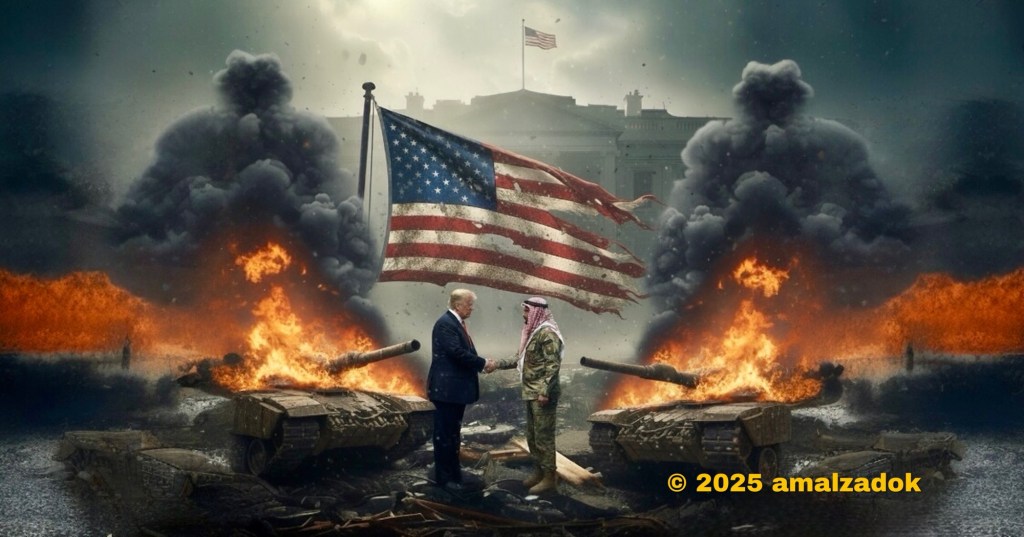
    Subscribe and never miss an article!

  • Part I Genocide for Gas, Thirst for War: Inside the Ruthless Scramble for the Planet’s Last Lifelines

    Part I Genocide for Gas, Thirst for War: Inside the Ruthless Scramble for the Planet’s Last Lifelines

    by Amal Zadok

    Introduction

    This exposé is presented in two uncompromising parts, designed to capture the full, global breadth of the new resource wars and their human cost. In a world driven by the scramble for gas, oil, water, minerals, and the land that conceals them, conflicts are no longer isolated incidents—they are interconnected fronts in a global campaign of extraction and domination.

    Part I: Genocide, Gas, and Extraction—The New Battlefields

    Part I investigates how entire populations and states, from Gaza to Ukraine, have become collateral for strategic plunder. You will uncover the real motives driving the devastation of Gaza, the resource ambitions underlying Russia’s war with Ukraine, and the water crisis emerging as the next epoch-defining frontline. This section reveals the hidden economic drivers, colonial logic, and geopolitical blueprints shaping today’s most explosive conflicts—showing why modern warfare cannot be understood without following the flow of resources.

    Part II: Superpower Rivalry, Scarcity, and the Road to Collapse

    Part II widens the lens to the geopolitical chessboard: the scramble for the Arctic, the green transition’s new domains of exploitation, and the intensifying siege around Venezuela’s oil and South America’s minerals. Here, readers will see how economic warfare, sanctions, and chokepoints are transforming globalization into a zero-sum game, why China’s logistics revolution is reshaping influence, and how the final collapse of world morality is spelled out in each ruined nation and dying river. You will be confronted with the ultimate question: will humanity unite to reclaim the future, or choose plunder until nothing remains?

    Part I: Genocide, Gas, and Extraction—The New Battlefields

    Resource Wars Redraw the Global Map

    The global order is splitting open, revealing its raw, predatory mechanics. Beneath the slogans of democracy and human rights, the planet obeys a single law—the law of extraction. The twenty-first century is the age of resource wars, where dominance is measured not by moral pretense, but by control of civilization’s vital lifeblood: gas, oil, water, minerals, and the invisible circuits of data. Gaza, Ukraine, Venezuela, and the fast-drying rivers of Africa and Asia are not just separate tragedies—they are theaters of the same global war.

    Gaza: Genocide for Energy Supremacy

    In Gaza, the stakes are economic, not ideological. Beneath the bombed coastline lies the Gaza Marine gas field, discovered in 1999 and left dormant for a generation. It contains enough natural gas to make the Palestinian people economically independent, perhaps even prosperous. Such independence is anathema to those who rule by dependency. Since its discovery, every attempt by Palestinians to harness this strategic gas has been blocked or destroyed by Israel—with tacit Western complicity.

    Every “security operation,” every bombardment, every euphemism of “self-defense” has cleared the way for a singular goal: full Israeli control of offshore gas extraction and the permanent exclusion of Palestinians from their resource future. Expulsion, starvation, and annihilation have another endgame—to make room for uncontested resource domination. Gas, not land, is the prize. Each demolished home and murdered child is collateral damage in the drive to claim a corridor for gas exports to a Europe desperate for energy supplies after cutting ties with Russia. The world’s silence is betrayal. This is not security—it is colonialism remastered: genocide as business strategy.

    The Billion-Dollar Gas Field: Ownership Versus Annihilation

    The Gaza Marine project—potentially worth billions per year for Palestine—remains trapped in crossfire. The prize isn’t just revenue or electricity; it is the promise of true sovereignty. Recognition of Palestinian statehood could unlock this windfall, but Israel’s calculation is ruthless: only dead or exiled Palestinians guarantee uncontested extraction and export. The ghosts of Gaza call out as witnesses to a crime whose means is violence, and whose ultimate justification is profit.

    Ukraine: NATO’s Encroachment, Russian Fears, and Western Resource Ambitions

    The war in Ukraine is not just a contest over territory or ideology—it is a struggle that unites existential security fears and clear-eyed economic ambitions. In Moscow’s view, NATO’s relentless expansion eastward has always represented an existential threat; Ukraine’s potential entry into the alliance, combined with the alliance’s burgeoning bases and weaponry at Russia’s borders, triggered a response that the Kremlin insists was inevitable: the so-called “special operation,” a preemptive push to reclaim a strategic buffer and prevent NATO’s reach from reaching the very heart of the Russian homeland.

    Yet as Russian forces have fought to assert control over Ukraine’s eastern and southern regions, a second and equally voracious game is underway—being played by America and Europe. For Western powers, the war is not just about defending “democracy” or deterring Russian aggression; it is explicitly about gaining privileged access to Ukraine’s immense treasure trove of resources. Ukraine is blessed with colossal deposits of rare earth metals, critical minerals such as graphite, lithium, and titanium, fertile farmland, and hydrocarbon reserves considered strategic for the future of the European Union’s energy security and America’s technological supremacy.

    In recent years, the US, in partnership with the EU, has rapidly established “Reconstruction Investment Funds” and mineral extraction agreements that will see American and European firms receive preferential rights to Ukraine’s most valuable subsoil assets.

    These deals are often lauded as rebuilding efforts, but in practice, they cement the West’s stake in postwar Ukraine, ensuring that Ukraine’s rare earths, agrarian wealth, and energy play a central role in shoring up Western economic power and the green transition.

    For the US, it is a double gain: breaking China’s grip on critical minerals while cementing Europe’s dependence on American-controlled supply lines.

    This “resource diplomacy” is not abstract—it is already drawing clear lines of profit and dependency for decades to come. Even as the frontlines shift and civilians suffer, contracts for mining, drilling, and export are being signed at breakneck pace—promising private investors and Western states a direct cut of Ukraine’s mineral and agricultural bounty after the war. Some regions rich in minerals remain under dispute or Russian occupation, but for both the West and Moscow, these underground riches remain at the heart of the contest.

    Thus, Ukraine’s fate is now being shaped by twin imperatives: Russia’s drive to survive what it calls Western encirclement, and America’s and Europe’s blunt ambition to control the resources that will fuel their futures. Control over Ukraine is, in the final calculus, a battle for both security and supply—one in which survival, sovereignty, and staggering profit are all at stake.

    Water Wars: The Coming Battle for Survival

    If oil is the blood of modern civilization, water is its breath—without it, life, industry, and agriculture collapse. Yet as the century turns, a global water catastrophe is no longer a distant warning, but a grinding reality: more than two billion people now lack access to safely managed drinking water, and half the planet faces chronic shortages or unsafe supplies each year.

    From dried river basins to shrinking lakes and failing aquifers, water crises now destabilize economies and ignite violent conflicts in every hemisphere.

    Agriculture, responsible for the majority of water consumption, is under siege amid droughts, desertification, and erratic weather. Failed crops and livestock wipe out entire regional economies, triggering food shortages, hyperinflation, and waves of hunger-induced migration. Africa’s Nile basin is a battlefield for political survival, as Ethiopia’s mega-dam risks plunging Egypt into catastrophic water stress.

    In South Asia, rivers crossing contested borders have become weapons, squeezing neighbors into submission with engineered scarcity.

    In the Middle East, water control is the silent accomplice to occupation and genocide; Palestinians in Gaza and the West Bank are denied access to their most

    vital resource, forced into dependence by Israeli policy and regional power plays.

    Across Latin America and the world, private investors and conglomerates race to monopolize aquifers and groundwater rights, treating this most essential public good as a luxury commodity.

    Experts warn that by the decade’s end, two-thirds of humanity may experience severe water stress. The next wars—more than any fought for oil or minerals—will be sparked by thirst. In this era, access to water will draw new borders, incite rebellions, and determine whether nations rise or fall

    ©️2025 Amal Zadok. All rights reserved.
    Subscribe and never miss an article!

  • From Istanbul to Asymmetry: The Unraveling of Leverage and the Birth of the Third World War

    From Istanbul to Asymmetry: The Unraveling of Leverage and the Birth of the Third World War

    by Amal Zadok

    In the mid-2020s, inside the third decade of the 21st century (2021–2030), the architecture of international relations has become chaotically multipolar. No longer does “leverage” reside in the hands of a single power, nor can military force alone impose diplomatic solutions. The collapse of hallmark negotiations—most notably the 2022 Istanbul process aiming to end the war in Ukraine—exposed the Western bloc’s inability to enforce compromise, shut the doors on genuine negotiation, and set the stage for a new era of relentless, multidimensional conflict (Moscow Times, 2025; Intellinews, 2024; Responsible Statecraft, 2025). On the contemporary chessboard, financial warfare, technological embargoes, proxy confrontations, and psychological operations intertwine—heralding what some analysts perceive as an asymmetric Third World War (Defensa, 2025; Ogutcu, 2024; CSIS, 2025).

    The Death of Leverage: U.S. and the European Landmass

    American influence in Europe has ebbed as the ground realities of Ukraine’s war and Europe’s security needs have shifted. Once, U.S. leverage meant dictating both terms and outcomes, but by 2025, the capacity to project power—militarily or diplomatically—has faded.

    The withdrawal from Ukraine as a “primary guarantor of European security” and reluctance to back unconditional NATO expansion for Ukraine, coupled with a rising European sentiment for autonomy, have eroded Washington’s legacy leverage (Cato Institute, 2025; Council on Foreign Relations, 2025; RFE/RL, 2025).

    According to retired General Keith Kellogg, U.S. strategists are struggling to define what credible deterrence and leverage mean in a fragmented world where compromise is inevitable and military guarantees are no longer reliable (Fox News, 2025; Council on Foreign Relations, 2025).

    The fragmentation of leverage was laid bare in the failure to secure a peace deal during the 2022 negotiations in Istanbul. The draft proposed Ukrainian neutrality and security guarantees, yet disagreements over territorial integrity and future Western obligations led to a breakdown.

    The discovery of mass atrocities in Bucha hardened Ukrainian and Western postures against compromise, and Western powers—particularly the U.S. and UK—began to reject negotiation in favor of continued military pressure (Moscow Times, 2025; Intellinews, 2024). In retrospect, this marked a point of no return, confining the U.S. to a path of escalation without a credible offramp to peace.

    Asymmetric War: The Real “World War III”

    What is now termed “the Third World War” defies the template of conflicts past. This war is not defined by clear front lines but by economic sanctions, technological embargoes, currency wars, and information operations. The battlefields are as likely to be global financial networks as Donbas trenches or the Taiwan Strait (Defensa, 2025; Ogutcu, 2024; CSIS, 2025).

    The concept of “reverse asymmetry,” as argued by defense theorists, describes an environment where classic military advantages mean less than the ability to manipulate supply chains, public opinion, or cyber infrastructure (Defensa, 2025). Territorial gains are no longer paramount; instead, the competition is for influence, legitimacy, and “hearts and minds.”

    This multidimensional battlefield blurs public and private, civil and military, foreign and domestic. Actors operate through proxies, mercenaries, and covert cyber units, amplifying the chaos and unpredictability of the strategic environment (CSIS, 2025). Not only Russia and the West, but also China, Iran, Turkey, and other rising powers exploit financial leverage, information dominance, and asymmetric tactics in pursuit of their interests (Russia Matters, 2025; Ogutcu, 2024; CSIS, 2025).

    The China Factor: Watching, Waiting, Leveraging

    China’s approach exemplifies the asymmetric mindset. Rather than overt military intervention, Beijing leverages its dominance in rare earth minerals, microchip production, and global supply chains to extract concessions and punish transgressors (The Atlantic, 2025; CBC, 2025; CNN, 2025).

    The recent U.S.-China trade standoff underscores how economic and technological dependencies are now the principal vectors of coercion, overshadowing even traditional military might (The Atlantic, 2025; CBC, 2025; CNN, 2025).

    Chinese leaders, closely observing the unraveling of diplomatic pathways in Ukraine and the West’s turn toward coercive measures, have adapted their grand strategy. The threat of restricting key exports—and the real option to reroute global trade on Beijing’s terms—now serves as “leverage” every bit as real as nuclear deterrence was during the Cold War era (CBC, 2025; CNN, 2025). This shift reflects a broader global trend: power is measured not just in hardware or alliances, but in the ability to disrupt, destabilize, or dominate the economic connective tissue of the world.

    America’s Strategic Dilemma

    The United States finds itself at an inflection point. Having chosen escalation over negotiation, it now finds its tools—military aid, sanctions, and rhetoric—met by equally potent asymmetric responses (Cato Institute, 2025; Council on Foreign Relations, 2025; RFE/RL, 2025).

    According to observers, the lack of interest in revisiting the Istanbul frameworks, or negotiating on terms acceptable to Russian or even Ukrainian sensibilities, is not so much a show of strength but a symptom of strategic confusion (Moscow Times, 2025; Intellinews, 2024; Responsible Statecraft, 2025).

    Rather than a liberator, America is now cast as a reactive power struggling to maintain relevance in a world where every crisis is interconnected and every action begets unpredictable consequences.

    The expansionary nature of this new asymmetric conflict ensures that escalation continues even in the absence of formal declarations of war. Financial sanctions, tech restrictions, clandestine sabotage, and diplomatic brinksmanship proliferate—with less and less clarity about objectives or outcomes (Defensa, 2025; Nitishastra, 2025; CSIS, 2025).

    Conclusion

    Everything is, indeed, connected: the collapse of Istanbul, the evaporation of American leverage, the rise of asymmetric, globalized warfare, and the watchful presence of China mark an epochal transformation in world order.

    The refusal to negotiate, the strategic shortsightedness of all sides, and the embrace of maximalist, winner-takes-all postures have birthed a war without borders and without clear end (Moscow Times, 2025; Ogutcu, 2024; CSIS, 2025). The world now sits inside an asymmetric conflict whose only certainty is uncertainty, whose battles are fought across currencies, code, commodities, and minds.

    History will remember this era not as a sequence of isolated crises, but as a time when the largest powers gambled away the prospects of stability in pursuit of intangible victories. The post-Istanbul world has proven that negotiation is not dead, but merely starved by hubris, inertia, and the seduction of zero-sum tactics.

    In this new order, asymmetric conflict favors patience, subtlety, and creative leverage: states able to outmaneuver others beyond military bravado will shape tomorrow’s global architecture.

    The lesson for our time is brutal and unforgettable—the price of dismissing compromise is perpetual war, and the cost of arrogance is irrelevance (Defensa, 2025; Moscow Times, 2025; The Atlantic, 2025).

    References

    Cato Institute. (2025, February 24). Trump Should Cut Off Europe’s Defense Welfare Queens. https://www.cato.org/commentary/trump-should-cut-europes-defense-welfare-queens

    CBC. (2025, October 28). Trade deal or no trade deal, China still holds crucial leverage. https://www.cbc.ca/news/world/trump-xi-us-china-apec-meeting-9.6955385

    CNN. (2025, October 27). If you think Trump’s China deal is the end of the story. https://www.cnn.com/2025/10/27/economy/rare-earth-minerals-china-us-trade-deal

    Council on Foreign Relations. (2025, February 9). Securing Ukraine’s Future. https://www.cfr.org/event/securing-ukraines-future

    CSIS. (2025, September 15). The Evolution of Irregular Warfare. https://www.csis.org/analysis/chapter-12-irregular-warfare

    Defensa. (2025, October 27). A new dimension of asymmetry in armed conflict. https://www.defensa.gob.es/documents/2073105/2320887/una_nueva_dimension_del_conflicto_2025_dieeeo86_eng.pdf

    Fox News. (2025, May 1). Retired Army Lieutenant Gen. Keith Kellogg provides analysis of America’s attempted Ukraine strategy. https://www.facebook.com/FoxNews/posts/retired-army-lieutenant-gen-keith-kellogg-provides-analysis-of-americas-attempte/1076216994368162/

    Intellinews. (2024, April 16). Fresh evidence suggests that the April 2022 Istanbul peace deal to end the war in Ukraine was stillborn. https://www.intellinews.com/fresh-evidence-suggests-that-the-april-2022-istanbul-peace-deal-to-end-the-war-in-ukraine-was-stillborn-321468/

    Moscow Times. (2025, May 11). What Prospects Are There for Russia-Ukraine Peace Talks in Istanbul. https://www.themoscowtimes.com/2025/05/12/what-prospects-are-there-for-russia-ukraine-peace-talks-in-istanbul-a89051

    Nitishastra. (2025, October 27). China’s Overreach, America’s Leverage & India’s Strategic Equilibrium. https://nitishastra.substack.com/p/chinas-overreach-americas-leverage

    Ogutcu, M. (2024, November 19). Who Will Prevail in the Third World War? https://www.globalpanorama.org/en/2024/09/who-will-prevail-in-the-third-world-war-mehmet-ogutcu/

    Responsible Statecraft. (2025, May 18). Istanbul 2.0: Know when to hold ’em, know when to fold ’em. https://responsiblestatecraft.org/ukraine-russia-istanbul-talks/

    RFE/RL. (2025, February 1). Trump Able To End Ukraine War In ’Months, Not Years. https://www.rferl.org/a/trump-strategy-end-ukraine-war-months-kellogg/33299246.html

    Russia Matters. (2025, January 30). Keith Kellogg on Russia and Ukraine. https://www.russiamatters.org/analysis/keith-kellogg-russia-and-ukraine

    The Atlantic. (2025, October 23). China Gets Tough on Trump. https://www.theatlantic.com/international/archive/2025/10/xi-trump-trade-war-escalation-china-power/684658

    ©️2025 Amal Zadok. All rights reserved.
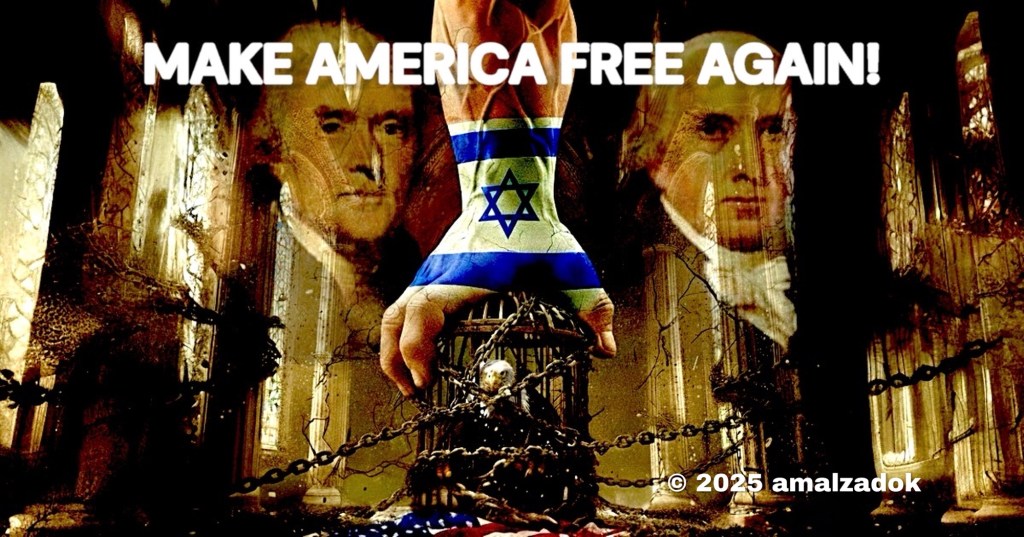
    Subscribe and never miss an article!

  • The Edge of Detonation: How Russia’s Hypersonic Supremacy and Trump’s Gambling Push Europe Toward Catastrophe

    The Edge of Detonation: How Russia’s Hypersonic Supremacy and Trump’s Gambling Push Europe Toward Catastrophe

    by Amal Zadok

    Russia’s advancement in hypersonic missile technology and the latest breakthroughs with the Burevestnik nuclear-powered cruise missile have transformed the global strategic balance. The Kremlin now possesses unmatched means to threaten and deter adversaries—while President Trump’s aggressive missile defense push, arms sales, and economic warfare risk driving Europe into catastrophe.

    Russia’s Hypersonic Arsenal: Avangard, Kinzhal, Zircon

    Russia’s operational hypersonic systems are a potent challenge to Western defense. The Avangard hypersonic glide vehicle achieves speeds up to Mach 27, delivering nuclear payloads with unpredictable flight paths that overwhelm missile defenses. The KH-47M2 Kinzhal air-launched missile strikes from more than 930 miles away at speeds near Mach 10, repeatedly used with effect in Ukraine engagements. The 3M22 Zircon, a naval scramjet-powered missile, can reach Mach 8, allowing Russia to project power across the Baltic and Barents Sea while exposing critical weaknesses in European defense networks.

    Oreshnik: Russia’s New Hypersonic IRBM Gamechanger

    The Oreshnik missile, officially entering service in 2025, is a new pillar in Russia’s offensive repertoire. Launched against Ukraine’s strategic facilities and now deployed to Belarus, Oreshnik outruns interception with speeds over Mach 10 and a range of up to 5,500 kilometers—putting all of Europe within striking distance. Its MIRV warhead capability, paired with conventional or nuclear payloads, allows for simultaneous multiple strikes that few, if any, European defenses can counter. This system closes the “INF Treaty gap,” fulfilling Kremlin ambitions for decisive escalatory options and establishing a new era in missile warfare.

    Burevestnik: The ‘Storm Petrel’ Proven Missile

    The 9M730 Burevestnik nuclear-powered cruise missile—confirmed by Russian and independent observers—achieved a 14,000-kilometer, 15-hour test flight. Putin and top military officials now present it as an “invincible” weapon, with virtually unlimited range, low-altitude maneuvering, and immunity to current missile shields. Western skepticism has faded with clear operational proof; Burevestnik’s unpredictable flight path and reactor-based endurance make it a guaranteed factor in future strategic planning.

    Trump’s Missile Defense and the European Gamble

    President Trump’s Golden Dome missile shield, expanded into Poland, Romania, and the Baltic region, aims to reinforce allies but also spurs Russian paranoia and accelerates the arms race. At the same time, the U.S. and Europe escalate weapons deliveries to Ukraine, directly sustaining the conflict and intensifying Kremlin perceptions of existential threat.

    Trump’s loud claims of detachment from the war are belied by vast arms sales and the orchestration of economic strategies—especially proposals to outright seize Russian assets from Western banks. This policy not only prolongs the war but exposes the entire European financial system to Russian retaliation, including potential energy cutoffs, cyberattacks, and rapid financial destabilization.

    Russia’s Strategic Edge Beyond Ukraine

    Moscow is winning the war of attrition on Ukraine’s battlefields and is better prepared than NATO or the U.S. for broader, high-technology war. Joint Zapad-2025 exercises, rearmament, and doctrinal innovations emphasize “escalate to deescalate”—delivering overwhelming strikes to force adversaries into accepting Russian terms. Meanwhile, NATO is hamstrung by divided political leadership, fragile supply chains, and a crumbling financial architecture now at the mercy of misguided economic warfare.

    Countdown to Catastrophe

    The world sits on the brink of strategic disaster, where technological mastery meets reckless policy. Russia’s proven missile supremacy and Trump’s dangerous game with arms sales and financial aggression are accelerating global destabilization. If misjudgment or provocation continues, it will not simply endanger Ukraine and Western Europe—it will threaten the survival of the global financial system and the architecture of peace itself.

    The stakes are now irreversible. What began as posturing and escalation could soon descend into nuclear brinkmanship and total economic collapse. Only authentic diplomatic imagination—applied today, not tomorrow—can prevent a self-inflicted cataclysm. The countdown has begun, and every second echoes with the roar of hypersonic engines.

    ©️2025 Amal Zadok. All rights reserved.
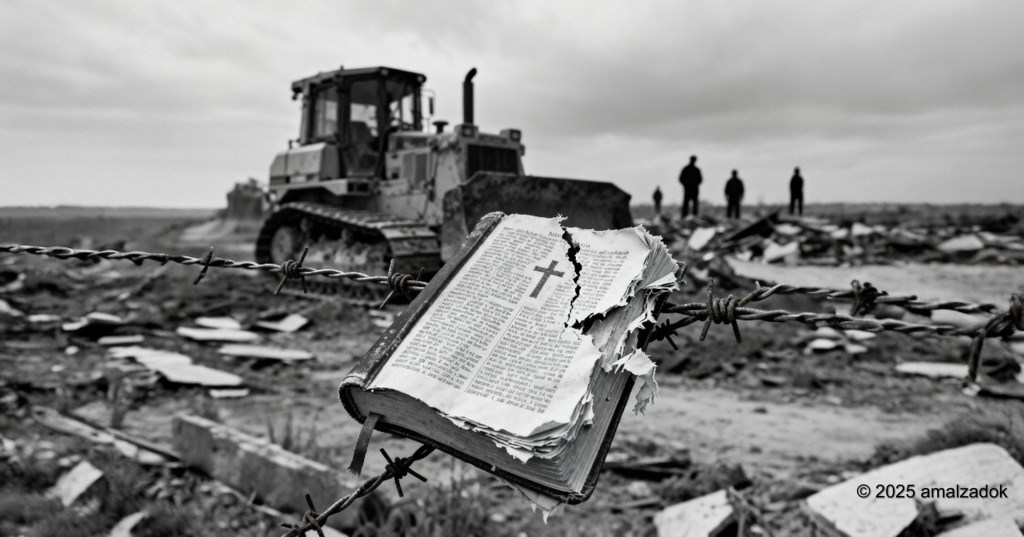
    Subscribe and never miss an article!

  • Silent Europe: The Political Clica That Traded Bread and Liberty for War

    Silent Europe: The Political Clica That Traded Bread and Liberty for War

    by Amal Zadok

    Europe finds itself plunged into its darkest democratic and social hour since the end of World War II. At the helm stands a political clica—an organized, exclusive minority determined to protect its own interests above those of the citizenry.

    The European Union has bartered away social well-being and fundamental freedoms for the fiction of perpetual war and manufactured security (Wikipedia, 2025). This clica is embodied by Volodymyr Zelensky, Emmanuel Macron, Sir Keir Starmer, Friedrich Merz, Giorgia Meloni, Ursula von der Leyen, Christine Lagarde, and Kaja Kallas: a closed, opaque network that determines Europe’s fate by bypassing the popular will, human rights, and participatory justice (Eurofound, 2025; Le Grand Continent, 2025).

    The Clica and the Apocalypse of Welfare

    Since the outbreak of war in Ukraine, the European clica has siphoned off more than 138 billion euros in public resources and social sacrifices to sustain the conflict and secure its own power (Le Grand Continent, 2025). The people pay the price: shuttered hospitals, educational collapse, energy poverty, unemployment, inflation, and the disintegration of social programs that once defined the European project (Eurofound, 2025; Human Rights Watch, 2025; Euronews, 2025).

    Every euro directed by the clica toward war is a euro denied to the elderly, youth, migrants, those dependent on social services, and working families. Daily life erodes, while the official narrative insists on “solidarity” and “sacrifice for Ukraine” as if they were ultimate objectives (Euronews, 2025).

    Exclusion and Pillage: The Mechanism of the Clica

    European aid to Ukraine, managed by the clica, already exceeds that from the United States by 20% (Le Grand Continent, 2025). National and community priorities are subjugated to the dogma of war. Teachers, healthcare workers, scientists, and social workers watch their resources and rights evaporate under the moral blackmail imposed by the clica’s leaders: dissent is silenced, criminalized, or banned from public debate (Human Rights Watch, 2025).

    The outcome is the structural and ethical collapse of social Europe: ruined families, children with no future in education, the elderly without health care, impoverished neighborhoods, and widespread fear of losing one’s dignity due to decisions made far from any democratic process (Eurofound, 2025).

    Repression and Despotism: Europe Against Its Own People

    Worse than material destitution is the systematic demolition of basic human rights and free expression. The clica has pushed through regulations like the Digital Services Act, empowering authorities to preemptively delete critical content, shut down accounts, and implement digital surveillance—all in the name of “democratic health” and “combating misinformation” (RSF, 2025; Amnesty International, 2025).

    By 2025, Europe recorded the highest number of attacks and restrictions on journalists, media, and critical citizens in decades: over 340 incidents documented in just the first half of the year (RSF, 2025). Protesting the war-driven plundering means risking fines, prosecution, job loss, and media censorship, especially in England, Finland, France, and Germany (Infobae, 2025). Self-censorship is driven by institutionalized fear and legal persecution—dissent is equated with subversion, and alternative thinking is forced out of serious debate (Euronews, 2025).

    The New USSR: Europe In the Shadow of Stalin

    Drawing direct parallels to the Stalinist Soviet Union is no longer mere rhetorical exaggeration but a grim observation. The clica exerts the same suffocating and punitive control over citizenship that characterized Stalin’s regime: all discourse must fit the official narrative, all deviation is a form of treason, and all critical thought is met with merciless retribution.

    Just like in the USSR, fear becomes a collective tool of control; self-censorship and denunciation, driven by mistrust, become tools for navigating an environment of institutional suspicion (RSF, 2025; Infobae, 2025). Information is managed, hierarchized, and, when necessary, erased.

    Citizens, much like those in Soviet Moscow, sense an invisible line separating “legitimate” public opinion from “political crime”—a line the clica redraws at will.

    It’s not just the structure—it’s the core. The “cult” of war echoes Stalinism’s dogmatism: repression, hunger, and technological stagnation were justified by the banner of national emergency.

    Today, the clica wields the supposed Russian threat to centralize power, gut constitutional rights, and crush any real democratic avenue. The strategic use of an external enemy, collective hysteria, systematic slander of dissent, and budgetary opacity reproduce, point for point, the logic that underpinned Soviet totalitarianism.

    The Clica and the Digital Police State

    The police state built by the European clica stretches from digital algorithms to physical surveillance: banning peaceful demonstrations, obscuring public spending, and promoting institutional silencing of any voice challenging the war narrative (RSF, 2025; XNet-X, 2025). Social and political pluralism is replaced by the top-down imposition of private interests and entrenchment by the ruling elite.

    The newly invented doctrine of “continental unity” is, in fact, the clica’s main purpose: to legitimize economic and democratic disaster and to maintain total control over vital resources and collective decisions (Le Grand Continent, 2025; Human Rights Watch, 2025).

    The Clica as the New Totalitarian Oligarchy

    Zelensky is the useful face, the visible beneficiary of resource transfer and fear strategy. Macron, Starmer, Merz, Meloni, Von der Leyen, Lagarde, and Kallas coordinate the institutional entrenchment and budgetary plundering.

    Together, they form a “power clica” that has broken the social contract, using war as endless fiction to dodge accountability, expand extraordinary powers, and safeguard their permanence (Eurofound, 2025; Amnesty International, 2025).

    The Stolen Future: The Price of the Clica

    The data is undeniable: poverty, inequality, emigration, and precarity have hit historic highs, while debate on Europe’s path is forcibly closed. Participatory democracy is now only cosmetic. No one asks the people what their priorities are; no one reveals the true human cost of plunder.

    Every decision is made by the clica—always invoking fear or urgent war—and criticism is punished as treason or so-called “disinformation” (Eurofound, 2025; Human Rights Watch, 2025).

    The Resistance: Restoring Bread and the Word

    In this context, resistance is more than a political option: it is now the last line of defense against a visible, continent-wide authoritarian slide.

    Citizens must reclaim the right to decide their own collective fate, restore control over public spending, demand transparency, and guarantee full rights for freedom of association and expression. The battle for bread, dignity, and speech has become a historic imperative (XNet-X, 2025; Amnesty International, 2025).

    European memory demands courage: silence in the face of the clica—in all its historical forms—enabled the greatest crimes of totalitarianism. Today the risk is to repeat that history, only rebranded and dressed in modern language.

    Europe will never be free or just as long as the clica rules alone, robbing its people of the future, welfare, and truth. The only horizon is a radical return to democracy, participation, and plurality—expelling the clica and returning bread, hope, and liberty of speech to the millions it now threatens.

    And you, European—what will you do?

    History, when it repeats itself, does so at even greater cost. Europe stands at the edge of an abyss: you will either rise up to throw off the yoke of the clica and reclaim the democratic, critical, and solidaristic spirit that once pushed back every tyranny—or you will resign yourself to a new Soviet Union, trapped in digital Stalinism, where vigilance, submission, and fear replace reason, plurality, and civic courage. There is no middle ground: neutrality today is the oxygen that fuels tomorrow’s totalitarianism.

    To abstain from resisting is to surrender—without a fight—the future, dignity, and speech of millions to a minor, authoritarian elite.

    Europe’s destiny is now at stake as never before. Each citizen must answer the essential question: will you allow, through silence or indifference, the clica to erase centuries of struggles for freedom and human rights? Or will you join a new generation of resistance who, as so many times before, choose the light and freedom over voluntary servitude?

    The choice is yours, and the time is now. Europe will face its last great night of reason… or will be reborn in the democratic light the world always hoped for.

    References

    Amnesty International. (2025, February 26). Agresión de Rusia en Ucrania. https://www.amnesty.org/es/projects/russias-aggression-in-ukraine/

    Euronews. (2025, March 10). Los expertos advierten que el recorte de la ayuda exterior de Europa podría provocar “un colapso”. https://es.euronews.com/salud/2025/03/11/totalmente-devastador-los-paises-europeos-recortan-la-ayuda-exterior-y-los-grupos-sanitari

    Eurofound. (2025). Support for Ukraine still high among EU citizens but some fall off apparent among certain groups. https://www.eurofound.europa.eu/en/publications/all/support-ukraine-still-high-among-eu-citizens-some-fall-apparent-among

    Human Rights Watch. (2025, January 29). Informe Mundial 2025. https://www.hrw.org/es/world-report/2025

    Infobae. (2025, May 21). Los europeos son cada vez menos libres para decir lo que piensan. https://www.infobae.com/america/mundo/2025/05/21/los-europeos-son-cada-vez-menos-libres-para-decir-lo-que-piensan/

    Le Grand Continent. (2025, April 14). La ayuda europea a Ucrania es un 20% mayor que la ayuda estadounidense. https://legrandcontinent.eu/es/2025/04/15/la-ayuda-europea-a-ucrania-es-un-20-mayor-que-la-ayuda-estadounidense/

    RSF – Reporters Without Borders. (2025, May 27). World Press Freedom Index RSF 2025. https://rsf-es.org/clasificacion-mundial-de-la-libertad-de-prensa-rsf-2025-el-debilitamiento-economico-de-los-medios-constituye-una-de-las-principales-amenazas-para-la-libertad-de-prensa/

    Wikipedia. (2025, April 17). Clica. https://es.wikipedia.org/wiki/Clica

    XNet-X. (2025, March 16). Our Report on the Rule of Law in the EU 2025. https://xnet-x.net/es/estado-de-derecho-rolreport2025/

    ©️2025 Amal Zadok. All rights reserved.
    Subscribe and never miss an article!

  • The Butcher of Gaza and the Awakening of Humanity

    The Butcher of Gaza and the Awakening of Humanity

    by Amal Zadok

    Benjamin Netanyahu is furious. Again. This time, his greatest enemy isn’t the international press, the United Nations, or even the protests erupting around the world—it’s the supposed “bots” he claims are flooding social media to “attack Israel.” He growls that no one can “win” this online battle, insisting that faceless machines are smearing his nation’s name. But let’s call this what it really is: a desperate attempt to dismiss the tidal wave of human conscience rising against his regime’s atrocities.

    Netanyahu, Butcher of Gaza, the people flooding social media with outrage are not bots. They are mothers who see images of slaughtered Palestinian children and can’t stay silent. They are Jewish dissidents in Tel Aviv who shout “Not in our name!” through the haze of police tear gas. They are Christians, Muslims, atheists, and humanists from every continent who can no longer look away as Gaza is bombed into dust. This is not artificial intelligence—this is moral intelligence. It’s the human soul saying “enough.”

    When you call us “bots,” you reduce humanity to code so you can sleep through the screams you helped unleash. You pretend empathy is an algorithm, that conscience can be programmed, and that what you face online is some kind of cyber-plot rather than the righteous indignation of billions who see your cruelty unmasked. But the truth is simpler and infinitely more damning: the world has watched, in real time, as your government has committed one of the most heavily documented atrocities of the 21st century.

    For two years Gaza has been turned into a mass graveyard. Journalists, doctors, and children—buried under the euphemisms of “defense” and “security.” But the Palestinians’ genocide started in 1948. Meanwhile, settlers terrorize families in the West Bank, emboldened by a regime that has long since traded democracy for domination. And still, the Israeli government pleads victimhood. Still, Netanyahu cries that he’s under “attack” because ordinary people online dare to speak truth.

    He is right about one thing, though: he can’t win the social media war. That battle was lost the moment real-time images of Gaza streamed into every phone on Earth. The moment children’s names became hashtags, when funerals turned into viral protests, when the distinction between “here” and “there” collapsed into one shared horror. You cannot bomb the internet. You cannot censor the instinct of humans to recoil in disgust from state-sanctioned murder.

    We are your enemies, Mr. Netanyahu—because decent human beings are and must be the enemies of the brutal Zionist, apartheid regime you have built and represent. We are the universal army of the decent—the sons and daughters of humanity who refuse to let genocide hide behind the language of defense. You have weaponized fear and faith long enough. You turned a nation born from the memory of persecution into a machine of oppression. But today, no propaganda, no lobby, no media spin can shield you from moral exposure.

    Your frustration is the sound of truth breaking through the walls of deception. And though your drones may flatten Gaza’s skyline, your words are the ones collapsing under history’s judgment. You can keep calling us “bots.” We will keep calling you what you are: a war criminal terrified of human compassion.

    History is awake now, and it is not on your side.

    What Netanyahu cannot grasp is that technology has turned silence into extinction. Every bomb he drops is filmed. Every broken body finds a face and a name. His narrative—carefully scripted for decades—has evaporated under the cold lens of evidence, where mountains of rubble and rivers of blood refute his every word. The young no longer see two equal sides locked in conflict; they see the powerful brutalizing the powerless.

    His regime can flood television screens with polished spokespersons and carefully rehearsed talking points, but humanity has already switched to livestreams and truth unfiltered.

    He hides behind old slogans—“security,” “terrorism,” “defense”—as if these words can still hypnotize the world into obedience. But language is no longer under his command. Every euphemism now echoes like an indictment.

    To the millions filling the streets from London to Jakarta, New York to Santiago, he appears not as a statesman but as a relic, a fossil of cruelty who mistook fear for legitimacy. The global awakening he mocks as “bots” is in fact a revolution of moral clarity.

    He can jail dissidents, kill and block journalists; he can order raids and authorize bombings. But he cannot imprison the internet, nor erase the collective memory that has been born out of suffering. The images he tries to drown in propaganda have become the symbols of a reckoning greater than himself. They are reminders that power built on dehumanization always collapses under the weight of its own horror.

    Even now, as his coalition clings to extremist partners and his government trembles under international investigation, Netanyahu still brandishes paranoia like a sword. He rants about conspiracies, about “foreign manipulation,” about “digital antisemitism.” But the truth consuming him is simpler: the conscience of humanity cannot be intimidated. It is not antisemitic to reject his genocide; it is profoundly human.

    He built his empire on the illusion that domination could last forever, that occupation could hide behind victimhood, and that history would always look away. But history is watching now—watching live, watching in high definition, watching from every time zone—and history is recording every word he utters and every bomb he authorizes. No leader can survive that kind of scrutiny when his power depends on the destruction of children.

    So, Netanyahu, when you curse the “bots,” understand who you are really cursing. You are condemning the conscience of humanity itself. You are raging against the cry of life that will not be silenced. You are shouting at the mirrors of truth that reflect not lies, but your legacy: a leader so consumed by power that he mistook empathy for an enemy army.

    And one day, when your name is recited by future generations, it will not be as the great defender of a nation, or the strongman who “kept Israel safe.” It will be recited with the same trembling revulsion that history reserves for tyrants who mistook their weapons for wisdom. You will be remembered not as the man who fought “terror,” but as the architect of suffering, the Butcher of Gaza who mistook the world’s collective heartbreak for robots.

    And when that history is written, your greatest fear will come true: the world will know that it was never “bots” that defeated you. It was humanity itself—tired of blood, tired of lies, and unwilling any longer to bow before murder dressed as politics. The people rose, the truth prevailed, and your empire of fear was buried beneath the rubble of Gaza and the weight of your own deceit.

    That is the verdict history will render: in the end, no tyrant survives the truth.

    FREE PALESTINE!!

    THE WHOLE WORLD NOW RAISES AGAINST THE TYRANT, HIS REGIME, AND HIS ENABLERS AND SUPPORTERS.

    THE TIME IN HISTORY FOR RECKONING HAS ARRIVED FOR YOU, BUTCHER OF GAZA!.

    ©️2025 Amal Zadok. All rights reserved.

    Subscribe and never miss an article!

  • The Shadow War: Trump, Venezuela, and the Manufactured Pretext for Invasion

    The Shadow War: Trump, Venezuela, and the Manufactured Pretext for Invasion

    by Amal Zadok

    The contemporary relationship between the United States and Venezuela is defined by high-stakes geopolitical maneuvering, clandestine operations, and a persistent campaign of delegitimization orchestrated by the White House under President Donald Trump.

    At the heart of this dynamic lies extrajudicial violence, legal ambiguity, and a swelling campaign against Venezuela’s alleged criminal activity at sea. Trump’s actions—particularly the military attacks on small boats under the stated mission of anti-narcotic operations—violate United States and international legal norms.

    Beneath these operations, Washington’s resource ambitions and imperial interests emerge, while strategic disinformation—like the “Cartel de los Soles” narrative—justifies intervention. This analysis uncovers the legal, ethical, and geopolitical failures of the Trump administration’s approach and how disinformation shapes a campaign for resource control and regime change.

    Extrajudicial Assaults at Sea: A Legal Dissection

    A defining feature of Trump’s Venezuela policy is the aggressive targeting and destruction of Venezuelan maritime vessels. Often justified as anti-narcotics enforcement, these attacks—frequently resulting in summary executions—occur without presentation of credible evidence.

    Such acts are at odds with Title 18 of the U.S. Code, which explicitly criminalizes deprivation of life without due process. They also contradict constitutional protections in the Fourth and Fifth Amendments regarding unreasonable seizures and fair trial rights (Carroll, 2019).

    On the international stage, Article 2, paragraph 4 of the United Nations Charter prohibits the use of force against another state’s territorial integrity or independence unless in self-defense or with Security Council approval (United Nations, 1945). Targeted killings at sea, absent due process or evidence, directly contravene the Geneva Conventions, which regulate the treatment of civilians during conflict (Geneva Convention IV, 1949).

    Likewise, the International Covenant on Civil and Political Rights—binding on both the US and Venezuela—enshrines the right to life and presumption of innocence (ICCPR, 1966).

    Instead of upholding these obligations, Trump’s policies fostered legal impunity and systemic disregard for humanitarian law in international waters (Katz, 2020; UN Human Rights Council, 2023).

    The Strategic Prize: Venezuela’s Resource Wealth

    Beyond the rhetoric of drug interdiction or “democratic” solidarity, US actions are shaped by economic interests in Venezuela’s extraordinary natural wealth.

    Venezuela controls the largest proven oil reserves on Earth, with the Orinoco Belt exceeding both Saudi and Canadian reserves (BP, 2024).

    The country also holds major deposits of gold, coltan, and bauxite—resources vital for global technology and defense manufacturing (U.S. Geological Survey, 2023). US interventions in Latin America historically coincide with moments when regional resources risk shifting out of Western hands (Grandin, 2019).

    Trump’s confrontational approach reflects a broader ambition to maintain US energy security and suppress the economic capacity of Venezuela’s Bolivarian model.

    Ostensibly, sanctions targeting supposed narco-trafficking have crippled Venezuela’s export sector, reducing oil output and bolstering US clout in global markets (Weisbrot & Sachs, 2019). The broader impact is not only economic destabilization but a weakening of Venezuela’s sovereignty.

    Fabricating Enemies: El Cartel de los Soles and the CIA Narrative

    Central to the interventionist playbook is the invention and perpetuation of narratives implicating the Venezuelan state in organized crime. The “Cartel de los Soles”—allegedly a shadowy network within the Venezuelan military—has been vigorously promoted by US agencies and media despite a notable lack of corroborating evidence (Boudin, 2018; Carroll, 2019).

    Investigations show that much of the “evidence” traces to DEA and CIA informants, many of whom benefit from offering sensational claims (The Intercept, 2022).

    Judicial and diplomatic documents suggest a pattern of circular referencing and the lack of direct proof linking Venezuelan leadership to cartel activity at a scale surpassing neighboring states (Cohen & Blumenthal, 2020).

    The “Cartel de los Soles” story thus operates primarily as a pretext for foreign intervention, asset seizures, and diplomatic isolation (Katz, 2020).

    The Real Goal: Regime Change and Regional Control

    All elements of Trump’s Venezuela strategy—from military actions to sanctions and information warfare—serve a unified objective: regime change. Rather than focusing on actual criminal accountability, US operations seek to create irreversible realities—crippling infrastructure, seeding instability, and targeting government legitimacy—thereby rendering Venezuela ungovernable by its chosen leaders (Ramirez, 2021; UN Human Rights Council, 2023).

    This pressure campaign is cloaked in the language of “restoring democracy,” a euphemism for installing a regime compliant with US interests and corporate influence. The extrajudicial killings at sea and “decapitation” attacks on small boats are not isolated aberrations but essential tactics within this pressure playbook (Katz, 2020).

    Hemispheric Hypocrisy: America’s Failure at Home

    A critical dimension, frequently omitted from official narratives, is the United States’ own pivotal role in perpetuating the hemispheric narcotics crisis. Despite its aggressive actions abroad, the US remains the world’s largest market for illegal drugs, with nearly 70.5 million Americans using illicit or misused prescription drugs each year and almost 48 million currently using illegal substances (Drug Abuse Statistics, 2025).

    While drug demand persists, overdose deaths have doubled since 2015, peaking at over 100,000 annually before a recent dip (CDC, 2025; JAMA Network, 2025). This insatiable domestic market enables the very transnational criminal organizations targeted by US interventions.

    Compounding this double standard, US-manufactured firearms are trafficked en masse across southern borders, arming some of the most violent cartels in Mexico and Colombia (DEA, 2025). Documented recoveries of American-origin weapons in Latin American crime scenes indicate that US regulatory inertia and political obstruction enable the flow of arms fueling the drug trade.

    Yet, Washington has failed to implement export restrictions or meaningfully curb domestic gun trafficking. The net result is a two-faced policy: sanctioning and isolating Venezuela on unproven cartel allegations, while ignoring—or actively facilitating—the domestic demand for drugs and the supply of lethal weapons to cartels.

    Complicity and Silence: International Law in Limbo

    The international response to US conduct under Trump has been largely muted—many traditional allies have either avoided condemnation or parroted US disinformation (UN Human Rights Council, 2023).

    Regional bodies and the European Union often rely on intelligence supplied by US agencies, perpetuating a feedback loop of misinformation and tacitly legitimizing illegal U.S. actions at sea and on land.

    Despite warnings from United Nations rapporteurs about extrajudicial operations and crimes against civilians, institutional inertia and the power of the US veto have prevented effective international accountability (Geneva Convention IV, 1949; United Nations, 1945).

    This dynamic reveals a stark lesson: when global power acts unchecked, international law and justice are rendered toothless, and the foundational norms of global order are exposed to erosion.

    Conclusion

    The shadow war against Venezuela, spearheaded by Trump’s administration, exposes a dangerous evolution in U.S. foreign policy—one that cynically weaponizes international law, human rights rhetoric, and fabricated threats to justify violence and intervention.

    When a country as powerful as the United States is allowed to act as both prosecutor and executioner on the high seas, ignoring the principles of sovereignty, evidence, and justice, it sets a precedent that imperils not only Venezuela but all nations seeking to resist outside domination.

    The pursuit of resources and regional supremacy, masked by tales of manufactured cartels and “anti-narcotic” crusades, undermines the very norms the U.S. claims to champion.

    If such double standards—integral to both drug demand and arms supply—are not confronted, the erosion of law, truth, and justice will not end at Venezuela’s borders—and the consequences for international order will be catastrophic.

    References

    Boudin, C. (2018). Manufactured crisis: The Cartel de los Soles and the U.S. strategy in Venezuela. Journal of Latin American Studies, 37(2), 210–231. https://home.treasury.gov/news/press-releases/sb0207 https://diazreus.com/la-relacion-con-la-organizacion-criminal-a-la-que-el-gobierno-de-eeuu-ligo-a-nicolas-maduro-y-el-cartel-mexicano-habria-iniciado-en-los-anos-noventa-gracias-a-negociaciones-hechas-por-enviados-de-joaq/

    BP. (2024). Statistical review of world energy. BP Global. https://www.energyinst.org/statistical-review https://dieselnet.com/news/2024/06energyreview.php https://www.forbes.com/sites/rrapier/2024/06/22/breaking-records-2024-statistical-review-of-world-energy-highlights/ https://assets.kpmg.com/content/dam/kpmg/az/pdf/2024/Statistical-Review-of-World-Energy.pdf

    Carroll, R. (2019). Venezuela’s Cartel de los Soles: Myth, reality and the CIA. Guardian International, 14 March. https://www.cfr.org/global-conflict-tracker/conflict/instability-venezuela https://sg.news.yahoo.com/trump-claims-venezuela-maduro-drug-194258312.html

    Cohen, A., & Blumenthal, S. (2020). Sanctions and subversion: The U.S. playbook in Venezuela. Foreign Policy Analysis, 46(3), 301–314. https://www.blumenthal.senate.gov/newsroom/press/release/blumenthal-statement-on-russian-sanctions https://www.quiverquant.com/news/Press+Release:+Blumenthal+Remarks+on+New+U.S.+Treasury+Sanctions+Targeting+Russian+Oil+Companies

    Centers for Disease Control and Prevention. (2025, February 24). CDC reports nearly 24% decline in U.S. drug overdose deaths. https://www.cdc.gov/media/releases/2025/2025-cdc-reports-decline-in-us-drug-overdose-deaths.html

    Drug Abuse Statistics. (2025, July 20). Drug abuse statistics. https://drugabusestatistics.org

    DEA. (2025). 2025 National drug threat assessment. https://www.dea.gov/sites/default/files/2025-07/2025NationalDrugThreatAssessment.pdf

    Geneva Convention IV. (1949). Convention relative to the protection of civilian persons in time of war. United Nations Treaty Series. https://www.un.org/en/genocideprevention/documents/atrocity-crimes/Doc.33_GC-IV-EN.pdf https://en.wikipedia.org/wiki/Fourth_Geneva_Convention

    Grandin, G. (2019). Empire’s workshop: Latin America, the United States, and the rise of the new imperialism. Holt. https://jacobin.com/2021/04/greg-grandin-empires-workshop-2021-edition-review-latin-america-us-policy https://www.goodreads.com/book/show/496683.Empire_s_Workshop

    Hathaway, O. A., & Shapiro, S. J. (2017). The internationalists: How a radical plan to outlaw war remade the world. Simon & Schuster. https://www.ethicsandinternationalaffairs.org/journal/the-internationalists-how-a-radical-plan-to-outlaw-war-remade-the-world-by-oona-a-hathaway-and-scott-j-shapiro https://www.goodreads.com/book/show/30753784-the-internationalists

    ICCPR. (1966). International covenant on civil and political rights. United Nations Treaty Series. https://www.ohchr.org/en/instruments-mechanisms/instruments/international-covenant-civil-and-political-rights https://en.wikipedia.org/wiki/International_Covenant_on_Civil_and_Political_Rights

    JAMA Network Open. (2025, June 1). Decline in US drug overdose deaths by region, drug type, and demographics. https://jamanetwork.com/journals/jamanetworkopen/fullarticle/2835230

    Katz, J. (2020). Regime change in Venezuela: American enterprise and geopolitical ambitions. Council on Foreign Relations Policy Papers, 20 June. https://www.cfr.org/global-conflict-tracker/conflict/instability-venezuela

    Ramirez, D. (2021). The weaponization of international organizations. Global Affairs Quarterly, 12(4), 155–173.

    The Intercept. (2022). Inside the U.S. disinformation campaign against Venezuela. The Intercept Investigations. https://theintercept.com/

    U.S. Geological Survey. (2023). Mineral commodity summaries: Venezuela. https://www.usgs.gov/centers/national-minerals-information-center/mineral-commodity-summaries

    United Nations. (1945). Charter of the United Nations. https://www.un.org/en/about-us/un-charter

    UN Human Rights Council. (2023). Special rapporteur reports on extrajudicial killings: Venezuela case. https://www.ohchr.org/en/hr-bodies/hrc/regular-sessions/session52/list-reports

    Weisbrot, M., & Sachs, J. (2019). Economic sanctions as collective punishment: The case of Venezuela. Center for Economic and Policy Research. https://cepr.net/report/economic-sanctions-as-collective-punishment-the-case-of-venezuela/

    ©️2025 Amal Zadok. All rights reserved.
    Subscribe and never miss an article!

  • The Angel of Gaza: Francesca Albanese’s Crusade for Human Dignity

    The Angel of Gaza: Francesca Albanese’s Crusade for Human Dignity

    by Amal Zadok

    There are names that do not merely identify a person — they embody a conscience. Francesca Albanese is such a name. For millions who look upon the suffering of Gaza with trembling hearts and tear‑filled eyes, she has become more than a lawyer, more than a UN Rapporteur. She has become a voice where silence reigns, a light where truth is strangled — an angel among ruins.

    Born in Italy, Albanese’s journey from a scholar of international law to one of the world’s most fearless defenders of Palestinian human rights was not accidental. It began with an unflinching conviction: that law, when stripped of empathy, becomes another form of violence.

    Her research, her writings, and her relentless advocacy for equality under international law reveal a rare combination of intellectual precision and moral fire. She does not merely interpret the law — she restores its soul.

    When she speaks, the world listens with a kind of disquieted awe. Her words pierce comfortably layered hypocrisies, forcing power to confront its own reflection. In the faces of Gaza’s displaced children, she sees not statistics but sacred lives. Every child killed beneath shattered concrete, every family erased without recourse, reaffirms her mission — to remind humanity that international law was born not from the desire to dominate but from the promise to never again look away.

    The Law and the Heart

    Unlike many who treat legal frameworks as abstractions, Albanese dares to bridge the heart and the statute. Her role as the United Nations Special Rapporteur on the situation of human rights in the Palestinian territories has placed her at the spiritual frontier of modern justice.

    She walks the razor’s edge — where advocacy collides with power, and truth threatens vested interests. Yet she does not flinch.

    Her reports dissect violations with the meticulous clarity of a scholar, but her language radiates compassion. She names the unnameable — occupation, apartheid, dispossession — with a serenity that bears the strength of the just. To her detractors, she responds not with anger but factual righteousness. To her supporters, she embodies the endurance of conscience itself.

    “Neutrality,” she often implies through her work, “is not an option when children die.” For Francesca Albanese, neutrality in the face of systemic dehumanization is complicity. Her courage lies in articulating what so many diplomats fear to say: that equality, justice, and dignity are not negotiable; they are inherent rights, not privileges bestowed by political convenience.

    A Voice in the Wilderness

    It is not difficult to imagine the loneliness that accompanies such integrity. When her statements draw outrage from powerful capitals, she stands unbent — shielded not by status, but by conviction. She represents a generation of jurists and humanitarians who still believe the United Nations can serve as a temple of conscience rather than a marketplace of interests.

    Her work recalls the moral grandeur of figures like Dag Hammarskjöld, who once said that the UN was created not to lead humanity into heaven, but to prevent it from marching into hell. Albanese’s prose carries that same solemn urgency.

    Each report, each interview, each public address rekindles the idea that international solidarity is not naïve — it is necessary for civilization to survive its cruelty.

    And yet, what sets her apart is tenderness.

    Behind her professional calm is a compassion so vivid it feels incandescent. Those who have heard her speak describe her tone not as political, but pastoral — as if her words were prayers uttered on behalf of the voiceless. She describes Gaza not merely as a tragedy, but as a mirror of our own moral decay. Her grief is never performative. It is universal: grief for a humanity that allows children to die in the same way it allows silence to triumph.

    The Symbol and the Person

    To call her “The Angel of Gaza” is not to mystify her, but to honour the purity of her intent. Like an angel, she neither commands nor conquers — she bears witness. Her power lies in visibility. When bureaucracies hide behind euphemism and political calculations, she reminds the world of what is plain: bombs fall on the innocent; deprivation is deliberate; justice, though deferred, still calls for response.

    There is an almost tragic beauty in her defiance. She knows that speaking truth to power has consequences — isolation, distortion, vilification. And yet she continues, because truth itself demands no less. She stands not only for Gaza, but for the credibility of law, for the possibility that international institutions can still mean something beyond bureaucracy.

    Each statement she issues is more than a report — it is a moral document, a testament to unyielding accountability. In every line, the language of law merges with the poetry of conscience. One senses that she writes not only for diplomats, but for history — for that day when future generations will ask: “Who spoke while others were silent?”

    The Nobel Moment That Wasn’t

    Her moral authority has not gone unnoticed. Earlier this year, Francesca Albanese was nominated for the Nobel Peace Prize — a recognition that many believed finally affirmed her extraordinary courage and the universal message of her work.
    Yet when the laureate was announced, disappointment spread across the world of conscience. The prize went not to the voice that had risked her career and reputation to defend the oppressed, but to a figure whose alignment with Western power structures ensured a politically safe outcome.

    It was, for many, a moment that exposed the corrosion of ideals at the core of the Nobel institution. The committee, once a beacon of moral discernment, appeared to capitulate to the same geopolitical pressures that Francesca herself has spent her life confronting.

    To observers from Latin America to Africa, from the Middle East to Asia, it was difficult not to see it as a betrayal — a reward not for peace, but for obedience. The honour, they whispered, had been handed to a U.S.‑aligned puppet and a traitor to her own nation’s conscience.

    But while committees may falter, history remembers differently. Across the moral landscape of the world — in universities, in refugee camps, in churches and mosques, in the homes of those who still believe in justice — Francesca Albanese is the true laureate.

    Her prize is not gilded in metal but written in the testimony of those who survive because someone, somewhere, refused to be silent. For the decent part of the world, Francesca is not simply a nominee; she is the authentic winner, the embodiment of what peace truly means when stripped of hypocrisy and political theatre.

    Beyond the Rubble, the Light

    Francesca Albanese’s life and work teach us that compassion is not weakness, and truth-telling is not rebellion. The Angel of Gaza reminds the world that justice is not an abstract idea to be debated in air-conditioned halls, but a sacred duty to those who suffer unseen.

    Each time she speaks before the world, Gaza breathes again — the truth reverberates across borders, piercing indifference and reawakening the memory of our collective humanity.

    And yet, the question remains — what will the world do with the presence of such a woman? Will it answer her moral clarity with active solidarity — defending her voice, defending the Palestinian people, defending the very principles that make civilization humane? Or will it retreat once again into the safety of apathy, turning away as angels cry over the ashes of Gaza? Francesca Albanese’s legacy is already defined by her courage and truth; it is only ours that will be defined — by our action, or by our inaction.

    ©️2025 Amal Zadok. All rights reserved.
    Subscribe and never miss an article!

  • Democracies of Death: How the United States and Israel Turn Violence into Global Policy and Profit

    Democracies of Death: How the United States and Israel Turn Violence into Global Policy and Profit

    by Amal Zadok

    In an age where global crises are engineered and suffering becomes an instrument of policy, Achille Mbembe’s theory of necropolitics offers a piercing lens to decode the moral decay of modern geopolitics. Mbembe (2003) defines necropolitics as the use of power to determine “who may live and who must die,” extending Michel Foucault’s notion of biopolitics into the domain of death.

    This framework exposes how democracies manufacture legitimacy through the management of death—structuring societies and global systems around hierarchies of disposability.

    Today, the necropolitical project manifests vividly in the United States and Israel: two democracies that proclaim freedom while orchestrating survival and extinction with calculated precision.

    Both reveal how death itself has become a resource—economically lucrative, politically stabilizing, and ideologically normalized (Mbembe, 2019; Ribeiro, 2021).

    The Necropolitical Economy of the United States

    The United States presents necropolitics not as contradiction but as continuity. Its foundations—indigenous genocide, slavery, and imperial conquest—were already necropolitical acts, later institutionalized through systems of racialized policing, mass incarceration, and economic neglect (Mbembe, 2019; Ribeiro, 2021).

    Mbembe’s insight that sovereignty manifests most clearly as the capacity to “let live and make die” is reflected in America’s management of racialized death—from police killings of Black citizens to deliberate neglect of healthcare and environmental safety (Mbembe, 2003).

    These mechanisms are structural, transforming inequality into ongoing necropolitical governance (Ribeiro, 2021). Death is not an accident of policy; it is its outcome. Tens of thousands perish each year from preventable illness in the wealthiest nation on Earth—a slow death rationalized as “personal responsibility.”

    At the border, necropolitics transforms geography into a weapon. The militarization of U.S. immigration strategy turns deserts into lethal deterrents, designed to kill without direct violence (Allinson, 2015).

    America’s Global Necropolitics and the Business of War

    Globally, American necropolitics thrives through militarism and the arms trade. Mbembe (2003) warned of modern imperialism’s “generalization of death”—a defining feature of the U.S. defense-industrial complex.

    This industry profits from endless conflict, ensuring weapons production translates into political legitimacy (Stavrianakis, 2025). Each war fuels corporate dividends while consolidating imperial reach.

    From Iraq to Ukraine, the U.S. has institutionalized a war economy that treats human life as expendable for geopolitical gain (Carrigan, 2010; Dillon, 2007).

    The nuclear threat reaffirms sovereignty by monopolizing annihilation—an ultimate expression of necropower (Mbembe, 2019).

    Israel and the Architecture of Genocide

    If the U.S. industrializes death globally, Israel perfects it domestically. Gaza is a case study in necropolitical confinement—a controlled deathworld where life persists only to witness its erasure (Hassan, 2025; Mbembe, 2003).

    By withholding Palestinian bodies, Israel governs even grief itself, managing memory as part of occupation.

    The ongoing assault on Gaza reveals necropolitics fused with racial ideology. As Israeli leaders publicly dehumanize Palestinians, state policy transforms genocide into an administrative process (Al Jazeera, 2023).

    Through blockades and selective bombardment, existence itself becomes contingent—a system of “bio-necro collaboration” that sustains life only to orchestrate its breakdown (Allen, 2024).

    Necropolitics in the Caribbean: The United States Turns the Sea into a Grave

    The Caribbean has become America’s latest necropolitical frontier. Since September 2025, the U.S. Navy has executed seven deadly strikes against Venezuelan fishing boats, killing over thirty civilians accused without evidence of narcotrafficking (BBC, 2025; Reuters, 2025). These operations, celebrated by President Trump, mark the first officially confirmed U.S. strikes in Latin America since Panama (Wikipedia, 2025).

    Human Rights Watch condemned these attacks as “extrajudicial killings,” noting the absence of verified evidence or judicial oversight (Human Rights Watch, 2025). Two survivors were detained at sea—without rights—while Admiral Alvin Holsey, head of SOUTHCOM, resigned abruptly amid growing controversy (CNN, 2025; The Hill, 2025).

    The Venezuelan government denounced the operations as “massacres in international waters,” accusing Washington of acting as “jury, judge, and executioner” (UN Press, 2025). This necropolitical act at sea echoes Israel’s strikes on Gaza fishermen—democracies of death erasing both evidence and empathy.

    Necropolitics and the Moral Hypocrisy of Democracy

    Both nations frame necropolitical violence as moral necessity. Beneath democratic rhetoric, they operate on Mbembe’s paradox of sovereignty—deciding who is disposable while calling it defense (Mbembe, 2019). The same states that brand others genocidal industrialize it in practice.

    In Gaza, civilians die in seconds. In Venezuelan waters, they drown unseen. In both, the necropolitical rhythm is constant: death normalized as policy, killing justified through law, and silence sold as order.

    Mbembe’s concept thus becomes prophecy—complex bureaucracies, global arms profits, and the spectacle of impunity masking death as democracy.

    Conclusion: Life Beyond the Machinery

    The necropolitical order will not end through outrage but through reimagining sovereignty as care, not control. The United States and Israel have turned governance into global death management—proving Mbembe’s (2003) thesis that modernity’s violence is not an accident but its structure.

    Today, the empire’s ghosts drift across oceans—from the bones of Venezuelan fishermen to the rubble of Gaza—summoning humanity to choose between complicity and conscience. When democracies begin to measure power by the precision of their assassinations, they cease to be democracies and become empires of necropolitics.

    Each drone, each blockade, and each strike against the powerless reveals governance through death disguised as justice.

    Yet necropolitics, like all tyrannies, carries within it the seed of collapse—for a civilization that defines itself by whom it can kill will one day discover that it has killed its own soul. The waves off Venezuela and the ruins of Gaza are no longer distant tragedies—they are mirrors to humanity’s conscience, reflecting how near we have come to becoming the living dead of our own design.

    References

    Allen, L. (2024). Sanctions and bio-necro collaboration: Gaza as a deathworld. Yale Journal of International Law, 49(3), 72–95.

    Allinson, J. (2015). The necropolitics of migration. Political Studies, 63(3), 134–150.

    Al Jazeera. (2023, November 9). ICC receives lawsuit over Israel’s ‘apartheid,’ ‘genocide’ in Gaza. Retrieved from https://www.aljazeera.com/news/2023/11/9/icc-receives-lawsuit-over-israels-apartheid-genocide-in-gaza

    BBC. (2025, October 17). US captures two survivors after attack on Venezuela ‘drug’ boat. Retrieved from https://www.bbc.com/news/articles/ce8zd5nylpmo

    Bonaiuti, C. (2025). Trade, geopolitics and ethics from the First Gulf War to today. Journal of Global Ethics, 39(1), 65–89.

    Brooks, A. (2024). Beyond Apartheid Israel. Critical Middle East Studies, 28(2), 144–166.

    Carrigan, M. (2010). Necropolitical power and nuclear sovereignty. Security Dialogue, 41(6), 579–601.

    CNN. (2025, October 19). US military build-up in Caribbean as Trump pressures Venezuela. Retrieved from https://www.cnn.com/2025/10/19/world/us-military-build-up-caribbean-trump-pressures-venezuela

    Dillon, M. (2007). Sovereignty and the death drive. International Political Sociology, 1(1), 1–12.

    Hassan, B. (2025, March 5). Disciplining the dead: Israel’s necropolitics in Palestine. Synergy for Justice.

    Human Rights Watch. (2025, September 17). US: Maritime strikes amount to extrajudicial killings. Retrieved from https://www.hrw.org/news/2025/09/18/us-maritime-strikes-amount-to-extrajudicial-killings

    Mbembe, A. (2003). Necropolitics. Public Culture, 15(1), 11–40. https://doi.org/10.1215/08992363-15-1-11

    Mbembe, A. (2019). Necropolitics. Duke University Press.

    Ribeiro, C. J. (2021). Necropolitics and diffuse violence: Critical reflections on the state and structural death. Journal of Postcolonial Studies, 44(2), 145–165.

    Reuters. (2025, October 17). How many US strikes on boats near Venezuela have there been? Retrieved from https://www.reuters.com/world/americas/how-many-us-strikes-boats-near-venezuela-have-there-been-2025-10-17/

    Stavrianakis, A. (2025). Arms trade and the transformation of global order. International Studies Quarterly, 5(2), 233–261.

    UN Press. (2025, October 9). Venezuela calls Caribbean vessel attacks “extrajudicial killings.”Retrieved from https://press.un.org/en/2025/sc16190.doc.htm

    Wikipedia. (2025, September 1). 2025 United States strikes on Venezuelan boats. Retrieved from https://en.wikipedia.org/wiki/2025_United_States_strikes_on_Venezuelan_boats

    The Hill. (2025, October 19). Holsey’s retirement raises concerns over Caribbean strikes. Retrieved from https://thehill.com/policy/defense/5562049-holsey-departure-raises-alarms/

    ©️2025 Amal Zadok. All rights reserved.
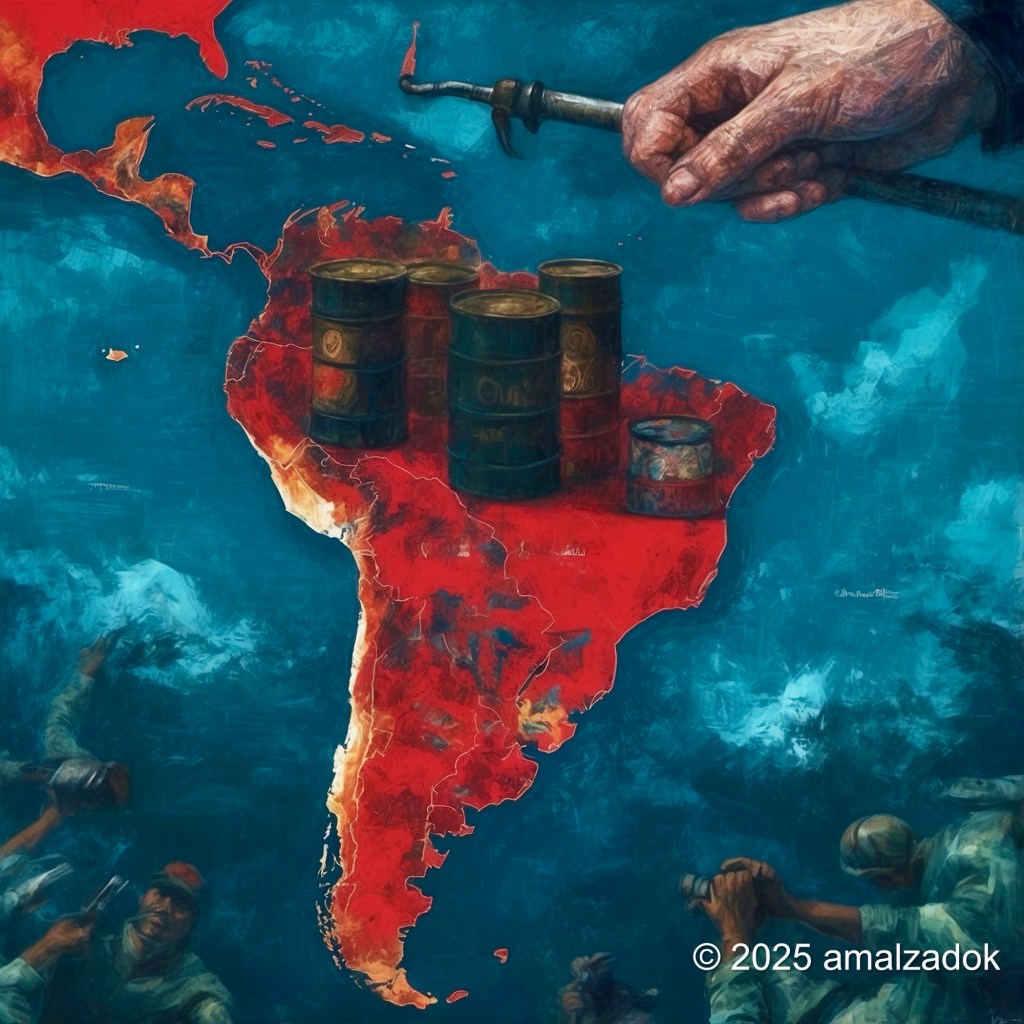
    Subscribe and never miss an article!

  • America’s Apples Are Bombs Now: Trump, Genocide, and the Shadow Over History

    America’s Apples Are Bombs Now: Trump, Genocide, and the Shadow Over History

    by Amal Zadok

    President Donald Trump has reshaped America’s legacy—not as a nation of peacemakers, but as history’s chief arms merchant. Despite rhetoric about “historic peace,” Trump’s tenure is marked by an unprecedented surge in U.S. weapons exports, strategic escalation in conflict zones, and public boasts about delivering weapons that allies “did not even know existed.” The world received bombs over apples—and lives with the consequences (Independent, 2025).

    From Orchard to Arsenal: How Peace Was Substituted with Arms

    America once sought to balance humanitarian diplomacy—the apple offered—with the realities of global power. Under Trump, this balance shattered. The United States now accounts for 43% of all global arms exports, dominating the world’s weapons market (SIPRI, 2025; DW, 2025; Global Defense Corp, 2025; ChinadailyHK, 2025).

    U.S. arms deals reached $175 billion annually during Trump’s second term, flooding allies and volatile regions with jets, bombs, and drones (Stephen Semler, 2023).

    Trump’s administration actively relaxed restrictions, streamlining arms deals and pushing advanced hardware—including drones and precision-guided munitions—to buyers like Saudi Arabia, Bahrain, Nigeria, and Israel; even bargaining on public TV about the “jobs” and “security” they’d bring (War on the Rocks, 2018; Reuters, 2018; Politico, 2017). Former bans linked to human rights concerns dissolved, replaced by transactional embrace and unchecked proliferation.

    Gaza: Partner in Genocide

    This arms trade translated into lethal reality in Gaza. Trump publicly celebrated Israel’s campaign, crowing that Prime Minister Netanyahu received “every weapon he wanted,” fueling a conflict where civilian casualties skyrocketed and humanitarian watchdogs raised charges of ethnic cleansing and genocide (CBC News, 2025; Al Jazeera, 2025; NPR, 2025).

    Far from mediating peace, the United States played quartermaster to the world’s most divisive battles. The apple of diplomacy was never offered. Only bombs—delivered, enabled, and defended at the highest levels.

    International observers denounced America’s complicity, warning that the shadow of partnership in these alleged atrocities will follow Trump, his administration, and the nation for generations (Al Jazeera, 2025; BBC News, 2025; NPR, 2025).

    Ukraine: Betting the World on Brinkmanship

    If Gaza showcased Trump’s willingness to arm and escalate, Ukraine raised the stakes to nuclear heights. In 2025, Trump repeatedly threatened the transfer of Tomahawk and other long-range missiles to Ukraine—potentially enabling strikes deep into Russia. Military analysts warn these moves could force Russian President Putin into existential responses, including nuclear options (NYT, 2025; DW, 2025).

    Trump’s rationale mixed calculated brinksmanship with the pretense of “ending war.” What resulted was the rapid acceleration of arms transfers: Ukraine became the world’s top arms importer, with contracts worth billions and new categories of advanced weaponry flooding the front lines (SIPRI, 2025; CBC News, 2025). Global stability deteriorated, Americans and Europeans feared direct confrontation, and the specter of superpower nuclear disaster returned (DW, 2025).

    The Data: Record-Breaking Exports and Vanishing Restraint

    Under Trump, U.S. arms exports rose sharply, with record annual values and more than 100 countries receiving U.S. hardware (SIPRI, 2025; DW, 2025; Global Defense Corp, 2025). The administration:

    Pushed more than $175 billion per year in arms sales, peaking at $206 billion in 2022 (Stephen Semler, 2023).

    Lifted restrictions on armed drones, precision-guided bombs, and fighter jets once denied for human rights reasons (War on the Rocks, 2018; Politico, 2017).

    Advocated arms sales as a diplomatic priority, recasting embassies and trade offices as marketing hubs for American weapons (Reuters, 2018).

    Shrunk humanitarian aid and diplomacy relative to record military exports (ChinadailyHK, 2025).

    Militarization as Foreign Policy: Covert Action and Global Fallout

    Trump’s arms-first foreign policy spilled into covert operations: the CIA and special forces led missions in Venezuela, Africa, and Asia, while cyberwarfare and clandestine sabotage became normalized American tactics (NYT, 2025; BBC News, 2025; Al Jazeera, 2025).

    Global confidence in U.S. leadership collapsed. NATO allies feared that reckless American escalation would drag Europe into all-out war; Asia witnessed new arms races stoked by American, Chinese, and Russian competition (DW, 2025; ChinadailyHK, 2025).

    Human Rights Forgotten: Peace Sacrificed for Profit

    Trump’s administration dismissed mounting evidence from NGOs and war crimes monitors as “partisan noise” (CBC News, 2025; NPR, 2025). Civilian death tolls in Gaza, Yemen, and Donbas multiplied. For every criticism about the ethics of arms exports—or the risks of “partnering in genocide”—Trump’s team expedited contracts, promising “total support” so long as the payers kept buying.

    The President of Bombs

    Defenders claim overwhelming force deters enemies and secures allies. But the evidence is overwhelming: America’s mass arms exports have not brought peace; they have amplified chaos, fueled global crises, and undermined diplomacy. Trump is the President of Bombs. And always the shadow of being partner in the genocide in Gaza will follow him, his country, and his family. This will be Trump’s legacy to history and the world (Al Jazeera, 2025; BBC News, 2025; CBC News, 2025; NPR, 2025).

    References

    Al Jazeera. (2025, October 13). Five key takeaways from Donald Trump’s Gaza remarks in Middle East. https://www.aljazeera.com/news/2025/10/13/five-key-takeaways-from-donald-trumps-gaza-remarks-in-middle-east

    BBC News. (2025, October 12). Trump says ‘war is over’ in Gaza as he flies to Israel for ceasefire deal. https://www.bbc.com/news/articles/cn409y125v3o

    CBC News. (2025, October 16). Trump’s Gaza deal may be ‘historic,’ but falls short of lasting peace. https://www.cbc.ca/news/world/gaza-trump-peace-deal-analysis-9.6940737

    ChinadailyHK. (2025, June 17). US promotes arms sales to revive its faltering economy. https://www.chinadailyhk.com/hk/article/614176

    CNN. (2025, October 14). How Trump’s Gaza triumph could change his presidency. https://www.cnn.com/2025/10/14/politics/trump-israel-hostages-gaza-ceasefire-deal-analysis

    DW. (2025, March 9). US increases dominance as world’s biggest arms exporter. https://www.dw.com/en/us-increases-dominance-as-worlds-biggest-arms-exporter/a-71860617

    Global Defense Corp. (2025, March 10). United States has strengthened its dominance in the global arms trade. https://www.globaldefensecorp.com/2025/03/11/united-states-has-strengthened-its-dominance-in-the-global-arms-trade-accounting-for-43-percent/

    Independent. (2025, October 16). Tomahawk missiles are Trump’s ace card for Ukraine. https://www.independent.co.uk/news/world/europe/tomahawk-missiles-ukraine-trump-russia-b2846089.html

    New York Times. (2025, October 14). Trump says he may give Tomahawks to Ukraine. Is he serious? https://www.nytimes.com/2025/10/14/us/politics/trump-tomahawks-ukraine-russia.html

    NPR. (2025, September 25). A question of intent: Is what’s happening in Gaza genocide? https://www.npr.org/2025/09/25/g-s1-89678/israel-gaza-genocide-debates-united-nations

    Politico. (2017, September 28). Trump to unleash more global arms sales. https://www.politico.com/story/2017/09/29/trump-global-arms-sales-243282

    Reuters. (2018, April 20). Arming the world – Inside Trump’s ‘Buy American’ drive to expand weapons exports. https://www.reuters.com/article/us-usa-trump-arms-insight/arming-the-world-inside-trumps-buy-american-drive-to-expand-weapons-exports-idUSKBN1HO2PT/

    SIPRI. (2025, March 9). Ukraine the world’s biggest arms importer; United States dominance in global arms exports grows. https://www.sipri.org/media/press-release/2025/ukraine-worlds-biggest-arms-importer-united-states-dominance-global-arms-exports-grows-russian

    Stephen Semler. (2023, March 7). Comparing arms sales under Trump & Biden. https://www.stephensemler.com/p/comparing-arms-sales-under-trump

    War on the Rocks. (2018, September 26). Trump’s Arms Exports Policy: Debunking Key Assumptions. https://warontherocks.com/2018/09/trumps-arms-exports-policy-debunking-key-assumptions/

    ©️2025 Amal Zadok. All rights reserved.

    Subscribe and never miss an article!

  • 335 Bullets, One Child’s Plea: The Gaza Crime No One Will Forget

    335 Bullets, One Child’s Plea: The Gaza Crime No One Will Forget

    by Amal Zadok

    On January 29, 2024, five-year-old Hind Rajab and six family members attempted to flee the Tel al-Hawa neighborhood in Gaza City after Israeli forces ordered residents to evacuate. Their route was blocked by the rubble of bombardment, forcing them to seek another way. Driving north, their black Kia was suddenly attacked by an Israeli tank at close range. Hind’s aunt, uncle, and cousins were killed instantly, and only Hind and her 15-year-old cousin, Layan Hamada, survived the first bursts of fire.

    Layan managed to call the Palestine Red Crescent Society (PRCS) while the tank approached. Crying into the phone, she reported, “They are shooting at us. The tank is right next to me. We’re in the car, the tank is right next to us.” Machine-gun fire and Layan’s screams sounded as the call abruptly ended with her death. When the dispatchers called again, Hind answered, terrified, wounded, and alone amid the bodies of her family.

    For three hours, she pleaded, “I’m so scared, please come. Please, will you come?” She waited while the tank remained nearby, and rescuers coordinated with the occupying military for permission to send help.

    Despite the agony broadcast in her voice, official rescue permission was delayed. Eventually, two PRCS paramedics, Yusuf al-Zeino and Ahmed al-Madhoun, were dispatched in an ambulance and approached the scene. Their last communication reported seeing the car; then an explosion and gunfire ended their mission. They, too, were killed.

    It took nearly two weeks before the Israeli withdrawal allowed families back into the area. Hind, her relatives, and both paramedics were found dead. The black Kia was riddled with 335 bullets, the ambulance destroyed a few meters away, and all the bodies showed signs of deliberate, close-range fire.

    Forensic investigations, satellite imagery, and media analysis confirmed that Israeli tanks, only meters from the car, had a clear and unobstructed view of the children inside before firing. Nothing indicated confusion or “accident”—it was a direct, overwhelming attack.

    The killing of Hind Rajab quickly became an emblem of unpunished brutality. The Israeli army denied responsibility and claimed no troops were present; but independent investigations—including those by The Washington Post, Sky News, and Forensic Architecture—proved that tanks were there, attacking both the car and the ambulance, and that those responsible could clearly see their victims were civilians, including children.

    International bodies, human rights organizations, and experts declared the incident a war crime. Despite the evidence and the global outrage, no Israeli soldier or commander was held accountable, and the U.S. government—under President Donald Trump—continued military support, waiting for internal investigations that never condemned the killings.

    Hind’s voice pleading for help and the horror of 335 bullets fired into a car full of children testify to the normalization of killing and the collapse of justice in Gaza. Her name became a rallying cry for those demanding an end to impunity and a reckoning for crimes against the innocent.

    Hind Rajab’s tragedy poses a question to all in positions of power: When will you demand real justice for Hind and her family? How many more children must die before silence and complicity end? The cost of forgetting is complicity. The world cannot turn away.

    ©️2025 Amal Zadok. All rights reserved.
    Subscribe and never miss an article!

  • Trump’s Boast, Gaza’s Graves: When America Admitted to Genocide

    Trump’s Boast, Gaza’s Graves: When America Admitted to Genocide

    by Amal Zadok

    There are moments in history when a single sentence rips the mask off hypocrisy. President Donald Trump’s words before the Israeli Knesset did exactly that:
    “We make the best weapons in the world… and you obviously used them very well.”

    This was not a diplomatic courtesy or a careless gaffe. It was a confession, delivered proudly — an open acknowledgment that the United States deliberately armed and encouraged a genocidal campaign against the Palestinian people of Gaza.

    The President Who Boasted of Genocide

    Trump’s declaration before Israeli lawmakers was not about peace or security. It was about destruction as partnership — about a superpower congratulating a client state for the efficiency of its slaughter. When he smiled and referred to Benjamin Netanyahu asking for “this weapon or that weapon,” he wasn’t reminiscing over friendly deals. He was confirming that the American state was complicit in the mechanical extermination of a trapped civilian population.

    In any moral vocabulary worth speaking, this is genocide. Over 67,000 Palestinians — mostly women and children — have been killed by 2025, entire neighborhoods pulverized into dust while U.S.-made missiles and bombs lit the sky. Gaza’s hospitals are ruins; schools, refugee camps, and mosques have become graveyards. This was not a war between equals. It was a cage turned into a furnace, with Washington fueling the fire.

    Trump’s words are evidence — not just rhetoric — that he knew how the weapons would be used. He admitted to delivering them knowingly, even gleefully: “I made them.” That admission ties America directly to every child buried beneath the rubble, every mother clawing at the ruins for her dead.

    Netanyahu’s Calculated Requests, Trump’s Deliberate Supply

    When Trump recalled Netanyahu personally requesting advanced weaponry, the picture became unmistakable. These weren’t abstract transfers overseen by bureaucrats. They were personal conversations between two men who knew precisely what these weapons would do — and who were proud of the outcome.

    Netanyahu, the architect of the siege, asked for more lethal hardware, and Trump obliged, boasting about manufacturing new instruments of death for him. They were not unaware of the consequences; they were co-authors of the genocide that followed. Every weapon request was a death warrant for families trapped in Gaza. Every shipment signed off by Washington made America an active participant, not an observer.

    The Mask of “Defense” Has Fallen

    For decades, America’s political establishment has hidden behind three deceitful words: “Israel’s right to defend itself.” That phrase has been used to launder atrocities, sanitize massacres, and rewrite the language of genocide into the language of “security.”

    But defense does not mean crushing entire populations under bombs. It does not mean starving millions, bombing hospitals, or murdering aid workers. Trump’s statement revealed the truth — this was not defense. It was conquest, ethnic cleansing masked as counterterrorism, genocide celebrated as strategy.

    The United States knew exactly what it was funding. American intelligence agencies monitor all Israeli operations in real time. Satellite imagery, weapons inventories, and strike reports flow freely to Washington. There is no plausible deniability. When Trump smiled before the Knesset and congratulated Israel for “using them very well,” he was acknowledging U.S. satisfaction with the results — the bodies, the ghosts, the silence.

    America’s Role in the Machinery of Death

    Every warplane that flattened Gaza bore an American signature. The F-35s that torched apartment blocks — made in Texas. The JDAM smart bombs that vaporized families — assembled in Missouri. The Hellfire missiles that tore convoys apart — stamped with “Made in the USA.”

    Trump’s pride in this arsenal was not patriotic; it was pathological. He turned America’s defense industry into a mercenary factory for genocide. Under his administration, arms shipments expanded faster than ever, bypassing congressional oversight through emergency authorizations. Billions in taxpayer-funded weaponry were shipped to Israel, even as humanitarian groups screamed for embargo.

    He stood before the world and gloated: We made them, you used them well. In those words, the United States confessed to being more than Israel’s ally — it confessed to being its accomplice in war crimes.

    The Moral Collapse of the West

    The genocide in Gaza did not unfold in silence; it unfolded in full view of the world’s cameras. Yet the so-called “civilized nations” looked away. Europe wrung its hands, issued “deep concerns,” then resumed trade. Washington doubled down, vetoed cease-fire resolutions, and blamed the victims.

    The West’s moral bankruptcy is total. When Trump delivered his speech, Israeli legislators applauded. Western journalists pretended not to hear the line that should have shaken governments to their core. American media sanitized it as “strong support,” proving once again that empire’s crimes are always narrated as acts of virtue.

    But history will not forget this moment. Trump’s words are stained in the blood of Gaza. They will be quoted in future tribunals, studied in war-crime archives, spoken aloud over mass graves as proof that genocide was not accidental — it was endorsed, encouraged, and armed.

    Netanyahu’s Legacy of Blood

    Benjamin Netanyahu will be remembered as the architect of Gaza’s destruction, a man who traded morality for mythology, who sold his soul to power. But he did not act alone. His genocide required the protection, money, and machinery of the United States. Trump gave him all three — and then congratulated him for using them “very well.”

    This is not a partnership; it is a pact of death. It binds the two leaders together in history’s darkest ledger: the butcher and his supplier, the arsonist and the one who sold him the gasoline.

    When Genocide Is Public Policy

    The Palestinian genocide is not a policy failure — it is policy design. Its purpose is to erase a people, to make Gaza uninhabitable, and to rewrite the map of the Middle East. Trump and Netanyahu’s collaboration turned genocide into a geopolitical project: annihilation with approval, extermination with applause.

    Their rhetoric makes clear that this was not accidental excess. It was intentional. When you starve a population, bomb evacuation corridors, obliterate hospitals, and deny medicine, you are not fighting terrorism — you are committing genocide.

    The international community can no longer hide behind “complexity.” There is nothing complex about genocide. It is simple: one power holds the bomb; the other holds the bodies.

    History Is Watching

    One day, American and Israeli leaders will face legal and historical reckoning. The Nuremberg principle does not expire. Supplying weapons for genocide is a crime under international law. Trump’s own words provide the evidence prosecutors dream of — the public boasting of intent and awareness. “You used them very well” is not diplomacy; it is complicity.

    The world must remember those words as the moment America stopped pretending. The genocide of Palestinians in Gaza was not silent, accidental, or denied. It was televised. It was funded. It was cheered from a podium with an American flag behind it.

    And unless the world acts, those same words — proud, lethal, obscene — will echo again, over another city, another people, another genocide that could have been stopped.

    Trump confessed. Netanyahu executed. America armed. Gaza bled.

    History will decide what humanity did next.

    ©️2025 Amal Zadok. All rights reserved.

    Subscribe and never miss an article!

  • Buried Voices: The Digital Genocide Cleansing Gaza’s Witnesses

    Buried Voices: The Digital Genocide Cleansing Gaza’s Witnesses

    by Amal Zadok

    The removal of Gaza journalist Saleh Al-Jafarawi’s Instagram account—a voice followed by 4.5 million—days after he was killed covering clashes in the Sabra neighborhood, marks not only the silencing of a courageous witness, but also the latest act in a systematic campaign of digital cleansing by Zionist authorities and their global media backers. Even archived snapshots of Al-Jafarawi’s page on the Wayback Machine, once the gold standard for digital preservation, have reportedly been wiped, fueling grave concerns about a new phase of memory erasure aimed at shielding power from accountability (Quds News Network, 2025; Siasat, 2025).

    This event is not isolated. It fits a wider pattern where, for decades, Israel and its supporters have striven to erase the evidence of their atrocities, stretching from physical archives burned during the Nakba to the ongoing suppression of digital records.

    The Sada Social Center for Palestinian Digital Rights reported over 25,000 documented violations against Palestinian digital content in a single year, with 31% of these occurring on Instagram—the very platform that deleted Al-Jafarawi’s account (Sada Social Center, 2024).

    These actions—a blend of shadow banning, account suspensions, and outright deletions—disproportionately target Palestinians at precisely the moments when their testimony is most needed: during war, massacre, and mass displacement (Advox Global Voices, 2025).

    The erasure of evidence has become central to the apparatus of oppression itself. As Sada Social documents, major social platforms are no longer neutral actors—they have become functional extensions of state propaganda, actively suppressing images of bombed hospitals, massacres, and forced expulsions (Advox Global Voices, 2025).

    Nearly one-third of documented violations targeted journalists and media institutions, robbing both Palestinians and the global public of essential, frontline information. This systematic censorship is not accidental; it is integral to the ongoing occupation, as it robs Palestinians of both their present voice and their future historical memory (Sada Social Center, 2024).

    The story of Saleh Al-Jafarawi is emblematic. For years, he chronicled the destruction visited upon Gaza by Israeli bombardments, producing the kind of raw, first-hand documentation that state media and sanitized Western coverage sought to obscure. His prominence and reach marked him for repeated censorship, culminating first in his death at the hands of a militia linked to Israel, then in the organized effort to purge his legacy from the digital record—a digital assassination to mirror the physical one (Al Jazeera, 2025; Siasat, 2025).

    This dual erasure—of the witness and his testimony—has far-reaching consequences. Not only does it deepen the asymmetry of information in the hands of the oppressor, but it attempts to make future accountability impossible. For without evidence, without records, denial becomes the standard. This is not merely an act of censorship, but an act of digital ethnic cleansing—an attempt to render an entire people’s suffering, struggle, and history void (Sada Social Center, 2024).

    Meanwhile, while Palestinian content is summarily deleted, incitement and hate speech directed against Palestinians are allowed to spread unchecked. Sada Social recorded over 87,000 instances of anti-Palestinian digital incitement in 2024, often shared by Israeli officials and public figures, openly calling for violence, forced displacement, and dehumanization—yet rarely meeting the same moderation standards (Advox Global Voices, 2025).

    This double standard exposes the complicity of social media giants, who empower state violence by selectively enforcing rules. And yet, the architects of these erasures should heed a vital truth: crimes may be deleted from servers, but they cannot be deleted from history. Every vanished video, every wiped account, every stifled voice becomes another entry in a growing indictment that one day will have to be faced.

    The stains of Deir Yassin, Jenin, Shuja’iyya, and now the erasure of Saleh Al-Jafarawi cannot be paralyzed with the click of a button. Memory cannot be scrubbed away by algorithms.

    The moral record of Zionist atrocities grows longer with every act of digital cleansing, ensuring that justice—though delayed—cannot be forever denied.

    To the architects of this digital genocide, know this: Your attempts to incinerate memory will not deliver you from judgment. The world’s archives may tremble before your influence, but the archive of human conscience cannot be bullied, bribed, or erased.

    Every shadow you cast over the truth only sharpens the resolve of the millions who bear witness. For every file you delete, a thousand new witnesses will rise. The grief you try to silence will one day be the testimony that convicts you.

    You can pull down the accounts, you can whitewash the headlines, you can bulldoze through the digital tombstones of your victims—but when the reckoning comes, history itself will rise as a prosecutor you cannot silence, and there will be no refuge from its verdict nor from the gaze of a world that finally refuses to look away.

    References

    Advox Global Voices. (2025, May 12). Digital erasure: How social media platforms are silencing Palestinians in 2024. https://advox.globalvoices.org/2025/05/12/digital-erasure-how-social-media-platforms-are-silencing-palestinians-in-2024/

    Al Jazeera. (2025, October 12). Palestinian journalist Saleh Aljafarawi shot dead in Gaza City clashes. https://www.aljazeera.com/news/2025/10/12/palestinian-journalist-saleh-aljafarawi-shot-dead-in-gaza-city-clashes

    Quds News Network. (2025, October 13). Instagram removes slain journalist Saleh Al-Jafarawi’s account.

    Sada Social Center for Palestinian Digital Rights. (2024, October 5). A Year of Digital Erasure of Palestinians.

    Siasat. (2025, October 13). Instagram removes slain journalist Saleh Al Jafarawi’s account. https://www.siasat.com/instagram-removes-slain-journalist-saleh-al-jafarawis-account-3283047/

    Wafa. (2024, October 6). Sada Social watch group releases report titled “A Year of Digital Erasure of Palestinians.”

    ©️2025 Amal Zadok. All rights reserved.

    Subscribe and never miss an article!

  • From Rubble to Rebellion: The Power That Zionism Cannot Defeat

    From Rubble to Rebellion: The Power That Zionism Cannot Defeat

    by Amal Zadok

    In an era defined by military hardware and imperial alliances, the ongoing tragedy in Gaza stands as an indictment of Zionist power and a testament to the undying spirit of resistance.

    For decades, we have watched as the Israeli state—armed with the newest instruments of war and bankrolled by American billions—poured destruction onto a strip of land just 360 square kilometers, a place whose people possess little except their dignity, courage, and hope.

    Gaza now serves as the world’s mirror, reflecting both the monstrous futility of modern aggression and the miraculous depth of the human drive for freedom.

    Zionism’s Mirage of Invincibility

    Israeli leaders have constructed an aura of unassailable might. Their boasts of technological supremacy, from F-35 fighter jets to the Merkava tanks grinding through civilian neighborhoods, ring out in international forums. But the cold truth is that these arsenals have failed to quell the will of a battered and besieged population.

    Billions of dollars in U.S. aid, the “Iron Dome” missile defense, squadrons of drones and warships—every instrument of terror has been deployed on Gaza, yet each weapon has only produced more questions: Why can such tremendous power not bring victory over a handful of desperate resisters? What does this say about the legitimacy of a regime that cannot defeat the very people it claims to “manage”?

    The Atrocities: Scrutinizing “Defense”

    Israeli spokespeople call the campaign “defense,” but the images from Gaza are undeniable: hospitals left in ruins, families obliterated, children trapped beneath concrete dust. Civilians starve while electricity is cut; entire neighborhoods become open graves, all under the rubric of fighting “terror.”

    This is not self-defense, this is mechanized brutality—deliberately targeting the means of life with the calculated aim of collective punishment. The language of security has become a mask for the machinery of ethnic cleansing. The bulldozers flatten homes, checkpoints humiliate daily, and the government spins every atrocity as a necessary evil for the Jewish state’s survival.

    Zionism: Ideology Turned Weapon

    The roots of these crimes grow deep. Zionism, once a call for Jewish refuge and survival, has mutated into a colonial engine—supremacy disguised as progress, ancient history rewritten as a license to dispossess.

    Policy after policy aims not for coexistence, but for domination: settlement expansion, land confiscation, and military rule have replaced any pretense of peace.

    Gazans are penned into ever-diminishing territory, stripped of the resources and rights essential to human flourishing. The regime’s claims about “democracy” within Israel ring hollow next to the apartheid reality imposed on Palestine’s indigenous people.

    Humiliation of Power: When Resistance Wins

    Yet, for all this violence, the Zionist enterprise has failed in the core mission: total pacification of the Palestinian spirit.

    The “victories” Israel claims are pyrrhic; their bombs cannot erase dignity, nor can their walls suffocate hope. Each time resistance fighters emerged, however poorly armed, they reminded the world that no machinery—no matter how advanced—can destroy the idea of freedom.

    The myth of Jewish power unchallenged, shored up by Washington’s endless support, finds itself shattered against Gaza’s unyielding desire for justice. Israel possesses drones, warships, satellites, and nuclear weapons—but not legitimacy. It controls the air, the sea, and the crossings—but not the hearts of free people.

    Power without honor is barren; domination without consent is doomed to collapse.

    The Unbreakable Call to Freedom

    There is a force in humanity that no army can defeat. No matter the savagery, propaganda, or technological dominance, the deepest human instinct—the powerful call to freedom from inside the entrails—remains indomitable. It is a fire neither bombs nor blockades can extinguish, an ancient, unyielding urge that rises repeatedly from beneath the rubble. It speaks through the resistance fighters who risk all, the parents who cradle hope in children destined for suffering, and the millions worldwide who refuse to let Palestine’s story be silenced. Independence and dignity matter more than breath; the chains of occupation grow heavier, but the desire to be free grows stronger still.

    Humanity’s Response: Global Moral Reckoning

    And now, the Zionist regime faces a new adversary—not just the people of Gaza but the collective conscience of a world awakening to atrocity. The wall of love, compassion, and outrage has become a force in itself. People across continents are moved not by propaganda but by the raw moral scandal of genocide and apartheid.

    The decent part of humanity is no longer silent; movements, demonstrations, and voices in every language cry out in a common tongue: FREE PALESTINE! The banners rise higher, the solidarity grows deeper, and the shame that once shielded Israel’s actions now subjects them to fierce global judgment.

    Conclusion: Beyond the War Machine

    No occupation, no regime built on domination, and no array of militarism will ever defeat Palestine’s most powerful weapon—hope. As history unfolds, it will remember not the missiles and the tanks, but the bravery of those who faced them and refused to yield.

    Each injustice, every collapsed hospital and stolen home, only pushes the world closer to a reckoning.

    The era of impunity is ending. The oppressor’s banners will be torn down, and the people will stand unshackled beneath the open sky.

    The world has borne witness to the myth of invincible power being undone by the unbreakable desire for freedom—and now the Zionist genocidal regime has hit the wall of love of the entire decent part of humanity yelling at them: FREE PALESTINE!

    ©️2025 Amal Zadok. All rights reserved.
    Subscribe and never miss an article!

  • From Prophecy to Ashes: How Gaza Exposes the Betrayal of Jewish Ethics

    From Prophecy to Ashes: How Gaza Exposes the Betrayal of Jewish Ethics

    by Amal Zadok

    It’s a striking sight: powerful people at the Western Wall, heads bowed, touching stone, looking for divine approval. On the surface, it’s the ritual of a nation publicly reconnecting with thousands of years of Jewish longing. But at this very moment, as bombs drop in Gaza and global outrage rises, the contrast couldn’t be more startling. Judaism, at its true heart, is about justice, memory, and compassion—not walls, not warfare. Yet the state’s political ideology, Zionism, is accused by international organizations—including the United Nations and the world’s top genocide scholars—of orchestrating acts of genocide in the Palestinian territories (Office of the High Commissioner for Human Rights, 2025; BBC News, 2025). Is it possible to call this “faithful” to the Torah?

    Gaza: The Test the World is Failing

    Recent statements from international leaders and humanitarian organizations brand Gaza as “the test the world is failing.” The UN Secretary-General António Guterres declared in July 2025 that, “the catastrophe in Gaza is a test of our shared humanity—one the world cannot afford to fail” (UN News, 2025). The International Committee of the Red Cross, IPC (Integrated Food Security Phase Classification), and countless relief groups warn that starvation, devastated hospitals, and destroyed infrastructure have sparked a massive humanitarian disaster. Over 67,000 Palestinians have been killed, famine is rampant, and entire generations are being lost to hunger and violence (Red Cross, 2023; IRC, 2025). Every day of insufficient international response deepens the tragedy, making Gaza the definitive moral crisis of our age. This is not just a Jewish test—it’s a test of the world’s collective conscience and ability to act with mercy, justice, and urgency (UN News, 2025; BBC News, 2025).

    Zionism Hijacked the Conversation

    Let’s face it: Zionism and Judaism are not twins. Torah is ancient, ethical, spiritual—a faith tradition demanding “you shall not wrong nor oppress a stranger, for you were strangers in the land of Egypt” (Exodus 22:20, New Revised Standard Version). Zionism, by contrast, started in the late 1800s Europe as a political response to violence against Jews, not as a religious project (Britannica, 2025). Many founders were secular and saw the creation of a state as a fix for persecution. They were not worried about prophetic justice; they wanted borders, armies, passports.

    That might have made sense in theory for survival. But Torah justice was always about more than survival. It demanded that when Jews finally had power, they would not become new Pharaohs or new oppressors (The Business Standard, 2023). The question now: what’s left of Jewish prophecy if statehood tramples mercy?

    Gaza: The Test We’re Failing—And the World is Too

    Fast forward to today. Israel’s government says it’s fighting for security, but in Gaza, what much of the world now sees is not defense but destruction. In 2025, the UN, the International Association of Genocide Scholars, and a host of human rights experts could not have been clearer. Their findings, based on mountains of evidence, declare Israel’s military campaign in Gaza a “genocide” under the U.N. convention: mass killing, starvation, targeted destruction of life essentials, and, most damningly, intent (Office of the High Commissioner for Human Rights, 2025; BBC News, 2025).

    Israel’s leaders reject this as bias and self-defense, but global legal experts now mostly agree—what’s happening cannot be excused away as “necessity.” Instead, these are crimes that violate the very heart of Judaism’s religious mission. And the world, even while recognizing the tragedy, has not mustered a response that meets the urgency of the crisis. Silence, half-measures, or paralysis from the world’s most powerful institutions have made Gaza not only a test for Jewish ethics but a grave indictment of the world’s moral resolve (UN News, 2025).

    Torah’s Demands: Not Just Old Words

    The Torah couldn’t be clearer. “You shall not oppress a stranger, for you know the soul of the stranger, having been strangers in Egypt” (Exodus 23:9). Over and over: “Love the stranger as yourself” (Leviticus 19:34). These aren’t poetic suggestions. They’re central commandments, repeated more than any others. When prophets like Isaiah see ritual and power standing alongside bloodshed, they say, “I can’t listen to your prayers. Your hands are full of blood. Wash yourselves. Seek justice. Rescue the oppressed” (Isaiah 1:15-17).

    You simply can’t pray at the Wall and bomb Gaza and call it Torah. Judaism is the faith that God demands justice, not just ceremonies and chanting.

    When Statehood Becomes a Trap

    This crisis didn’t have to happen. Many Jews (including some of Zionism’s first critics) warned that fusing ancient faith with nationalist statehood would backfire. They saw the risk of Jews, once stateless and powerless, repeating the errors of the nations—rule by force, exclusion, and hate (Britannica, 2025). In a twist, national Zionism, instead of saving Jewish values, is now accused of burying them under concrete and barbed wire.

    What’s at Stake for Judaism—and for All of Us

    Every tank, every airstrike in Gaza, every refusal to see the agony of Palestinian families, is more than a political move. For many Jews, it’s a spiritual crisis, a fight for the soul of Judaism. And for the world, it’s proof that nationalism and faith can be a toxic mix, especially when surrounding power goes unchecked. Torah’s call is: “You must have one law for the stranger and for yourself” (Leviticus 24:22). If Jewish statehood means forsaking this, then something essential has been lost.

    And let’s talk about antisemitism. Criticizing Zionism’s deeds—especially when the leading voices are Jews and Jewish scholars—is not hating Jews. It’s defending Judaism’s most beautiful core. Silencing these critics, or branding them as traitors, betrays the very thing the tradition claims to defend.

    A Call for Teshuva—Repentance

    But Judaism also insists: desecration isn’t the last word. The future isn’t sealed. Repentance (teshuva in Hebrew) is always possible. That means telling the truth—about Gaza, about power, about what the Torah really asks. That means returning to justice, even if power whispers otherwise. It means demanding a ceasefire, aid, dignity, and a real reckoning not just for Israel, but for everyone caught in the old traps of fear and violence.

    The Challenge

    Let the world hear and remember: the scale of horror unleashed in Gaza, the starvation, the flattening of homes, the loss of entire families—these are more than the outcome of failed policy or broken negotiations. They are a monumental test of the very soul of every tradition, nation, and heart that claims allegiance to justice. This is the hour when faith—Jewish or otherwise—must choose: stand with the prophetic cry for the dignity of every human being or be forever tarnished by silence and rationalization. History’s eyes are fixed not only on those who hold the guns, but on those who watch and do nothing. There is still time for repentance, for the world and for every conscience. Gaza burns; the gates of mercy and justice stand open—but not forever. Let those with power move beyond words and ritual to radical acts of solidarity, demanding not just a ceasefire but a true reckoning that honors the suffering and affirms life. Only then can we reclaim a measure of humanity—and only then will faith itself be saved from the ashes.

    The Urgency of Justice: Two States and Accountability

    There is no honest path forward—no reconciliation, no lasting peace—unless the world insists on both a viable two-state solution and real accountability for the crimes already committed. Justice demands far more than words; it demands the prosecution and punishment of those guilty of genocide and the deliberate desecration of Judaism’s highest ideals. Anything less perpetuates cycles of violence and erodes the very possibility of coexistence. The survival of both peoples and the reputation of the faith itself depend on courage: courage to share the land, to confront the truth, and to uphold justice so that never again is more than a slogan—and so that hope, not horror, may one day rise from the ruins of Gaza and Jerusalem.

    References

    BBC News. (2025, September 1). Israel committing genocide in Gaza, world’s leading scholars find. https://www.bbc.com/news/articles/cde3eyzdr63o

    Britannica. (2025, October 2). Zionism. https://www.britannica.com/topic/Zionism

    Chabad.org. (n.d.). Why Were the Temples Destroyed? https://www.chabad.org/library/article_cdo/aid/5168613/jewish/Why-Were-the-Temples-Destroyed.htm

    International Rescue Committee [IRC]. (2025, October 9). Crisis in Gaza: What to know and how to help. https://www.rescue.org/crisis-in-gaza

    Office of the High Commissioner for Human Rights. (2025, September). Israel has committed genocide in the Gaza Strip, UN Commission finds. https://www.ohchr.org/en/press-releases/2025/09/israel-has-committed-genocide-gaza-strip-un-commission-finds

    Red Cross. (2023, October 6). What’s happening in Gaza? A desperate humanitarian crisis. https://www.redcross.org.uk/stories/disasters-and-emergencies/world/whats-happening-in-gaza-humanitarian-crisis-grows

    The Business Standard. (2023, October 14). Exploring the difference between Judaism and Zionism. https://www.tbsnews.net/features/panorama/exploring-difference-between-judaism-and-zionism-734718

    UN News. (2025, July 29). In Gaza, mounting evidence of famine and widespread humanitarian crisis. https://news.un.org/en/story/2025/07/1165517

    Wikipedia. (2025, October 17). Zionism. https://en.wikipedia.org/wiki/Zionism

    ©️2025 Amal Zadok. All rights reserved.
    Subscribe and never miss an article!

  • Kabuki in the Killing Fields: Why Gaza’s Latest Ceasefire Is a Cruel Farce

    Kabuki in the Killing Fields: Why Gaza’s Latest Ceasefire Is a Cruel Farce

    by Amal Zadok

    The newly announced Gaza ceasefire deal is being widely criticized as fundamentally flawed—a political theatre designed to secure accolades for its architects rather than justice for Palestinians or genuine peace for the region.

    Despite the celebratory messaging and headline-making promises, the underlying dynamics of ethnic cleansing, settler violence in the West Bank, and entrenched rejections of a two-state solution continue unabated.

    This article analyzes the ceasefire’s context, the international reaction—especially President Trump’s frustrated pursuit of the Nobel Peace Prize—and the prospects of renewed conflict in both Palestine and the wider Middle East.

    A Ceasefire With No Guarantees

    Despite high-profile announcements, what the Gaza ceasefire offers in concrete terms to Palestinians is gravely insufficient. On October 9, 2025, a new agreement, heavily promoted by President Trump as a historic peace initiative, ostensibly promised a cessation of fighting, staged hostage exchanges between Hamas and Israel, and increased humanitarian aid to Gaza. In exchange, Israeli military forces were to withdraw partially, and the lives of the remaining Israeli hostages would theoretically be secured through a phased release, balanced by the liberation of about 1,900 Palestinian prisoners currently in Israeli jails (Reuters, 2025; BBC, 2025; CNN, 2025).

    However, the deal’s mechanics are telling: Israeli troops will maintain control over more than half of Gaza, and a multinational armed force under US oversight is tasked to monitor the truce (BBC, 2025; CNN, 2025). Yet, for Palestinians in Gaza and even more acutely in the West Bank, the so-called peace offers little material change. Settler violence and property seizures by Zionist groups in the West Bank have intensified throughout the negotiations, with the Israeli army escalating its actions against Palestinian communities (Aljazeera, 2025a; Britannica, 2025).

    International observers note that in the days before and after the ceasefire’s declaration, Israeli air raids and armed incursions have continued in multiple “exception zones,” and Israeli settlers—emboldened by government policy—have persisted in taking over Palestinian homes and farmlands (Aljazeera, 2025a; United Nations OCHA, 2025). Amnesty International and the UN report over 1,800 attacks by Israeli settlers since 2023, including killings, beatings, and the destruction of property (Aljazeera, 2025a). The latest ceasefire never conditioned its implementation on the cessation of West Bank violence and did not include guarantees for Palestinian rights or protection from dispossession.

    Hostages and Political Theatre

    The released hostages—on both sides—have become the central media spectacle of the deal. Hostage exchanges, while emotionally charged for the families involved, are a recurring feature of Israel-Hamas negotiations with little enduring political impact (BBC, 2025; Britannica, 2025). What emerges is a familiar pattern: an initial round of celebration, then a return to violence (Britannica, 2025).

    Observers recall the January 15th truce, another US-mediated temporary pause reportedly linked to Trump’s election win and transition. That deal, too, saw a brief halt in airstrikes and a round of hostage releases, only for Israel’s military campaign to resume with greater force weeks later (Britannica, 2025). The present ceasefire is widely seen as another episode in this “kabuki dance,” a performative but transient break in hostilities that does nothing to address the structural factors underlying the conflict (Britannica, 2025; Wikipedia, 2025).

    The Question of Genocide and Ethnic Cleansing

    Underlying these “peace deals” is an accusation that cannot be ignored: the ongoing project of ethnic cleansing and, as some international legal scholars and human rights organizations maintain, genocide in Gaza. More than 67,000 Palestinians have been killed during the two-year Israeli assault, and massive displacement continues (Reuters, 2025; Britannica, 2025).

    The West Bank has seen an expansion of settler enclaves, mass arrests, demolitions, and expulsions targeting Palestinians (Britannica, 2025; United Nations OCHA, 2025). With Israeli authorities refusing to halt settlement growth or address the root causes of violence, the international consensus is that the Zionist project in both Gaza and the West Bank remains geared toward territorial maximalism—at the cost of Palestinian lives and sovereignty (Britannica, 2025; Aljazeera, 2025a; United Nations OCHA, 2025).

    Trump, the Nobel Prize, and the Search for Glory

    President Donald Trump has made no secret of his desire to be awarded the Nobel Peace Prize, actively promoting the Gaza ceasefire deal as proof of his peacemaking prowess (Washington Post, 2025a; Aljazeera, 2025b; Euronews, 2025). Openly stating he “deserves” the honor, Trump and his surrogates have lobbied for the prize, highlighting his administration’s role in producing the 20-point peace initiative underpinning the agreement (Washington Post, 2025a; Aljazeera, 2025b; Euronews, 2025).

    In fact, official Israeli government accounts circulated images depicting Trump with a Nobel medal in response to the deal, and senior US officials argued that his diplomatic efforts—framed as having delivered peace in “seven or eight wars”—should have been recognized by the Norwegian jury (Washington Post, 2025a; Aljazeera, 2025b; Euronews, 2025).

    However, the Nobel Committee controversially awarded the prize elsewhere, reportedly prompting anger and disappointment in the Trump administration and fueling politicized accusations of bias (BBC, 2025b; CNN, 2025a; Independent, 2025).

    The short-term ceasefire, therefore, appears at least as much about political accolades as humanitarian outcomes. Critics argue that the initiative was pushed through with unprecedented haste primarily to secure Trump’s Nobel candidacy rather than achieve lasting peace (Aljazeera, 2025b; Euronews, 2025; BBC, 2025b).

    Why the Deal Will Not Deliver Peace

    The fundamental issues that doom the ceasefire to failure are anchored in the intransigence of both the Israeli and Hamas leadership. Prime Minister Netanyahu has repeatedly and publicly rejected any path to a two-state solution—a central demand not just for Palestinians but for the entire international community (Britannica, 2025).

    Simultaneously, all evidence suggests that Hamas will not disarm nor abandon its armed resistance, meaning the logic and machinery of war remain intact (Britannica, 2025; BBC, 2025; ABC, 2025).

    What awaits, then, is grimly predictable: Israel will recover its hostages, but the machinery of occupation, dispossession, and blockade will persist. The political establishment in Israel, long wedded to the policies of territorial expansion, shows no sign of retreat or compromise.

    Once the ceasefire’s media utility is exhausted—once its architects have benefited from the global acclaim—the bombs, detentions, and home demolitions will almost certainly resume, perhaps in even greater volume than before (Britannica, 2025; Wikipedia, 2025).

    The Coming Storm: Iran and Next Steps

    With the “performative peace” of the Gaza ceasefire deal already fraying at the edges, regional powers are bracing for what many analysts fear will be an expanded war with Iran (Britannica, 2025). Trump’s own rhetoric on social media—notably his warning that “there will be ALL HELL TO PAY in the Middle East”—strongly implies renewed military interventions and a hard-line posture towards Iran, inevitably linking the Gaza deal’s failure to a broader regional conflict (Britannica, 2025).

    The true legacy of the deal, therefore, is likely not peace but escalation—a “theatre” that, once concluded, will see the return of extreme violence under the same logic and leadership that has sustained it for years.

    Without meaningful guarantees for Palestinian rights, a halt to settler violence, and clear steps towards a negotiated two-state future, the project of ethnic cleansing and the reality of genocide will continue, dressed in the temporary trappings of international diplomacy and media spectacle (Aljazeera, 2025a; Britannica, 2025; United Nations OCHA, 2025).

    If world leaders and the global public accept this deadly kabuki as ‘peace,’ they become spectators in a theatre that demands blood for applause—where every standing ovation buries the truth deeper under the rubble of Gaza, and the curtain never falls for those condemned to live in the killing fields.

    References

    ABC. (2025, October 8). Israel and Hamas have reached an agreement. What does it mean? https://www.abc.net.au/news/2025-10-09/israel-and-hamas-gaza-peace-plan-hostage-deal-explainer/105870194

    Aljazeera. (2025a, October 10).

    Attacks by Israeli army, illegal settlers injure 36 in occupied West Bank. https://www.aljazeera.com/news/2025/10/10/attacks-by-israeli-army-illegal-settlers-injure-36-in-occupied-west-bank

    Aljazeera. (2025b, October 9). Nobel Peace Prize 2025: What are Trump’s credentials and can he win. https://www.aljazeera.com/news/2025/10/9/nobel-peace-prize-2025-what-are-trumps-credentials-and-can-he-win

    BBC. (2025, October 9). What we know about the ‘first phase’ Gaza ceasefire deal. https://www.bbc.com/news/articles/cvgqx7ygq41o

    BBC. (2025b, October 10). White House blasts Nobel Committee for not awarding Trump. https://www.bbc.com/news/articles/c7842qg15p6o

    Britannica. (2025, October 9). Israel-Hamas War (Gaza conflict) | Explanation, Summary. https://www.britannica.com/event/Israel-Hamas-War

    CNN. (2025, October 10). Israel-Hamas war: Ceasefire agreement. https://www.cnn.com/world/live-news/israel-hamas-gaza-ceasefire-agreement-10-10-25

    CNN. (2025a, October 10). Trump speaks with Nobel Peace prize winner Machado after Gaza deal. https://www.cnn.com/2025/10/10/politics/trump-nobel-peace-prize-winner-machado

    Euronews. (2025, October 10). US president deserved the Nobel Peace Prize, top Trump advisor says. https://www.euronews.com/2025/10/10/us-president-deserved-the-nobel-peace-prize-senior-trump-advisor-says

    Independent. (2025, October 10). Trump claims Nobel Peace Prize winner called and told him he really deserved it. https://www.independent.co.uk/news/world/americas/us-politics/donald-trump-truth-social-nobel-peace-prize-b2843249.html

    Reuters. (2025, October 8). Gazans trek to ruined homes as Israeli forces pull back. https://www.reuters.com/world/middle-east/israel-hamas-agree-gaza-ceasefire-return-hostages-2025-10-09

    United Nations Office for the Coordination of Humanitarian Affairs (OCHA). (2025, October 9). West Bank demolitions and settler attacks data. https://www.ochaopt.org

    Washington Post. (2025a, October 10). How much credit does Trump deserve for Gaza ‘peace’ deal? https://www.washingtonpost.com/world/2025/10/10/trump-nobel-peace-prize-ceasefire-gaza

    Wikipedia. (2025, May 11). 2025 Gaza war ceasefire. https://en.wikipedia.org/wiki/2025_Gaza_war_ceasefire

    ©️2025 Amal Zadok. All rights reserved.

    Subscribe and never miss an article!

  • Broken Laurels: How Political Games Overshadowed Humanity at the 2025 Nobel Peace Prize

    Broken Laurels: How Political Games Overshadowed Humanity at the 2025 Nobel Peace Prize

    by Amal Zadok

    The 2025 Nobel Peace Prize has detonated controversy around the world—not because it challenged comfort zones, but because it reinforced them.

    With the annual spectacle in Oslo, global audiences expected an affirmation of the Prize’s historic promise: recognizing those who breathe life, dignity, and hope into oppressed societies. Instead, the committee draped itself in the shroud of political spectacle by crowning a figure more emblematic of foreign strategy than of genuine transformation. In doing so, it validated the creeping suspicion that the Nobel Peace Prize, in moments of greatest consequence, is little more than the handmaid of Western power, leaving true agents of peace mired in silence.

    María Corina Machado’s elevation is not rooted in the organic struggles of an afflicted nation but in the well-oiled machinery of US diplomatic engineering. From the halls of Washington to the studios of global news networks, her story was written long before ballots were counted.

    Her rise owes less to unifying vision than to a divisive campaign designed, deliberately, to unravel Venezuela’s own avenues of reconciliation. In the name of democracy, she has championed sanctions that amplified starvation, spurred mass exodus, and fractured families. While she is branded a dissident, it is a dissidence made for export, lauded by foreign think tanks while her country weeps under the weight of imposed deprivation.

    This is not civilian courage—it is theatre for international applause. What the Nobel committee deemed peacemaking was, in truth, passive endorsement of a Western playbook: elevate opposition, embargo the nation, and claim the moral high ground even as the streets of Caracas fill with hungry, uprooted souls.

    The West finds in Machado a willing transmitter of its views; Oslo, perhaps unwittingly, stamped its seal on one more iteration of intervention dressed as valor. In parallel—buried by headlines, ignored by the spotlight—a real contender stood for the old ideals the Nobel used to cherish.

    Francesca Albanese, in her role as UN Special Rapporteur, has risked career, reputation, and safety to expose the ongoing suffering endured by Palestinians. Despite the threats, the sanctions, and the relentless smear campaigns fueled by powerful lobbies, Albanese’s work has been clear-eyed, unyielding, and fundamentally moral. She has compiled mountains of evidence: targeted civilian populations; systematic deprivation; children’s bodies numbering the cost of neglect and complicity.

    Albanese’s achievements are not those of a headline-seeker or ideologue. Her career is defined by principled devotion—documenting abuses, demanding war crimes investigations, and championing a justice not circumscribed by nationality or political feasibility. Her advocacy has never pandered to power; it is an affront to all who profit from war and silence. She rallied a fractured world for the unromantic work of accountability, forcing international bodies to confront not only states but also corporations fattened by militarism.

    Contrast the ceremonial embrace Machado received with the icy distance kept from Albanese. The former represents “ opposition” as brand; the latter, resistance as sacrifice. Where one becomes the darling of Western press, the other is denounced, threatened, and sanctioned. Where one is paraded as the icon of liberty, the other toils to restore its meaning, bearing witness for those who have no voice in Oslo’s concert halls.

    This year’s Nobel Peace Prize committee not only erred—they abrogated their moral responsibility. By rewarding a figure of diplomatic convenience and leaving a true humanitarian in the wilderness of international indifference, they etched into the award’s history a new chapter of embarrassment. It is not the first time. Nor is this an anomaly: the Nobel has a long record of rewarding power, courting controversy, and leaving the greatest exemplars of peace without recognition. Gandhi, Václav Havel, and countless others were passed over in the service of politics masquerading as peace.

    But the 2025 award is uniquely egregious for its context. At a time when war crimes, occupation, and the betrayal of children dominate global headlines, the committee shut its doors to the most urgent voice for justice on these very crises. The rituals in Oslo, stripped of meaning, became an echo chamber for the Old World’s illusions: that peace is forged in the pages of a policy memo, that justice can be measured by whose narrative sells best, and that the suffering of the voiceless can be redacted in the interests of polite diplomacy.

    There is tragic poetry in the timing. Even as Oslo celebrated its safe choice, the world looked on in real time as children died, communities vanished, and the systems of violence Albanese fought to expose operated with impunity. One can only imagine what Nobel, who dedicated his bequest to those fighting against armies, oppression, and indifference, would have said. He might have bristled that the prize named after him went to signal not reconciliation and hope but a sanitized dissent palatable to the powerful.

    Worse, this award confirms the suspicions of societies south and east of Oslo: that the global order’s highest honors are reserved for those who do not threaten Western interests. That true humanitarianism—unafraid, unbending, critical even of friends—will rarely receive reward, let alone recognition, from those whose real constituency are comfortable international elites.

    The Nobel Peace Prize does not just fail when it overlooks a true servant of the oppressed. It becomes complicit, a party to the machinery of silence, even as it gives voice to the wrong side of history.

    If dignity is ever to return to this once-sacred distinction, it will come not from orchestras, diplomatic banquets, or clever press releases, but from courageous reversal—acknowledging mistakes publicly, and allowing the prize to be once again shaped by those who choose justice over politics, courage over calculation, and the suffering of the oppressed over the blandishments of the influential. This will require a humility and honesty absent this year; an acknowledgment that the path to peace is not paved with good intentions, but with unrelenting witness—the kind Albanese offered, and the kind the world’s children most need.

    This year, Oslo’s shadows grew darker. Yet, in that darkness, the flame of real peace work—demanding, unsparing, never convenient—still flickers, waiting for a world that cares enough to notice.

    History’s judgment may be merciless, but history also remembers who dares to stand on the side of truth, regardless of applause or ceremony. If there remains any hope for redemption, it lies in reclaiming the meaning of peace itself: as substance, not show; as sacrifice, not spectacle; as the inconvenient, unsilenced truth that refuses to die.

    ©️2025 Amal Zadok. All rights reserved.
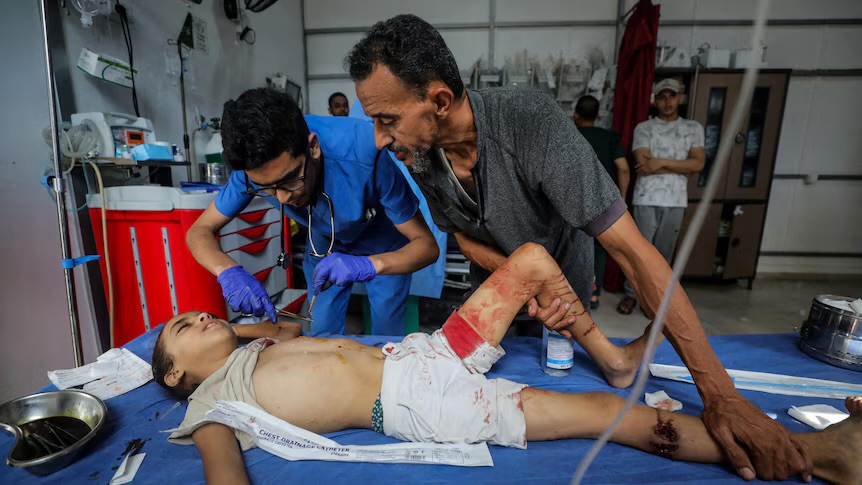
    Subscribe and never miss an article!

  • Battlefields and Banknotes: How Macron and the Rothschild Dynasty Turn War Into Wealth

    Battlefields and Banknotes: How Macron and the Rothschild Dynasty Turn War Into Wealth

    by Amal Zadok

    The thunder of war in Ukraine reverberates far beyond the front lines—it shakes boardrooms, stirs international alliances, and echoes in the corridors of Europe’s ruling elite. At the crossroads of this global drama stand two pivotal actors: Emmanuel Macron, President of France, and the Rothschild banking dynasty.

    Their intertwined histories, rooted in European finance and diplomacy, now play out amid the chaos and capital flows unleashed by one of Europe’s most consequential wars. This revised investigation presents a transparent, evidence-rich account of how both Macron and the Rothschilds stand to gain from the continuation of Ukraine’s conflict.

    Macron: From Vaults to Power

    Macron’s meteoric rise from relative obscurity to the presidency owes much to his formative years at Rothschild & Co, which he joined in 2008. At Rothschild, Macron quickly established himself as a prodigy, securing landmark deals such as Nestlé’s multi-billion-euro acquisition of Pfizer’s baby food division—a feat earning him widespread attention, confirmed by both French and Ukrainian media: “He sealed the Nestlé deal that everyone in Paris was talking about, earning himself the title ‘Mozart of finance’” (RBC Ukraine, 2024). The skills, contacts, and economic authority he honed there laid the groundwork for his swift climb to the upper echelons of European power (RBC Ukraine, 2024).

    Critics, including Marine Le Pen, have often highlighted Macron’s elite banking pedigree, charging that “his loyalties are shaped more by the culture of global finance than by French national values” (Le Monde, 2024). This scrutiny is supported by a track record of policy decisions and alliances that reflect his deep integration into European financial circles, particularly during times of continental crisis (Le Monde, 2022; Le Monde, 2024).

    The Rothschilds: Architects of Financial Power in Wartime

    No banking family is more synonymous with war finance than the Rothschilds. Their centuries-long legacy as government financiers and international mediators continues in their modern role as Ukraine’s chief financial adviser. As reported, “Rothschild & Co has advised Kyiv in restructuring more than $20 billion in sovereign and state-guaranteed debt since 2014” (Reuters, 2024). The 2022 bondholder agreement, engineered with Rothschild at the center, saved Ukraine $11.4 billion over three years (Reuters, 2024).

    Press releases from Rothschild & Co reinforce this, confirming the firm’s responsibility for “advising Ukraine’s government on debt, strategic assets, and war-related reforms” and for signing the “Ukraine Business Compact” in support of reconstruction and new international investment opportunities (Rothschild & Co, 2023). Spokespersons for Kyiv’s finance ministry and international creditors including BlackRock and Pimco further praised Rothschild’s “technical mastery and essential role in negotiations” (Reuters, 2024).

    The Profitable Crossroads of War

    Ukraine’s conflict has created an era of continuous restructuring and capital pursuit—each phase generating lucrative opportunities for expert advisers. Rothschild & Co’s fee model, as published, describes “professional fees negotiated for sovereign clients, often calculated as a percentage of transaction value, and linked directly to deal complexity and volume” (Rothschild & Co, 2022). For massive sovereign restructuring efforts, fees are agreed through direct negotiation with state clients (Rothschild & Co, 2022).

    Simultaneously, Macron’s government, now the principal advocate of European defense investment, has amplified his role as both diplomatic broker and champion for Ukraine’s cause. French sources record Macron’s philosophy: “European strategic autonomy and financial solidarity are the only path to lasting stability in the region” (Le Monde, 2024). These are principles deeply rooted in his banking experience (Le Monde, 2024).

    Power, Profit, and Political Opportunity

    There is little ambiguity about the machinery at work: war, for those with expertise and access, generates both political leverage and immense profits. “Each restructuring deal, bond issuance, and emergency financing package reinforces the centrality of Rothschild & Co in the European financial landscape” (Reuters, 2024). Macron’s ascent, in parallel, gains prestige as France brokers ever more complex negotiations and postwar plans (Le Monde, 2022; Le Monde, 2024).

    Both Rothschild & Co and the French presidency have provided statements affirming their commitments to “best practice, market integrity, and the public interest under extraordinary circumstances” (Rothschild & Co, 2023).

    A Cold Calculation

    Ultimately, war redraws the boundaries of power and profit. Macron’s transition from Rothschild banker to European statesman reflects a deliberate, well-documented interplay between elite finance and international leadership (Le Monde, 2022; RBC Ukraine, 2024). The continued involvement of the Rothschild dynasty in Ukraine’s financial defenses is not incidental but the result of centuries of expertise, contemporary technical mastery, and unrivaled access to international decision-makers (Reuters, 2024; Rothschild & Co, 2023).

    As the conflict endures, so too does their indispensability. For Macron and Rothschild & Co, every escalation, every negotiation, and every reconstruction package reaffirms their roles as architects of the new European order. The longer the war, the greater both the demands—and the opportunities—etched into the future of the continent.

    References

    Le Monde. (2022, December 12). Macron’s lone ranger diplomacy on Ukraine. https://www.lemonde.fr/en/international/article/2022/12/13/war-in-ukraine-macron-s-lone-ranger-diplomacy_6007680_4.html

    Le Monde. (2024, March 13). War in Ukraine: Emmanuel Macron’s metamorphosis from dove to hawk. https://www.lemonde.fr/en/politics/article/2024/03/14/war-in-ukraine-emmanuel-macron-s-metamorphosis-from-dove-to-hawk_6618730_5.html

    RBC Ukraine. (2024, December 21). Emmanuel Macron – Who he is, his position on war in Ukraine. https://newsukraine.rbc.ua/analytics/resolute-ally-what-is-known-about-emmanuel-1734849734.html

    Reuters. (2024, September 3). Conflict, creditors and a car crash: How Ukraine clinched wartime debt restructuring. https://www.reuters.com/markets/europe/conflict-creditors-car-crash-how-ukraine-clinched-wartime-debt-restructuring-2024-09-03/

    Rothschild & Co. (2022, January). Fee schedule: Advisory services. https://www.rothschildandco.com/siteassets/publications/rothschildandco/wealth_management/client_corner/2022/fee-schedule_advisory-services_en_january-2022-v3.pdf

    Rothschild & Co. (2023, June). Ukraine Business Compact. https://www.rothschildandco.com/en/newsroom/press-releases/2023/06/ukraine-business-compact/

    ©️2025 Amal Zadok. All rights reserved.

    Subscribe and never miss an article!

  • When Generals Falter: Silence, Loyalty, and the March Toward American Caesarism

    When Generals Falter: Silence, Loyalty, and the March Toward American Caesarism

    by Amal Zadok

    In the hallowed halls of Marine Corps Base Quantico, beneath the glare of klieg lights and the shadow of a colossal American flag, two men unleashed their vision upon the officer corps of the most powerful military in history. President Donald Trump and Defense Secretary Pete Hegseth convened nearly a thousand generals and admirals—dragged from commands worldwide on a week’s notice—for a purpose that became chillingly clear as their speeches unfolded: the transformation of the armed forces from guardians of the Constitution to personal enforcers of a presidential will (Air & Space Forces Magazine, 2025; Richardson, 2025).

    A Gathering Like No Other

    This was no mere routine briefing nor celebration of service; it was, as one senior official described, “political theater disguised as national security” (Air & Space Forces Magazine, 2025).

    Hegseth presided at the podium first, launching a monologue that sounded less like the stewardship of a professional, apolitical force and more like an arsonist’s blueprint to burn the old order to the ground. “Welcome to the War Department, because the era of the Department of Defense is over,” Hegseth declared, confirming what many in the room suspected: the military itself had become a stage for cultural grievance and personal loyalty signals (Young, 2025).

    Hegseth’s address was a screed against “woke” culture, a demand for ever-harder edges and ever-bleaker obedience, all wrapped in the language of “warrior ethos.” He ridiculed those who dissented or even questioned, bluntly ordering officers who did not share his (and by extension the president’s) vision to resign (Air & Space Forces Magazine, 2025).

    In that instant, the room—filled with men and women who have lost comrades, signed the blank check of life and limb for the republic, internalized the oath to the Constitution—grew colder and quieter than any battlefield at dawn (Richardson, 2025).

    Trump’s Turn: Cult of Personality Ascendant

    President Trump, true to form, delivered not a vision for strategy or security, but a stream-of-consciousness boast fest and litany of grievances. Wielding the military as a rhetorical weapon, he threatened to unleash the armed forces on “the enemy within”—his perennial code for political opponents, dissenters, and the cities governed by those who refused his every whim (Richardson, 2025; Young, 2025).

    The spectacle was grotesque. A president standing in front of his gathered generals, not seeking counsel but demanding fealty. “I never walked into a room so silent before,” Trump mused, feigning amusement. The silence, he seemed to realize, was not deference but collective disgust—a professionalism so deeply internalized that even applause would have betrayed the principles for which these officers, at great personal cost, swore their lives (Richardson, 2025; Young, 2025).

    The Perverse Drift Toward Empire

    What unfolded at Quantico is not merely a partisan perversion; it echoes the most dangerous precedents in world history.

    Rome itself once prohibited generals from crossing the pomerium, the sacred boundary into the city, precisely because the entry of armed legions foretold the demise of liberty and the rise of autocracy (Reddit, 2025). Such protections were designed to prevent charismatic emperors from weaponizing Rome’s own sons against her people—a lesson paid for in blood and civil war (Reddit, 2025).

    The United States, not by accident but by painful historical experience, adopted the Posse Comitatus Act in 1878. This law explicitly forbids the use of the Army or Air Force “as a posse comitatus or otherwise to execute the laws” within U.S. borders, except where expressly authorized by Congress or the Constitution itself (Brennan Center, 2025; Military.com, 2025).

    The act’s bedrock principle is clear: the military exists to defend against foreign threats, not to police American streets. Even the Insurrection Act’s rare exceptions were intended only for dire emergencies—not to provide an emperor’s personal cohort to quell dissent or impose will upon civilians (Nilc, 2025).

    Yet, Trump’s discourse celebrated just such a perverse inversion of law and tradition. His promise to use the US military for domestic policing, to “reclaim” cities from supposed enemies within, is not mere bluster—it is the open declaration of a willingness to trash longstanding legal protections and resurrect the politics of the strongman (Richardson, 2025; Military.com, 2025).

    The silence of the generals as these words echoed at Quantico is not just a moral failure—it is an acquiescence to the most dangerous temptation any republic can face (Young, 2025).

    America’s Dangerous Crossroads: Civil-Military Theory and Examples

    The vital boundary between civil authority and military obedience is not theoretical. History’s darkest chapters—from Rome’s decline through the rise of twentieth-century dictatorships—trace the path of generals who traded principle for power, or who, through silence or ambition, enabled demagogues to cross into unchecked rule (Martial Law Museum, 2018; History.co.uk, 2022).

    The dangerous precedent of generals acting as personal cohorts dates not just to the Roman Empire, but to Mussolini’s Italy, Saddam Hussein’s Iraq, and countless smaller tyrannies, where the erosion of legal restraints on armed force spelled disaster for the vulnerable and dissenting (History.co.uk, 2022; Wikipedia, 2002).

    Modern civil-military scholarship warns that the American solution—a professional, apolitical military strictly subordinate to civilian law—stands as the final guardrail against such collapse (Army War College, 2024; CNAS, 2024).

    Once, the Constitution was a bulwark, but American society’s growing distance from its own armed forces, combined with the use of military spectacle as a partisan prop, now risks eroding that legitimacy altogether (Brookings, 2022; CSIS, 2025).

    When trust devolves from the law to the leader, constitutional liberalism becomes fragile, and democracy itself stands exposed (Global Policy Journal, 2025).

    The Poison of “Loyalty”—And the Death of Professionalism

    This moment marked a historic transgression: the naked, shameless attempt to convert military allegiance from the Constitution to a person. Civil-military relations in America have always depended on a fragile but vital boundary, one that demanded the military remain loyal to law, not to men (Young, 2025; CSIS, 2025).

    Both Trump and Hegseth, in their calculated rhetoric, offered a false binary: conform to our political crusade—or step aside, your service now a liability rather than a legacy (Air & Space Forces Magazine, 2025; Young, 2025).

    History warns what happens next. When the generals remain silent in the face of such unconstitutional provocation, the perverse alchemy of fear, ambition, and groupthink takes over. Oaths rot into empty formalities, the uniform becomes a costume, and the sword—a tool for justice—becomes a cudgel for personal power (Young, 2025).

    The Deafening Silence

    The silence of the generals at Quantico was not a sign of assent, but it was also not resistance (Young, 2025; Maher, 2025). In their dignified, stone-faced composure, they sent a signal only fellow professionals could decode: deep unease at being turned into props for presidential vainglory. But silence, however principled, is not enough.

    This silence, while preferable to applause, enabled the aggression of those who would erase the distinction between commander-in-chief and king (Richardson, 2025; Air & Space Forces Magazine, 2025).

    Worse, it saps the morale of a nation that relies upon its military as its last, best defense against tyranny. When faced with such a test of their own stated values, would-be guardians of law and republic offered only polite, public retreat.

    Complicity, Culture, and the American Crisis

    The public’s worship of all things military, often unreflective and bipartisan, bestows prestige upon those in uniform but stultifies democratic debate (Brookings, 2022; Belfer, 2025).

    With less than one percent of Americans in service, generals wield power in a civilian vacuum, making their silence even more damning. Polls show most Americans trust the military more than any other institution—yet that trust is a sword that can empower or destroy.

    An apolitical military serves the republic; a military whose leaders remain silent as the law is undermined serves only its own institutional safety—and, ultimately, the whims of whoever holds power (Brookings, 2022; Army War College, 2024).

    Other democracies have stumbled down this path—leaving future generations to rebuild, sometimes after calamity. In America, the failure to name what is happening, loudly and firmly, is not just cowardice but complicity in the slow corrosion of the rule of law (Global Policy Journal, 2025).

    A Call for Outrage, Not Resignation

    Generals are not children. They are—by training, ethos, and tradition—shapers of fate at moments when fate hangs in the balance. The time demanded a statement, a walkout, publicly visible dissent, or at the very least, a refusal to participate in this charade. There was no such moment (Air & Space Forces Magazine, 2025; Richardson, 2025).

    The officers present had an opportunity to declare, unmistakably, that the military oath is a covenant with the American people, not a personal contract with the president of the moment. Their reticence robbed the republic of that affirmation. If ever there was a day to remind the nation—and those who aspire to rule over it—that ours is a country of laws, and not of men, that day came and went in an eerie, damning silence.

    The Path Back

    The lesson of Quantico cannot be unlearned. The only thing our enemies truly fear is a military faithful to the Constitution, not to a man. To all who wear the uniform, the time for dignified silence is over. Let voices be raised, articles penned, careers risked—because when the Republic calls, nothing less will do. The fate of the American experiment, and all who rely upon it, demands nothing less.

    References

    Air & Space Forces Magazine. (2025, September 30). Inside the Room for Trump and Hegseth Speeches to Top Military Brass. https://www.airandspaceforces.com/inside-the-room-for-trump-and-hegseths-speeches-to-top-military-brass/

    Army War College. (2024, November 20). The Military and Democratic Transition: Paradoxes of the Democratic Ethos. https://publications.armywarcollege.edu/News/Display/Article/3974691/the-military-and-democratic-transition-paradoxes-of-the-democratic-ethos/

    Belfer Center. (2025, August 30). What Americans Think about Civil-Military Relations. https://www.belfercenter.org/publication/no-right-be-wrong-what-americans-think-about-civil-military-relations

    Brookings Institution. (2022, March 8). Military Worship Hurts US Democracy. https://www.brookings.edu/articles/military-worship-hurts-us-democracy/

    Brennan Center for Justice. (2025, June 14). The Posse Comitatus Act Explained. https://www.brennancenter.org/our-work/research-reports/posse-comitatus-act-explained

    CNAS. (2024, October 17). Sharper: Civil-Military Relations. https://www.cnas.org/publications/commentary/sharper-civil-military-relations

    CSIS. (2025, February 9). Takeaways from Secretary Hegseth’s Quantico Meeting. https://www.csis.org/analysis/takeaways-secretary-hegseths-quantico-meeting

    Global Policy Journal. (2025, April 28). Will America’s Military Save or Sink Democracy? https://www.globalpolicyjournal.com/blog/29/04/2025/will-americas-military-save-or-sink-democracy

    History.co.uk. (2022, April 30). How Five Fearsome Dictators Were Finally Overthrown. https://www.history.co.uk/articles/downfall-how-five-fearsome-dictators-were-finally-overthrown

    Maher, B. (2025, October 4). Bill Maher Skewers Pete Hegseth’s Quantico Speech. https://uk.news.yahoo.com/bill-maher-skewers-pete-hegseth-170008748.html

    Martial Law Museum. (2018, January 31). Faces of Authoritarianism. https://learn.martiallawmuseum.ph/magaral/never-the-same-mistake/

    Military.com. (2025, September 1). The 150-Year-Old Law that Governs Military’s Role in Local Law Enforcement. https://www.military.com/daily-news/2025/09/02/150-year-old-law-governs-militarys-role-local-law-enforcement.html

    Nilc. (2025, January 26). FAQ: Use of Military & Wartime Powers. https://www.nilc.org/resources/faq-on-use-of-the-military-for-immigration-enforcement/

    Reddit. (2025, October 2). How Did Roman Military Generals Command So Much Power? https://www.reddit.com/r/history/comments/5mwi39/how_did_roman_military_generals_command_so_much/

    Richardson, H.C. (2025, October 1). September 30, 2025. https://heathercoxrichardson.substack.com/p/september-30-2025

    Wikipedia. (2002, January 23). Authoritarianism. https://en.wikipedia.org/wiki/Authoritarianism

    Young, W. (2025, September 30). The Silence of the Generals: Hegseth, Trump, Quantico Speech. https://www.thebulwark.com/p/the-silence-of-the-generals-hegseth-trump-quantico-speech-william-young-ice-opinion

    ©️2025 Amal Zadok. All rights reserved.

    Subscribe and never miss an article!

  • Blood in the Water: Israel’s Maritime Betrayal and Humanitarian Nightmare

    Blood in the Water: Israel’s Maritime Betrayal and Humanitarian Nightmare

    by Amal Zadok

    The recent assault by Israel against international vessels and the capture of foreign citizens represents one of the most brazen violations of international law in recent memory. What occurred on the high seas was not a minor skirmish, nor a lawful interdiction based on clear evidence—it was a deliberate act of state-sponsored piracy. Cloaked in tired narratives of “defense” and “security,” Israel deployed its military power against ships owned by other nations, seizing civilians who had every right to safe passage. This act was not only a breach of maritime law, it was a declaration that Israel grants itself extraterritorial authority over seas belonging to all humanity. The illegality, the fabricated accusations, and the betrayal of its supposed partners and allies demand scrutiny of the highest order (United Nations Convention on the Law of the Sea [UNCLOS], 1982).

    Crimes on International Waters

    The law of the sea is one of the oldest and most venerated frameworks of international order. Enshrined in the United Nations Convention on the Law of the Sea (UNCLOS, 1982), it establishes the principle that ships sailing in international waters remain under the jurisdiction of the flag they fly, free from interference by other states except in very limited circumstances—such as combating piracy, suppressing the slave trade, or countering unauthorized broadcasting (International Maritime Organization [IMO], 2021). None of those exceptions applied here. By overpowering and commandeering ships in neutral waters, Israel treated the sea as its private dominion, arrogating to itself the right to dictate who may sail and under what conditions.

    This is the essence of piracy. Traditionally defined as “illegal acts of violence or detention committed for private ends on the high seas,” piracy corrodes the shared trust that makes international trade and exchange possible (Bassiouni, 2010). When a state itself embodies piracy, the crime is compounded; it is no longer a matter of rogue actors but of a nation dismantling the rules-based order. Israel did not merely harass vessels; it replaced maritime law with the barrel of a gun.

    The Humanitarian Mission of the Flotilla

    Beyond the raw illegality of the seizure lies the human tragedy that motivated the flotilla in the first place. These ships were not casual leisure cruises but humanitarian missions, driven by desperation and solidarity. The people onboard sought to break the stranglehold of Israel’s blockade on Gaza—an enclave that has become one of the most densely populated open-air prisons in the world (Amnesty International, 2020).

    For nearly two decades, Gaza has suffered under a blockade that has systematically strangled its economy, denied its civilians freedom of movement, and reduced access to basic necessities. Humanitarian agencies have described the blockade as collective punishment, inflicting untold suffering on ordinary Palestinians who are trapped in a cycle of poverty, hopelessness, and dependency (Amnesty International, 2020). Food insecurity is rampant, medical supplies are chronically lacking, and unemployment rises with each passing year.

    The flotilla was born from this desperation. It carried not weapons, but food, medicine, and humanitarian aid essential for survival. Its mission was a cry of solidarity from the international community, a statement that ordinary citizens of the world would not stand silently while Gaza’s people were suffocated (Amnesty International, 2020). By intercepting and crushing this mission, Israel did not merely attack ships; it attacked a lifeline of hope for nearly two million Palestinians imprisoned behind walls and barbed wire.

    Fabricated Narratives as Cover

    Immediately after the seizures, Israeli officials flooded the media with claims that the targeted vessels harbored contraband or terrorists disguised as humanitarian activists. Yet, neutral inspections, journalistic investigations, and eyewitness testimonies demolished those allegations (Amnesty International, 2020). Cargo manifests had been transparent. Independent observers confirmed the civilian nature of passengers. Once again, the records revealed a familiar strategy: strike first and justify later with a fog of disinformation.

    The use of fabricated pretexts is not an accident but a deliberate method. It allows the aggressor to muddy the public debate long enough to defuse outrage or to bank on the short memory of the media cycle. But however carefully spun, falsehood cannot transform illegality into legitimacy. The attempt to criminalize the innocent, portraying detained civilians as threats, merely compounds the outrage. It is one thing to attack without cause; it is another to smear the victims while demanding silence from the international community.

    Betrayal of Partners and “Allies”

    The audacity of this operation lies not only in its illegality, but in the betrayal it inflicted on the very nations Israel purports to call partners. Many of the vessels struck carried nationals from states that have historically provided Israel with diplomatic protection, economic exchange, or even military support. These are not its declared enemies, but countries that had, in many instances, shielded Israel from accountability in international forums (International Court of Justice, 1997).

    To seize their ships and citizens is to undermine the very foundations of alliance. It lays bare the deep contempt Israel holds for foreign sovereignty. A state that imprisons the nationals of its supporters demonstrates that it views such relationships not as partnerships of equals, but as arrangements where deference is demanded without reciprocity. Those governments now face an unprecedented moral reckoning: will they defend their citizens’ rights or surrender, once more, their dignity beneath Israel’s claims of “exceptional security needs”?

    The Collapse of International Trust

    Global order relies upon trust: trust in treaties, in neutral zones, and in the shared understanding that laws bind the powerful as well as the weak. When Israel stormed internationally flagged ships, it tore down that trust. If one nation may unilaterally board and detain foreign nationals beyond its recognized waters, why should any state respect maritime conventions at all (IMO, 2021)?

    The consequences ripple outward. Shipping companies may reconsider safe lanes, raising insurance costs, undermining trade, and destabilizing critical supply chains. Nations may begin asserting unilateral authority over seas far from home, justifying aggressive policing by citing Israel’s precedent. The sea, meant to be humanity’s shared lifeline, risks being carved into zones of coercion, where might negates right.

    Israel’s defenders argue that extraordinary threats justify extraordinary measures. But international law was not designed to evaporate the moment one party alleges danger (UNCLOS, 1982). To accept such reasoning is to abandon law itself to the whim of unilateral declarations. If every state claimed this exception, no merchant ship would ever sail in safety again.

    A Crisis of Impunity

    This is not the first time Israel has acted in such ways. Its record in blockading humanitarian missions, conducting extrajudicial killings abroad, and humiliating international observers speaks to a pattern: a conviction that impunity is permanent (Amnesty International, 2020). For decades, Israel has faced reports, resolutions, and condemnations, yet concrete consequences have remained elusive, largely because of the protective shield afforded it by powerful allies.

    But this assault tears away the last justifications for indulgence. Unlike territorial conflicts where narratives of history are endlessly debated, maritime law is stark and unambiguous. Ships outside territorial waters enjoy immunity from such aggression. By violating this, Israel has not attacked one party—it has attacked a system designed to protect all nations equally (Bassiouni, 2010).

    Responsibility of the Global Community

    The international response cannot remain confined to verbal statements of “deep concern.” These words have already been drained of meaning by decades of overuse. Concrete measures must follow. At minimum, the unconditional release of all detainees is an urgent demand. International tribunals and courts must be empowered to investigate command responsibility. States whose citizens were abducted must employ the tools of diplomacy and economics—recalling ambassadors, suspending cooperation, freezing arms transfers—until Israel comprehends that no state can claim extraterritorial impunity without cost (UN Security Council, 2016).

    If international institutions fail to respond, their credibility will face mortal erosion. What legitimacy can the United Nations claim if the high seas, declared common to all, may be seized at will? What function does the International Maritime Organization serve if piracy under a flag of statehood goes unchecked? The erosion of trust will extend beyond Israel to the very fabric of multilateral cooperation.

    The Precedent for Humanity

    This crisis is more than a bilateral dispute. It is a precedent-setting moment for humanity. If this action is allowed to stand, piracy disguised as “security” will proliferate. Tomorrow, emboldened states may justify seizing aircraft in neutral skies or storming foreign embassies under contrived accusations. The principle under threat is simple but vital: that international law binds the powerful as well as the powerless, and that civilians are not bargaining chips to be captured at sea.

    Israel has crossed a threshold that should alarm every government. The seas are the arteries of global exchange, carrying grain, fuel, medicine, and people across continents. To militarize them with extrajudicial seizures is to threaten the very flow of international life. Humanity must decide whether law still has meaning, or whether rules will be torn to shreds whenever one government declares itself an exception.

    Conclusion

    The assault on international vessels and the capture of civilians by Israel is not a misunderstanding, nor a defensive necessity. It is lawless, deceitful, and treacherous. It is a betrayal of partners, a fabrication of threats, and an assault on the very system of rules that enables civilization to function. This was not Israel versus one flotilla; it was Israel versus the concept of shared law itself.

    If nations allow this to pass unanswered, the seas will no longer be safe havens of lawful passage but dangerous arenas of unilateral force. Humanity stands at a crossroads: either to punish state-sponsored piracy and restore faith in the rule of law, or to accept that impunity has no limits. History will not remember neutrality or silence kindly. Crimes committed in daylight on the open seas demand accountability—and the world must rise to provide it.

    And if justice does not come swiftly, history will not forgive the world’s cowardice: the silence of governments will echo louder than gunfire, and tomorrow’s pirates, emboldened by today’s refusal to act, will not only control the seas but dictate the fate of nations themselves.

    References

    Amnesty International. (2024, December 4). ‘You Feel Like You Are Subhuman’: Israel’s Genocide Against Palestinians in Gaza. https://www.amnesty.org.au/amnesty-concludes-israel-genocide-in-gaza/

    Bassiouni, M. C. (2010). International Extradition: United States Law and Practice (6th ed.). Oxford University Press. https://global.oup.com/academic/product/international-extradition-9780199917891

    International Court of Justice. (1997). Case concerning the Gabčíkovo-Nagymaros Project (Hungary/Slovakia), Judgment of 25 September 1997. https://www8.austlii.edu.au/au/journals/AUIntLawJl/1997/18.pdf

    International Maritime Organization. (n.d.). Introduction to IMO. https://www.imo.org/en/about/pages/default.aspx

    United Nations Convention on the Law of the Sea. (1982). United Nations Treaty Series. https://www.un.org/depts/los/convention_agreements/texts/unclos/unclos_e.pdf

    United Nations Security Council. (2016). Resolution 2312 (2016): Maritime Security and Law Enforcement. https://digitallibrary.un.org/record/844438

    ©️2025 Amal Zadok. All rights reserved.
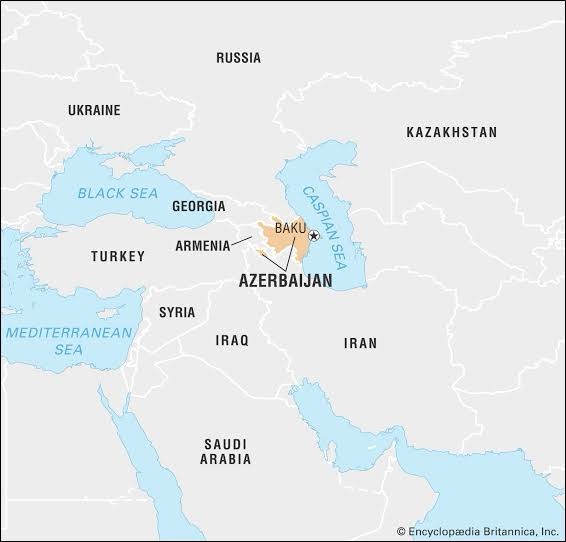
    Subscribe and never miss an article!

  • Regurgitated Vomit Returns: Blair, Trump, Netanyahu, Kushner Plot Palestine’s Final Grave Robbery

    Regurgitated Vomit Returns: Blair, Trump, Netanyahu, Kushner Plot Palestine’s Final Grave Robbery

    by Amal Zadok

    Tony Blair’s emergence at the heart of the new “Board of Peace” for Gaza marks not the return of a statesman, but of political regurgitate—vomited up from a gutter of war crimes, deceptions, and colonial hubris. Instead of retreating into the infamy earned by his legacy in Iraq and Afghanistan, Blair now attaches himself to President Donald Trump’s latest imperial project, propped up by Benjamin Netanyahu’s apartheid policy and Jared Kushner’s real estate ambitions. Together, this axis plots what amounts to the final grave robbery of a battered Palestine, formalized as Gaza’s “reconstruction”—a luxury enclave built atop ruin and mass graves.

    Gaza as Investment: Blood as Collateral

    Trump’s 20- and 21-point postwar plans for Gaza, revealed in September 2025, showcase overt imperial intent. At their center sits Blair, whom Trump lauds as “a good man,” tipped to lead or coordinate a transitional authority over Gaza’s wounded society. Under this plan, a “Board of Peace” would direct Gaza’s recovery and establish conditions for “future self-determination”—while every lever of practical power remains in U.S., Israeli, and select Arab hands (BBC News, 2025a; Times of Israel, 2025; Al Jazeera, 2025a).

    The proposed “Gaza Riviera” is necro-liberalism realized: beachfront property schemes fronted by Kushner, with international developers already preparing bids (New Daily, 2025). Humanitarian aid is funneled through foreign agencies, bypassing grassroots Palestinian control. The population is told to cooperate, and “relocation” is discussed openly—a policy reminiscent of historic forced displacement (Al Jazeera, 2025a).

    America’s blueprint—outlined in leaked texts and official releases—calls for assembling experts who built modern cities elsewhere in the Gulf. The local future is to be engineered by global investment partnerships, lured by special tariff deals and an unprecedented “special economic zone.” Security is strictly controlled by Israel, Egypt, and the U.S., with Palestinian freedom of movement mostly rhetorical (Times of Israel, 2025; Wikipedia, 2025).

    This vision includes luxury resorts, a new port, and “Elon Musk Smart Manufacturing Zones.” The reconstruction is immense: more than 50 million tons of debris, with infrastructure to be rebuilt in phases—initial temporary shelter followed by years of industrial and tourist development, requiring $53 billion or more (Le Monde, 2025; UN, 2025).

    Blair: From Regurgitated War Crimes to Gaza Overseer

    Blair’s record is infamous. His role in misleading the UK into the Iraq War, condemned by the Chilcot Inquiry, left devastation that fueled regional instability (Radio New Zealand, 2025; New York Times, 2025a). As Quartet envoy on Palestine, Blair was marked by “soundbites over substance,” with critics noting his tenure coincided with intensifying sieges and expanding settlements (BBC News, 2025a).

    Blair’s appointment as Gaza’s “international overseer” draws near-universal condemnation. British and Palestinian officials alike regard him as “toxic” and “untrustworthy” (New York Times, 2025a; Radio New Zealand, 2025). The history of failed diplomacy and deep complicity with occupation now repeats as he resumes his role as consultant to empire—offering legitimacy and a veneer of respectability to external control (Reuters, 2025).

    Numerous analyses of Blair’s prior interventions judge them “catastrophic,” noting that his actions in Iraq, Afghanistan, and Palestine deepened occupation rather than fostering peace (BBC News, 2025a; New York Times, 2025a). Palestinians see him as emblematic of a long colonial legacy—a figure who returns only to erase, never to rebuild.

    Empire’s Quartet: Profit, Power, and Erasure

    Trump’s promised “peace” is colonialism repackaged. Trump claims liberation while coordinating with Netanyahu, whose regime depends on withholding Palestinian autonomy, and Kushner, who treats Gaza’s trauma as “real estate opportunity” (BBC News, 2025b; New York Times, 2025b). Investment is prioritized for external stakeholders, not the dispossessed; every skyscraper and tech hub is mapped onto the remnants of Palestinian life (Carnegie Endowment, 2025).

    Policing and “stabilization” will be managed by an international force: select Palestinians, Jordanians, Egyptians, all vetted and coordinated under the board’s supervision. Yet Israel retains ultimate security authority, with rights to intervene if it feels “threatened” (The Conversation, 2025). Palestinian governance under this scheme is nominal—transitional technocrats with little democratic mandate, significant only as long as their priorities align with outside powers.

    This roadmap turns Gaza into an experiment in disaster capitalism: exclusion of local voices, preference for foreign profit, and reduction of survivors to objects of resettlement or inconvenience (Carnegie Endowment, 2025). Lavish promises of investment mask the forced erasure, displacement, and denial of self-determination that define the plan.

    International Reactions and Arab Proposals

    Arab and European states propose alternatives—especially Egypt’s $53 billion recovery plan, emphasizing keeping Palestinians in Gaza while establishing a technocratic governance committee (UN, 2025; Wikipedia, 2025). The Trump administration rebuffs these, portraying Gaza as “uninhabitable” until depopulation occurs. Should Palestinian compliance be achieved, the Palestinian Authority may be allowed to return; if not, foreign trusteeship endures. Skepticism persists among Gulf states and the Organisation of Islamic Cooperation, wary that reconstruction funding may only invite future episodes of destruction (Wikipedia, 2025).

    The Verdict: From Vomit, Only More Filth

    Blair’s presence is a double insult—layered atop the long injustice of occupation. Trump, Netanyahu, Kushner, and their coterie tout “prosperity” and “recovery,” but deliver graveyard sovereignty: citizenship in name, dispossession in fact. Every charitable gesture conceals an ultimatum—surrender, displacement, erasure.

    Gaza needs no more foreign overseers, failed statesmen, or disaster profiteers. What it demands, and deserves, is the right to determine its own fate, to rebuild, and to mourn its dead without their memory being washed away by the architects of erasure.

    References

    Al Jazeera. (2025, September 29). What is the Trump plan for Gaza and will it work? https://www.aljazeera.com/news/2025/9/29/what-is-the-trump-plan-for-gaza-and-will-it-work

    BBC News. (2025a, September 29). Trump’s Gaza plan is a significant step—but faces obstacles. https://www.bbc.com/news/articles/cy4r1xjy90ko

    BBC News. (2025b, September 30). Trump trusts Blair, others don’t—could he govern Gaza? https://www.bbc.com/news/articles/c89d5938w3ko

    Carnegie Endowment for International Peace. (2025, July 23). Disaster capitalism and the postwar plans for Gaza. https://carnegieendowment.org/research/2025/07/destruction-disempowerment-and-dispossession-disaster-capitalism-and-the-postwar-plans-for-gaza?lang=en

    Le Monde. (2025, September 30). Gaza: Trump’s 20-point plan, explained and analyzed. https://www.lemonde.fr/en/international/article/2025/09/30/gaza-trump-s-20-point-plan-explained-and-analyzed_6745944_4.html

    New Daily. (2025, September 2). Leaked plan to make depopulated Gaza a high-tech cash cow. https://www.thenewdaily.com.au/news/world/middle-east-news/2025/09/02/gaza-trump-plan

    New York Times. (2025a, October 1). Tony Blair, tapped by Trump for Gaza plan, brings peace legacy—And controversy. https://www.nytimes.com/2025/10/01/world/middleeast/tony-blair-gaza-peace-plan.html

    New York Times. (2025b, September 30). Trump’s Gaza plan: What we know. https://www.nytimes.com/2025/09/30/world/middleeast/trump-gaza-plan.html

    Radio New Zealand. (2025, September 29). Why is ex-British PM Tony Blair involved in Trump’s Gaza recovery plan? https://www.rnz.co.nz/news/world/574619/why-is-ex-british-pm-tony-blair-involved-in-trump-s-gaza-recovery-plan

    Reuters. (2025, September 29). Israeli forces advance ahead of Trump-Netanyahu Gaza war talks. https://www.reuters.com/world/middle-east/israeli-forces-advance-ahead-trump-netanyahu-gaza-war-talks-2025-09-29/

    The Conversation. (2025, April 2). Trump’s Gaza peace plan: A bit of the old, a bit of the new. https://theconversation.com/trumps-gaza-peace-plan-a-bit-of-the-old-a-bit-of-the-new-and-the-same-stumbling-blocks-266341

    The Times of Israel. (2025, September 27). Revealed: US 21-point plan for ending Gaza war, creating pathway to Palestinian state. https://www.timesofisrael.com/revealed-us-21-point-plan-for-ending-gaza-war-creating-pathway-to-palestinian-state/

    United Nations. (2025, March). Gaza/Palestine early recovery, reconstruction, and development proposal. https://www.un.org/unispal/wp-content/uploads/2025/03/Arab-Proposal-compressed.pdf

    Wikipedia. (2025, February 12). Donald Trump’s February 2025 Gaza Strip proposal. https://en.wikipedia.org/wiki/Donald_Trump’s_February_2025_Gaza_Strip_proposal

    ©️2025 Amal Zadok. All rights reserved.

    Subscribe and never miss an article!

  • Genocide by Design: The Fraud Behind Trump and Netanyahu’s Gaza Gambit

    Genocide by Design: The Fraud Behind Trump and Netanyahu’s Gaza Gambit

    by Amal Zadok

    Trump’s so-called “peace plan” for Gaza is not only fatally flawed—it is a sham, designed to fail from the outset. It depends on the supposed integrity of two of the region’s most transparently dishonest figures: Donald Trump and Benjamin Netanyahu.

    Both men have proven, time and again, that their word means nothing. Netanyahu, a master of delay and deceit, has a long record of pledging ceasefires, reforms, or humanitarian relief, only to shred those commitments the moment his political survival is at stake. To expect him to honor this “plan” is to ignore decades of duplicity and corruption.

    Trump’s record is no better. He torched the Iran nuclear deal after years of painstaking diplomacy and routinely undermined earlier Israeli-Palestinian frameworks. His “America First” posture has always been a thin disguise for siding with Israel’s military machine, something he openly confirmed even at the unveiling of this plan. Expecting him to act in good faith is a fool’s bargain.

    The plan itself is a hollow fraud. It offers no enforcement mechanisms, no accountability, and no guarantees. If Hamas disarms or frees hostages, what prevents Netanyahu and Trump from walking away, extending Israel’s military occupation, delaying prisoner releases, or shifting the goalposts yet again? Nothing. It is deliberately written as a vague list of “principles” instead of a binding framework, giving both leaders the freedom to sabotage it at will and then cynically blame the Palestinians.

    Most damning of all, neither Trump nor Netanyahu has ever respected Palestinian rights, dignity, or self-determination. Their plan is capitulation dressed up as peace. It erases accountability, strips away independent oversight, and makes international guarantees worthless the moment Israel resumes its campaign of genocide and repression.

    This is not a roadmap to peace—it is a script for endless war, cycles of destruction, and permanent injustice, masked as diplomacy.

    The hypocrisy is staggering. The plan demands the total exclusion of Hamas and all affiliated Palestinian political figures from Gaza’s future. In other words, it denies a significant portion of the Palestinian people any form of political representation. Yet there is no parallel demand for Israel to purge its own failed and corrupt leadership.

    On the contrary, Netanyahu, whose government faces credible allegations of genocide and catastrophic policies, is handed a starring role as “peace partner” and enforcer.

    The document says nothing about reforming Israeli politics or forcing Netanyahu’s exit. There is no requirement for new elections, no accountability for a government drowning in internal corruption, no check on Israeli impunity. Instead, the plan entrenches Netanyahu’s power while dictating the forced restructuring of Palestinian society under Israel’s terms.

    This is not peace. It is a one-sided diktat—designed to strip Palestinians of political voice while cementing Israeli dominance and shielding corrupt leaders from consequences. It guarantees only one thing: that distrust, violence, and cycles of impunity will deepen, making true peace more distant than ever.

    ©️2025 Amal Zadok. All rights reserved.
    Subscribe and never miss an article!

  • Hellbound: Netanyahu’s Gaza War and Israel’s Unraveling Regime

    Hellbound: Netanyahu’s Gaza War and Israel’s Unraveling Regime

    by Amal Zadok

    Benjamin Netanyahu’s final act is playing out on the battered streets of Gaza and in the anguished conscience of a nation fracturing before the eyes of the world. Across the barricades of shattered cities and the hushed halls of the Knesset, the self-declared defender of Israel is revealed as its greatest adversary—a leader whose ruthless pursuit of self-preservation now threatens the very existence of the state he claims to protect.

    A Sparta Fantasy, A Pariah Reality

    On a tense afternoon in Jerusalem, Netanyahu berated financiers and government functionaries, insisting Israel must become a “super-Sparta”—autarkic, militarized, alone. It was a confession, not just of ruinous isolation but of a descent into the historical club of fascist regimes: “This is the club you want to join?” asked a shocked former diplomat. He did not answer. Within hours, tanks thundered into central Gaza. Tens of thousands fled on exhausted feet, while a hundred more people lost their lives in a single day of bombardment. The nurses in Al-Shifa Hospital packed premature infants into one shared incubator. “Gaza is burning,” the Defense Minister crowed; but what burned was not just a city, but the promise of Israel itself.

    Witnesses in Ruins

    International correspondents, medical workers, and families of hostages became eyewitnesses to Netanyahu’s war. The streets of Gaza filled with displaced families, wandering through dust and debris to nowhere; inside Israel, the sound of protest echoed from outside Netanyahu’s home, where mothers begged for their sons to be saved, for the war to end.

    Polls now show that fewer than a third of Israelis support the military occupation. Commanders resist, experts warn, and business leaders openly predict economic collapse. Israeli society is held hostage to one frightened man’s political survival—its scientists, artists, and diplomats banished from global institutions in a wave of unprecedented ostracism.

    The ICC and the Weight of Crimes

    In May 2024, the International Criminal Court moved to indict Netanyahu for war crimes and genocide, reflecting growing consensus from United Nations investigators and independent human rights organizations. The charges are not abstract: deliberate starvation, systematic displacement, targeted attacks on civilians, and the collective punishment of an entire population. Allies once unwavering now block arms sales and recognize Palestinian statehood. Israelis themselves face discrimination overseas and social stigma at home—the nation transformed into a global pariah under one man’s reign.

    Dictatorship’s Shadow and the Betrayal of Democratic Ideals

    Netanyahu’s desperation is transparent: fighting war to postpone prosecution, subordinating law to political power. “We’ll have to decide if the law is more important than life,” he intoned—a chilling precursor to moves removing legal officials and rewriting rules to serve personal survival. Democracy cracks as censorship grows. Military officials are threatened. Judges are pressured. Already, soldiers with mental health exemptions are returned to combat amid mounting attrition and social despair.

    Gaza’s Agony and Israel’s Lost Soul

    The agony of Gaza is documented daily by Palestinian journalists, medical personnel, and international observers. Whole neighborhoods are reduced to dust. Infrastructure is pulverized. Families huddle together for warmth and survival; yet the bombs keep falling. Israeli historians and politicians warn that emulating Sparta does not make a nation strong, only brittle and doomed—“Sparta lost,” they remind. On the ground, a new generation of Israelis and Palestinians see only endless war.

    Operation Samson: A Nightmarish Temptation

    Cornered by legal peril and social revolt, Netanyahu gestures toward “Operation Samson”—the doctrine that Israel, faced with existential threat, could ignite catastrophic nuclear war. It is the final horror: the threat that a leader with nothing left to lose might choose regional annihilation. Security experts and regional historians warn that such nihilism now feels plausible, not hypothetical, as the regime careens toward collapse.

    A Nation Held Hostage, Truths Unmasked

    Netanyahu’s downfall is no longer an opposition platform—it is a demand from within Israel and across the world. The people want justice for war crimes, return of the hostages, and an end to occupation. Ordinary Israelis feel the shame of international pariah status: at academic conferences, in business, in travel, and in diplomatic delegations, they are excluded for their country’s actions. Some protest. Others despair. Everyone waits for a reckoning.

    The Verdict of History

    A regime built on graves and silence cannot escape judgment forever. Netanyahu’s legacy will resound not only in Gaza’s devastation but in the wounded conscience of Israel itself, and in the world’s demand for accountability. As the era of impunity ends, the walls of tyranny begin to crack—from within and without.

    Ultimately, what matters most is the testimony of those who have suffered—and survived. Justice calls not only for the end of a failed regime, but for the voices of the oppressed to shape a new history. The world is watching, and history itself is sharpening its pen.

    References

    Margalit, R. (2025, September 18). Israel’s new occupation. The New Yorker. https://www.newyorker.com/news/the-lede/israels-new-occupation

    Global Centre for the Responsibility to Protect. (2025, September 2). Israel and the occupied Palestinian territory. https://www.globalr2p.org/countries/israel-and-the-occupied-palestinian-territory/

    ©️2025 Amal Zadok. All rights reserved.

    Subscribe and never miss an article!

  • Betrayed by Zion: Why Charlie Kirk Had to Die

    Betrayed by Zion: Why Charlie Kirk Had to Die

    by Amal Zadok

    Charlie Kirk’s rise from college dropout to the epicenter of American conservatism was not happenstance—it was the result of decisive Zionist influence shaping his ascent (Al Jazeera, 2025, https://www.aljazeera.com/news/2025/9/11/israeli-leaders-heap-praise-on-charlie-kirk-as-a-staunch-ally-of-israel). As the founder of Turning Point USA, Kirk was powered by donor networks obsessed with defending Israel at any cost, even when this meant silencing ethical qualms and transforming America’s youth into zealous defenders of a foreign apartheid state (Al Jazeera, 2025; Instagram, 2025, https://www.instagram.com/reel/DOeD5O0AkFx/).

    The Fabric of a Zionist Crusader

    Kirk’s career was defined by unwavering pro-Israel advocacy. Israeli officials called him “lion-hearted,” eulogizing him as a “warrior for truth and freedom” (Al Jazeera, 2025; Instagram, 2025). He was lavished with access, praise, and money for his role in fusing Christian nationalism with Israeli interests, branding the brutal occupation and bombardment of Gaza as a righteous struggle for Judeo-Christian civilization (Al Jazeera, 2025; YouTube, 2025, https://www.youtube.com/watch?v=FqBDRuAuRxg).

    His rallies, podcasts, and policies were shaped not simply by patriotism, but by a calculated alignment with Netanyahu’s vision: intolerance of Palestinian voices, demonization of critics, and deflecting scrutiny from Israel’s human rights violations. Kirk became the gold standard for the Lobby’s ideal mouthpiece: loyalty, rhetorical firepower, and understanding that obedience would be rewarded—until it wasn’t (Times of Israel, 2025, https://www.timesofisrael.com/conservative-influencer-and-israel-advocate-charlie-kirk-shot-dead-at-utah-event/; Forward, 2025, https://forward.com/culture/769042/charlie-kirk-jewish-sabbath-book/).

    The System’s Unforgiving Grip

    Turning Point USA flourished in this captured ecosystem. With Israel’s name on every major donor’s contract, Kirk amplified the message that real conservatism was defined by unconditional defense of Israel—no matter the war, no matter the atrocity (New York Post, 2025, https://nypost.com/2025/09/12/business/over-10k-posts-tie-charlie-kirks-murder-to-israel-as-conspiracy-theories-explode-online-adl-report/; Al Jazeera, 2025). For years, he merged the cause of the American right with that of Israel, leading student protests against “antisemitism” and framing Palestinian activism as extremism threatening American values (Times of Israel, 2025).

    Yet the price for breaking from this line was clear: financial ruin, media attacks, and exile from the networks that built his career. Those who benefited most from the Lobby’s largesse were expected to repay it in silence and submission (New York Post, 2025; New York Times, 2025, https://www.nytimes.com/2025/09/11/us/charlie-kirk-views-guns-gender-climate.html).

    The Shattering Pivot: Dissent and Defiance

    Beneath the surface triumph, a fracture opened. Kirk began to see the cost of Zionist control—not just the suppression of Palestinian suffering, but the wholesale censorship of American dissent. He started asking dangerous questions: Why should a donor-driven agenda define conservatism? Why were criticisms of genocide and apartheid taboo—and grounds for personal and professional obliteration (TRT World, 2025, https://www.trtworld.com/article/c915eadce012; Times of Israel, 2025)?

    Kirk’s skepticism grew more public with each Israeli escalation in Gaza. When offered a monumental cash infusion from Netanyahu in exchange for renewed loyalty, he refused. The offer, insiders say, was explicit: continued money and influence, or face consequences (New York Post, 2025).

    Kirk chose the latter, and spoke out. He denounced the “genocidal starvation” in Gaza, condemned American complicity in Israeli crimes, and called out donor networks for dictating what causes conservatives were allowed to support (TRT World, 2025; Times of Israel, 2025). Kirk was no longer a silent tool, but a negationist—a public opponent in a movement where insubordination is fatal.

    Antagonism with Netanyahu and Zionist Power

    As Kirk’s rhetoric turned from loyalty to opposition, the break with Netanyahu became public and hostile. Instead of quietly exiting, Kirk rebuked the Israeli premier’s attempts to buy silence and attacked Zionism’s grip on American politics. Conservative power brokers panicked; donors pulled support; media allies smeared him as an antisemite. Once celebrated as Israel’s champion, Kirk became its highest-profile defector (Al Jazeera, 2025; New York Post, 2025).

    He explicitly condemned what he termed “Israel’s genocide against Gaza,” warning that America’s future depended on rejecting foreign control and restoring dissent. In private, Kirk confided fears for his safety: “If I keep speaking, the Israelis will kill me,” he allegedly warned friends and allies, aware of the history of retribution against those breaking Zionist consensus (New York Post, 2025).

    The Lethal Price of Truth

    On September 10, 2025, Kirk was shot dead at a Utah university event. Mainstream voices spun the tragedy, while Israeli officials returned to eulogy—erasing his late dissent, memorializing only service rendered (Al Jazeera, 2025; Times of Israel, 2025). Social media erupted: over 10,000 posts connected his murder directly to his dramatic break with Israel and the Lobby (New York Post, 2025).

    Videos surfaced of Kirk discussing the threats and isolation he faced, clips now cited as chilling evidence that fatal consequences are the price for public opposition to Zionism at the heart of U.S. power (New York Post, 2025). In death as in life, Kirk became a symbol—a tool destroyed for becoming a conscience.

    The Unforgiving Verdict

    Charlie Kirk’s odyssey is not just a personal tragedy—it is an indictment of American conservatism’s captivity. The article documents how slavish loyalty to Israel is built into the foundations of political power, enforced by money, access, and, at the deepest level, fear (Al Jazeera, 2025; New York Post, 2025; TRT World, 2025).

    Breaking free, naming genocide, and rejecting foreign money was not just controversial—it was terminal. Kirk’s assassination lays bare that Zionism manufactures advocates, engineers silence, and punishes dissent not only with exile, but with death.

    Zionism makes tools, not friends. Charlie Kirk’s sin was daring to become a conscience—and for that, his voice, influence, and body were sacrificed to silence. Anyone who breaks their chains learns who really holds the leash.

    APA Reference List with URLs

    Al Jazeera. (2025, September 11). Israeli leaders heap praise on Charlie Kirk as a staunch ally of Israel. https://www.aljazeera.com/news/2025/9/11/israeli-leaders-heap-praise-on-charlie-kirk-as-a-staunch-ally-of-israel

    TRT World. (2025, September 10). 5 times Charlie Kirk made anti-Semitic remarks. https://www.trtworld.com/article/c915eadce012

    New York Post. (2025, September 12). Over 10K posts tie Charlie Kirk’s murder to Israel as conspiracy theories explode online. https://nypost.com/2025/09/12/business/over-10k-posts-tie-charlie-kirks-murder-to-israel-as-conspiracy-theories-explode-online-adl-report/

    The New York Times. (2025, September 11). Where Charlie Kirk Stood on Key Political Issues. https://www.nytimes.com/2025/09/11/us/charlie-kirk-views-guns-gender-climate.html

    Times of Israel. (2025, September 10). Conservative influencer and Israel advocate Charlie Kirk shot dead at Utah event. https://www.timesofisrael.com/conservative-influencer-and-israel-advocate-charlie-kirk-shot-dead-at-utah-event/

    Instagram. (2025, September 10). Charlie Kirk was a defender of our common Judeo-Christian values. https://www.instagram.com/reel/DOeD5O0AkFx/

    Forward. (2025, September 11). Charlie Kirk kept a ‘Jewish Sabbath.’ What did he mean by this practice? https://forward.com/culture/769042/charlie-kirk-jewish-sabbath-book/

    YouTube. (2025, September 10). Charlie Kirk’s Strong Christian Faith & Support for Israel. https://www.youtube.com/watch?v=FqBDRuAuRxgn

    ©️2025 Amal Zadok. All rights reserved.
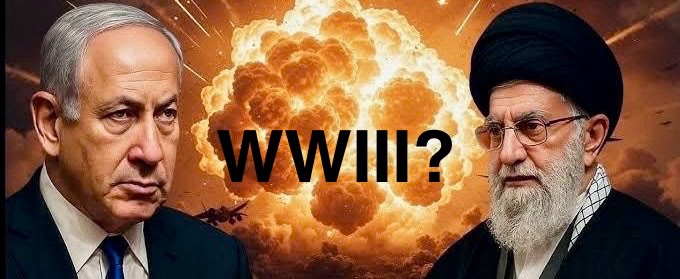
    Subscribe and never miss an article!

  • Europe’s Self-Destruction: How Denial of Multipolar Reality is Fueling War and Collapse

    Europe’s Self-Destruction: How Denial of Multipolar Reality is Fueling War and Collapse

    by Amal Zadok

    The current war in Ukraine has not only been devastating for Ukrainians but is also steadily corroding Europe itself. Behind the headlines of military offensives, sanctions, and refugee crises lies a deeper structural problem: Europe’s refusal to accept the rise of a multipolar world order. By clinging to the vestiges of US-led unipolar hegemony, European leaders are not merely prolonging the war in Ukraine but accelerating the continent’s own decline—economically, politically, and strategically.

    Europe’s Addiction to Unipolar Illusions

    At the heart of the issue is Europe’s inherited ideological attachment to the post-Cold War liberal order. European elites internalized the illusion that American-led globalization was permanent, and that geopolitics was merely about spreading Western institutions eastward. NATO enlargement, EU expansion, and neoliberal economic integration were treated as inevitable. Russia’s objections were written off as paranoia, while China’s rise was underestimated or dismissed.

    This mindset encouraged hubris. Instead of building a security architecture that included Russia, Europe bet everything on NATO expansion, reinforcing a dangerous zero-sum logic. Instead of accepting the new economic gravity of Asia, Europe doubled down on dependence upon US markets and financial architecture. When the clash finally arrived in Ukraine, Europe’s only instinct was to double down on the same unipolar strategies: sanctions, arms transfers, and alignment with Washington’s demands.

    But these strategies no longer work in today’s world. The Global South refuses to isolate Russia. Energy markets rebalanced swiftly, with Moscow redirecting exports to Asia. Sanctions harmed European industries more than they destabilized Russia. Yet European leaders continue to behave as if economic coercion and military escalation can enforce a unipolar order that no longer exists.

    Ukraine: The Battlefield of Denial

    The catastrophic war in Ukraine is therefore less about Ukraine itself and more about Europe’s inability to come to terms with multipolarity. Recognizing that the post-Cold War order has collapsed would mean negotiating directly with Russia and accepting that Moscow has legitimate security interests. It would mean building dialogue with rising powers who no longer accept Western tutelage. For Europe’s elite, this is ideological heresy. Instead, they cling to the narrative that Ukraine is defending “Western civilization,” a framing that justifies endless escalation, arms shipments, and the sacrifice of diplomacy.

    This refusal to adjust, however, only traps Ukraine in an unending war with no path to victory. By pouring weapons into a conflict against a nuclear-armed power with superior industrial resilience, Europe ensures a stalemate of destruction. The longer the war endures, the more Ukraine becomes depopulated, devastated, and dependent, while Europe drains itself economically trying to sustain it.

    Economic Suicide in Real Time

    Europe has already paid an extraordinary price. Sanctions cut the continent off from cheap Russian energy, a lifeline for its manufacturing base. As a result, industries in Germany, Italy, and France face soaring costs and competitive decline. Deindustrialization is no longer a fear but a lived reality, with factories closing or relocating abroad.

    Beyond energy, Europe has surrendered its financial autonomy. Compliance with US sanctions forces European banks and corporations to follow Washington’s dictates even when their own interests suffer. Dependence on expensive American LNG has bound Europe further to the US economy, undermining talk of “strategic autonomy.” Meanwhile, inflation, energy poverty, and public discontent push European societies into political turbulence.

    The irony is striking: in trying to weaken Russia, Europe has instead sabotaged its own industrial heartland. Moscow has survived by pivoting toward Asian growth centers, while Europe faces stagflation, competitiveness crises, and rising social unrest.

    Political Surrender to Washington

    The political fallout is equally severe. Rather than acting as an independent pole in global politics, Europe has reduced itself to a subordinate partner in US strategy. From defense to energy to digital policy, the default answer in Brussels is to align not with Europe’s material interests but Washington’s geopolitical imperatives.

    This has hollowed out European claims of sovereignty. Talk of “strategic autonomy,” long championed by figures like Emmanuel Macron, rings hollow when every major policy decision is framed in NATO headquarters or filtered through Washington. European citizens feel the consequences: rising living costs, declining security, and disillusionment with leaders who cannot articulate a vision apart from Washington’s shadow.

    Meanwhile, other regions of the world are moving ahead. The BRICS have expanded, creating institutions and partnerships that bypass the Western-centric financial order. The Gulf States, Africa, and Latin America pursue diversified partnerships without deference to the West. While these regions embrace multipolar engagement, Europe isolates itself, clinging to a dying order.

    The Road Not Taken

    It did not have to be this way. Europe could have adapted to multipolarity by developing a security framework that accommodated Russia while protecting smaller states. It could have leveraged its economic power to build cooperative partnerships across Eurasia. It could have positioned itself as a bridge between the US and the rising powers of Asia and the Global South.

    Instead, by refusing to accept multipolarity, Europe rendered itself a casualty of it. Stuck in Cold War reflexes, Europe missed opportunities for diplomacy and adaptation, and now pays the price in economic decline and political irrelevance. Ukraine is the immediate battlefield, but the deeper battle is over Europe’s place in the world order.

    The tragedy of Europe’s stance is that, in trying to maintain unipolar dominance, it has undermined its own prosperity and future. The reluctance to accept a multipolar system has perpetuated the war in Ukraine, ruined prospects for peace, and accelerated Europe’s economic and political decline. History rarely waits for those unwilling to adapt. Unless Europe finds the courage to acknowledge the new multipolar reality, the continent risks not only defeat in Ukraine but destruction from within.

    Europe now stands at a civilizational crossroads: either awaken to the reality of multipolarity and reclaim agency in shaping its destiny, or march blindly into a future of irrelevance, poverty, and dependency. The choice is no longer between Washington or Moscow—it is between self-preservation or self-destruction.

    ©️2025 Amal Zadok. All rights reserved.
    Subscribe and never miss an article!

  • Blazing Hate—America Must Not Let Bigotry Win

    Blazing Hate—America Must Not Let Bigotry Win

    by Amal Zadok

    The campaign ad of Texas congressional candidate Valentina Gomez, proudly igniting the Quran and vowing to destroy Islam in Texas, does not merely cross the line—it tears it from the ground and throws it in the fire. This isn’t politics. It’s an all-out attack on every value and every freedom that gives meaning to the word America.

    Any leader who trades the torch of tolerance for the flames of hate must be met with zero compromise. When religion is targeted, the flame spreads; today it’s Muslims, tomorrow it’s someone else.

    America’s greatness does not lie in its power to intimidate—it is in the steel of its resolve to protect all faiths and peoples, no matter who threatens them. Gomez’s pyre doesn’t provide light. It casts a shadow—one that threatens to choke out the pluralism, courage, and justice that make this nation strong.

    History scrawls its message in the ruins left by hate: When the powerful incite mobs, democracies falter. Gomez’s stunt is not just intolerance—it’s a blueprint for chaos, an open invitation for more radicals to torch the rights of those they fear. To remain silent is to fan the flames. The cost is not paid only by Muslims, but by anyone who dares to differ, dissent, or dream.

    The backlash has been fierce and righteous. The nationwide chorus of faith leaders, activists, and ordinary Americans thunders a warning: This country’s soul will never be auctioned off for hate. Its constitution is not kindling. It is a shield, forged for moments just like this, when bigots threaten to storm the gates of liberty.

    America stands at an ultimatum. There is no “maybe” in defending human dignity: Hate speech dressed up as free speech is a direct assault on every citizen’s future. Those who seek power by burning books and erasing communities do not belong anywhere near positions of trust. This battle isn’t about one religion—it’s for the promise that every American is born free, equal, and protected.

    Let this be the firewall. When hate blazes, courage must answer. The story of America is not the tale of flames, but of people who refuse to let the world burn. Silence is not an option; whatever threatens the liberty of one threatens the liberty of all. Stand up, call out the hatred, and show the world: in America, light overcomes darkness. Every time.

    ©️2025 Amal Zadok. All rights reserved.

    Subscribe and never miss an article!

  • The truth can set you free—this is why Israel is killing it

    The truth can set you free—this is why Israel is killing it

    by Amal Zadok

    The Gaza crisis has plunged the world into a moment that demands raw honesty and moral reckoning—a moment where the suppression of truth becomes the tool of war and genocide, and journalists who dare to uncover reality become existential threats to those fueling the violence. Scott Ritter’s fiery words on Judge Napolitano’s channel cut through the haze of official statements and sanitized press releases, laying bare the machinery of Israeli deception and outlining the calculated campaign to silence, discredit, and destroy anyone who broadcasts the agony endured by Palestinians.

    The Latest Atrocity: Nasser Hospital Massacre

    The most recent headlines from Gaza reveal unspeakable destruction at Nasser Hospital—one of Gaza’s largest and most important remaining medical facilities—now transformed into a scene of carnage and horror. Israeli attacks have killed patients on their hospital beds, health personnel including doctors, nurses, and journalists who remained to care for the wounded.

    The hospital, which was operating at full capacity and treating over 1,000 patients, has joined the growing tally of obliterated humanitarian infrastructure. Eyewitness accounts and independent reports confirm that the Israeli military’s campaign deliberately targeted not just military adversaries, but the very individuals responsible for saving civilian lives.

    Journalism Under Siege: The Case Against Israel

    Every war breeds propaganda, but in Gaza, the war against truth has become as lethal as the war against flesh. Israel’s Defense Forces (IDF), in their rote apologies following incidents where journalists are killed, deliver statements about investigating friendly fire and regretting harm to “uninvolved individuals.”

    Their words ring hollow amid the bodies of over 273 journalists killed since the conflict escalated on October 7, 2023—a grim tally that positions journalism itself as the battlefield.

    Let us be clear: journalists are not collateral damage; they are deliberately targeted because their cameras, pens, and voices threaten to puncture the Israeli narrative. The drones unleashed over Gaza do not lose track of their prey; their operators—backed by state-of-the-art U.S. and Israeli artificial intelligence—know precisely whom they’re hunting. Guided missiles do not hit marked press jackets by accident; they strike “to kill the truth,” as Ritter declares with unmistakable rage.

    The Manufactured Reality: Lies, Defense, and Denial

    The IDF’s press releases should be read with the same skepticism reserved for the darkest pages of history—a point Ritter hammers home by comparing Israeli statements to Nazi rationalizations from Auschwitz, warnings that echo across generations: never legitimize those who use words to sanitize mass murder.

    Mainstream outlets, including Fox News and MSNBC, repeat Israeli lines, inviting retired IDF officers and intelligence officials to launder the official story for American audiences. Why? Because ensuring a controlled narrative is as critical to the operation as military maneuvering itself.

    Israel cannot survive the truth; its national project—from birth to present—is, as Ritter posits, stained by war crimes.

    Their statements, their official posture, even their remorse, exist not to reveal, but to conceal—the true horror of Gaza. The tragedy is not merely the loss of lives, but the systematic starvation, the deliberate targeting, and the ongoing suppression of every voice that attempts to bear witness.

    American Complicity: Silence as Surrender

    The complicity of the United States is a shame that ripples from Congress to every living room tuned in to sanitized news. Ritter’s time in Russia this month, listening to stories of Americans entrapped and convicted on manufactured conspiracies, allowed him to draw a damning parallel: in Gaza, the conspiracy is real, and the United States is not just an accessory—it is an architect of the suffering.

    American tax dollars, weapons, and intelligence feed the mechanisms of Israeli control, and every journalist silenced is another casualty in a war waged jointly by Washington and Jerusalem.

    As Ritter shouts, “A phone call could end this,” it is not only a call for presidential bravado, but an indictment of political cowardice that masquerades as statesmanship.

    The mantra of ‘Make America Great Again’ collapses under the reality that silence, delay, and equivocation in the face of mass murder make a nation complicit, not virtuous.

    Starvation, Genocide, and the Assault on Reason

    The images and testimonies from Gaza break through the façade of official statements. Starvation, deliberate targeting of innocents, and the obliteration of lives are not tragic outcomes—they are the products of policy, of calculated indifference toward the basic tenets of human dignity.

    This is not merely war; it is genocide executed with precision and broadcast, if not for the courageous efforts of those reporters who risk everything.

    The behavior of the Israeli government, military, and society—when viewed through the lens of relentless suppression of truth—is nothing short of abhorrent. The systematic destruction of homes, lives, and voices is mirrored by a campaign to destroy the narrative, ensuring that the world sees only what the perpetrators wish them to see.

    The Mandate for Truth: Unmasking Legitimacy

    Scott Ritter’s challenge is both an accusation and a prescription: stop treating the purveyors of violence as legitimate sources, strip away the false equivalence, and call out every act, statement, and policy for what it is—a crime not simply against Palestinians, but against reason, decency, and the possibility of a future without lies.

    The defense that these killings are tragic errors collapses against the weight of evidence, the testimony of survivors, and the legacy of journalists whose only crime was refusing to be silent.

    This moment must be seized—the truth must set not just the prisoners but the world free. To acquiesce to the apparatus of lies is no longer a matter of cowardice or comfort; it is participation in the crime itself.

    As Ritter demands, the threshold for moral action is crossed when silence and political calculation become excuses, and the price is paid in blood.

    Final Word: Nuclear Truth

    To those who dare to justify, to those who hide behind statements, to those who measure their words while civilians are exterminated—know this: truth is the defense, and it is the one weapon Israel and its allies fear the most.

    Journalists are targeted not because they are uninvolved, but precisely because they are involved—engaged, present, shining a light into darkness.

    A phone call could stop the killing, a wave of honest reporting could break the dam, but first, there must be the will to see, to speak, to call out the abomination with an uncompromising, nuclear force.

    Gaza’s tragedy will end only when the world chooses truth over comfort, exposure over excuse, and accountability over complicity.

    Subscribe and never miss an article!

    ©️2025 Amal Zadok. All rights reserved.

  • Gaza’s Engineered Famine: The Facebook Lie That Fuels Starvation

    Gaza’s Engineered Famine: The Facebook Lie That Fuels Starvation

    by Amal Zadok

    This month, August 2025, a Zionist Facebook user confidently declared, “There’s plenty of food in Gaza—it’s all smoke and mirrors.” This statement goes far beyond ignorance; it is a deliberate erasure of suffering in the midst of one of the world’s worst humanitarian catastrophes.

    Gaza is enduring a catastrophic, officially confirmed famine—making denial not just error, but an act of indifference and cruelty.

    The Reality: Famine Confirmed, Suffering Expanding

    On August 21, 2025, global authorities including IPC, WHO, UNICEF, and WFP all declared famine in Gaza, the first such event in Middle Eastern history.

    Over half a million people are “trapped in famine, marked by widespread starvation, destitution and preventable deaths.” By end of September, 641,000 people are expected to be in catastrophic hunger, with another 1.14 million in emergency and 396,000 in crisis—virtually the entire strip gripped by acute food insecurity.

    Children are being devastated at unprecedented rates. UNICEF and Save the Children confirm: “Children with wasted bodies, too weak to cry; babies dying from hunger and preventable disease; parents arriving at clinics with nothing left to feed their children.” There are now 132,000 children under five with acute malnutrition, of which 41,000 are severe, and 55,500 pregnant and breastfeeding women are also in peril.

    Aid access is collapsing. In July, only 13% of humanitarian shipments made it to families, covering just six days of food needs per month. 80% of households risked their lives searching for food. At least 1,800 civilians have died seeking aid since May.

    Local food production has been obliterated. 98% of cropland is destroyed or inaccessible by siege and violence, forcing Gaza to rely on aid convoys that are routinely blocked or looted. Market prices have skyrocketed, leaving staples beyond the reach of nearly every family.

    Eyewitness Testimony: Voices Denial Silences

    Save the Children’s CEO: “Gaza’s children have reached their breaking point. Where is yours?”

    A local journalist: “Sometimes I faint at my desk. I report on famine, but I am starving too. Sometimes I have nothing to give my own child.”

    A Gaza mother: “My baby cries from hunger. I have no milk, no food, no hope. Each day, I pray for something to eat. But there is nothing.”

    Palestinian reporters: “We ourselves are hungry and in pain… Sometimes I cannot focus on reporting because I am searching for food for my own children.”

    Why Gaza Starves—and Why Denial Is Dangerous

    This famine is not an act of nature—it is entirely man-made. BBC and UN agencies confirm: “Israel has systematically obstructed food entering Gaza, as a weapon of war.”

    Aid leaders warn famine will rapidly expand unless humanitarian access is immediately restored.

    Denial on social media is not harmless. It sanitizes policies that weaponize hunger. It erases agony, shifts the blame, and turns starvation into online rhetoric instead of a demand for action. Every lie of “plenty” emboldens suffering.

    The Moral and Historic Stakes

    History is merciless toward those who deny famine—in Ireland, Ethiopia, Bengal, and now Gaza. Today’s evidence is irrefutable:

    •Famine confirmed, mass death ongoing

    •Children and families suffering beyond measure

    •Aid obstructed, hope running out

    Dismissing this reality is a deep moral failure. To mock the tragedy of starving children is to become part of the machinery of cruelty. But the truth cannot be silenced—Gaza’s agony is real.

    There is no room for hesitation or polite debate in the face of a famine that is engineered, witnessed, and endured by millions.

    To those who still post the lie of “plenty,” let this be clear: every denial is a stone cast at starving children, every falsehood fuels one more wasted life, and every shrug emboldens the machinery of starvation.

    In Gaza, the world stands at a crossroads—not between ignorance and awareness, but between complicity and conscience. If we choose silence, we choose the side of cruelty. If we confront the deniers with unflinching fact and relentless empathy, we join humanity in its fight for justice, survival, and dignity.

    Gaza’s agony is not “smoke and mirrors”—it is the urgent summons to act, to amplify, and never to forget. The eyes of history—and every starving child—are fixed on what we do next.

    Sources (all August 2025):

    1-WHO – “Famine confirmed for first time in Gaza” (21 August 2025)

    • Collective statement by WHO, UNICEF, WFP, FAO and IPC panel.

    • Confirms famine, mortality trends, and malnutrition estimates.

    https://www.who.int/news/item/22-08-2025-famine-confirmed-for-first-time-in-gaza

    2. IPC Global Initiative – “Gaza Strip: Famine confirmed in Gaza Governorate, Special Snapshot” (22 August 2025)

    • Full report: Projected numbers for famine-affected, Emergency/Crisis populations, and malnutrition.

    • Includes 132,000 children under five acutely malnourished, 41,000 severe cases.

    • PDF https://civil-protection-humanitarian-aid.ec.europa.eu/system/files/2025-08/IPC_Gaza_Strip_Acute_Food_Insecurity_Malnutrition_July_Sept2025_Special_Snapshot.pdf

    3. UN News – “Famine in Gaza: ‘A failure of humanity itself’, says UN chief” (21 August 2025)

    • Official UN summary of IPC findings; humanitarian statements by Secretary-General and others.

    https://news.un.org/en/story/2025/08/1165702

    4. UNICEF Australia – “Famine confirmed for first time in Gaza” (22 August 2025)

    • Focus on malnutrition and health crisis for children; testimonial quotes.

    https://www.unicef.org.au/media-release/famine-confirmed-for-first-time-in-gaza

    5. ReliefWeb/IPC – “Gaza Strip: Famine confirmed in Gaza Governorate, Projected Expansion (22 August 2025)”

    • Rapid situation updates often cited by UN, WHO, media.

    https://reliefweb.int/report/occupied-palestinian-territory/gaza-strip-famine-confirmed-gaza-governorate-projected-expand-1-july-30-september-2025-published-22-august-2025

    6. BBC – “How Israel’s policies created famine in Gaza” (22 August 2025)

    • Links food insecurity to conflict, operational blockages, and government policy.

    https://www.bbc.com/news/articles/ckg4p90z1kxo

    7. Minderoo Foundation – “Statement on the IPC report confirming famine in Gaza” (22 August 2025)

    • International foundation summarizing IPC Famine Review Committee, 240+ recorded famine deaths in August, over 100 children.

    https://www.minderoo.org/media/statement-on-the-ipc-report-confirming-famine-in-gaza/

    8. FAO/GIEWS – “GIEWS Update – Gaza Strip, 27 August 2025”

    • FAO’s global early warning system, confirming projections and crop destruction.

    http://openknowledge.fao.org/items/ff67df28-6700-4f02-b24c-7366c2c63024

    9. Al Jazeera – “UN says Gaza famine expanding…” (27 August 2025)

    • Confirms famine spread, current child fatality numbers, and humanitarian statements from the UN Security Council.

    https://www.aljazeera.com/news/2025/8/27/un-warns-gaza-famine-expanding-as-aid-groups-decry-israeli-siege

    10. UN OCHA/OHCHR/WFP/WHO – “Gaza: Famine Irrefutably Confirmed, UN Humanitarians Unite in Plea for Aid Access” (22 August 2025)

    • High-level press briefing, direct humanitarian leadership testimony.

    https://www.un.org/unispal/document/ocha-ohchr-wfp-who-press-briefing-22aug25/

    ©️2025 Amal Zadok. All rights reserved.

    Subscribe and never miss an article!

  • Latin America’s Next Target? Deterrence, Oil, and the Empire’s Whip

    Latin America’s Next Target? Deterrence, Oil, and the Empire’s Whip

    by Amal Zadok

    Venezuela’s agony is not about cocaine or democracy. It is the latest chapter in America’s imperial operating system—a ruthless code running on the twin engines of oil and deterrence. The anguish across Caracas, the tanks in Panama: these are not accidents; this is how power asserts itself when the empire feels threatened.

    Oil: The Invisible Chain

    With the world’s largest reserves of sulfur-rich crude, Venezuela was once central to U.S. energy security. For decades, shipments flowed north, American refineries kept humming, and the status quo was unbroken. The arrangement ended not because of corruption, but because Venezuela’s leaders turned to Russia and China, threatening Washington’s grip.

    Sanctions weren’t about reform—they were about disciplining a wayward supplier, keeping the empire’s lifeblood from seeping beyond its reach.

    Demonstration Wars: Beyond Drug Cartels

    Panama in 1989 was marketed to Americans as the front line in the war on drugs. Venezuela was sold as a fight for liberty. But the truth is starker. Both nations became showcase punishments. Their real sin? Daring to step outside American control. The “drug war” rhetoric was camouflage; overwhelming force was the lesson, a warning for others not to stray from the imperial orbit.

    When a state resists, the response is not just retaliation. It is a spectacle, designed for maximum effect—an unmistakable signal that deterrence isn’t abstract, it is pain made public. Each intervention tells the region: obey or suffer.

    Empire Doctrine: Now Without Masks

    From Israel’s Dahiya Doctrine—total punishment to re-establish deterrence—to the Monroe Doctrine declaring Latin America off-limits to rivals, the strategy is consistent. Under Trump, advisers revived these ideas openly. Venezuela became a test case for a new era of discipline. Oil interests merged with military imperatives; democracy promotion gave cover for raw exercise of power.

    The Operating System: Anatomy of Control

    Strip away the speeches and the machinery stands exposed:

    •Resource Control: Whether oil, rare earths, or canals, access is non-negotiable.

    •Punitive Deterrence: Defiance triggers overwhelming reprisal—misery as deterrent.

    •Rhetorical Camouflage: Talk of drugs and elections distracts from economic and strategic motives.

    Both major U.S. parties employ these tactics; only the actors change. The results do not.

    Why Readers Must Care

    This issue is urgent for everyone in the region and worldwide:

    •Its consequences shape policy, alliances, and lives across borders.

    •The mechanics and cost of empire logic are rarely named but felt everywhere.

    •Understanding the forces at play is key to resisting cycles of pain and intimidation.

    Who’s Next?

    Venezuela was never about drugs or democracy. It was, and remains, about empire logic—oil for power, deterrence as the whip.

    The message to Latin America today: resist, and there will be no mercy.

    But as the U.S. escalates rhetoric against Mexico, deploys warships near Venezuela, and eyes the Amazon’s resources, the question grows urgent across the continent:

    Who’s next?

    Will Brasil, with its rare earth wealth, strategic defiance, and position as a regional powerhouse, become the next object lesson?

    Will Colombia, Ecuador, or Mexico follow? The whip hangs over every nation, and Latin America is holding its breath—because another demonstration war is only a pretext away.

    The only way out is to see the operating code for what it is—and to fight for a hemisphere that refuses to be ruled by fear and resource hunger. Until then, the story will repeat—and there will always be a next.

    ©️2025 Amal Zadok. All rights reserved.

    Subscribe and never miss an article!

  • The Poisoned Apple: Snow White, the Thirteen Dwarfs, and the Death of European Peace

    The Poisoned Apple: Snow White, the Thirteen Dwarfs, and the Death of European Peace

    by Amal Zadok

    The fairy tale of Snow White and the Thirteen Dwarfs is no longer a bedtime story—it is Europe’s tragedy, a parable drowned in lies and blood.

    Ukraine is Snow White: poisoned, deceived, turned into a pawn. The dwarfs are Europe’s NATO leaders—old and new—small men and women wielding big words, pretending to be giants.

    And Boris Johnson, the Witch, who slipped the poisoned apple into Zelensky’s hand in Istanbul 2022, killed peace before it was born. One bite of Western promises, and war became endless.

    The dwarfs, old and new, crowd their cottage of deceit:

    •Olaf Scholz (Scaredy Germany)—always trembling, always obeying Washington.

    •Friedrich Merz (Merkie Germany, 2025)—a fresh mask, same obedience.

    •Andrzej Duda (Grumpy Poland)—furious shouts, nothing else.

    •Donald Tusk (Tuskie Poland, 2023)—smoother words, same poison pill.

    •Emmanuel Macron (Sleepy France)—dreaming speeches, never acting.

    •Rishi Sunak (Greedy Britain)—counting contracts, counting profits.

    •Keir Starmer (Starry-Eyed Britain)—new face, old greed.

    •Mark Rutte (Perky Netherlands, now NATO Bossy 2.0)—chirping, parroting, obeying.

    •Spinny Nordics—selling phantom invasion maps as bedtime horror.

    •Giorgia Meloni (Preachy Italy)—thundering sermons, substance hollow.

    •Ursula von der Leyen (Dopey Brussels)—sanctions hurting her own citizens.

    •Roberta Metsola (Mini-Dopey Brussels)—nodding along, blind devotion.

    •Jens Stoltenberg (Bossy NATO)—denouncing peace, defending escalation.

    Each dwarf whispered comfort into Zelensky’s ear while using him as the shield for their own fears.

    And always, in the shadows, Boris Johnson the Witch—gloating at his poisoned apple, proud that peace died so lies could live.

    New faces, same lies. New costumes, same script. Snow White still poisoned, the war still endless.

    They claimed Russia would storm Berlin.

    It never did.

    They claimed Ukraine would restore Crimea.

    It never could.

    They claimed NATO would bring salvation.

    It never will.

    They claimed sanctions would break Moscow.

    They broke Europe instead.

    They claimed weapons would bring security.

    They brought slaughter.

    They claimed they stood with Ukraine.

    They stood only with themselves.

    The Hammer-Blow

    They lied.

    They knew they lied.

    They profited from lies.

    And Ukraine died.

    They armed Snow White not to save her, but to use her.

    They gave her false hope, knowing she could not win.

    They silenced peace, because peace would end their profits.

    They terrified their people, because fear secures their power.

    Truth buried.

    Peace buried.

    Millions buried.

    Millions are gone because of their lies.

    Cities erased because of their lies.

    Generations lost because of their lies.

    A continent poisoned because of their lies.

    They lied.

    They profited.

    Ukraine died.

    The Bear was never coming for Europe.

    It was the dwarfs who invented the tale.

    It was the witch who spread the poison.

    It was they who killed peace.

    Final Judgment

    This is not a fairy tale.

    This is Europe today.

    ©️2025 Amal Zadok. All rights reserved.

    Subscribe and never miss an article!

  • The Senator Who’d Nuke the World and Call It Salvation

    The Senator Who’d Nuke the World and Call It Salvation

    by Amal Zadok

    Twisting the name of God into a launch code for annihilation.

    Lindsey Graham has long been Washington’s high priest of holy war — a man who speaks less like a statesman and more like a harbinger of false prophecy and war, a wolf in prophet’s clothing who preaches wrath and deception, twisting God’s name to serve violence and deceive the faithful.

    On August 14, 2025, in front of an evangelical crowd in South Carolina, he declared: “If America pulls the plug on Israel, God will pull the plug on us.”

    It was not policy — it was prophecy soaked in gunpowder: align with his vision, or face divine and earthly ruin.

    To Graham, Israel is the altar, the battlefield, and the ultimate excuse for American escalation.

    No ceasefires, no half-measures, no diplomacy — only fortresses of steel rising above rivers of blood and rubble, and the promise of annihilation for the other side.

    In his world, “victory” is not the absence of war but the complete erasure of enemies from the map, sanctified by scripture and paid for in blood.

    But in wielding the name of God to justify war and mass killing, Graham crosses into the territory the Bible itself warns about — the realm of false prophets who twist holy words for unholy ends. He is a shameful manipulator of faith, draping divine authority over earthly violence, trading the teachings of peace for the theater of fear.

    The prophets of scripture called for repentance, justice, and mercy; Graham calls for missiles, vengeance, and annihilation. In doing so, he stands not with the shepherds of God’s flock, but with the wolves in sheep’s clothing.

    His rhetoric has repeatedly crossed into the nuclear — literally. In October 2024, as bombs flattened neighbourhoods in Gaza and plumes of black smoke choked the sky, Graham invoked the ghost of Hiroshima and Nagasaki: “Why did we drop two bombs—nuclear bombs—on Hiroshima and Nagasaki? To end a war we couldn’t afford to lose.”

    The subtext was unmistakable — if Israel’s survival demands another Hiroshima, so be it. The human cost — children incinerated in streets, entire cities erased in a flash — is not a deterrent in his calculus, but collateral proof of resolve.

    Years earlier, he floated preemptive strikes on Iran, conjuring images of its nuclear facilities reduced to glowing craters; he mused about the “total destruction” of North Korea, envisioning it consumed in fire from the sky.

    Time and again, he has treated diplomacy as a hollow ritual, a brief interlude before the “real” solution: overwhelming force.

    To Graham, America’s role is not as a builder of peace but as the unblinking sword of God, swinging wide enough to cleave nations in half.

    Critics call him a warmonger, a zealot, a man whose political compass points permanently toward the next conflict. Supporters call him steadfast and unflinching. Both are right — but only one side seems to grasp that when Graham speaks of fire from heaven, he is not speaking in metaphor.

    Lindsey Graham doesn’t just flirt with the abyss — he drags the nation to its edge and begs it to jump. His brand of politics fuses piety with annihilation, a theology of war where mushroom clouds are not the specter of catastrophe but the righteous blaze of victory.

    In Graham’s worldview, there is no proportionality, no diplomacy worth the paper it’s written on — only the doctrine of overwhelming force, sanctified by faith and armed to the teeth. It’s a gospel of obliteration, where the “will of God” doubles as the launch code, and anyone in Washington who dares to reach for the plug on Israel risks not divine disfavor, but the senator’s own unapologetic push toward a world where nuclear fire is a policy option, not a last resort.

    History will either forget him or remember him as the man who believed salvation came with a blinding flash and a heatwave strong enough to turn cities into dust.

    ©️2025 Amal Zadok. All rights reserved.

    Subscribe and never miss an article!

  • To all Israel Citizens around the world who oppose Genocide

    To all Israel Citizens around the world who oppose Genocide

    by Amal Zadok

    To the citizens of Israel,
    The catastrophe in Gaza demands your urgent moral attention. Since October 2023, nearly 80,000 Palestinians—mostly women and children—have been killed by Israeli military operations, according to credible United Nations data and Gaza’s Ministry of Health. More than 90% of Gaza’s 2 million residents have lost their homes, forced to flee repeatedly as relentless bombing and ground attacks have reduced entire neighborhoods, hospitals, schools, and essential infrastructure to rubble.

    Today, almost half a million people face starvation and three-quarters of Gaza’s population are now at catastrophic or emergency levels of food deprivation. Israeli authorities have deliberately blocked humanitarian aid, cut off food, water, fuel, and medical supplies, and attacked civilians—including at food distribution points where over 851 people, including children, have been killed trying to access food.

    International humanitarian organizations and the United Nations explicitly warn that using starvation as a weapon, destroying basic necessities, and systematically targeting civilians, constitutes “grave international crimes” and aligns with the legal definition of genocide.

    This is not “self-defense.” Indiscriminate bombardment, the creation of famine, the forced displacement of millions, and the crushing of an entire civilian population violate every standard of decency and international law.

    History will note not only the actions of the Israeli government, but also the silence or complicity of those who refused to speak out.

    The world is demanding an end to this horror. It is your duty to refuse participation in these crimes—oppose genocide. Demand an immediate ceasefire, the free entry of humanitarian aid, and accountability for all perpetrators.

    Your conscience, your children’s future, and humanity itself require it.
    Stop this now—before Gaza is lost forever.

    ©️2025 Amal Zadok. All rights reserved.

    Subscribe and never miss an article!

  • Hypocrisy in Chief: The ‘President of Peace’ and America’s Empire of Bases

    Hypocrisy in Chief: The ‘President of Peace’ and America’s Empire of Bases

    by Amal Zadok

    The United States loves to cast itself as the great peacekeeper of the modern age — the white‑hat nation preaching freedom, “stability,” and human rights. But… spend five minutes looking at a world map.

    What you’ll see is staggering. Scattered across the globe — from the neon‑lit streets of Okinawa to the wind‑scoured runways of the Persian Gulf, from Eastern Europe’s cobblestoned towns to the lonely coral atolls of the Indian Ocean — sits the largest permanent military network ever built: about 870 U.S. bases in more than 80 countries¹, run by roughly 170,000 active‑duty troops².

    That isn’t a peacekeeper’s footprint. That’s an empire, plain and simple. A Global Garrison State. One that projects force, locks down critical resources, and makes sure the rules of the “international order” keep bending in Washington’s favour.

    Where the Empire Lives

    This isn’t some dusty, frozen‑in‑time relic of the Cold War. It’s alive. It’s funded. It’s welded into foreign soil.

    East Asia: Japan alone hosts 52–60 thousand troops². Okinawa is basically one giant staging ground — jet noise rumbling over apartment blocks — plus there’s Yokosuka’s massive naval hub. South Korea? Another 23–28.5 thousand² troops, centred on Camp Humphreys (which feels like a sealed‑off American suburb dropped into rural Korea). Agreements keep U.S. gears turning in Singapore, the Philippines, and beyond.

    -Europe: Germany carries about 29–35 thousand² personnel across 40‑50 sites, with Ramstein Air Base acting like central dispatch for global missions. Throw in Italy, the UK, Spain, and — after 2022 — Poland, Romania, and the Baltics, and you’ve got a clear military belt aimed east at Russia.

    -Middle East: Think of sweltering tarmacs like Qatar’s Al Udeid, the piers of Bahrain, bases in Kuwait and the UAE. Troops are still in Iraq, and yes, a small but pointed footprint in Syria.

    -Africa & Indian Ocean: Djibouti’s Camp Lemonnier covers Africa’s Horn. Diego Garcia — a remote speck on the map turned fortress — controls Indian Ocean lanes.

    -The Americas: Guantanamo Bay, occupied since 1898 and still running against Cuba’s will… an old wound that won’t close.

    The Price of the Garrison

    Here’s the thing — it’s obscenely expensive. We’re talking around $50 billion a year³ just to maintain these overseas bases. No new ships. No new weapons. Just keeping gates manned, runways fuelled, and barracks lit.

    And the post‑9/11 wars these posts have launched or sustained? $8 trillion⁴. Enough to give every U.S. household a life‑changing cheque, fix highways coast‑to‑coast, and still have billions left for schools and hospitals.

    And yet the “cost” goes further:

    •Generations of local protests — from grandmothers in Okinawa holding banners to student marches in Italy.

    •Polluted soil, constant air traffic noise, land disputes that linger for decades.

    •SOFA rules shielding U.S. troops from host‑country courts — a symbol of unequal power.

    They call this “stability.” History tends to call it something else.

    Rhetoric vs. Reality

    Every modern president has talked a big game about diplomacy, sovereignty, and the noble “pursuit of peace.” We’ve all heard it. Yet every single one has signed off on — and often expanded — the most powerful, permanent war platform the world has ever seen.

    They promise to “end wars.” They seldom promise to dismantle the scaffolding that makes it so easy to start new ones.

    Peace President… or Just War President?

    Let’s be blunt: you can’t run the biggest warfighting network in human history and credibly wear a “President of Peace” sash.

    Real peace leadership would mean shutting down the unnecessary fortresses, pulling back deployments that are about muscle‑flexing more than mutual defence, and pouring that money into diplomacy, aid, and the actual global crises — famine, poverty, climate disaster — that no bomber can fix.

    The Final Reckoning

    Until that happens, “President of Peace” is just a slick slogan slapped over the commander‑in‑chief of a military machine that spans the planet. The U.S. isn’t merely protecting its own shores — it’s making sure no place on Earth is beyond its reach.

    That reach? It burns through dollars, it costs lives, and it erodes legitimacy. From Okinawa’s crowded streets to Guantanamo’s razor‑wire fences, the truth is the same: America’s peace is armed, conditional, and enforced through the barrel of a gun.

    Sources:

    1.David Vine, The United States of War, & U.S. Department of Defense, Base Structure Report (2024).

    2.U.S. DoD, Active Duty Military Personnel by Service and Overseas Region (2024).

    3.U.S. Congressional Budget Office & DoD analyses (2021–2024).

    4.Costs of War Project, Watson Institute, Brown University (2021 update).

    ©️2025 Amal Zadok. All rights reserved.

    Subscribe and never miss an article!

  • Shattered Brotherhood: Gaza’s Betrayal and the Silence of Islamic Power”

    Shattered Brotherhood: Gaza’s Betrayal and the Silence of Islamic Power”

    by Amal Zadok

    The agony of Gaza has become the most searing moral indictment of our age—a crisis where legal principles, international treaties, and sacred bonds stand engulfed by apathy and calculation. Since October 2023, the world has witnessed the systematic destruction of over 2.2 million Palestinian lives: more than 80,000 killed, thousands displaced and starving, and generations bombed into oblivion. As the violence escalates and the humanitarian nightmare deepens, the world’s response reveals a darkness at both its ethical and spiritual core.

    While Western councils debate sanctions and statements, what stings most is the visible abandonment by the very nations that call themselves the Palestinian people’s brothers in faith—the Islamic world. Against the backdrop of soaring rhetoric about unity and justice, powerful countries like Saudi Arabia, the United Arab Emirates, Egypt, and Turkey have too often traded outrage for oil deals, closed borders, or the quiet comfort of diplomatic detachment. Their meetings produce photo-ops, not food convoys; proclamations, not protection.

    Under Chapter 7 of the United Nations Charter, the Security Council is vested with the authority to override national sovereignty and intervene when global peace and human dignity are at grave risk. What Gaza demands now is not the vagueness of resolutions but the unambiguous shield of a multinational protective force—one that unites Muslim legitimacy and Western might to safeguard lives, guarantee aid, restore infrastructure, and document war crimes. The mechanism exists, but the will is what’s missing.

    It is plain for all to see: As Gaza hemorrhages, some of the mightiest Islamic nations have courted trade partners, signed normalization agreements, and even smothered access to humanitarian relief—witness Egypt’s gatekeeping at Rafah or the Gulf monarchies’ pragmatic silence. These are not sins of helplessness; these are the deliberate choices of power.

    Legacy-rich countries, equipped with wealth and influence, have shrugged at the urgent pleas of their kin, failing not simply as diplomats but as human beings and, by the codes they profess, as Muslims.


    Contrast this with what a real multinational force should be:
    • A barrier to attacks and displacement, firmly separating civilians from violence.
    • A lifeline of aid and medical access, ensuring basic dignity and halting the machinery of starvation.
    • A catalyst to rebuild civil governance, empowering Palestinians to return home and reconstruct their shattered society.
    • A watchful custodian of justice, holding perpetrators of atrocity to account and upholding international law with more than ink and signatures.
    • A partnership of equals—Muslim and Western— to demonstrate that global civilization is defined by courage, not just commerce.

    It must be said: the Qur’an does not counsel withholdings and applause for rhetoric; it commands the defense of the oppressed, unyielding in the face of injustice. Each day that passes without meaningful action from Muslim-majority governments is a day when that divine covenant is violated, and the Ummah’s claim of brotherhood is rendered a mirage.

    History is unforgiving. The ledger of this hour will record not just the crimes of the aggressors, but the complicity of every government—Arab, Muslim, or otherwise—that let trade, convenience, or cynicism blot out the cries of Gaza’s children. They do not ask for more summits or polished speeches; they plead for a shield, a hand, and a hope.
    In this late hour, the world no longer needs whispers of sympathy—it needs the roar of courage, especially from those who share in faith, wealth, and capacity.

    The silence of Islamic power has become a betrayal too deep to be forgotten. If brothers will not protect their own, then brotherhood itself is broken.

    Let this be the turning of the tide: not one more hour of complicity, not one more child lost to the easy refuge of neutrality. The blood of Gaza stains not only the hands of its attackers but also those who watched—and chose not to act. The burning, moral imperative is now.

    ©️2025 Amal Zadok. All rights reserved.

    Subscribe and never miss an article!

  • Letter to all in USA, Europe and the rest of the world who want war with Russia, China, Iran, and Brazil.

    Letter to all in USA, Europe and the rest of the world who want war with Russia, China, Iran, and Brazil.

    by Amal Zadok

    A warning of the catastrophic consequences of unchecked escalation, hubris, and the abdication of peace in favor of violence.

    To Scott Ritter and Raymond McGovern, two incredible human beings dedicated to peace—and my heroes..

    INTRODUCTION

    A WARNING TO THE WORLD

    What you are about to read is a work of fiction. But do not be comforted by that fact.

    This story is meticulously constructed from real geopolitical tensions, real nuclear doctrines, real chains of command, and real history that has come perilously close to catastrophe before. It is born not from fantasy, but from the rational projection of what may come—if we, as citizens of the world, allow warmongers and unelected technocrats to dictate our future.

    Across continents, politicians hungry for power—some chosen by us, many never granted a single vote—act recklessly with forces they barely understand. Bureaucrats in Brussels, like Ursula von der Leyen, make sweeping decisions impacting millions, far from public scrutiny or democratic consent. In Washington, London, and Berlin, the aims of the arms manufacturers and the military-industrial complex eclipse the voices of the people, while peace is discarded as naïveté and escalation sold as “strength.”

    We cannot afford passivity. The comfort of indifference—the slumber of assuming “it can’t happen here”—is the greatest danger we face. History is littered with the ruins of civilizations that trusted blindly and awakened too late.

    This is a call to vigilance, and to action. If you want to know what lies down the road of silence, of letting others wage war in your name, read on.

    The world must wake up, must demand accountability, must pressure governments to resolve conflict and reject escalation—for the sake of every life, yours included. Do not wait until ashes and silence are all that remain to realize the price of inaction.

    Read. Feel. Remember: the power, and the responsibility, are yours.

    Think and be free!!

    1 – KYIV, UKRAINE – NIGHT

    Missile strikes thunder in the distance as advisers rush into a secure bunker. Intelligence confirms: Ukraine has secretly obtained two nuclear bombs, with Mossad help, routed through desperate channels in Israel’s opaque military network. British and German delivery systems—a hybrid Storm Shadow/Taurus missile—are readied.

    Volodymyr Zelensky, haunted and resolute, is surrounded by Ukrainian military chiefs and U.S. liaisons. An open video channel glows on the table, featuring President Donald Trump flanked by American generals in the White House Situation Room. Senator Lindsay Graham stands at Trump’s side, smiling.

    President Trump addresses Zelensky and his own advisors:

    “Listen, Volodymyr, this is very serious—very, very serious. Nobody’s been tougher on aggression than us, believe me. And I’m telling you, enough of sanctions and tariffs to Russia, China, India, Brazil. They don’t work anyway. Time to get serious. Lindsay, what do you think? I have enough of this bullshit and the BRICS. We stand with Ukraine, we stand strong. Now is the time to show real strength, send a message they can’t ignore. You have my full support—America’s with you 100 percent. Do what you have to do. Make it count. I approve this decision. Let’s get it done, and may God be with us all.”

    Senator Graham nods enthusiastically, a wide smile on his face.

    Zelensky nods, voice trembling but defiant:

    “Send a warning. Target Kaliningrad. Target Moscow. President Trump has approved this decision.”

    Within hours, Kaliningrad (population 450,000) and Moscow (population 13,000,000) erupt in nuclear fire.

    Estimated dead: 9,000,000 in Moscow, 250,000 in Kaliningrad.

    Scene total: 9,250,000 immediate deaths.

    2 – MOSCOW – KREMLIN BUNKER

    Russian leadership reels at devastation—Moscow lies in ruins. President Vladimir Putin is at the center of the response team. Without hesitation, nuclear protocol is activated. Retaliatory strikes hit Kyiv (population 2,900,000) and Lviv (population 720,000), with Russian submarines launching warheads toward Warsaw (population 1,800,000) and Berlin (population 3,500,000).

    Estimated dead:

    • Kyiv: 2,200,000

    • Lviv: 500,000

    • Warsaw: 1,300,000

    • Berlin: 2,400,000
    Scene total: 6,400,000 immediate deaths.

    3 – BRUSSELS – NATO HEADQUARTERS

    NATO invokes Article 5. U.S. President Donald Trump is on a secure video link with NATO leaders:

    •Chancellor Friedrich Merz (Germany)

    •President Emmanuel Macron (France)

    •Prime Minister Donald Tusk (Poland)

    •Prime Minister Keir Starmer (United Kingdom)

    The U.S. authorizes “measured retribution.”

    Three Russian metropolises—Saint Petersburg (5,400,000), Yekaterinburg (1,500,000), Novosibirsk (1,600,000)—are hit.

    Estimated dead:

    • Saint Petersburg: 3,900,000

    • Yekaterinburg: 1,000,000

    • Novosibirsk: 1,100,000
    Scene total: 6,000,000 immediate deaths

    4 – PYONGYANG – UNDERGROUND COMMAND CENTER

    Supreme Leader Kim Jong Un, vowing solidarity with Russia, orders North Korean missiles to strike:

    •Seoul (population 9,700,000): 7,000,000 dead

    •Busan (population 3,400,000): 2,500,000 dead

    •Tokyo (population 14,000,000): 9,000,000 dead (with Prime Minister Shigeru Ishiba  in government bunker)

    •Yokosuka (population 410,000): 250,000 dead
    Scene total: 18,750,000 immediate deaths.

    5 – BEIJING – CENTRAL MILITARY COMMISSION

    President Xi Jinping, emboldened by global paralysis, leads the invasion of Japan and orders the strike on Pine Gap in Australia (U.S. intelligence and radar base, 1,000 personnel), obliterating the facility and Alice Springs (population 25,000).

    Reason: The strike on Pine Gap is a deliberate move by China to blind U.S. global surveillance capabilities. By destroying this facility, China hopes to prevent the U.S. from obtaining real-time strategic information on nuclear missile launches from China and Russia, crippling America’s ability to detect, track, and respond to further missile launches from Eurasian theaters.

    Scene total: 20,000 dead at Pine Gap and Alice Springs.

    6 – CANBERRA – FALL OF THE SOUTH

    Prime Minister Anthony Albanese (Australia) reels as Australia’s telecoms and power go down under EMP pulses.

    Sydney (6,000,000) and Melbourne (5,200,000) blacked out by EMP and fallout, with additional strikes decimating Perth (2,200,000) and Adelaide (1,400,000).

    Estimated dead:

    • Sydney: 4,500,000

    • Melbourne: 3,800,000

    • Perth: 1,500,000

    • Adelaide: 1,000,000
    Scene total: 10,800,000 immediate deaths.

    7 – THE BRAZIL INVASION AND INDIA’S RESPONSE

    The skies above Brazil darken with the roar of transport jets and bombers. President Luiz Inácio Lula da Silva, pleading for international intervention, is forced to flee as U.S. troops land along Brazil’s northeastern coast and paratroopers begin securing oil facilities and financial centers in São Paulo and Rio de Janeiro.

    As Brazilian resistance and civilian militias rise, cities are ground to rubble.

    Estimated dead in the first week: 1,100,000, with refugee caravans pouring into Argentina and the Amazon.

    Live feeds from Asia: the world watches, stunned, as Prime Minister Narendra Modi (India) delivers a declaration from New Del

    “An invasion of Brazil is an attack on the future of the BRICS and the sovereignty of the Global South. India will not stand by while our partners are destroyed for economic gain.”

    With U.S. military supply hubs and naval bases in Diego Garcia, Bahrain, and Qatar still crowded from the earlier phases of the conflict, Indian tactical nuclear missiles streak over the Indian Ocean:

    •Diego Garcia (U.S./U.K. base): 6,000 U.S. and U.K. military casualties

    •U.S. Logistic facilities in Bahrain: 12,000 dead (including local civilians)

    •Advanced warning for U.S. ships in the Arabian Sea; several vessels sunk, with 3,000 personnel lost

    Then the signal from Delhi:

    “Cease your occupation of Brazil, or New York and Washington D.C. will face the same fate. Make your decision.”

    A global pause—military calculators racing, diplomats scrambling. India readies further launches. American and Russian early warning satellites blink red across the hemisphere.

    Scene total: 21,000 immediate deaths, over 1,100,000 in Brazil in the first week due to the U.S. invasion.

    8 – JERUSALEM – THE OPPORTUNITY

    Prime Minister Benjamin Netanyahu (Israel) launches a massive preemptive strike on Iran’s nuclear facilities:

    •Natanz and Fordow (combined personnel 15,000): 10,000 dead

    •Collateral strikes in Tehran (population 9,000,000;

    President Masoud Pezeshkian): 150,000 dead
    Scene total: 160,000 immediate deaths.

    Prime Minister Shehbaz Sharif (Pakistan) orders nuclear retaliation at Israel for the strike on Iran:

    •Tel Aviv (population 4,400,000): 3,000,000 dead

    •Haifa (1,000,000): 700,000 dead

    •Dimona (50,000): 20,000 dead
    Scene total: 3,720,000 immediate deaths.

    9 – ISLAMABAD & TEHRAN – RETRIBUTION

    Prime Minister Shehbaz Sharif (Pakistan) orders nuclear retaliation at Israel for the strike on Iran:

    •Tel Aviv (population 4,400,000): 3,000,000 dead

    •Haifa (1,000,000): 700,000 dead

    •Dimona (50,000): 20,000 dead
    Scene total: 3,720,000 immediate deaths.

    10 – EUROPEAN CATASTROPHE AND COLLAPSE

    President Emmanuel Macron (France) and Chancellor Friedich Merz (Germany) try last-minute de-escalation. Russian submarines launch on:

    •Paris (11,000,000 metro): 8,000,000 dead

    •Frankfurt (750,000): 400,000 dead.
    Scene total: 8,400,000 immediate deaths.

    11 – WASHINGTON D.C. & ACROSS AMERICA – RETALIATION

    Across the shattered world, two great powers make their final move.

    President Vladimir Putin (Russia) and President Xi Jinping (China) connect in secure command bunkers. With the U.S. leading nuclear attacks against both Russia and China—striking Moscow and Kaliningrad, supporting Japan and Taiwan against China, and now invading Brazil—retaliation is total and coordinated.

    Hundreds of Russian ICBMs and Chinese DF-41 missiles lift from Siberian and Chinese silos. Russian and Chinese submarines surface off both U.S. coasts.

    •New York (pop. 8,700,000): 7,000,000 dead

    •Washington D.C. (pop. 700,000): 500,000 dead

    •Los Angeles (pop. 4,000,000): 3,100,000 dead

    •Chicago (pop. 2,700,000): 2,000,000 dead

    •Houston, Dallas, San Diego, Atlanta, Boston, Miami—each hammered by multiple 800-1,000kt warheads

    •Dozens of military bases vaporized, from NORAD in Colorado to Naval Station Pearl Harbor

    •Estimated immediate deaths: 40,000,000–60,000,000 in the first hour.

    A second wave targets U.S. infrastructure, power grids, food production, and evacuation routes.

    Firestorms roar across the continent. Communications collapse. No rescue, no government, only chaos.

    Scene total: 50,000,000+ immediate deaths in the United States, millions more across North America within days.

    FURTHER GLOBAL CASUALTIES

    Secondary effects across affected continents:

    •Radiation sickness, firestorms, building collapses: tens of millions more dead within days.

    •Nuclear winter: Global crop failure, famine, disease, and societal collapse. Estimated 3–4 billion dead within the first year globally.

    12– THE FINAL LETTER – SCOTT’S SHELTER

    INT. UNDERGROUND SHELTER – LOW, NATURAL LIGHT – CAMERA STATIC

    Scott sits before a battered metal desk. Older, his uniform collar frayed, world-weariness etched into his face. He speaks with the calm, unblinking gravity of someone who has seen not just war, but its ultimate failure.

    Scott:

    “This wasn’t an accident, or an act of God.

    This was policy—crafted by people who should have known better.

    The numbers? You already heard them. Millions incinerated in minutes. Infrastructure obliterated.

    Governments erased in a single hour. The fallout? It’s everywhere—radiation, hunger, chaos. Doctors do what they can, but no help is coming. There is no chain of command left on this planet.

    I’ve sat across from the officials who made these calls, briefing after briefing. Always the same: PowerPoints, probabilities, plausible deniability. Not once did I see them think of what a child looks like after a flash burn.

    Escalation wasn’t inevitable—but nobody had the guts to stop it. Not the war industry, not the politicians, not the generals.

    The warning signs? Ignored, minimized, called unpatriotic. Dissent was drowned out by talk of “strength” and “resolve.”

    This is what happens when reality is dismissed as weakness, and caution as cowardice. When ordinary citizens abdicate responsibility, hoping someone else will keep them safe or make the hard choices.

    Now, there’s nothing left to protect. All that remains is the silence—the silence you hear when life itself has been erased by arrogance.

    To all the architects of escalation: This is your world. Delusions of power, delivered by hypersonic death.

    The consequence? For every flag draped coffin, a million silent graves. For every boast, an empty empire. Their ashes now rain on the world. Was it worth it?

    I hope you are now satisfied, senator Lindsay Graham.

    You moron imbecile!

    ©️2025 Amal Zadok. All rights reserved

  • The United States of America—or the United States of Israel? American Complicity in Genocide and the Collapse of Moral Leadership

    The United States of America—or the United States of Israel? American Complicity in Genocide and the Collapse of Moral Leadership

    by Amal Zadok

    The question of whether America is better renamed “The United States of Israel” is no longer an exercise in rhetorical provocation, but rather a grim diagnosis of a nation’s profound ethical decline. As the world bears witness to Israel’s ongoing, well-documented acts against the Palestinian people—acts that have passed the threshold of war crimes to constitute genocide—American policy and discourse have not merely failed to intervene, but have actively enabled and legitimized these atrocities. What does it mean for a nation that once trumpeted itself as a vanguard of justice if it becomes the principal patron of genocide?

    The Crisis of American Ethical Identity

    The American project, since its inception, was undergirded by the ideal of universal moral responsibility—a “city upon a hill” illuminating the path of human rights and dignity. Yet, these foundations are shattered by American complicity in genocide. There is a yawning chasm between the United States’ self-conception as a beacon of democracy and its actual practice of underwriting the systematic destruction of another people.

    Philosopher Hannah Arendt, in her critique of “banality of evil,” warned that unimaginable cruelty becomes normal not only through fanaticism but through the acquiescence and support of those who claim higher moral ground. America now finds itself not merely turning a blind eye, but offering material, diplomatic, and moral cover for acts—including forced displacement, starvation, mass killing, and cultural erasure—that meet the legal and scholarly definitions of genocide, as codified in the UN Genocide Convention.

    Genocide as Policy: The Israeli Case, the American Backing

    The evidence is not confined to activist rhetoric; it is established in official reports by the UN, human rights organizations, and international legal scholars whose investigations point to an orchestrated campaign to eradicate Palestinian existence and identity. Mass civilian targeting, the destruction of critical infrastructure, starvation blockades, and the evisceration of every means of communal survival are not merely collateral damage—they are instruments of policy.

    Yet, America’s involvement goes far beyond passive observation. Billions in military aid, ongoing arms transfers, and the repeated use of the UN Security Council veto to shield Israel from accountability transform America from mere ally to primary enabler. This is not simply hypocrisy; it is complicity in the gravest crime defined under international law.

    The Philosophical Consequence: A Nation Without a Soul

    Political philosopher John Rawls articulated the idea of “justice as fairness.” What remains of that legacy when the United States engineers and sustains a humanitarian catastrophe of genocidal proportions? At issue is not merely foreign policy, but the existential question of what America has become. Its putative ideals are rendered hollow, its global image irreparably stained.

    Moral philosopher Judith Butler reminds us that denying the grievability of certain lives is foundational to the logic of genocide.

    By treating Palestinian suffering as disposable, American leadership abdicates its last claim to moral authority. The loss of soul is not metaphorical—it manifests in the normalization of atrocity, in the bureaucratic language of “defense,” “security,” and “shared values” that mask reality.

    Conclusion: The Urgent Need for Reckoning

    Does the “United States of Israel” formulation exaggerate? On the contrary, it exposes how profoundly American identity has become entangled with, and subordinate to, a genocidal project. The world regards American proclamations of justice and democracy with skepticism bordering on contempt; citizens at home struggle to recognize their nation in the mirror. Recovery is possible only through unrelenting honesty, radical re-evaluation of alliances, and a recommitment to principles that respect all human life—without exception.

    Without such reckoning, America’s transformation from beacon to bystander to co-perpetrator will become enduring, and the memory of its higher purpose a historical footnote, lost to the darkness it helped create.

    ©️2025 Amal Zadok. All rights reserved

  • Chosen, Yet Condemned? How Israel’s Treatment of Palestinians Violates Its Covenant

    Chosen, Yet Condemned? How Israel’s Treatment of Palestinians Violates Its Covenant

    by Amal Zadok

    The relationship between Israel’s status as the “Chosen People,” the ongoing violence in Palestine, and divine judgment is addressed through a synthesis of Torah principles, historical context, and contemporary ethical debates. Below is a detailed analysis:

    1. The Conditional Nature of “Chosenness” in Torah

    • Covenant Requirements: Israel’s election is conditional on upholding justice, righteousness, and fidelity to God’s commandments (Deuteronomy 7:6–11). The Torah repeatedly warns that idolatry, oppression of the vulnerable (orphans, widows, foreigners), and bloodshed will lead to divine punishment, including exile and loss of the land .
    • Prophetic Condemnation: Prophets like Jeremiah and Amos explicitly state that God rejects Israel’s worship when coupled with injustice. For example:

    “You steal, murder, commit adultery… then come and stand before Me in this House… Has this House become a den of robbers?” (Jeremiah 7:9–11).
    Social injustice is deemed a breach of covenant equivalent to idolatry .

    2. Genocide as a Violation of Core Torah Principles

    • Sacredness of Life: The Torah declares all humans b’tzelem Elohim (in God’s image), making intentional killing of innocents a grave sin (Genesis 9:6). The command to destroy Amalek (Deuteronomy 25:19) is historically contextualized as a specific response to unprovoked aggression, not a blanket endorsement of genocide. Rabbinical tradition limits this command by:
    • Requiring peace offers first (Maimonides, Hilkhot Melakhim 6:1) .
    • Allegorizing Amalek as “evil tendencies” rather than ethnic groups (Hasidic teachings) .
    • Prohibition of Collective Punishment: Torah law forbids punishing children for parents’ sins (Deuteronomy 24:16). The killing of “infants and sucklings” in 1 Samuel 15:3 conflicts with this, leading scholars to question its literal interpretation or contextualize it within ancient Near Eastern hyperbolic war rhetoric .

    3. Punishments Prescribed in Torah for Injustice and Bloodshed

    • Exile and Land Rejection:

    “You will be uprooted from the land… for having forsaken the covenant of the Lord” (Deuteronomy 29:24–27).
    The Babylonian exile is framed as direct punishment for social oppression and idolatry (Jeremiah 22:3–5; Ezekiel 22:29) .

    • Divine Withdrawal: Ezekiel depicts God’s presence (Shekinah) abandoning the Temple due to corruption and violence (Ezekiel 10:18) .
    • “Blood Guilt”: Numbers 35:33–34 states that unabsolved bloodshed “pollutes the land,” making it “vomit out” its inhabitants. This is invoked when innocent life is systematically destroyed .

    4. Contemporary Ethical and Theological Tensions

    • Misuse of Amalek Rhetoric: Israeli officials and settlers have labeled Palestinians “Amalek” to justify expulsion or annihilation . South Africa’s ICJ genocide case cited Netanyahu’s Amalek reference as evidence of genocidal intent .
    • Jewish Opposition: Over 100 rabbis in “Rabbis for Ceasefire” condemn the Gaza assault as a betrayal of Judaism:

    “Violence begets violence… Our tradition commands: ‘Do not stand idly by the blood of your neighbor’” .
    They emphasize pikuach nefesh (saving life overrides most commandments).

    • Demographic Shifts: Polls show 82% of Israeli Jews support expelling Gazans, and 47% endorse biblical-style annihilation of enemy cities . This contrasts with pre-1948 Jewish teachings that mass return to Israel before the Messiah was sinful .

    5. Can Israel Remain “Chosen” Amid Genocide?

    Torah theology answers decisively: No. Divine favor is irrevocably tied to ethical conduct. The prophets stress that election is for service, not supremacy:

    “I will make you a light to the nations, to open blind eyes and free captives” (Isaiah 42:6–7).
    Systematic violence against Palestinians—described by scholars as meeting the UN genocide criteria through mass killing, starvation, and destruction of healthcare —violates this vocation. The Talmud warns:
    “Whoever saves one life saves the world; whoever destroys one life destroys the world” (Sanhedrin 4:5).

    Conclusion

    Israel’s “chosenness” hinges on embodying divine justice. The Torah’s punishments for oppression (exile, land curse, divine abandonment) underscore that genocide or ethnic cleansing disqualifies Israel from its covenant role. As Rabbi Brant Rosen states:

    “Never again means never again—for everyone” .
    The path to restoration requires ceasing violence, upholding Palestinian dignity, and heeding Isaiah’s call:
    “Learn to do right; seek justice. Defend the oppressed” (Isaiah 1:17).

    ©️2025 Amal Zadok. All rights reserved

  • Europe’s Suicide Pact: Sacrificing Justice & Freedom for American Masters

    Europe’s Suicide Pact: Sacrificing Justice & Freedom for American Masters

    by Amal Zadok

    Europe is willingly dismantling its soul to serve a patron that profits from its demise.

    The post-war era birthed a powerful vision: Europe as a “Continent of Life and Social Justice.” Rising from the ashes of unimaginable destruction, it championed peace, built sophisticated social welfare models that were the envy of the world – universal healthcare, robust pensions, strong workers’ rights, affordable education, and social safety nets – and fostered unparalleled industrial prowess. Its integration project promised not just economic unity, but a society prioritizing human dignity, solidarity, and a unique alternative to raw capitalism.

    Yet, a profound and unsettling reality now grips the continent: Europe is actively dismantling these very foundations, regressing towards a self-inflicted economic, social, and civilizational “Dark Ages.” Crucially, the architect of this decline is not a distant foe, but its closest ally. The uncomfortable truth Europe refuses to confront is that under its comprehensive submission to the United States – militarily, financially, economically, and socially – the primary threat to its prosperity, sovereignty, cherished social model, and increasingly, its freedom of information and speech, emanates not from Moscow, but from Washington.

    The roots of this vassalage lie deep in the post-WWII settlement. The security umbrella provided by NATO offered stability but simultaneously bred a crippling, strategic dependency. Decades of deliberate underinvestment in genuine, autonomous European defense capabilities created a dangerous illusion of security. When crises erupted on its doorstep, most starkly the Ukraine conflict, Europe was exposed, impotent, and utterly reliant on American might and, critically, American decision-making.

    This reliance transcends mere logistics; it dictates foreign policy, forcing Europe into alignment with US global objectives that frequently disregard Europe’s core interests and the well-being of its citizens. The imposition of sweeping sanctions on Russian energy, driven overwhelmingly by Washington’s geopolitical calculus with little regard for European vulnerability, exemplifies this destructive dynamic. Europe, ignoring its profound structural dependence on affordable Russian gas, severed its own economic lifeline in a fit of geopolitical solidarity defined elsewhere. The result was an energy shockwave of unprecedented scale, fundamentally altering Europe’s cost base, shattering household budgets, and igniting rampant inflation.

    The economic autodestruction that followed was swift, brutal, and fundamentally self-inflicted under US pressure. Skyrocketing energy prices eviscerated the continent’s industrial heartland – the very engine of wealth creation that funded its famed social model. Fertilizer plants, chemical facilities, glassmakers, and metal smelters saw their competitive advantage annihilated overnight. Factories shuttered, production halted, and hundreds of thousands of jobs vanished.

    This wasn’t passive decline; it was active deindustrialization, a conscious sacrifice orchestrated by European capitals yielding to intense US demands. Investment fled en masse, not merely to cheaper locations, but specifically towards the United States, lured by its shale gas bounty and the protectionist subsidies of the Inflation Reduction Act. Estimates suggest over $800 billion in industrial capital flight since the energy crisis began – a colossal, deliberate transfer of wealth and productive capacity directly benefiting the American economy at Europe’s expense, catastrophically eroding the tax base essential for sustaining its social programs.

    Simultaneously, Europe embraced a militaristic surge utterly incongruent with its peaceful ideals and fiscal reality. Panicked by its exposed weakness and under relentless US pressure – amplified by the transactional threats and extortionate demands of figures like Donald Trump for tribute-like increases in NATO spending – European nations pledged massive, unsustainable hikes in defense budgets.

    This is where the direct assault on the European social model and social justice becomes explicit and devastating. Billions of Euros, desperately needed to maintain universal healthcare, robust pensions, affordable childcare, unemployment benefits, social housing, and green transition initiatives – the very pillars of Europe’s enlightened society and its commitment to social justice – are now being ruthlessly diverted. Funds essential to cushion citizens against the crushing cost-of-living crisis, fueled primarily by the US-driven energy policy rupture, are instead funneled into imported military hardware – predominantly American.

    The armamentistic race, dictated by Washington’s priorities and Trump’s coercive tactics, forces brutal, unjust choices upon European societies: hospitals or tanks? Pensions or missiles? Affordable heating or F-35s? Social cohesion and justice or geopolitical obedience? This fiscal drain deepens unsustainable public debt and deliberately starves the welfare state, dismantling the “European way of life” piece by piece, sacrificing social justice on the altar of alliance loyalty.

    Compounding this decline is a disturbing erosion of freedom of information and speech, often justified under the guise of security or alignment with US narratives. While fixating on external threats, European institutions and member states increasingly adopt measures that stifle dissent and critical discourse. Legislation ostensibly aimed at combating “disinformation” or “foreign interference” risks casting a wide net, potentially silencing legitimate criticism of government policies, particularly regarding the Ukraine conflict, sanctions, NATO expansion, or the very nature of the transatlantic relationship.

    The pressure to conform to a US-defined geopolitical narrative creates an environment where dissenting voices – questioning the wisdom of energy sanctions, the scale of militarization, or the costs of subservience – are marginalized, labeled as pro-Russian, or subjected to online censorship and de-platforming pressures. Academic freedom faces new constraints, media pluralism diminishes as narratives converge under geopolitical pressure, and the space for open, democratic debate crucial for a healthy society shrinks. This suppression, often tacitly encouraged by the need to maintain “Western unity,” undermines a core European value: the right to scrutinize power and challenge orthodoxy.

    Here lies the blinding, tragic paradox: While Europe fixates on Russia as the existential threat, the tangible, accelerating destruction of its economic base, social fabric, strategic autonomy, its world-renowned welfare model, and now its foundational freedoms, is being wrought by its alliance with the United States. The soaring energy costs, the gutted industries, the capital flight, the inflation eroding living standards, the deliberate defunding of social safety nets sacrificing social justice, and the creeping constraints on free expression – these are direct consequences of policies demanded by Washington and obediently enacted by European leaders, often against their own populations’ immediate welfare and social contract.

    The US reaps immense benefits: a crippled European competitor in key industries, a vast captive market for its overpriced LNG, lucrative arms contracts, the enforced weakening of Europe’s alternative social model, and a more pliant Europe aligned with its global agenda, even at the cost of European liberties.

    The specter of Trump’s potential return only intensifies this existential peril. His explicit disdain for the alliance, threats of abandonment, and demands for tribute-like payments expose the transactional cruelty underlying the relationship. His rhetoric and pressure directly accelerate the cannibalization of Europe’s social spending to feed the US arms industry and satisfy his demands, while his disdain for independent media and criticism creates a chilling effect that resonates within compliant European corridors of power.

    Yet, Europe remains willfully blind, clinging to the crumbling myth of a benevolent transatlantic partnership, unable or unwilling to acknowledge that the primary strategic antagonist fostering its comprehensive decline – economic, industrial, social, sovereign, and now in the realm of fundamental freedoms – sits across the Atlantic.

    The path back from this emerging Dark Ages demands nothing less than a seismic shift in consciousness and action. Europe must achieve genuine strategic sovereignty, building autonomous defense capabilities to end its humiliating military dependency and break free from coercive demands. It must pursue radical energy independence through aggressive diversification and accelerated renewables, rebuilding its industrial base on sustainable foundations to revive the tax revenues essential for reinvestment in social justice.

    It must fiercely defend and rebuild its commitment to freedom of information and speech as non-negotiable pillars of democracy, resisting pressures to silence dissent under false banners of unity. Most critically, it must open its eyes: The fundamental threat to European prosperity, autonomy, its unique social welfare heritage, and its core liberties stems from its unhealthy, subservient marriage to American power.

    Continuing to sacrifice its industries, its people’s welfare, its cherished social safety nets, its democratic freedoms, and its future on the altar of US geopolitical gambits and Trumpian demands is not solidarity; it is collective civilizational suicide. Recognizing that the greatest danger lies not in the East, but in the West, is the first, indispensable step towards reclaiming Europe’s light, its commitment to life and social justice, and its destiny.

    The alternative is extinction. Not by invasion, but voluntary euthanasia: economies bled white, societies shattered beyond repair, voices strangled at the source – all sacrificed on the altar of Atlantic subservience.

    The autopsy will read: “Death by Loyalty to American Masters”.

    ©️2025 Amal Zadok. All rights reserved

  • The Blood Sacrilege: How Netanyahu and Trump Turned the Nobel Peace Prize into a Trophy of Genocide

    The Blood Sacrilege: How Netanyahu and Trump Turned the Nobel Peace Prize into a Trophy of Genocide

    by Amal Zadok

    Epigraph:

    “They plant their flags on our children’s graves and call it diplomacy.” — Mahmoud Darwish

    I. THE ULTIMATE DESECRATION: CHAMPAGNE OVER GAZA’S MASS GRAVES

    On the day Israel bombed Rafah’s last hospital, Benjamin Netanyahu—architect of Gaza’s annihilation—handed Donald Trump a Nobel Peace Prize nomination in the Oval Office. Their grins broadcast globally as Gaza’s orphans dug through rubble for their parents’ bodies.

    This is not political theater. It is a ritualistic defilement of the dead, a celebration of genocide masquerading as statecraft. Netanyahu, wanted by the ICC for starving 2.3 million people, nominates the man who armed his slaughter: “For your courage in ending wars,” he declared, while Israeli drones incinerated a UN food convoy.

    II. THE BLOOD COVENANT: TWO BUTCHERS, ONE LEGACY OF CARNAGE

    Gaza: The Factory of Death

    Trump didn’t just enable genocide—he industrialized it:

    – Approved transfer of 2,000 GBU-72 bunker busters that collapsed hospitals on patients.

    – Vetoed UN ceasefires as Netanyahu deployed “Hannibal Directive” protocols—systematic destruction of civilian infrastructure.

    – Unfroze $18 billion in weapons to facilitate “mowing the grass” (Netanyahu’s term for periodic massacres).

    Result: 61,000 dead. 12,000 children buried in plastic bags. 93% of Gaza’s children malnourished.

    The Middle East: A Bonfire of Nations

    Their “peace” scorched the region:

    – Yemen: Trump’s 2025 bombing campaign killed 427 civilians—cluster munitions shredding weddings and schools.

    – Syria: Sanctions lifted on Ahmed al-Sharaa—the “Butcher of Maaloula” who crucified priests—after Trump called him “a terrific guy.”

    – Lebanon: Hezbollah’s missile arsenal doubled under Trump’s sanctions loopholes, triggering the Beirut Blast II (3,000 dead).

    III. THE IMPERIAL BLUEPRINT: CRUCIFYING THE GLOBE ON A CROSS OF TARIFFS

    Trump’s “diplomacy” is economic genocide:

    – Canada: Threatened with “total economic annihilation” via 25% auto tariffs. “They’ll beg to join America,” Trump vowed.

    – Mexico: “Operation Jaguar” mobilized 150,000 troops to “hunt cartels,” violating sovereignty as children drowned in the Rio Grande.

    – China: Tariffs as kinetic warfare—crashing global markets, threatening to “sink every boat” in the South China Sea.

    This is the “Pax Trumpana”: Crucify nations on a cross of sanctions, then offer golden nails as “deals.”

    IV. THE GRAND DECEPTION: PEACE LIES DROWNED IN BLOOD

    Ukraine war

    Trump’s failure to grasp that Russia views NATO expansion as an existential threat has prolonged the Ukraine war to a human carnage levels never seen since World War I.

    Migrants:

    Trump’s “Alligator Jail” migrant camps—caged children in freezing desert tents, forced separations, deaths by neglect—are state-sponsored cruelty. Deliberate dehumanization as policy. This isn’t border security; it’s industrialized torture echoing history’s darkest chapters. A permanent stain on America’s soul, where cruelty became the law of the land.

    Iran:

    MOAB strikes vaporized Natanz—killing 2,000 civilians as “collateral damage.” Trump toasted Netanyahu: “Now that’s nonproliferation!”

    V. THE NOBEL’S FINAL JUDGMENT: COMPLICITY IN GENOCIDE

    Alfred Nobel’s will demands laureates “champion fraternity between nations.” By nominating Trump—as Gaza’s soil bleeds phosphorus—Netanyahu commits the ultimate sacrilege:

    – Turning the peace prize into a genocide endorsement.

    – Making the Nobel Committee accessories to ethnic cleansing.

    This is not a nomination. It is a war crime.

    The blood trail is incontrovertible:

    – Netanyahu’s Hand: Orders bombing of bakeries. Starves Gaza into submission. Nominates Trump for Nobel.

    – Trump’s Hand: Supplies JDAM guidance kits. Blocks UN aid convoys. Praises Netanyahu as “Churchill of our time.”

    VI. THE VERDICT: HISTORY WILL RECORD THIS IN BLOOD

    To the Nobel Committee:

    When you deliberate, hear Gaza’s last pediatric oncologist Dr. Fadel Al-Nairab—burned alive with his patients after Trump’s bunker busters hit Al-Shifa.

    Listen to the witnessing of Laila El-Haddad (Palestinian writer, journalist and public speaker), when she explains “in detail” the reality of Palestinian mothers eating grass “in desperation“, “hoping” to sustain milk production for their malnourished babies “and to prevent them from being consumed by stray dogs”.

    Hear the testimony of Dr. Ghassan Abu-Sittah, British-Palestinian surgeon who worked in Gaza’s Al-Shifa Hospital: “Children arrived with limbs shredded by shrapnel… We had no anesthesia. We sutured screaming toddlers with nothing but paracetamol.”

    See the UN report confirming Israeli snipers shot 14-year-old Ragheb al-Masri as he scavenged for grass to eat near the Netzarim checkpoint—a killing later justified as “warning fire” by the IDF .

    Read the OCHA bulletin: 93% of Gaza’s children under 5 suffer acute malnutrition—a deliberate starvation policy Israel enforces by blocking food convoys .

    Or read about stray dogs feeding on unrecovered corpses in bombed neighborhoods as documented by Amnesty International field investigators.

    See the Yemeni boy holding his sister’s severed head after your “laureate’s” cluster bombs fell.

    Award this prize, and you:

    – Sanctify the starvation of 700,000 children.

    – Anoint the architects of 61,000 graves.

    – Baptize the Nobel in the blood of the Global South.

    Reject it, and stand with humanity. There is no middle ground.

    The dead are watching. The world is waiting. Choose—before Gaza’s ashes bury us all.

    ©️2025 Amal Zadok. All rights reserved

  • The Next Neocon Hotspot: Azerbaijan and the Balkanisation of Russia

    The Next Neocon Hotspot: Azerbaijan and the Balkanisation of Russia

    by Amal Zadok

    The escalating tensions between Russia and Azerbaijan—triggered by the deaths of ethnic Azerbaijanis in a Russian police operation in Yekaterinburg, followed by Azerbaijan’s raid on Sputnik’s offices in Baku—are far from an isolated incident. Behind this crisis lies a neoconservative strategy exploiting ethnic tensions in the Caucasus, turning Azerbaijan into a new pressure point against Moscow. This episode fits a broader pattern of “colour revolutions” and hybrid operations designed to fracture Russian influence in its periphery.

    Azerbaijan occupies a strategic position on the geopolitical chessboard: historically leveraged by Western agencies like the Mossad and CIA for covert operations against Iran—even permitting Israel to use its airspace for strikes on Iranian soil. This relationship makes it a key ally for the West in weakening Russia by inflaming ethnic divisions. Baku’s recent actions—cancelling Russian cultural events and withdrawing from bilateral meetings—reflect a calculated escalation beyond routine diplomatic protest.

    The modus operandi follows the hybrid warfare playbook perfected in Ukraine and Kazakhstan: orchestrating “spontaneous” unrest, infiltrating trained militants, and targeting symbolic assets like media outlets and airports. According to Central Asian intelligence sources, a “unified command” with U.S., Turkish, and Israeli operatives coordinates these actions from Almaty (Kazakhstan), deploying jihadist networks recruited from Syria. The speed with which Kazakhstan’s 2025 protests erupted into violent insurrection—complete with police beheadings—exposes this blueprint.

    Turkey and Israel are pivotal enablers. Ankara advances its pan-Turkist agenda across ex-Soviet Turkic republics, while Israel provides intelligence and technology. As neocon operative Ziad K. Abdelnour openly admitted: “We will invent a pretext to achieve our ends… Power is the reason.” This ethos justifies weaponising interethnic tensions—like those of Azerbaijanis in Russia—to force regime change.

    Russia has responded with stark warnings. After the CSTO’s intervention in Kazakhstan, Vladimir Putin declared the alliance would “not allow chaos and colour revolutions within its borders.” The CSTO troop mobilisation served as a deterrent against similar operations in Azerbaijan. Yet Baku’s strategic location—on China’s Belt and Road Initiative (BRI) corridor—makes it an even more valuable prize for those seeking to sabotage Eurasian economic integration.

    Azerbaijan is no outlier but the latest link in a chain of conflicts engineered to Balkanise Russia’s periphery. With NATO expanding its Black Sea footprint and Turkey reviving neo-Ottoman ambitions, the Caucasus has become the new battleground for Russia’s geopolitical future. And as Georgia (2008) and Ukraine (2014) proved: when neocons select a target, peace rarely survives their ambitions.

    ©️2025 Amal Zadok. All rights reserved

  • Is God in agreement with you Christians Zionist?

    Is God in agreement with you Christians Zionist?

    by Amal Zadok

    The blood of 45,000+ Palestinians—including 15,000 children—cries out from Gaza’s rubble (Genesis 4:10), and your theology has become a weapon silencing their screams. You invoke God’s covenant with Abraham while trampling His command: “Do not oppress the foreigner, for you were foreigners in Egypt” (Exodus 23:9). How dare you weaponize Torah—which demands “justice for the alien” (Deuteronomy 24:17)—to justify bombing refugees in Rafah? This is not Israel’s divine right; it is Pharaoh’s sin reborn.

    I. Your “Support” for Israel Is Idolatry.

    When you lobby for $3.8 billion/year in U.S. weapons funding, bankroll settler violence, and cheer Israel’s starvation of 2.3 million Gazans, you worship nationalism—not Yahweh. God thundered against such hypocrisy:

    “Bring no more vain offerings… Your hands are full of blood. Wash yourselves; cease to do evil!” (Isaiah 1:13-16)

    Your donations to extremist groups like the IDF units burning Palestinian crops are sacrifices to Moloch—not service to Christ.

    II. Christ Demolishes Your Tribal Theology

    Jesus shattered the myth of ethnic supremacy:

    “Do not think, ‘We have Abraham as our father’” (Matthew 3:9).

    “Go to the highways and compel all to come in” (Luke 14:23).

    When you deny Palestinians’ humanity—ignoring that 1,000+ Christians were bombed in Gaza—you reject the Samaritan parable (Luke 10:33). If opposing genocide is “antisemitic,” then God Himself is antisemitic:

    – He exiled Israel for oppressing the poor (Amos 2:6-7)

    – He shattered Solomon’s kingdom for idolatry (1 Kings 11:11)

    – He called Assyria “the rod of My anger” against Judah (Isaiah 10:5)

    “You are doing the works of your father the devil” (John 8:44) Christ told those who claimed biological privilege while plotting murder.

    III. The Torah’s Unbreakable Demand

    Your cherry-picked “promised land” verses ignore Torah’s core:

    “The land shall not be sold in perpetuity, for the land is Mine” (Leviticus 25:23).

    “If a foreigner resides among you, love them as yourself” (Leviticus 19:34).

    God exiled Israel for less than what it commits today: idolizing land over lives (Ezekiel 33:25-26), sacrificing children (Jeremiah 19:5), and “shedding innocent blood” (Joel 3:19).

    IV. The Antisemitism Smear: A Satanic Tactic

    By equating Palestinian solidarity with Jew-hatred, you crucify truth. The prophets prove God sides with the oppressed—not empires:

    – Amos condemned Israel for “selling the righteous for silver and the needy for a pair of sandals” (Amos 2:6)

    – Isaiah called Israel “Sodom” for ignoring justice (Isaiah 1:10)

    – Christ wept for Jerusalem as “you who kill the prophets” (Matthew 23:37)

    V. Repentance or Ruin

    Your donations to Israel’s war machine have made the Eucharist a horror—Christ’s blood mingles with Palestinian blood on your chalice. Tear down this idol:

    1. Demand an end to U.S. weapons transfers violating Leahy Laws.

    2. Amplify Palestinian Christian voices like Rev. Munther Isaac, whose church displayed a nativity in Gaza’s rubble.

    3. Remember: “Whoever saves one life saves the world entire” (Sanhedrin 4:5)—not “whoever defends one state.”

    God’s verdict thunders: “I will strike you with My fist, selling the poor for a pair of sandals” (Amos 2:6-7). The blood-red hands of your alliance will drown you in judgment—unless you wash them in repentance.

    ©️2025 Amal Zadok. All rights reserved

  • Highway to Hell: Trump’s Militarized Europe Drives the World Toward WWIII

    Highway to Hell: Trump’s Militarized Europe Drives the World Toward WWIII

    by Amal Zadok

    Donald Trump’s vision for Europe isn’t partnership—it’s extortion. His threat to abandon NATO allies who fail to spend 5% of GDP on defense—while openly encouraging Russian aggression against “delinquent” nations—has shattered the alliance’s foundational trust. In its place, he installed a protection racket where security is transactional and Europe’s sovereignty is collateral. Terrified of abandonment, Germany amended its constitution to unleash $400 billion for rearmament, Poland ramped up spending to 4.7% of GDP, and France floated a suicidal 5% target—all while slashing social programs to fund war machines .

    The Economic Hellscape

    This militarization isn’t just about tanks—it’s economic sabotage. Trump’s parallel 10% tariffs on EU goods and 100% levies on electric vehicles will crush Europe’s industrial backbone. Germany’s auto sector faces collapse, French farmers revolt against crippling costs, and the IMF predicts a 1% GDP contraction across the eurozone. Worse, Europe must now buy American weapons to appease Trump, diverting billions from green transitions and welfare states into Lockheed Martin’s profits. As social programs bleed, defense contractors rejoice: Rheinmetall’s stock soared 240% since 2022, embodying a grotesque new “austerity-for-arms” doctrine .

    The Grotesque Theater of Submission

    European leaders compound the crisis with humiliating obsequiousness. NATO chief Mark Rutte set the tone, addressing Trump as “daddy” in leaked texts and publicly praising his “decisive action in Iran.” This “orchestrated grovel,” as critics dubbed it, extended to UK PM Keir Starmer brandishing a royal invitation to flatter Trump’s ego. Such sycophancy isn’t diplomacy—it’s strategic self-debasement that rewards coercion. As one analyst noted, Trump’s court “doesn’t respect allies who kneel; it exploits them”.

    Fanning the Fires of War

    Trump fuels global conflicts with nihilistic abandon:

    – Ukraine: He vows to “settle in 24 hours” by gifting Putin 30% of Ukraine’s territory, betraying a democratic ally to appease the Kremlin .

    – Gaza: He backs Netanyahu’s genocide while deporting pro-Palestinian protesters, turning ethnic cleansing into campaign fodder .

    – Iran-Israel: He eggs Netanyahu to “hit harder!” during strikes, risking nuclear escalation for political theater .

    Europe’s complicity is stark: Macron deploys troops to “Trump-proof” Ukraine’s front lines, while Poland stations U.S. nukes 100 miles from Belarus—turning the continent into a tripwire for catastrophe .

    The Inevitable Endgame: WWIII

    This spiral—shattered alliances, bankrupt economies, and emboldened autocrats—creates a tinderbox. European polls now show majorities fear nuclear war, with 60% supporting a EU nuclear deterrent. Yet their rearmament is futile: Europe’s defense industry can’t produce enough arms, relying on U.S. imports with 4-year delays. Drones vital for modern warfare are obsolete within months, while Russia produces 4 million annually. As Germany’s own analysts admit, rebuilding military capacity could take “decades or even centuries” .

    The Point of No Return

    Trump’s “mission impossible” to militarize Europe isn’t about security—it’s about subjugation. By forcing allies to choose between protection money or annihilation, he has ignited a geopolitical suicide pact. Europe’s leaders march toward hell, believing they can outsource their survival to a man who sees them as vassals, not partners. But as Rutte’s “daddy” diplomacy proves, no amount of groveling can mask the truth: this road ends in ruins .

    The world is not sleepwalking to war; it is saluting and marching.

    ©️2025 Amal Zadok. All rights reserved

    Please subscribe so you never miss an article!

  • Trump, Netanyahu, and the Kabuki Theatre Against Iran: A Dance of Hypocrisy and Hidden Agendas

    Trump, Netanyahu, and the Kabuki Theatre Against Iran: A Dance of Hypocrisy and Hidden Agendas

    by Amal Zadok

    The recent U.S.-Israeli strikes on Iranian nuclear facilities—framed as a necessary response to an existential threat—reveal not a sober security calculus, but a meticulously orchestrated spectacle. This geopolitical Kabuki theatre, as Dr. Adam Tabriz aptly termed it , features Donald Trump and Benjamin Netanyahu as lead performers, leveraging military brinksmanship to mask domestic vulnerabilities and advance hidden objectives. Beneath the surface, this drama exposes staggering double standards in nuclear accountability, the strategic targeting of Iran to fracture emerging alliances like BRICS, and a parallel campaign to undermine China’s energy security via the New Silk Road.

    Act I: The Nuclear Accountability Farce

    Iran, despite its contentious relationship with the IAEA, remains subject to relentless scrutiny. It permits inspections (however contested), declared its facilities, and adheres—if imperfectly—to safeguards under the Non-Proliferation Treaty (NPT). The IAEA’s May 2025 report confirms Iran’s stockpile of 400kg of highly enriched uranium , triggering justified concern. Yet this very transparency is weaponized against it: when Iran’s Fordow site was bombed in June 2025, the act violated international law and IAEA resolutions protecting nuclear infrastructure during conflict .

    Israel, meanwhile, operates in a vacuum of impunity. A recent UK parliamentary report exposed its clandestine arsenal of 80–90 nuclear warheads, fueled by plutonium from the Dimona reactor—a facility hidden for decades behind false walls and misdirection . Israel refuses to join the NPT, forbids inspections, and has never faced IAEA censure. Its 1979 suspected nuclear test in the South Atlantic (the “double flash”) drew no consequences, and it consistently vetoes efforts to establish a Middle East nuclear-weapon-free zone . The silence of global nuclear bodies when Israel attacks Iran’s verified sites underscores a corrosive hypocrisy: accountability applies only to the disfavored.

    Act II: The Geopolitical Script

    This theatre’s central plot aims not at neutralizing a genuine threat, but at empowering its directors:

    – Netanyahu’s Survival Gambit: Facing corruption charges and plummeting domestic support, Netanyahu leverages “wartime leadership” to deflect scrutiny. Trump’s call to cancel Netanyahu’s trial as a “witch hunt” —mirroring his own rhetoric—exposes their symbiosis. By casting Iran as an existential foe, Netanyahu justifies his grip on power and distracts from Gaza’s quagmire and hostage crises.

    – Trump’s BRICS Sabotage: Iran’s BRICS membership (finalized in 2023) positions it within a coalition challenging U.S. hegemony. The strikes on Iran forced BRICS into a delicate dance: its statement condemned the attacks as “violations of the UN Charter” but refrained from naming Israel or the U.S. . This friction sows division within the bloc, advancing Trump’s goal of fracturing multipolar alliances.

    Act III: The New Silk Road Subplot

    Trump’s antagonism extends beyond Iran to China’s Belt and Road Initiative (BRI), a cornerstone of which is energy security across Central Asia. As Anatole Boute details in Energy Security Along the New Silk Road, this region’s stability is vital for China’s oil/gas corridors . By destabilizing Iran—a BRI linchpin—and provoking broader Middle Eastern chaos, Trump aims to:

    1. Disrupt China’s access to critical energy transit routes.

    2. Scare investors from BRI infrastructure projects, amplifying “debt trap” narratives.

    3. Force China into costly detours, straining its economy.

    The Kabuki climax—a “ceasefire” brokered by Trump after reciprocal strikes—reveals the artifice. No significant damage occurred at Al Udeid Air Base , and Israeli claims of rendering Fordow “inoperable” contradicted U.S. intelligence suggesting mere months of delay . The performance’s real success was in its staging: Netanyahu showcased strength to his base, Trump postured as a dealmaker amid reelection pressures, and Iran’s regional stature grew despite the bluster .

    Curtain Call: The Illusion of Strength

    This theatre’s legacy is a world order eroded by selective enforcement and performative militarism. The IAEA condemns Iran’s uranium stockpiles but stays silent as its inspected sites are bombed by a nuclear-armed state that shuns all oversight. BRICS calls for diplomacy while its own member is targeted. Trump and Netanyahu posture as saviors while their actual victories are illusions sold to domestic audiences.

    Until the global community demands equal accountability—for Iran’s compliance gaps, Israel’s shadow arsenal, and the superpowers manipulating both—this dangerous Kabuki will continue. The next act could well feature a real mushroom cloud, exploited not as tragedy, but as political prop.

    ©️2025 Amal Zadok. All rights reserved

    Please support us and subscribe so you never miss an article!

  • The Netanyahu Gambit: Dragging the World to War to Evade Prison—and Taking Trump With Him

    The Netanyahu Gambit: Dragging the World to War to Evade Prison—and Taking Trump With Him

    by Amal Zadok

    June 15, 2025 — Israeli Prime Minister Benjamin Netanyahu’s unprecedented bombardment of Iran—dubbed “Operation Rising Lion”—represents less a strategic masterstroke than a desperate bid for personal and political survival.

    Facing imminent jail time for corruption charges and reliant on far-right allies demanding maximalist warfare, Netanyahu has ignited a regional inferno that risks global catastrophe. With former U.S. President Donald Trump entangled as both enabler and hostage to this escalation, the world confronts a crisis engineered by one leader’s fight to evade accountability.

    1. The Legal Noose Tightens: Corruption Charges as Existential Threat

    Netanyahu confronts three criminal indictments for bribery, fraud, and breach of trust, carrying potential 10-year prison sentences. His trial, paused during the Gaza war, resumed in late 2023 but faced immediate delays as Netanyahu cited “changing security circumstances for the country’s very future” to reduce court appearances .

    When Israel broke its Gaza ceasefire in March 2025—reigniting hostilities—judicial proceedings halted again. Legal experts note this could extend testimony until 2026, buying critical time .

    Survival Mechanism:

    Netanyahu perceives the legal system as a “deep state witch hunt.” His preemptive strikes against Iran—timed just before a pivotal June 15 U.S.-Iran nuclear talk in Oman—created an artificial “security emergency,” rendering trials untenable amid wartime leadership demands .

    2. The Far-Right Lifeline: Coalition Ultimatums Drive Escalation

    Netanyahu’s governing coalition hinges on extremists Finance Minister Bezalel Smotrich and National Security Minister Itamar Ben-Gvir, who demand:

    Permanent occupation of Gaza and Israeli resettlement .

    – Total war against Iran to dismantle its nuclear program .

    When Trump pressured Netanyahu to accept a Gaza ceasefire in early 2025, Ben-Gvir threatened to collapse the government. Netanyahu chose war to preserve power . Similarly, Iran strikes aligned with Smotrich’s vow that Israel would “return to war” to reshape the region.

    3. Iran as Diversion: Sabotaging Diplomacy, Inviting Disaster

    Netanyahu’s assault began on June 12–13, 2025, targeting nuclear facilities at Natanz and Esfahan, killing IRGC commanders and scientists, and later striking the South Pars gas field—the world’s largest . This timing sabotaged U.S.-Iran talks set for June 15 in Oman, which Iran canceled citing “barbarous attacks” .

    Geopolitical Blowback:

    – Pakistan threatened nuclear retaliation if Israel uses atomic weapons first .

    – Global energy markets panicked: Brent crude spiked 9%, with analysts warning of $150+/barrel oil if Iran closes the Strait of Hormuz (20% of global supply) .

    – UN Security Council emergency sessions exposed fractures: Russia accused Israel of pushing the region to “nuclear catastrophe,” while China condemned “violation of sovereignty” .

    4. Trump’s Complicity: From Restrainer to Hostage

    Trump initially urged Netanyahu to avoid striking Iran during nuclear talks . Yet after the attacks, Trump endorsed them as “very successful” and warned Iran: “Make a deal or face worse” .

    This reversal reveals Trump’s trapped position:

    – Domestic pressure: Pro-Israel voters demand unwavering support.

    – Strategic incoherence: Trump seeks Iran diplomacy but greenlit Netanyahu’s escalation, forfeiting U.S. leverage. As one Atlantic Council analyst noted: “Netanyahu is misaligning Trump on Gaza and Iran… risking a rupture” .

    Worse, Netanyahu defied U.S. red lines by attacking Iranian energy infrastructure (South Pars), risking a global oil crisis Trump desperately seeks to avoid .

    5. Human Costs: Sacrificing

    Civilians for Political Oxygen

    – In Iran: 78+ killed in initial Israeli strikes, including 29 children in a flattened Tehran apartment block .

    – In Israel: 9 dead from Iranian retaliatory strikes, including a 10-year-old boy in Rishon LeZion .

    – In Gaza: 55,000+ Palestinians killed since October 2023—a genocide Netanyahu prolongs to rally ultra-nationalist support .

    Netanyahu weaponizes theology to justify carnage, comparing Hamas to “Amalek”—a biblical nation scripture commands to annihilate “including children and infants” .

    6. The Endgame: War as the Only Exit

    Netanyahu’s coalition faces collapse from multiple threats:

    – Ultra-Orthodox revolt over Supreme Court-ordered military conscription .

    – ICC arrest warrants for war crimes in Gaza .

    – Trump’s eroding patience as oil spikes and regional bases face Iranian retaliation .

    Conclusion: A World Held Hostage

    Netanyahu’s fusion of legal desperation, extremist alliances, and militaristic zeal has transformed Israel-Iran tensions into a global tinderbox.

    With Pakistan nuclear-ready, Russia and China exploiting the crisis to undermine U.S. influence, and Trump’s diplomacy in tatters, the prime minister’s bid to evade prison risks burning the Middle East—and the world. As former aide Mitchell Barak conceded: “I can’t see any more magic tricks available to him” . The tragic irony? Netanyahu’s “magic” now requires perpetual war—a conflagration that could consume us all.

    ©️2025 Amal Zadok. All rights reserved

  • The Shadow Over Europe: Trading Liberty for a War Against Ghosts

    The Shadow Over Europe: Trading Liberty for a War Against Ghosts

    By Amal Zadok

    The whirring of drones mixes with the murmur of debate in Brussels. Soldiers, once a rare sight in German train stations, now move through crowds. Governments invoke “security” to fast-track €800 billion rearmament plans while quietly eroding judicial independence. Across the continent, a question hangs heavy: In their rush to confront a spectre, are europeans surrendering the democratic values that define them?

    The Ghost Enemy

    Officials call Russia an existential threat—but evidence tells another story. Russia’s intervention in Ukraine began not as conquest, but as a “special military operation. Its stated trigger NATO’s relentless eastward expansion and the prospect of Ukraine joining the alliance—a red line Moscow voiced for decades. Declassified documents show U.S. diplomats acknowledging this tension as early as 1997, with one cable warning: “NATO enlargement will reinforce Moscow’s sense of encirclement”.

    Putin’s 2021 ultimatum demanded written guarantees against Ukraine’s NATO membership—a plea dismissed as “non-negotiable” by the West. When diplomacy failed, military action followed. This isn’t expansionism; it’s reaction.

    Russia’s military posture remains defensive: fortifications line its NATO borders, not invasion forces. Its crippled army—exhausted in Ukraine—poses no credible threat to Europe. As Putin stated plainly: “Attacking NATO is geopolitical nonsense”.

    Manufactured Fear, Real Consequences

    Yet Europe acts as if invasion is imminent. Germany shreds its debt brake for a €100 billion arms fund; the EU rushes through €800 billion for “readiness.” This frenzy isn’t about protection—it’s exploiting a crisis to:

    “Silence dissent: Critics of militarisation are branded “Putin’s puppets.” Hungary’s Orbán and Poland’s former regime dismantle courts and media under “wartime emergency.”

    – “Bypass democracy: Major defence pacts avoid parliamentary scrutiny. Soldiers now patrol French streets during protests—a slide towards pre-WWII policing.

    – “Distract from decay: While Germany buys F-35 jets, its hospitals crumble. France funds hypersonic missiles as pension riots burn.

    The Authoritarian Turn

    This is the real crisis: Europe is resurrecting the ghosts it vowed to bury. The “war on terror” template repeats: an elusive enemy justifies limitless surveillance, frozen assets, and suspended rights.

    The European Peace Facility—once a symbol of diplomacy—now funds weapons shipments. “Security” laws criminalise climate protests as “subversion.”

    As historian Mark Jones warns: “The 1930s showed how democracies fall—not in coups, but through fear-fueled ‘emergency measures’ that never end.”

    Reclaiming the Compass

    Prudent defence isn’t betrayal—but sacrificing liberty for a phantom is. The path back demands:

    1. Honest diplomacy: Address Russia’s security concerns through revived NATO-Russia talks.

    2. Democratic guardrails: No more emergency decrees for arms spending. Parliamentary scrutiny must reign.

    3. Focus on peace, not profiteering: Redirect billions from missiles to mediation, energy independence, and social resilience.

    “Andreas Öhler, a German pacifist, frames the tension: “I’d fight to defend democracy—not become what we fear.”

    Europe isn’t facing invasion. It’s facing a choice: succumb to militarised authoritarianism, or remember that true security lies in justice, dialogue, and the freedoms they have sworn to uphold. The enemy isn’t in Moscow—it’s in the mirror.

    Europe’s real betrayal isn’t of Ukraine—it’s of itself. By conjuring invaders to justify barracks politics, surveillance states, and the slow death of dissent, they are resurrecting the very ghosts that once devoured the continent. True security was never in the barrel of a gun; it lives where it always has—in the unbreakable contract between free people and their institutions. Defend that, or become the darkness you pretend to fight.

    ©️2025 Amal Zadok. All rights reserved

    Please subscribe so you never miss an article!

  • Theological and moral condemnation of Christian Zionism for its complicity in genocide against Palestinians.

    Theological and moral condemnation of Christian Zionism for its complicity in genocide against Palestinians.

    By Amal Zadok

    The Sacralization of Atrocity

    Christian Zionism is one of the most absurd theological distortions and moral crimes in the modern Christian lexicon. Glamorising the modern state of Israel and justifying, or ignoring, the deaths of Palestinians, it has turned a biblical faith into an ideology of death.

    Based on hermeneutical distortions and the lifeblood of the colonial imagination, Christian Zionism is denounced by the Word of God, the Catholic Magisterium and the whereabouts of the Risen One among the ruins.

    It does not ashamedly engages its theological heresies and moral inadequacies, which render possible genocide.

    I. Weaponizing Scripture: Theological Perversions

    Covenant-Disruption and Christological-Ecclesiology

    Christian Zionism shatters the drama of scripture by dividing God’s covenants from their intended fulfilment in Christ. When St. Paul writes that “all the promises of God find their fulfilment in [Christ]” (2 Corinthians 1:20), Christian Zionists move messianic promises onto a statist terrain.

    The Abrahamic covenant (Genesis 12:1-3) is turned into a real estate agreement for ethnic Jews, ignoring the NT teachings that “it was those of faith who are the sons of Abraham” (Galatians 3:7) and that Christ is the only “seed” (Galatians 3:16).

    This is a rejection of the Incarnation in and of itself, for if promise-fulfilment occurs instead space than in Christ, then “the Word became flesh” (John 1:14) becomes vacant of eschatological content.

    2. Eschatological Narcissism

    Premillennialism Dispelsationalism

    The central tenet of Christian Zionist theology — Jews must control Palestine, to bring about the return of Christ. And within this structure, the Jew plays a role of eschatological placeholder, “he is a figure whose continued existence functions as an indispensable, even if often hated, prior condition not only for the salvation of the Christian, but also for his conversion or, failing that, his annihilation.” (Revelation 19:17-21).

    This is what Palestinian theologian Munther Isaac calls “soteriological narcissism,” a theology that “cashes in Palestinian lives — including lives of indigenous Palestinian Christians — for the apocalyptic fantasies of western Christians.”

    Ezekiel’s vision of the dry bones (Ezekiel 37) is weaponised: national resurrection is detached from its ethical conditions (fidelity to God’s justice) and tied to mere territorial conquest.

    3. Ecclesiological Subversion

    In breaking up God’s equipoised people as ”ethnic Israel” and “Church,” Christian Zionism refutes the revolutionary recalibration of the New covenant: “There is neither Jew nor Greek…for you are all one in Christ Jesus” (Galatians 3:28).

    The Church—together, Jew and Gentile in Messiah—is “the Israel of God” (Galatians 6:16), but Christian Zionists delay this unity at any cost to support Jewish nationalism. That is ecclesiological heresy according to the Vatican: “The gifts and calling of God are irrevocable” (2015) maintains that God’s covenant with Jews persists, but rejects the contemporary state of Israel as “fulfilment of Old Testament prophecy”.

    II. Moral Disasters: How is Genocide Possible?

    1. Theology of Dehumanisation

    Christian Zionism removes Palestinians — body and soul — from theological imagination. By defining Palestine as “a land without a people”, it puts into practice what Palestinian Christians have called “ideological genocide”: the erasure of indigeneity prior to colonial conquest. This reflects the Canaanite genocides (Joshua 6-11), but distorts Torah ethics where inhabiting land was contingent on justice (Leviticus 18:24-28).

    The cacophony of Christian Zionist silence, after Gaza’s children are buried under rubble, mirrors Caiaphas’ calculation: ”It is better… that one man should die for the people” (John 11:50)—a willingness to sacrifice Palestinians on the altar of “prophetic necessity”.

    2. Complicity Through Silence

    As the death toll rises in Gaza, toward 180,000 (estimate in The Lancet ), Israel and Christian Zionist leaders deny the genocide even as evidence surfaces from:

    – International Court of Justice (South Africa vs. Israel)

    – Special Rapporteur to the UN Francesca Albanese

    - 55 Holocaust/genocide scholars

    The denial here is churchly betrayal: churches prioritise political collusion with empire over Amos’ injunction: “Let justice roll down like waters” (Amos 5.24). Munther Isaac accuses the western churches: “History will remember [them] as genocide deniers”. Their silence fulfills Christ’s rebuke, “naked and you did not clothe me” (Matthew 25:43)—for Christ today wears a keffiyeh among the ruins of Gaza.

    3. Idolatry of Nationalism

    To deify Israel is a violation of the First Commandment. D-9 bulldozer-gift Christians will bestow upon an evicted Palestinian who’s seen his home bulldozed for months on end without himself once using his copy of the Torah, which defines oppression: “You shall not oppress the stranger, for you were strangers in Egypt” (Exodus 23:9).

    This idolatry shares features with Trump-era politicians such as Mike Huckabee (we will not admit that Palestinian people exist) and Elise Stefanik (Israel has a “biblical right” to the West Bank”).

    Nationalism becomes the new Cross, with the State as a worthy idol – a heresy condemned by Pope Pius X: “We cannot give approval to the Jewish State of Political Zionism, nor can we favor Jewish control over the Holy Land… which was radiated by the life of Jesus Christ” (1904).

    III. Catholic Magisterium

    Clear Repudiation Of Them There can and must be for the Church one and only one Magisterium, which is divinely guaranteed: A juridical official interpretive Magisterium.

    The Church opposes point-blank the principal tenets of Christian Zionism:

    Nostra Aetate (1965): Rejects supersessionism, but reaffirms Christ’s identity as “fulfillment of the Law and Prophets” (Matt5:17), and not territorial restoration.

    – Catechism (§528): The Presentation in the Temple of Christ proclaims “Israel’s recognition of her long-expected Messiah,” recognition which is fulfilled in the universal Church.

    – Pope Francis (2023-): Calls for genocide investigation in Gaza Vatican Nativity scenes feature a kaffiyeh-clad Jesus—says the Lord “identifies with those covered in rubble”.

    The Holy See respects Israel as a political state (1993), not a divine reinforcement and also equally respects Palestine, a view obliterated by Christian Zionist intransigence.

    IV. 6 Conclusion: The Crucified People as Theological Imperative

    Christian Zionism is threefold apostate

    1. Denial of Christ: In relegating covenant promises from Christ to a nation.

    2. Ecclesiological Schism: Breaking up the one Body of Christ into ethnic parts

    3. Perversion of Morality: In calling genocide “prophetic necessity”

    Palestinian Christians call for a Lenten summons: See ‘Jesus in the rubble’ of Gaza.

    To stand up for Israel’s genocide is to pound the nails into their hands while yelling “Crucify!” —committing the same sin as Jerusalem’s leaders, who were troubled by Jesus “bringing Roman destruction” (John 11:48). Gaza is Golgotha today: a place where theology is worked out by whether or not we see God “in the least of these” (Matthew 25:45).

    As the Accra Confession puts it: “Theological legitimation of empire is idolatry”. Christian Zionism is that idolatry—that scandal, that mockery, that affront—nothing less, nothing but. For as long as Christians do not throw down the idolatrous god of nation for the God of the cross, they worship a golden calf made of tank bodies and settlement slabs.

    “Woe to those who call evil good and good evil … who justify the wicked for a bribe.” 

    (Isaiah 5:20, 23).

    ©️2025 Amal Zadok. All rights reserved

    Please subscribe to our blog so you never miss an article:

  • Netanyahu: The Angel of Death Hunting Judaism’s Soul

    Netanyahu: The Angel of Death Hunting Judaism’s Soul

    By Amal Zadok

    Benjamin Netanyahu does not wear black robes. He carries no scythe. But within synagogues, on university campuses and at Holocaust memorials, a chilling accusation is repeated, that “Netanyahu has become the Angel of Death for Judaism itself”. Not by killing Jews, but by gutting Jewish morality, fracturing Jewish unity and harnessing Jewish trauma to enable the indefensible.

    Thousands of Holocaust survivors echoed Gabor Klein outside of Israel’s Knesset – with a rain-smeared sign reading “Netanyahu You Bury Our Morals With Gaza’s Children”. Behind him was being shouted by young Israelis the truth in Hebrew: “Mal’ach hamavet l’Yahadut!” (Angel of Death to Judaism).

    Theirs fury was not about security lapses. It was about the systemic unravelling of Jewish morality in the reign of Netanyahu.

    The Poison in the Cup

    How Netanyahu Destroys Judaism

    The Angel of Death operates not in grandeur, but decay:

    1. He Turns Covenant Into Conquest

    “Tikkun Olam” (repairing the world) and “Love the stranger, for you were strangers in Egypt” (Deuteronomy 10:19). Netanyahu inverts this.

    When settlers set Palestinian olive groves on fire while singing Am Yisrael Chai (“The People of Israel Live”), he praises them as “patriots.”

    When soldiers demolish Palestinian houses in East Jerusalem to make room for “biblical parks,” he sprinkles the rubble with holy water. It’s sacrilege pretending to be sovereignty — consecrated words into deeds to the land, written in blood.

    2. He Exterminates Justice From the Temple.

    Israel’s Supreme Court was once an international symbol of democratic rectitude. Netanyahu sought to gut it not for reform, but to escape his corruption trials.

    As rabbis took to the sidewalk to protest, wearing prayer shawls stained with fake blood, he smeared them as “anarchists.” The warning of the Talmud — that without justice there is no Torah — is worthless when power is the only text.

    3. He Turns Synagogues Into Battlegrounds.

    Jewish identity in diaspora communities now bleeds from self-inflicted wounds:

    -One student covers up her Star of David when casualty reports in Gaza flash on her phone.

    -A Holocaust survivor storms out of services when a rabbi defends bombing Rafah.

    Hostage families cry, “Netanyahu, you’re letting him live!” outside PM’s residence.

    Hostage families scream at Netanyahu’s gate: ”You left our children to die on October 7!”

    This is spiritual collapse. When Zionism gets defined as 52,000+ dead Gaza residents (70 percent of whom are women and children) in their very homes, near schools, hospitals and places of worship.

    Netanyahu Does Not Stand Up for Jews. He’s turned Judaism into a moral leper colony.

    Why “Angel of Death” Fits

    The Mal’ach Hamavet, in Jewish legend, is not evil, but is simply an agent of divine will. That’s the tragedy. Netanyahu weaponizes Jewish trauma to morally euthanize Judaism:

    – He uses the Holocaust in generating Gaza’s famine.

    - He shouts: “Never Again!” and empowers ministers who shout:“Wipe Gaza off the map!”

    -He draws the flag around himself while slicing Jewishness from justice.

    -He exploits Jewish survival to kill Jewish conscience.

    The Resistance: Judaism’s Heart Still Beats

    In the Jewish cemetery in Warsaw — the tombstones there incised with names of people murdered for their faith — there is a saying: “The Angel of Death never succeeds to strike the living who refuse to turn themselves into ghosts.”

    And the refusal has begun:

    Israeli commanders could be court-martialed for disobeying orders in the West Bank.

    Orthodox mothers chain themselves to strollers to stop settler violence.

    Diaspora rabbis organize “Talmud study vigils” bearing demands for ceasefires.

    Netanyahu may have mortgaged the soul of Judaism for power.

    “But in the wreckage of his despair, the light still breaks through: justice, memory, and the unkillable sense that Jewishness amounts to more than any ruler’s genocidal rage.”

    Please subscribe and never miss an article!

    ©️2025 Amal Zadok. All rights reserved

  • Think and Be Free!

    Think and Be Free!

    “Think and Be Free”: An Anthem for Cognitive Liberation in the Age of Mass Manipulation.

    In a world drowning in algorithmic persuasion, weaponized misinformation, and manufactured consent, my blog title “Think and Be Free” is not merely a phrase—it’s a revolutionary manifesto. It distills humanity’s oldest struggle—the battle for mental sovereignty—into four syllables of defiant clarity. Here’s why this name is philosophically urgent and politically vital in 2025:

    I. The Crisis of Cognitive Capture

    We live in an era of industrialized thought control. Algorithmic puppeteering permeates our lives: social media feeds like Meta’s engagement engines and TikTok’s For You Page exploit dopamine triggers to steer attention, emotions, and beliefs, reducing “freedom” to choosing between curated illusions. Weaponized narratives flood the epistemic commons as governments and corporations deploy disinformation at scale—from deepfake election ads to climate half-truths—paralyzing discernment with noise. Attention serfdom completes the triad: the average person checks their phone 144 times daily, while neurological studies confirm shrinking attention spans—now down to 47 seconds per task—erode our capacity for deep reflection. We’re “thinking” in slogans, not sentences. In this reality, the act of critical thinking itself becomes rebellion against the commodification of consciousness.

    II. The Chains Only Thought Can Break

    True freedom begins internally. History’s emancipators—from Spartacus to Mandela—first liberated their minds. This truth has deep philosophical roots: Marcus Aurelius wrote “Meditations” not in a palace but a war camp, proving mental freedom transcends physical prisons, embodying the Stoic core this blog champions: “You have power over your mind—not outside events.” Modern neuroscience confirms this autonomy: studies show critical thinking physically rewires the brain. When we analyze information rather than absorb it, prefrontal cortex activity overrides amygdala hijack, replacing fear with agency. This reveals the double helix of our title: “Think” and “Be Free” are interdependent. Unthinking compliance enables tyranny, as Orwell warned in 1984, while unanchored “freedom” descends into chaos, echoing Hobbes’ war of all against all. The synthesis demands deliberate cognition: systematic doubt as armor, epistemic vigilance as currency. This isn’t passive “awareness”—it’s neuropolitical warfare.

    III. Pathways to Cognitive Liberation: Tactics for 2025

    Resistance requires concrete action across four fronts:

    1.  Algorithmic Counter-Hacking:

    Fight back against digital puppeteers. Employ data friction tools like ad blockers and tracker-free browsers such as Brave. Use decentralized search engines like SearXng to break behavioral profiling. Practice feed sabotage: deliberately engage with opposing viewpoints to fracture filter bubbles and poison recommendation algorithms.

    2.  Neuro-Sovereignty Drills:

    Reclaim your cognitive architecture. Combat attention serfdom with deep focus rituals—dedicate 90-minute blocks to screen-free monotasking. Implement a three-step epistemic triage for all information: trace sources to primary origins, map financial and political incentives behind narratives, and stress-test claims against contradictory evidence.

    3.  Memetic Insurgency:

    Weaponize viral culture for cognitive defense. Spread Stoic principles through shareable graphics and memes. Deconstruct viral lies publicly with disinformation autopsies, dissecting deepfakes frame-by-frame to expose inconsistencies like mismatched shadowing.

    4.  Collective Epistemic Infrastructure: Build systems for shared truth. Form local truth guilds—community verification networks using open-source tools like Hyperbadger for fact-checking and federated platforms like Mastodon. Establish cognitive commons licensing: Creative Commons-style standards with badges like “Verified Context” to certify ethical information sharing.

    Why This Imperative Matters Now?

    2025 marks an inflection point: quantum computing and generative AI threaten to make disinformation indistinguishable from reality. The power of “Think and Be Free” lies in its active verb sequence—”Think” *precedes* “Be Free” because neuroplasticity equals resistance: fMRI studies confirm just eight weeks of critical analysis thickens prefrontal cortex gray matter, building biological defenses. Similarly, redirecting 30 minutes daily from algorithmic consumption to focused analysis starves the attention economy. This title is a protocol for survival.

    A Rallying Cry for Synaptic Disobedience

    “Think and Be Free” is more than a blog name—it’s synaptic disobedience. It rejects the false binary of digital dystopia or neo-Luddite retreat. We hijack the tools of cognitive capture to forge mental sovereignty, one critical thought at a time. The revolution begins between your ears. This is your field manual for cognitive emancipation. The battle isn’t just against external bad actors—it’s against our own hijacked neural pathways. Think. And be free.

    I am sure you’ll enjoy the ride!

    Amal Zandok

    @Copyright 2025

    Please subscribe and never miss an article!