by Amal Zadok
The escalating tensions between Russia and Azerbaijan—triggered by the deaths of ethnic Azerbaijanis in a Russian police operation in Yekaterinburg, followed by Azerbaijan’s raid on Sputnik’s offices in Baku—are far from an isolated incident. Behind this crisis lies a neoconservative strategy exploiting ethnic tensions in the Caucasus, turning Azerbaijan into a new pressure point against Moscow. This episode fits a broader pattern of “colour revolutions” and hybrid operations designed to fracture Russian influence in its periphery.
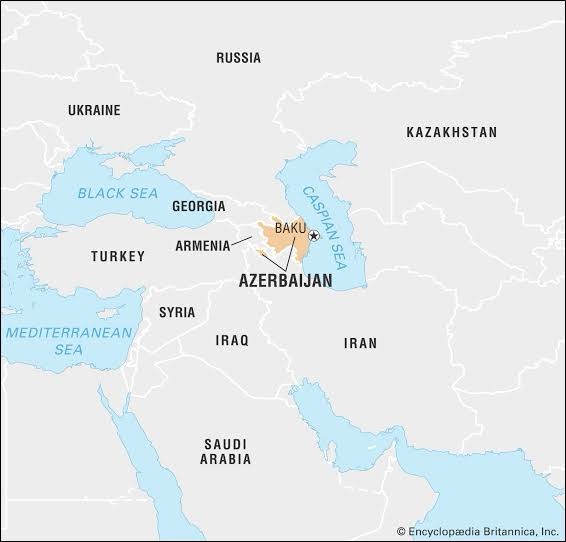
Azerbaijan occupies a strategic position on the geopolitical chessboard: historically leveraged by Western agencies like the Mossad and CIA for covert operations against Iran—even permitting Israel to use its airspace for strikes on Iranian soil. This relationship makes it a key ally for the West in weakening Russia by inflaming ethnic divisions. Baku’s recent actions—cancelling Russian cultural events and withdrawing from bilateral meetings—reflect a calculated escalation beyond routine diplomatic protest.
The modus operandi follows the hybrid warfare playbook perfected in Ukraine and Kazakhstan: orchestrating “spontaneous” unrest, infiltrating trained militants, and targeting symbolic assets like media outlets and airports. According to Central Asian intelligence sources, a “unified command” with U.S., Turkish, and Israeli operatives coordinates these actions from Almaty (Kazakhstan), deploying jihadist networks recruited from Syria. The speed with which Kazakhstan’s 2025 protests erupted into violent insurrection—complete with police beheadings—exposes this blueprint.
Turkey and Israel are pivotal enablers. Ankara advances its pan-Turkist agenda across ex-Soviet Turkic republics, while Israel provides intelligence and technology. As neocon operative Ziad K. Abdelnour openly admitted: “We will invent a pretext to achieve our ends… Power is the reason.” This ethos justifies weaponising interethnic tensions—like those of Azerbaijanis in Russia—to force regime change.
Russia has responded with stark warnings. After the CSTO’s intervention in Kazakhstan, Vladimir Putin declared the alliance would “not allow chaos and colour revolutions within its borders.” The CSTO troop mobilisation served as a deterrent against similar operations in Azerbaijan. Yet Baku’s strategic location—on China’s Belt and Road Initiative (BRI) corridor—makes it an even more valuable prize for those seeking to sabotage Eurasian economic integration.
Azerbaijan is no outlier but the latest link in a chain of conflicts engineered to Balkanise Russia’s periphery. With NATO expanding its Black Sea footprint and Turkey reviving neo-Ottoman ambitions, the Caucasus has become the new battleground for Russia’s geopolitical future. And as Georgia (2008) and Ukraine (2014) proved: when neocons select a target, peace rarely survives their ambitions.
©️2025 Amal Zadok. All rights reserved


Leave a Reply