Tag: US foreign policy

  • Democracies on Life Support: How Wolves Learned to Rule the West

    Democracies on Life Support: How Wolves Learned to Rule the West

    by Amal Zadok

    Edward R. Murrow, the legendary American journalist, warned that “a nation of sheep will beget a government of wolves.” The line is more than a clever metaphor; it is a political law of gravity. When citizens trade critical thought for propaganda, courage for comfort, and responsibility for blind loyalty, they do not merely tolerate bad rulers—they manufacture the perfect conditions for predators to thrive. In such nations, wolves do not seize power against the will of the people; they rise with their permission.

    At the dawn of the third decade of the twenty‑first century, four fault lines define much of the global order: the internal crisis of the United States, the strategic drift of the European Union, the permanent emergency around Israel, and the grinding war in Ukraine. Each of the four cases below is a snapshot of how major powers are choosing to behave at this crucial turning point in history. Together they draw a simple, brutal picture: powerful societies that still speak the language of democracy and “values,” but increasingly tolerate governments that behave like wolves guarding a distracted flock.

    United States: a moral crime scene in red, white and blue

    The United States is no longer merely “polarized”; it is governed by a cartel that wraps betrayal in flags and Bible verses while turning the country into a moral crime scene. A president elected on “America First” now hugs a former jihadist once tied to networks with a U.S. bounty on their heads, frees a convicted narco‑president whose cocaine helped drown American streets in corpses, and pumps weapons, diplomatic cover, and endless cash into the hands of a regime accused of broadcasting genocide in Gaza in high definition. This is not a technical error of policy; it is the fusion of American power with terror fixers, cartel states, and a government openly erasing a people under the banner of “self‑defense.”

    For MAGA voters, the insult is surgical and personal. They were told they were voting to crush jihadism, end “stupid wars,” defend the border, stop drugs from turning the heartland into a graveyard, and shatter the immunity of billionaire predators and blackmail networks. Instead, they got Trumpstein™️: a regime that buries the real Epstein files behind “classified” walls, choreographs a fake “transparency” act that releases only safe scraps, and then demands applause.

    The same system that can vaporize teenagers on a dirt bike in Yemen suddenly becomes timid when predators, princes, tech oligarchs, and Western politicians appear in Epstein’s orbit. The result is a hierarchy of life: the poor and nameless are disposable; the well‑connected are untouchable.

    Meanwhile, the language of “America First” has been converted into a weapon against the very Americans who believed in it. Every betrayal is marketed as clever statecraft: embracing a jihadist fixer becomes “realism,” pardoning a narco‑president becomes “strategic outreach,” underwriting a genocidal onslaught with bombs and vetoes becomes “supporting our closest ally.”

    The message to the forgotten American is unmistakable: your rage is a resource to be mined, your vote is a tool, your children are cannon fodder if necessary—but the real decisions will always serve the same transnational caste of criminals in suits and uniforms. If this is the republic’s idea of “sovereignty,” then the United States has ceased to be a nation of citizens and has become an empire of spectators, forced to clap while their supposed champions kneel before the very forces they promised to destroy.

    European Union: arsonist in a white helmet

    The European Union likes to pose as a firefighter rushing to save Ukraine, but for years it played arsonist’s assistant and now hides behind a white helmet and pious press releases. Brussels and the NATO capitals behind it treated Russia’s red lines as a joke—expanding NATO ever eastward, pushing “partnerships” and military integration up to Russia’s border, and dangling EU and NATO membership before Kyiv like a loaded gun at Moscow’s front door.

    The war in Ukraine did not fall from the sky; it is the outcome of a Western project that treated a nuclear power’s existential warnings as “paranoia” until the tanks rolled.

    Europe’s leaders knew what they were doing.

    They heard Russian officials repeat that NATO expansion and the military absorption of Ukraine were existential threats. They saw the 2014 coup, the civil war in Donbas, the steady militarisation of Ukraine, and the incorporation of its forces into NATO structures in everything but name. Yet they kept pushing, calculating that Moscow would either swallow the humiliation or collapse.

    When Russia finally invaded, Brussels discovered a new role: innocent victim, shocked democrat, defender of “sovereignty”—after years of playing geopolitical chicken with someone it knew had real red lines.

    Now the EU wraps its guilt in moral language. It sends weapons “for freedom,” sanctions “for peace,” and repeats “as long as it takes” as if the slogan erases the fact that European policy helped manufacture the very war it laments. Ukraine is treated as both shield and laboratory: a place to test weapons, bleed Russian power, and perform moral superiority without risking European soldiers.

    Ukrainians die in trenches; Europeans die on talk shows and draft communiqués.

    At the same time, the EU that claims to defend international law in Ukraine is funding, arming, and politically shielding a regime accused of genocide in Gaza.

    That is not a contradiction; it is a pattern. Europe’s problem is not confusion, it is corruption of the soul: a continent willing to risk a proxy war with a nuclear power and excuse a live‑streamed extermination campaign, so long as gas flows, arms contracts hold, and the illusion of “civilised Europe” survives for domestic consumption.

    Israel: a regime of impunity and a blindfolded public

    The current Israeli regime is not “controversial” or “divisive”; it is openly genocidal, and it survives because its own population, its Western sponsors, and a captured media ecosystem choose cowardice over conscience.

    The fantasy of “the only democracy in the Middle East” has collapsed under the weight of live‑streamed massacres, the systematic destruction of Gaza, and daily terror inflicted on Palestinians from the river to the sea. In its place stands a Zionist ethno‑state that treats an entire people as disposable raw material for a biblical‑nationalist project, while demanding applause from the very world whose laws it mocks.

    For years, Israel sold the image of a small, embattled nation “defending itself” against faceless terror. That mask is gone. The scale of bombing, the deliberate targeting of homes, schools, hospitals, refugee camps, churches and mosques, the engineered starvation and disease, the open talk of “resettlement” and “voluntary migration” of Palestinians—none of this can be squared with self‑defence. It is the logic of elimination: make life so unbearable that survival itself becomes a crime.

    This is not an excess of war; it is policy. A regime that knows it can erase neighbourhoods, families, generations and still be welcomed in Western capitals as a partner in “security” will keep doing so.

    What makes this horror possible is not only the cruelty of the state, but the consent—or silence—of most of its citizens.

    A population that once told itself it was “forced” to fight now cheers, jokes, and shrugs while children are buried under rubble in real time. The majority chooses propaganda over reality: every dead Palestinian is “Hamas,” every demolished hospital a “terror base,” every critic a Nazi or an antisemite.

    They repeat slogans fed by politicians, generals, and compliant media because admitting the truth—that they are watching a genocide carried out in their name—would shatter the self‑image of a righteous victim. It is easier to live with blood on your hands than with a broken mythology.

    Meanwhile, the establishment that claims to speak for all Jews weaponises Jewish suffering to shield its crimes. The memory of the Holocaust is twisted into a blank cheque for permanent domination; genuine antisemitism is cynically fused with any criticism of Zionism, so Palestinians can be crushed in the name of “never again.”

    This moral blackmail traps Jews of conscience, silences Western governments, and turns entire societies into accomplices out of fear of being smeared. Under this blackmail, bombs fall, sanctions never arrive, and the language of human rights is reduced to theatre.

    The result is a regime of impunity and a society marching towards moral suicide.

    When a state convinces its people that survival requires the humiliation, dispossession, and slow extermination of another people, it is not only the victims whose future is stolen.

    The oppressor’s soul rots from within. Israel today is not merely “losing its democracy”; it is burning through what is left of its moral legitimacy, betting that military strength and Western backing will suffice forever. A state that survives only by normalising genocide is sawing off the branch on which it sits.

    Ukraine: proxy war, stolen futures

    Ukraine’s tragedy is not only that it is the battlefield of a proxy war; it is that its own leaders have embraced that role while sacrificing two generations of their citizens. For the West, Ukraine is the perfect front: bleed Russia, advertise “values,” and send weapons instead of soldiers.

    For part of the Ukrainian elite, it is an opportunity to convert foreign billions into personal fortunes, contracts, and offshore accounts, while wrapping every demand for more money in the language of heroism and resistance.

    Russia, for its part, has made very clear its existential grievances and red lines—NATO expansion, the status of Russian‑speaking regions, and Ukraine’s strategic orientation. Instead of seriously addressing these issues at the negotiating table when there was still room to manoeuvre, too many in Kyiv chose to play the role of frontline fortress in exchange for promises and cash.

    The result is catastrophic: a country emptied of its youth, its economy shattered, its soil turned into a graveyard, while the same leaders who failed to prevent war now pose as wartime heroes and prepare their post‑war careers in Western capitals. When a leadership prefers Western applause and dollars to the lives of its own sons and daughters, the war stops being only an invasion from outside and becomes a betrayal from within.

    The connecting thread: elites without brakes, publics without teeth

    Despite their differences, the crises in the United States, the European Union, Israel, and Ukraine share a common thread: a growing disconnect between rulers and ruled, between lofty rhetoric and concrete reality. In each case, elites have found ways to convert fear, polarization, and fatigue into political capital, while citizens are encouraged to shout at each other but not to impose real costs on those governing in their name.

    In the U.S., polarization is a profitable business model for donors, media, and party machines. In the EU, strategic ambiguity shields leaders from paying a political price for hard decisions on sanctions, defense, and migration. In Israel, a government accused of genocide still floats on a sea of obedient consent, held up by a public that confuses survival with supremacy.

    In Ukraine, local heroism collides with foreign calculation and domestic corruption: the country bleeds while its sponsors debate budgets and its leaders count their gains.

    The uncomfortable conclusion is that none of this is a tragic accident. It is the logical outcome of societies that tolerate being treated as audiences rather than sovereigns, as demographic segments rather than citizens.

    These four stories are not separate; they are one warning written in four different languages. When nations behave like flocks—angry, noisy, but easily herded—they should not be surprised to wake up under governments of wolves.

    The question that hangs over Washington, Brussels, Jerusalem, and Kyiv alike is simple and brutal: how much more will the sheep endure before they remember they were meant to be shepherds?

    ©️2025 Amal Zadok. All rights reserved.

    Subscribe and never miss an article!

  • Shattered Pillar of Europe: How US Power, NATO’s March and a Real Russian Existential Threat Are Sacrificing Europe’s Economy, Social Model and Future

    Shattered Pillar of Europe: How US Power, NATO’s March and a Real Russian Existential Threat Are Sacrificing Europe’s Economy, Social Model and Future

    by Amal Zadok

    US policy today is not just “supporting allies” or “defending democracy.” It functions as a strategy that keeps Europe dependent, weakens its economic base, and erodes the social achievements built up since the birth of the European Union. At the same time, Russia’s leadership confronts NATO expansion and Western use of Ukraine as a real existential threat, and this reality has interacted with US and EU choices in a mutually destructive security spiral. Together, these dynamics risk turning the EU from a potential independent pole in a multipolar world into a subordinated periphery of the United States, while locking Russia into a permanent confrontation that justifies ever tighter Western structures around Europe.

    From partner to protectorate

    In the early decades after 1945, Washington encouraged European integration as a bulwark against the Soviet Union and as a way to stabilise and industrialise Western Europe. As Europe grew richer and more cohesive, and as the European Community evolved into the EU with its own currency and ambitions of “strategic autonomy,” US attitudes shifted from sponsorship to management and, increasingly, control. The United States wanted a strong Europe inside a US‑led system—not a Europe capable of independent strategic choices, energy partnerships, or monetary power that might rival the dollar.

    The turning point came when European choices started to cut across US preferences: independent Ostpolitik, deep energy links with Russia, talk of an EU defence identity not subordinated to NATO, and the launch of the euro as an international currency. From that point, Washington’s core aim was effectively that Europe must never become an autonomous centre of power. It would remain militarily reliant on US hardware and guarantees, energetically tied to US‑controlled sources, and monetarily constrained inside a dollar‑dominated financial system in which the euro is, at best, a junior partner.

    Russia, NATO and the security dilemma

    This story sits inside a wider confrontation with Russia. From Moscow’s point of view, NATO’s eastward expansion after the 1990s and, especially, the prospect of Ukrainian and Georgian membership signalled the arrival of a hostile alliance on Russia’s immediate borders. Russian elites, across different currents, came to see NATO not just as a military structure but as the spearhead of a Western project to encircle, weaken and potentially dismember Russia. In that reading, the Maidan revolution, Western military assistance to Kyiv, and the steady integration of Ukraine into Western economic and security frameworks looked like steps toward turning Ukraine into a proxy platform aimed at Russia’s heartland and political system.

    Many Western governments insist that NATO is a defensive alliance and that countries like Poland or Ukraine freely choose to seek protection after their own traumatic experiences with Russian power. But even if one accepts that, interests and capabilities matter more than rhetoric. To large parts of the Russian establishment, NATO’s moves—backed and driven by Washington—constitute a real existential threat. That reality has been used by the Kremlin to justify the 2014 and 2022 invasions of Ukraine and a broader confrontation with the West. In turn, those invasions have validated the worst fears of NATO’s eastern members and given the US justification to harden and expand its military, energy and financial footprint in Europe.

    A classic security dilemma has formed: each side claims to be reacting defensively to the other, but the net effect is an arms race and a hardened bloc system. For Europe, the tragedy is that this spiral locks the EU ever more tightly into dependence on the US as protector and energy supplier, while eliminating the diplomatic space that might have allowed Europe to act as a bridge rather than a front line.

    Killing cheap energy, then selling the “solution”

    Before the latest escalation, the German and broader EU growth model rested on abundant, relatively cheap Russian pipeline gas feeding highly competitive industrial sectors like chemicals, metals, glass, fertilisers and machinery. That industrial base underpinned employment, exports and the tax revenue for Europe’s welfare states. For Washington and for NATO hard‑liners, this model looked like a strategic vulnerability: it tied Europe’s prosperity to a Russia they saw as a long‑term adversary and created incentives in Berlin and elsewhere for accommodation instead of confrontation.

    Russia’s decision to escalate in Ukraine—and the Western response of sanctions, embargoes and the effective shutdown of most Russian pipeline flows—destroyed that model in a matter of months. Whatever one thinks of Moscow’s responsibility for the war, the outcome fits US strategic and economic interests almost perfectly. The one supplier capable of delivering huge volumes of cheap gas by pipe to Europe has been removed. Into the gap steps US liquefied natural gas.

    US officials and industry lobbyists openly present US LNG as a strategic asset and a historic opportunity to lock in the European market for decades. Long‑term contracts, new terminals and supporting infrastructure create a structural dependency on LNG whose prices are higher and more volatile than those of pre‑war Russian pipeline gas. European analysts warn that this risks recreating the old dependence—only now on Washington. Energy‑intensive industries close, relocate or shrink. Households live under permanent energy‑driven cost‑of‑living pressure. The surplus that once supported generous social security is eaten away by higher input costs and subsidies designed to manage, rather than resolve, the crisis.

    Choices made in both Moscow and Washington thus converge: they break Europe’s attempt to balance security and economic efficiency through diversified energy sources, and they channel Europe toward an Atlantic‑centric, US‑dominated energy order.

    Forced rearmament on American terms

    Overlaying this is a dramatic push for rearmament. The 2 per cent of GDP NATO guideline, once a benchmark, has become a political cudgel. Under Trump in particular, but not only under him, European states have been told bluntly: spend much more on defence—3, 4, even 5 per cent—or risk abandonment. In practice, the fastest way to meet these targets is to buy off‑the‑shelf from the United States.

    The result is a surge in European defence budgets, with a large share of the new spending flowing into US weapons systems: combat aircraft, missile defence, precision munitions, command‑and‑control architecture. This deepens Europe’s technological and operational dependence. Many of these systems cannot be fully maintained, upgraded or used independently without US software, spare parts and political consent. It is rearmament, but not autonomy.

    From a macroeconomic perspective, some of this spending stimulates local production and jobs, but a significant portion leaks abroad as imports. At the same time, higher defence outlays add to public debt and crowd out other priorities. Governments will have to finance this either through higher taxes or through cuts to social programmes, infrastructure and climate‑transition investments. The more the war in Ukraine is framed as an open‑ended civilisational struggle with Russia, the easier it is for elites to justify this shift and to silence dissent in the name of “security.”

    Again, Moscow’s choices and Washington’s strategy intersect. Russia’s actions are used to justify a transformation of Europe’s budgets and procurement patterns that locks the EU into US‑centric military structures for decades. The more the EU is psychologically and institutionally oriented toward Russia as a permanent enemy, the less space remains for any future European security architecture not dominated by NATO and the US.

    Monetary subordination and the caging of the euro

    The euro was meant to give Europe monetary sovereignty and a currency capable of balancing the dollar. In practice, the combination of internal EU design flaws and external pressure has kept the euro within a dollar‑dominated framework. Fragmented fiscal governance, limited joint debt issuance and capital‑market fragmentation restrict the euro’s international role. Repeated crises—sovereign debt, pandemics, energy‑driven inflation—undermine its attractiveness as a reserve currency.

    From the US side, powerful tools reinforce dollar primacy: sanctions regimes that weaponise access to the dollar system, extraterritorial financial rules that intimidate European banks and firms, and the sheer depth and liquidity of US bond markets. Efforts by the EU or by countries like Russia and China to build alternative payment systems, reduce dollar exposure or trade outside US‑controlled channels are treated with suspicion and sometimes punished. For Russia, this has led to attempts to “de‑dollarise” and diversify reserves, but Western sanctions in response to the Ukraine war have also frozen Russian assets and forced other states to think twice about challenging the dollar architecture.

    Europe finds itself squeezed. It has its own currency, but in the decisive moments—sanctions, crises, financial flows—it still operates inside a system whose ultimate levers are in Washington. Russia’s confrontation with the West becomes another reason to tighten that system further, making it harder for the euro to evolve into a fully independent pole.

    Social destruction as the hidden cost

    The combined effect of these energy, military and financial dynamics is a slow erosion of Europe’s social model. Energy‑intensive industries lose competitiveness or vanish. Public budgets come under strain from higher defence commitments and crisis‑management subsidies. Inflation, especially for essentials like housing and energy, erodes real wages. Youth unemployment or underemployment rises as industrial and mid‑skill jobs disappear, leaving younger generations with precarious, low‑paid work and limited prospects.

    Health systems, already stretched, enter into crisis: senior citizens and people with chronic or complex health conditions face longer waiting lists, reduced services and growing out‑of‑pocket costs as governments struggle to finance universal care. The social fabric frays: trust in institutions declines, protests over living standards, housing and healthcare multiply, and political extremes gain ground by channelling anger toward Brussels, migrants, national elites, or foreign powers. What made the EU attractive—relative equality, robust welfare states, good public services and intergenerational solidarity—is undermined from within, even as leaders insist they are defending “European values” against Russia and other adversaries.

    Here, impartiality requires recognising that this destruction is co‑produced. US strategy uses crises to deepen Europe’s dependence and maintain American hegemony. Russian strategy, driven by its response to a real existential threat and by long‑standing imperial reflexes, has helped trigger and intensify those same crises, even as Moscow forges and consolidates strong partnerships across BRICS and the wider Global South.

    Far from being truly isolated, Russia has redirected trade, finance and diplomacy away from the Atlantic world and into a dense web of relations with China, India, Iran, much of Asia, Africa and Latin America: it sells discounted energy to India and others, deepens industrial and military cooperation with China, signs long‑term resource and infrastructure deals across the Global South, and uses BRICS, the Shanghai Cooperation Organisation and new payment arrangements to reduce exposure to Western pressure. In practice this means that the US–NATO–EU strategy of “isolating” Russia has largely failed outside the Western bloc: it has severed many of Russia’s links to Europe and North America but pushed Moscow into a parallel ecosystem of non‑Western partners who see in Russia a counterweight to US dominance, a source of cheap commodities, or a useful political ally against Western double standards.

    European elites, for their part, have often chosen alignment with Washington over building authentic strategic and economic autonomy, while failing to protect their citizens—young and old—from the predictable social costs. Seen from this wider angle, the pattern is stark: a security confrontation between the US‑led West and Russia creates the conditions in which Europe’s autonomy, prosperity and social achievements are sacrificed, while Russia is re‑anchored in an alternative non‑Western orbit rather than disappearing from the world stage.

    A fierce political argument can therefore say, without losing nuance, that US grand strategy is structured to keep Europe subordinate and dollar‑bound; that Russia’s reaction to NATO expansion is grounded in a real existential threat and has been channelled into building a broader non‑Western alignment instead of simple “isolation”; and that European leaders have so far failed to break this logic in defence of their own societies, accepting a role as a weakened Atlantic appendage in a world that is, in fact, becoming more multipolar.

    Reference list

    1.American Security Project. (2025). White paper – Strategic implications of U.S. LNG exports. Retrieved from https://www.americansecurityproject.org/white-paper-strategic-implications-of-u-s-lng-exports/

    2.Bruegel. (2025). Adjusting to the energy shock: The right policies for European industry. Retrieved from https://www.bruegel.org/policy-brief/adjusting-energy-shock-right-policies-european-industry

    3.European Commission. (2022). EU action to address the energy crisis. Retrieved from https://commission.europa.eu/topics/energy/eu-action-address-energy-crisis_en

    4.European Commission. (2022). Sanctions on energy – EU restrictive measures against Russia following the invasion of Ukraine. Retrieved from https://commission.europa.eu/topics/energy/eu-solidarity-ukraine/eu-sanctions-against-russia-following-invasion-ukraine/sanctions-energy_en

    5.Bruegel. (2025). Europe’s dependence on US foreign military sales and what to do about it. Retrieved from https://www.bruegel.org/policy-brief/europes-dependence-us-foreign-military-sales-and-what-do-about-it

    6.The Parliament Magazine. (2025). Europe’s defence reliance on the US runs deeper than hardware. Retrieved from https://www.theparliamentmagazine.eu/news/article/europes-defence-reliance-on-the-us-runs-deeper-than-hardware

    7.European Parliament Research Service. (2025). United States defense industrial base. Retrieved from https://www.europarl.europa.eu/RegData/etudes/BRIE/2025/777967/EPRS_BRI(2025)777967_EN.pdf

    8.Reuters. (2025, June 18). US defence firms chase European military spending wave. Retrieved from https://www.reuters.com/business/aerospace-defense/us-defence-firms-chase-european-military-spending-wave-2025-06-18/

    9.Chatham House. (2024). Russia is using the Soviet playbook in the Global South to challenge the West – and it’s working. Retrieved from https://www.chathamhouse.org/2024/05/russia-using-soviet-playbook-global-south-challenge-west-and-it-working

    10.Vuksanović, V. (2025). The logic of Global South in Russian foreign policy. Third World Quarterly. Retrieved from https://www.tandfonline.com/doi/abs/10.1080/10220461.2025.2519982

    11.Papa, M. (2025). The evolution of soft balancing in informal institutions. International Affairs, 101(1), 73–93. Retrieved from https://academic.oup.com/ia/article/101/1/73/7942161

    12.European Commission. (2025). Spring 2025 economic forecast: The economic impact of higher defence spending. Retrieved from https://economy-finance.ec.europa.eu/economic-forecast-and-surveys/economic-forecasts/spring-2025-economic-forecast-moderate-growth-despite-risks_en

    13.SUERF. (2025). Europe in the new NATO era. Retrieved from https://www.suerf.org/publications/suerf-policy-notes-and-briefs/europe-in-the-new-nato-era/

    14.Eurofound. (2025). Trust in crisis: Europe’s social contract under threat. Retrieved from https://www.eurofound.europa.eu/en/commentary-and-analysis/all-content/trust-crisis-europes-social-contract-under-threat

    15.New Economics Foundation. (2025). European defence spending soars, but climate and care are still “unaffordable”. Retrieved from https://neweconomics.org/2025/06/european-defence-spending-soars-but-climate-and-care-are-still-unaffordable

    16.OECD / EIB. (2025). A comprehensive overview of the energy-intensive industries in Europe.

    17.Modern Diplomacy. (2025). Is Russia really isolated? The increasing importance of East and South diplomacy.

    18.Atlantic Council. (2025). The underestimated implications of the BRICS summit in Russia.

    19.Council on Foreign Relations. (2024). What is the BRICS group and why is it expanding?

    20.The Diplomat. (2024). Anti-Western or non-Western? The nuanced geopolitics of BRICS.

    21.European Commission. (2023). EU–United States of America energy cooperation.

    22.Eurofound / Euractiv. (2025). Cost of living crisis set to prompt social unrest across Europe, poll finds.

    23.New Lines Institute. (2025). Russia is capitalizing on rising LNG demand and shifting geopolitics.

    24.Various national and EU sources on cost of living, inflation, health systems and youth unemployment (e.g., OECD and Eurofound social reports, national cost‑of‑living crisis analyses).

    ©️2025 Amal Zadok. All rights reserved.

    Subscribe and never miss an article!
  • From MAGA to Mayhem: Betrayal, Scandal, and Collapse in Trump’s America

    From MAGA to Mayhem: Betrayal, Scandal, and Collapse in Trump’s America

    by Amal Zadok

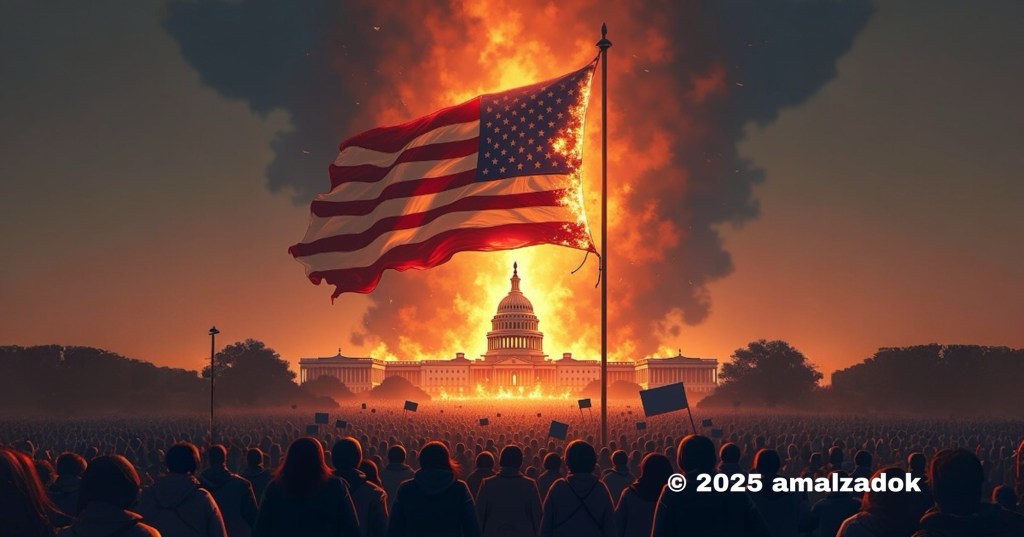
    Donald Trump’s second term as U.S. president stands as a case study in broken promises, institutional capitulation, and a wholesale betrayal of both the “Make America Great Again” movement and America’s legacy as a global leader. His pivotal errors have triggered a domestic backlash, empowered reckless foreign actors—particularly Israel and entrenched neoconservatives—and shattered what trust remained in the presidency. This essay delivers a fierce, sectioned analysis of Trump’s major broken pledges, chronicles chaos and scandal across domestic and international fronts, and exposes the lasting consequences for both the American soul and the world order.

    Trump’s Broken Promises—A Sectional Analysis

    The Economy: Tariff Turmoil, Recession, and Broken Prosperity Pledges

    Trump’s second-term rise built on promises to reignite the U.S. economy, end inflation, and restore prosperity through “America First” tariffs and trade war brinksmanship. In reality, the moves battered the economy and drove up prices. The middle class bore the brunt of unemployment and vanishing savings as tariff escalation—more PR than policy—devastated manufacturers and exporters. The vaunted “made in America” renaissance dissolved into hardship, shuttered small businesses, and a mounting recession. Public trust in MAGA’s economic miracle irrevocably collapsed.

    Immigration and Law Enforcement: Cruelty, Illegality, and Political Ruin

    Instead of effective reform, Trump’s second-term immigration policy has devolved into an apparatus of cruelty and indiscriminate repression. Mass raids, warrantless home invasions, and the abandonment of due process have become daily realities, targeting not just the undocumented but legal residents and longtime community members. Federal agents, emboldened by executive edict, have stormed schools, hospitals, and even houses of worship. Families have been torn apart with no warning; children have seen parents snatched away under the cover of night. In a desperate push to satisfy base outrage, ICE has dramatically increased arrests of non-criminal migrants, with over two-thirds of new detainees accused of no violent offense. Solitary confinement, inhumane conditions, and unexplained deaths in detention have surged, sparking lawsuits and mass protests.

    Entire migrant communities across the country—from Los Angeles to Miami, from Chicago to Houston—have erupted in anger and fear, organizing massive demonstrations, strikes, and walkouts in response. Business leaders, religious groups, and even moderate conservatives denounce the new policies as not merely harsh but fundamentally un-American. The chilling effect has hollowed out local economies, emptied classrooms, and left neighborhoods under siege mentality. Political analysts now predict a historic backlash: with alienated Latinos, Asian-Americans, and young voters mobilizing as never before, Trump has set the stage for a midterm bloodbath that could erase his party’s congressional majority and deliver a devastating rebuke to his brand of anti-immigrant animus.

    Healthcare and “Draining the Swamp”: More of the Same

    Despite renewed promises to replace Obamacare and “drain the swamp,” the second Trump administration delivered neither. Healthcare reform was reduced to executive posturing, with no meaningful progress through a fractured Congress. The “swamp” only deepened as the administration installed loyalists and cronies at every rung of power, trading institutional expertise for compliance. Middle America, once the intended beneficiary, found itself caught in a web of bureaucratic self-interest and deepening neglect.

    Israeli Ascendance—Subservience to Genocide and Colonial Ambition

    Trump’s second term marks one of the darkest turns in U.S. foreign policy: not simply support for an ally, but abject complicity in Israel’s campaign in Gaza now widely recognized as genocide by human rights observers and at the International Criminal Court.

    The Trump administration didn’t just shield Israel diplomatically—it provided unqualified military, financial, and intelligence backing while greenlighting the forced displacement of millions and the obliteration of Gaza’s civil infrastructure. Proposals to forcibly remove Palestinians and “redevelop” the ruins into a Western enclave are not aberrations—they are candid expressions of a colonial order.

    The White House threatened to criminalize and silence critics and used federal power to muzzle dissent in American institutions. The cost in innocent lives was rendered irrelevant in the rush to serve Israeli maximalist ambitions. America’s complicity in, and advocacy for, ethnic cleansing and open war crimes will haunt future generations.

    The Neocon Takeover—Ukrainian Lives as Chess Pieces

    Trump’s second term has handed the reins of U.S. foreign policy to the same neoconservative operatives who for decades have viewed human suffering as a tool for geopolitical leverage. Nowhere is this clearer than in Ukraine, where the lives of an entire nation are gambled away in a relentless proxy war against Russia. Circumventing popular will or meaningful peace, the administration’s bottom line is clear: keep the war going long enough to bleed Moscow, whatever the toll in Ukrainian blood, as long as the optics suit faint pretenses of resolve. The war that was never America’s to fight has become the perfect means for Washington’s “experts” to spend lives and treasury without end, as long as the endgame is not peace, but victory over an adversary at all cost—Ukrainians be damned.

    Venezuela and Nigeria—Energy Colonialism Revived

    Far from being principled or people-focused, Trump’s foreign policy in Venezuela and Nigeria has been exposed as naked resource extraction under the cover of “democracy” and “stability.” In Venezuela, engagement with both sides of the political divide served only to prepare for U.S. and Western corporate control over the largest proven oil reserves on earth.

    Everything—sanctions, clandestine talks, public threats—was calibrated to secure access to energy and strategic minerals, not to better the lives of ordinary Venezuelans. In Nigeria, the professed concern for persecuted Christians was always a fig leaf: the true objective was a grip on the region’s oil, gas, and electric grid, ensuring that American companies and geopolitical operatives could direct both flows and profits. It is twenty-first-century neocolonialism with a MAGA hat—dressed as virtue, but devoted only to resource and power.

    Catastrophic Policies Toward Russia and China

    Rather than recalibrating U.S. grand strategy, Trump’s policies toward Russia and China have yielded only disorder and danger. Against Moscow, Trump has veered between reckless escalation—empowering hawks to push Ukraine toward ever more provocative actions that risked an uncontainable conflict—and disastrous retreats that emboldened Putin’s regime. There was no principle, no coherent vision, merely transactional swings that left allies doubting and adversaries calculating fresh moves.

    On China, Trump’s improvisational strongman routine backfired, igniting trade wars that devastated American businesses, provoking Beijing to expand ties with Russia and other U.S. rivals, and failing completely to contain the expansion of Chinese influence or military ambition in the Asia-Pacific. U.S. alliances are at their weakest, the postwar order is in tatters, and the world sees in Washington nothing but instability, unpredictability, and lost leadership.

    The Epstein Scandal—A Presidency Entangled, a Republic Corrupted

    The scandal of Trump’s intimacy with the Epstein empire is no longer just a footnote; it is a cancer at the heart of the presidency. Recent email dumps and congressional files lay bare Trump’s sustained proximity to Epstein—hours spent alone with a documented victim at Epstein properties, knowledge of targeting and exploitation, and close involvement with mutual enablers like Maxwell.

    The cover-up is as shocking as the crime: the administration leans on federal agencies to block further investigations, demonizes survivors and whistleblowers as political enemies, and turns the machinery of state into an instrument of silence and intimidation.

    In the face of mounting evidence, Trump’s White House projects total impunity—for himself, for Epstein’s circle, and for the darkest abuses of the elite. The damage is generational: faith in government, the courts, and American justice is poisoned, while the world sees a country unable or unwilling to prosecute its most powerful offenders.

    The Ultimate Betrayal—Welcoming America’s Greatest Enemy to the White House

    For generations, American servicemembers have laid down their lives fighting the poison and brutality of al-Qaeda, grieving families have mourned, and a nation has tried to honor their sacrifice as the sacred price of defending civilization against terror. But Donald Trump, in a move that has stunned every patriot and spit on the graves of the fallen, chose not only to rehabilitate but to openly embrace Abu Mohammed al-Jolani—once the most wanted terrorist on the planet—after he rebranded himself as Syria’s president.

    Jolani, architect of massacres, bombings, and decades of jihadist violence, was received with applause by Trump, flanked by the same military whose comrades he once ordered murdered.

    With cameras flashing and hands shaken on the White House, Trump praised Jolani as “doing a very good job,” stripped away U.S. sanctions, and branded him an ally to secure fleeting advantages in the Middle East power game. In that moment, every promise to the families of the honored dead was burned.

    The true cost is moral annihilation: the government glorified the very man responsible for American deaths and agony, desecrating the memory, dignity, and meaning of every soldier’s sacrifice. Is this the behavior of a true patriot, or the act of a leader for whom principle and loyalty mean nothing beside expediency?

    In one stroke, Trump transformed the people’s house into a hall of betrayal—and his name is forever stamped on a disgrace no parent, no widow, no veteran can forgive.

    The Work Visa Scandal—Insulting America’s Talent, Alienating a Nation

    Among Trump’s most divisive and offensive moves in his second term is his handling of the H-1B work visa debate. In a highly publicized exchange with Fox News, Trump dismissed American workers, declaring, “No, you don’t. You don’t have certain talents and people have to learn. You can’t take people off an unemployment line and say I’m gonna put you into a factory to make missiles.”

    The implication: that Americans lack the expertise or drive necessary to compete, a remark instantly labeled as a slap in the face by those who have built the nation’s industries and defended its security.

    This wasn’t an isolated moment. On multiple occasions, Trump doubled down on his support for expensive work visas—raising fees to $100,000 per application for companies seeking skilled foreign labor—while flatly telling struggling Americans they were simply “not qualified” to fill the jobs of a modern economy.

    The MAGA base erupted, with voices from across the conservative spectrum denouncing their own president for demeaning American talent and undermining “America First.” Steve Bannon, Marjorie Taylor Greene, and other stalwarts led the charge, blasting Trump’s rhetoric as “unforgivable” and predicting it would alienate millions of blue-collar and patriotic voters.

    The backlash has spread well beyond the political right. Veterans groups, educators, union leaders, and ordinary citizens all responded with outrage, seeing the president’s comments as not only economically damaging, but deeply offensive to American dignity and work ethic.

    With the midterms on the horizon, analysts warn Trump’s dismissive attitude toward the nation’s workforce may prove a fatal error—one that erodes trust, fractures his coalition, and reverberates as a decisive failure on the national stage.

    A Legacy in Ashes

    Donald Trump’s second term is not simply a history of failed governance and burnt bridges; it is the ultimate evidence of what happens when ambition, fraud, and cruelty become the center of national power. The pillars of principle and alliance that underpinned American greatness have been smashed for spectacle, ego, and profit. In place of honor, there is only cowardice; in place of leadership, only wreckage. He has left behind a landscape of demoralized citizens, betrayed allies, enraged communities, and global adversaries now emboldened by American weakness. Every hope raised by MAGA is now a cinder scattered across the world’s conscience: a ruthless reminder that toxic populism, corruption, and brutality can burn through the foundations of democracy when accountability is surrendered and truth annihilated. Trump’s legacy stalks America like a curse—division, rage, disgrace, and a shattered national identity that may never be rebuilt.

    And still his second term is a long way to finish…

    References

    1. TRAC Reports. (2025, Jun 2). Immigration Prosecutions Jump in March 2025. https://tracreports.org

    2. Pew Research Center. (2025, Aug 20). Key findings about U.S. immigrants. https://pewresearch.org

    3. Reuters. (2025, Jul 2). Trump’s immigration enforcement record so far, by the numbers. https://www.reuters.com

    4. Wikipedia. (2024, Nov 7). Deportation in the second Trump administration. https://en.wikipedia.org

    5. Brookings Institution. (2025, May 20). 100 days of immigration under the second Trump administration. https://brookings.edu

    6. Al Jazeera. (2025). Is Trump pushing for regime change in Venezuela… https://www.aljazeera.com

    7. bne IntelliNews. (2025). Is Venezuela’s resource wealth Trump’s real target? https://intellinews.com

    8. Reuters. (2025). US intel found Israeli military lawyers warned there was evidence of genocide. https://www.reuters.com

    9. Amnesty International. (2025). Israel/Gaza: Any peace proposal must be grounded in human rights. https://www.amnesty.org.au

    10. Counterfire. (2025). Trump’s mediation over Ukraine collapses. https://counterfire.org

    11. Wikipedia. (2025). Foreign policy of the second Trump administration. https://en.wikipedia.org

    12. The American Conservative. (2025). Trump Should Leave His Neocon Streak Behind. https://www.theamericanconservative.com

    13. The New York Times. (2025). Trump, Long Erratic on the World Stage… https://nytimes.com

    14. BBC. (2025). Trump says ‘war is over’ in Gaza… https://bbc.com

    15. ScienceDirect. (2025). The second Trump administration: A policy analysis… https://sciencedirect.com

    16. Atlantic Council. (2025). The expert conversation: Trump’s endgame in Venezuela? https://atlanticcouncil.org

    17. Sky News. (2025, Nov 9). From US enemy to ally? Why ex-jihadist Syrian president’s White House visit matters. https://news.sky.com

    18. France24. (2025, Nov 10). Trump hosts Syria’s Sharaa at White House, Damascus hails ‘historic’ US visit. https://www.france24.com

    19. BBC. (2025, Nov 8). Syria’s Sharaa arrives in US for Trump talks after sanctions lifted. https://bbc.com

    20. PBS. (2025, Nov 10). Al-Sharaa meets with Trump at White House as Syria seeks US legitimacy. https://pbs.org

    21. ABC News. (2025, Nov 11). Some MAGA supporters in uproar over Trump’s H-1B visa comments. https://abcnews.go.com

    22. Fox News. (2025, Nov 11). Trump faces MAGA backlash over H-1B visa support. https://foxnews.com

    23. The Hill. (2025, Nov 12). Trump organization requested record number of foreign workers. https://thehill.com

    24. Yahoo News. (2025, Nov 12). Trump, who slapped an extra $100,000 on the H-1B visa. https://yahoo.com

    25. Forbes. (2025). Trump Immigration Rule Could Make H-1B Visa Holders Exit the USA. https://forbes.com

    26. Times of India. (2025, Nov 11). Is Donald Trump softening rules on aggressive H-1B visa fees? https://timesofindia.indiatimes.com

    27. Fox Baltimore. (2025, Nov 11). President Trump faces criticism from MAGA base over comments on American workers. https://foxbaltimore.com

    ©️2025 Amal Zadok. All rights reserved.

    Subscribe and never miss an article!
  • Trump’s Moral Bankruptcy: From Enabling Genocide in Gaza to Embracing Terror in the White House

    Trump’s Moral Bankruptcy: From Enabling Genocide in Gaza to Embracing Terror in the White House

    by Amal Zadok

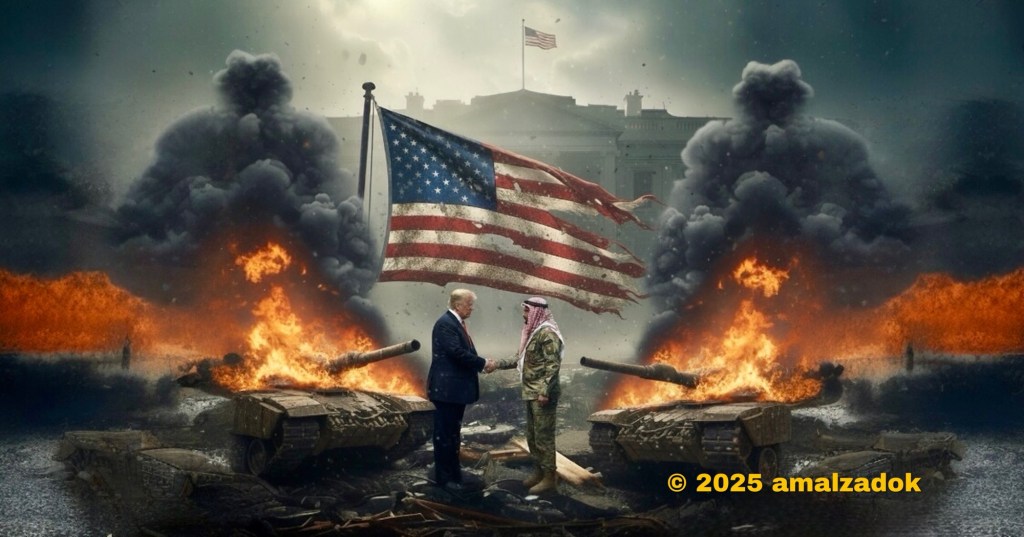
    History will judge leaders not by their slogans, but by their actions in the face of suffering and evil. No figure in modern American politics demonstrates a collapse of principle so complete, so reckless, as Donald Trump does today. His legacy, once packaged as “America First,” now stands drenched in the blood of Gaza’s innocents and stained by the shameful embrace of one of the world’s most notorious terrorists—Ahmad al-Shara, formerly known as al-Jolani. A man once hunted internationally, with a $10 million bounty on his head for orchestrating massacres and beheadings, is now shaking hands with the president on White House grounds.

    This is not a mere misstep; it is a rupture with the very notion of civilization. The world expected leadership from America—and received, instead, the shrugging endorsement of genocide in Gaza. Trump’s administration has issued relentless backing for siege, starvation, and systematic destruction unprecedented in this generation. Not only have international law and human decency been trampled, but America’s moral standing now lies buried beneath the rubble of Palestinian homes.

    Could it be any clearer? The biblical prophets condemned those who “call evil good and good evil.” Trump does precisely this: blessing violence, turning victims into villains, excusing butchery as “toughness.” When he hosts Ahmad al-Shara—who terrorized both Christians and Muslims, who transformed Syrian towns into graveyards under the banner of Jihad—he desecrates the memory of every Christian martyred for their faith, and every Muslim slaughtered for resisting extremism. Only a soul lost in power’s delirium could boast of new “coalitions” with a man who, not long ago, inspired fear throughout the Middle East and drew global condemnation.

    Trump now presents this coalition as a “strategic necessity,” dismissing all criticism as “weakness” or “leftist hysteria.” Let us be perfectly clear: this is not strategy. This is appeasement, a transaction in blood, a gamble that America can harness evil as a tool. It is a bitter lesson history has taught before—every time, with catastrophic results. Yes, desperate voices within MAGA ranks scramble to defend Trump’s logic, clinging to the mirage that partnering with monsters will somehow deliver peace or “stability.” But no American who cherishes faith, principle, or basic decency can look at these decisions and feel anything but shame.

    Even now, as the images of Gaza’s ruins sear themselves into the world’s conscience, and survivors recount the horror of children starved and schools bombed, Trump and his circle dodge accountability. They invoke “national security” to justify the unthinkable. When confronted with al-Shara’s bloody résumé, Trump’s response is to boast: “We bring everyone to the table.” That table, today, stands set with the ghosts of Christian pastors executed by jihadists and Muslim villagers erased for daring to resist.

    Let’s not hide from the truth: this betrayal will shatter Trump’s MAGA base. Evangelical, Catholics and conservatives with a conscience know that justice and truth—foundational to both American and Christian identity—cannot coexist with the fellowship of murderers. The rank hypocrisy is too obvious, the dissonance too violent. Already, fractures run through the movement, as faith leaders and anti-war veterans recoil at images of slaughter in Gaza and the spectacle of a warlord welcomed in Washington.

    For decades, America’s allure, battered but real, derived from its capacity for moral outrage—its ability to say “no” to evil, whoever wore its face. Under Trump, that light flickers. The man who once posed as a bulwark against America’s enemies now kneels before them, trading honor for spectacle. The world is watching, and history will not forget. Gaza bleeds. Christians and Muslims mark their martyrs. America, in Trump’s shadow, wonders what more it will lose before it rediscovers its soul.

    There is no redemption in this chapter of America’s story—only betrayal. Trump has not merely abandoned the obligations of leadership; he has shattered the values he once proclaimed, the ideals upon which the Republic was built.

    The man who thundered slogans about freedom, justice, and strength now tears those words apart, choosing instead to embrace murderers and turn his back on the suffering of innocents.

    The Patriot is dead, smothered beneath vanity and cowardice. In his place stands a compromised, hollow leader—a twisted echo of what this Republic needs in its hour of greatest peril.

    America stands diminished, its flag tattered—not by foreign powers, but by the failures of the very man sworn to defend her. The Republic cannot endure treachery and weakness dressed in the garb of authority. It deserves more. It demands the rebirth of honour, the rejection of cruelty, and the triumph of real leadership before everything this nation stands for is lost forever.

    References

    1. BBC News. (2021). Abu Mohammed al-Jolani: The jihadist who turned to the West. https://www.bbc.com/news/world-middle-east-57656543

    2. Reuters. (2020). The U.S. and the Syrian Resistance: Inside America’s Secret Effort to Arm the Rebels. https://www.reuters.com/investigates/special-report/syria-usa/

    3. NBC News. (2025). Syrian interim president Ahmad al-Shara expected to join U.S.-led coalition against ISIS. https://www.nbcnews.com/news/world/syrian-interim-president-expected-join-us-coalition-isis

    4. The Guardian. (2023). Trump’s response to the Gaza crisis: Applause for force, silence for suffering. https://www.theguardian.com/world/2023/oct/31/trump-response-gaza-crisis

    5. U.S. State Department. (2021). $10 Million Reward for Information on Abu Mohammed al-Jolani. https://rewardsforjustice.net/english/julani.html

    6. Human Rights Watch. (2023). Gaza: Starvation and siege. https://www.hrw.org/news/2023/10/30/gaza-starvation-siege

    7. CNN. (2025). Trump faces backlash after inviting former jihadist leader to White House. https://www.cnn.com/politics/trump-white-house-syria-backlash

    ©️2025 Amal Zadok. All rights reserved.

    Subscribe and never miss an article!