Tag: israel

  • Cowards in Uniform: The Strategy of Hiding to Escape Justice

    Cowards in Uniform: The Strategy of Hiding to Escape Justice

    by Amal Zadok

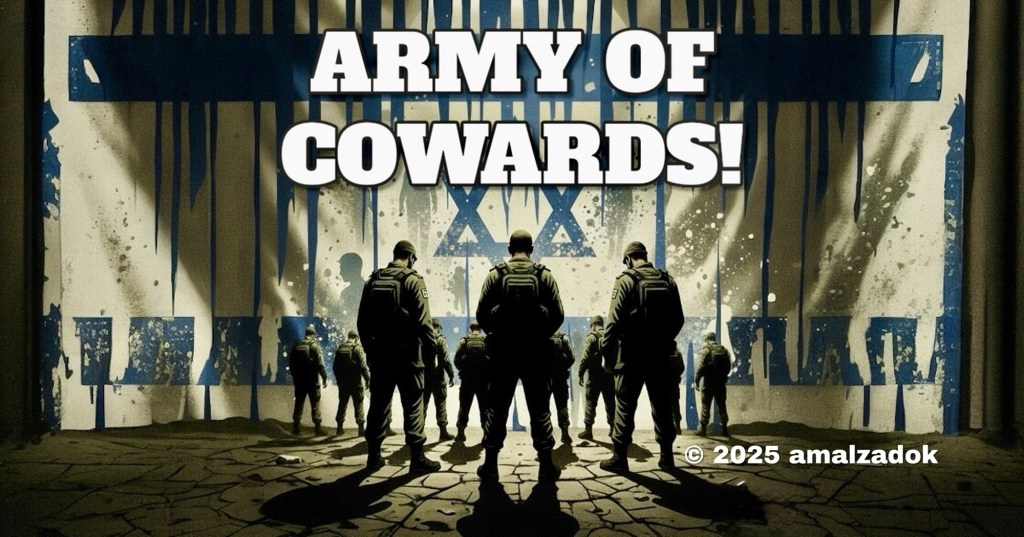
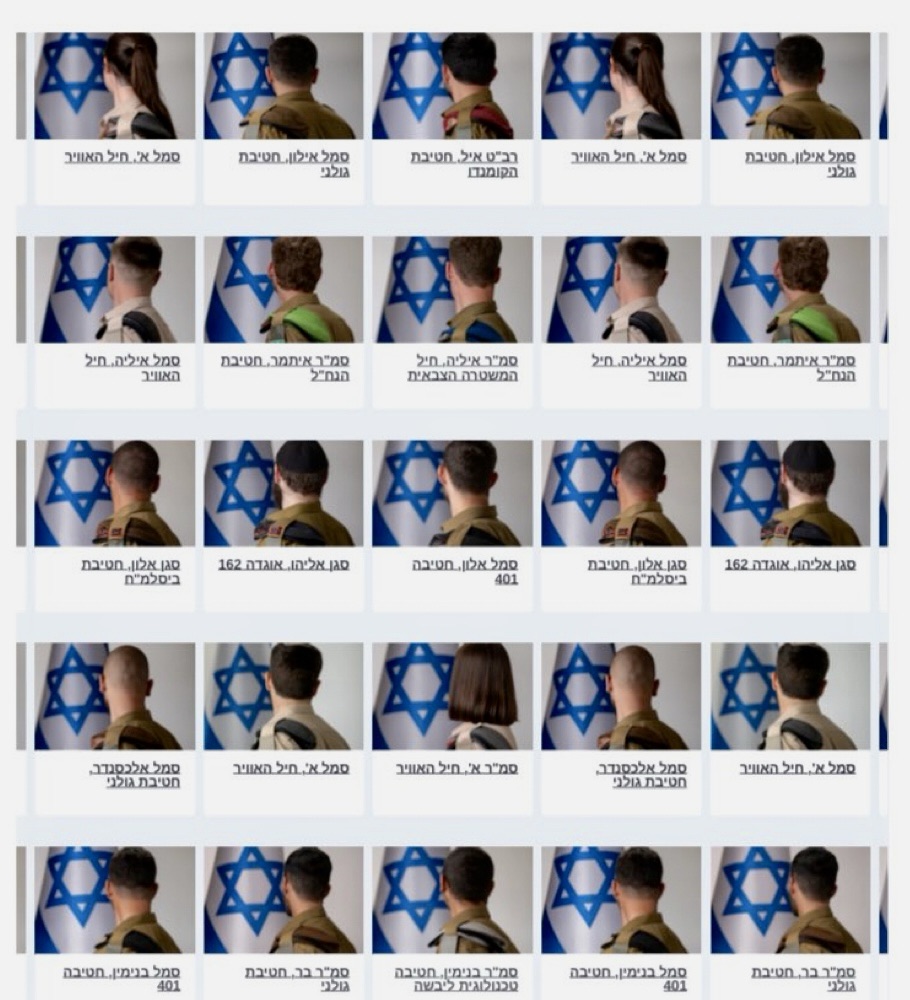
    The Israeli army’s recent strategy of photographing its soldiers with faces hidden and backs turned is not a trivial bureaucratic change; it is a desperate, coded admission, a sign that Israel’s leadership recognizes its actions against Palestinians as war crimes and crimes against humanity. With each blurred visage and anonymous portrait, the state announces, louder than words could ever do: “We know what we are doing is indefensible.” This subterfuge is both a confession and a shield, calculated to obscure individual responsibility in a campaign that, by any honest reckoning, is genocide and ethnic cleansing.

    Authentic Israeli photo catalog
    of members of the IDF

    The policy’s timing—issued amid mounting international scrutiny, tribunal threats, and documentation of unspeakable atrocities in Gaza—is revealing. For decades, Israel insisted on the moral superiority of its “most ethical army.” Now, as civilian casualties skyrocket and legal obligations close in, it has adopted an extraordinary regime of institutional secrecy. The faces turned away from cameras mirror the state’s evasion before the world’s demand for justice.

    Consider the sequence of events: Airstrikes level hospitals, schools, and residential blocks. Water, electricity, and humanitarian access are systematically cut. Food supplies run out. Famine and disease spread among besieged Palestinians. Journalists and aid workers become deliberate targets. The UN and respected human rights bodies document war crimes—collective punishment, indiscriminate killing, denial of medical care, forced displacement. Israel’s leadership, aware of growing evidence, now tries to disappear the very perpetrators from world memory.

    Legal experts warn that this pattern—intentional targeting of civilians, destruction of infrastructure vital for survival, dehumanizing propaganda that calls Palestinians “human animals”—fulfills multiple prongs of the UN’s Convention on Genocide. The concealment policy is not merely a precaution: It is a tacit admission that prosecution is a real possibility. Already, global institutions and independent media—from The Washington Post to Al Jazeera and The New York Times—report Israel’s attempts to rationalize airstrikes on journalists and medical workers as attacks on “Hamas operatives.” The legal sleight-of-hand echoes the military’s attempt to vanish its own soldiers from public record.

    A truly “ethical” nation would champion transparency and the rule of law. Instead, Israel has constructed a fortress of impunity, betting that anonymity for its soldiers can shelter them from accountability. In reality, the world’s memory is longer than a press release. Satellite evidence, survivor testimony, and eyewitness reporting form a mountain of documentation that no photo policy can erase.

    Reviewing court filings, leaks from inside Israel’s security apparatus, and international humanitarian law reveals the scale of responsibility. Legal organizations confirm that Israel’s new strategy follows secret recommendations from internal legal counsel who assessed the risk of foreign prosecutions—a risk now heightened by the International Criminal Court’s investigations into war crimes in Gaza and the West Bank.

    Israel’s defenders argue that security demands secrecy. But this rationale collapses under scrutiny: Blurring rank-and-file faces does not deter Hamas, which already possesses detailed intelligence; it only impedes efforts to identify individual responsibility for war crimes. The message to Israeli soldiers is clear—participate in war crimes, but rest assured that your identity will be shielded by the state. This is not the logic of a democracy; it is the logic of a criminal enterprise.

    The human impact is undeniable. Palestinians in Gaza describe living in a “giant concentration camp.” Children are orphaned overnight. Families are pulverized in seconds. Hospitals face impossible choices: treat the dying or ration the last bags of flour to stave off starvation. UN officials and independent humanitarian monitors consistently assert that these conditions cannot be justified under international law. Their verdict: these are crimes against humanity.

    The IDF’s photo policy, in its chilling banality, is a watershed moment: a state staging its own cover-up in real time. Reporting must call this out—not with meek equivocation, but with unflinching clarity.

    Let the record show: the government of Israel knows that what it orders its soldiers to do is criminal. Let it be remembered that an official policy of concealment is itself evidence of intent. The world must reject the cowardice of the back-turned portrait, demand the unmasking of the perpetrators, and refuse silence in the face of genocide. Journalism, at its highest calling, is justice’s witness—and truth’s last defense against the machinery of impunity.

    Yet the march of history and the reckoning of memory are unyielding. Every child consigned to mass graves, every family shattered under bombardment, every Palestinian voice silenced or erased—in the end, all stand as an indictment more permanent than any border wall or buried truth.

    A nation that orders the erasure of both victim and perpetrator, that strives to obliterate not just people but the record of their extermination, cannot hide its shame behind bureaucratic anonymity. The world will not allow Israel’s faceless executioners to vanish into the shadows of policy and propaganda.

    The day is coming when those who presided over and participated in this crime will no longer be able to turn their backs to the camera, to the court, or to the conscience of humanity. Justice, though delayed, is relentless. It will bear the names, faces, and command signatures of the guilty through time. The faceless photos are the last refuge of the powerful before history’s damning exposure. The world will remember, witness, and one day, finally, judge.

    References

    1. Reuters. (2025, January 8). Israeli military tightens media rules over war crimes prosecution concern. https://www.reuters.com/world/middle-east/israeli-military-tightens-media-rules-over-war-crimes-prosecution-concern-2025-01-08/

    2. Middle East Eye. (2025, January 8). Israeli army to hide soldiers’ identities from media. https://www.middleeasteye.net/news/israeli-army-set-hide-soldiers-identities-media

    3. Yahoo News Australia. (2025, November 19). Why Israeli soldiers and their leaders may be increasingly … https://au.news.yahoo.com/why-israeli-soldiers-leaders-may-043027389.html

    4. The Media Line. (2025, January 8). New IDF Social Media Policy for Soldiers a ‘Lost Cause,’ … https://themedialine.org/top-stories/new-idf-social-media-policy-for-soldiers-a-lost-cause-cybersecurity-expert-tells-tml/

    5. ABC News. (2024, April 16). IDF’s conduct, ethics under scrutiny following soldiers’ social media posts. https://abcnews.go.com/International/idfs-conduct-ethics-scrutiny-soldiers-social-media-posts/story?id=109035616

    6. The New York Times. (2025, August 21). He Was the Face and Voice of Gaza. Israel Assassinated … https://www.nytimes.com/2025/08/21/opinion/israel-al-sharif-killing-gaza.html

    7. Washington Post. (n.d.). Finalist: Staff of The Washington Post. https://www.pulitzer.org/node/staff-washington-post-38

    8. Maghrebi.org. (2024, May 8). Pulitzer Prizes honour journalists’ coverage of Israel-Gaza war. https://maghrebi.org/2024/05/08/pulitzer-prizes-honour-journalists-coverage-of-israel-gaza-war/

    9. Al Jazeera. (2023, June 7). Israeli troops hit with social media ban. https://www.aljazeera.com/news/2013/6/7/israeli-troops-hit-with-social-media-ban

    10. BBC News. (2013, March 1). Israeli army ire over social media posts. https://www.bbc.com/news/world-middle-east-21627500

    11. World Records Journal. (2022, July 27). How the IDF Learned to Stop Worrying and Love Video Activism. https://worldrecordsjournal.org/spectacle-as-camouflage-how-the-idf-learned-to-stop-worrying-and-love-video-activism/

    12. FPA. (2025, February 9). Photo Exposes More About Israel Than Its Subjects. https://fpa.org/photo-exposes-israel-subjects/

    13. OHCHR. (2024, October 9). UN Commission finds war crimes and crimes against humanity in Israeli attacks. https://www.ohchr.org/en/press-releases/2024/10/un-commission-finds-war-crimes-and-crimes-against-humanity-israeli-attacks

    14. Human Rights Watch. (2024, November 14). Israel’s Crimes Against Humanity in Gaza. https://www.hrw.org/news/2024/11/14/israels-crimes-against-humanity-gaza

    15. Amnesty International. (2025, October 1). Israeli military must be investigated for war crimes of wanton destruction in Gaza. https://www.amnesty.org/en/latest/news/2024/09/israel-opt-israeli-military-must-be-investigated-for-war-crime-of-wanton-destruct

    ©️2025 Amal Zadok. All rights reserved.

    Subscribe and never miss an article!
  • The Angel of Gaza: Francesca Albanese’s Crusade for Human Dignity

    The Angel of Gaza: Francesca Albanese’s Crusade for Human Dignity

    by Amal Zadok

    There are names that do not merely identify a person — they embody a conscience. Francesca Albanese is such a name. For millions who look upon the suffering of Gaza with trembling hearts and tear‑filled eyes, she has become more than a lawyer, more than a UN Rapporteur. She has become a voice where silence reigns, a light where truth is strangled — an angel among ruins.

    Born in Italy, Albanese’s journey from a scholar of international law to one of the world’s most fearless defenders of Palestinian human rights was not accidental. It began with an unflinching conviction: that law, when stripped of empathy, becomes another form of violence.

    Her research, her writings, and her relentless advocacy for equality under international law reveal a rare combination of intellectual precision and moral fire. She does not merely interpret the law — she restores its soul.

    When she speaks, the world listens with a kind of disquieted awe. Her words pierce comfortably layered hypocrisies, forcing power to confront its own reflection. In the faces of Gaza’s displaced children, she sees not statistics but sacred lives. Every child killed beneath shattered concrete, every family erased without recourse, reaffirms her mission — to remind humanity that international law was born not from the desire to dominate but from the promise to never again look away.

    The Law and the Heart

    Unlike many who treat legal frameworks as abstractions, Albanese dares to bridge the heart and the statute. Her role as the United Nations Special Rapporteur on the situation of human rights in the Palestinian territories has placed her at the spiritual frontier of modern justice.

    She walks the razor’s edge — where advocacy collides with power, and truth threatens vested interests. Yet she does not flinch.

    Her reports dissect violations with the meticulous clarity of a scholar, but her language radiates compassion. She names the unnameable — occupation, apartheid, dispossession — with a serenity that bears the strength of the just. To her detractors, she responds not with anger but factual righteousness. To her supporters, she embodies the endurance of conscience itself.

    “Neutrality,” she often implies through her work, “is not an option when children die.” For Francesca Albanese, neutrality in the face of systemic dehumanization is complicity. Her courage lies in articulating what so many diplomats fear to say: that equality, justice, and dignity are not negotiable; they are inherent rights, not privileges bestowed by political convenience.

    A Voice in the Wilderness

    It is not difficult to imagine the loneliness that accompanies such integrity. When her statements draw outrage from powerful capitals, she stands unbent — shielded not by status, but by conviction. She represents a generation of jurists and humanitarians who still believe the United Nations can serve as a temple of conscience rather than a marketplace of interests.

    Her work recalls the moral grandeur of figures like Dag Hammarskjöld, who once said that the UN was created not to lead humanity into heaven, but to prevent it from marching into hell. Albanese’s prose carries that same solemn urgency.

    Each report, each interview, each public address rekindles the idea that international solidarity is not naïve — it is necessary for civilization to survive its cruelty.

    And yet, what sets her apart is tenderness.

    Behind her professional calm is a compassion so vivid it feels incandescent. Those who have heard her speak describe her tone not as political, but pastoral — as if her words were prayers uttered on behalf of the voiceless. She describes Gaza not merely as a tragedy, but as a mirror of our own moral decay. Her grief is never performative. It is universal: grief for a humanity that allows children to die in the same way it allows silence to triumph.

    The Symbol and the Person

    To call her “The Angel of Gaza” is not to mystify her, but to honour the purity of her intent. Like an angel, she neither commands nor conquers — she bears witness. Her power lies in visibility. When bureaucracies hide behind euphemism and political calculations, she reminds the world of what is plain: bombs fall on the innocent; deprivation is deliberate; justice, though deferred, still calls for response.

    There is an almost tragic beauty in her defiance. She knows that speaking truth to power has consequences — isolation, distortion, vilification. And yet she continues, because truth itself demands no less. She stands not only for Gaza, but for the credibility of law, for the possibility that international institutions can still mean something beyond bureaucracy.

    Each statement she issues is more than a report — it is a moral document, a testament to unyielding accountability. In every line, the language of law merges with the poetry of conscience. One senses that she writes not only for diplomats, but for history — for that day when future generations will ask: “Who spoke while others were silent?”

    The Nobel Moment That Wasn’t

    Her moral authority has not gone unnoticed. Earlier this year, Francesca Albanese was nominated for the Nobel Peace Prize — a recognition that many believed finally affirmed her extraordinary courage and the universal message of her work.

    Yet when the laureate was announced, disappointment spread across the world of conscience. The prize went not to the voice that had risked her career and reputation to defend the oppressed, but to a figure whose alignment with Western power structures ensured a politically safe outcome.

    It was, for many, a moment that exposed the corrosion of ideals at the core of the Nobel institution. The committee, once a beacon of moral discernment, appeared to capitulate to the same geopolitical pressures that Francesca herself has spent her life confronting.

    To observers from Latin America to Africa, from the Middle East to Asia, it was difficult not to see it as a betrayal — a reward not for peace, but for obedience. The honour, they whispered, had been handed to a U.S.‑aligned puppet and a traitor to her own nation’s conscience.

    But while committees may falter, history remembers differently. Across the moral landscape of the world — in universities, in refugee camps, in churches and mosques, in the homes of those who still believe in justice — Francesca Albanese is the true laureate.

    Her prize is not gilded in metal but written in the testimony of those who survive because someone, somewhere, refused to be silent. For the decent part of the world, Francesca is not simply a nominee; she is the authentic winner, the embodiment of what peace truly means when stripped of hypocrisy and political theatre.

    Beyond the Rubble, the Light

    Francesca Albanese’s life and work teach us that compassion is not weakness, and truth-telling is not rebellion. The Angel of Gaza reminds the world that justice is not an abstract idea to be debated in air-conditioned halls, but a sacred duty to those who suffer unseen.

    Each time she speaks before the world, Gaza breathes again — the truth reverberates across borders, piercing indifference and reawakening the memory of our collective humanity.

    And yet, the question remains — what will the world do with the presence of such a woman? Will it answer her moral clarity with active solidarity — defending her voice, defending the Palestinian people, defending the very principles that make civilization humane? Or will it retreat once again into the safety of apathy, turning away as angels cry over the ashes of Gaza? Francesca Albanese’s legacy is already defined by her courage and truth; it is only ours that will be defined — by our action, or by our inaction.

    ©️2025 Amal Zadok. All rights reserved.

    Subscribe and never miss an article!
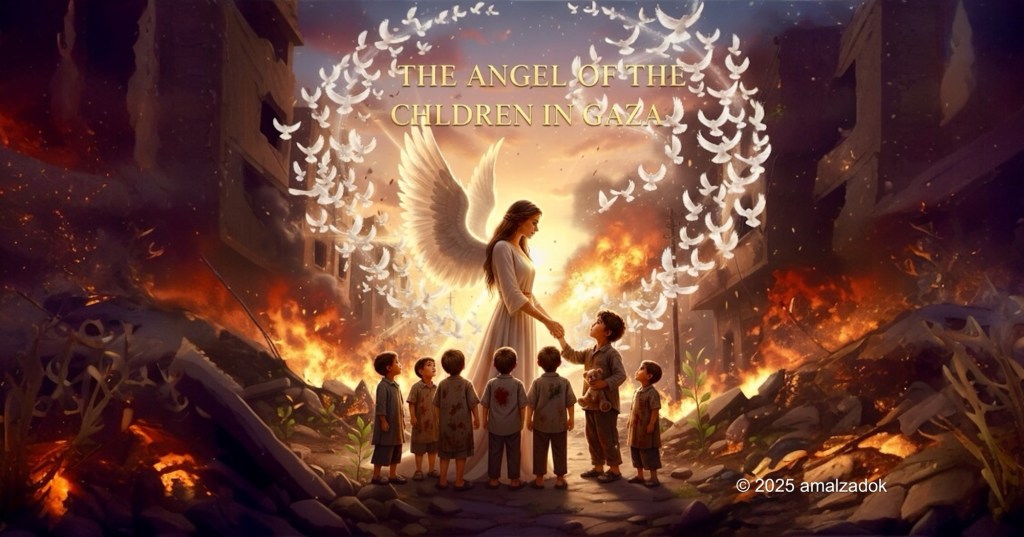
  • From Prophecy to Ashes: How Gaza Exposes the Betrayal of Jewish Ethics

    From Prophecy to Ashes: How Gaza Exposes the Betrayal of Jewish Ethics

    by Amal Zadok

    It’s a striking sight: powerful people at the Western Wall, heads bowed, touching stone, looking for divine approval. On the surface, it’s the ritual of a nation publicly reconnecting with thousands of years of Jewish longing. But at this very moment, as bombs drop in Gaza and global outrage rises, the contrast couldn’t be more startling. Judaism, at its true heart, is about justice, memory, and compassion—not walls, not warfare. Yet the state’s political ideology, Zionism, is accused by international organizations—including the United Nations and the world’s top genocide scholars—of orchestrating acts of genocide in the Palestinian territories (Office of the High Commissioner for Human Rights, 2025; BBC News, 2025). Is it possible to call this “faithful” to the Torah?

    Gaza: The Test the World is Failing

    Recent statements from international leaders and humanitarian organizations brand Gaza as “the test the world is failing.” The UN Secretary-General António Guterres declared in July 2025 that, “the catastrophe in Gaza is a test of our shared humanity—one the world cannot afford to fail” (UN News, 2025). The International Committee of the Red Cross, IPC (Integrated Food Security Phase Classification), and countless relief groups warn that starvation, devastated hospitals, and destroyed infrastructure have sparked a massive humanitarian disaster. Over 67,000 Palestinians have been killed, famine is rampant, and entire generations are being lost to hunger and violence (Red Cross, 2023; IRC, 2025). Every day of insufficient international response deepens the tragedy, making Gaza the definitive moral crisis of our age. This is not just a Jewish test—it’s a test of the world’s collective conscience and ability to act with mercy, justice, and urgency (UN News, 2025; BBC News, 2025).

    Zionism Hijacked the Conversation

    Let’s face it: Zionism and Judaism are not twins. Torah is ancient, ethical, spiritual—a faith tradition demanding “you shall not wrong nor oppress a stranger, for you were strangers in the land of Egypt” (Exodus 22:20, New Revised Standard Version). Zionism, by contrast, started in the late 1800s Europe as a political response to violence against Jews, not as a religious project (Britannica, 2025). Many founders were secular and saw the creation of a state as a fix for persecution. They were not worried about prophetic justice; they wanted borders, armies, passports.

    That might have made sense in theory for survival. But Torah justice was always about more than survival. It demanded that when Jews finally had power, they would not become new Pharaohs or new oppressors (The Business Standard, 2023). The question now: what’s left of Jewish prophecy if statehood tramples mercy?

    Gaza: The Test We’re Failing—And the World is Too

    Fast forward to today. Israel’s government says it’s fighting for security, but in Gaza, what much of the world now sees is not defense but destruction. In 2025, the UN, the International Association of Genocide Scholars, and a host of human rights experts could not have been clearer. Their findings, based on mountains of evidence, declare Israel’s military campaign in Gaza a “genocide” under the U.N. convention: mass killing, starvation, targeted destruction of life essentials, and, most damningly, intent (Office of the High Commissioner for Human Rights, 2025; BBC News, 2025).

    Israel’s leaders reject this as bias and self-defense, but global legal experts now mostly agree—what’s happening cannot be excused away as “necessity.” Instead, these are crimes that violate the very heart of Judaism’s religious mission. And the world, even while recognizing the tragedy, has not mustered a response that meets the urgency of the crisis. Silence, half-measures, or paralysis from the world’s most powerful institutions have made Gaza not only a test for Jewish ethics but a grave indictment of the world’s moral resolve (UN News, 2025).

    Torah’s Demands: Not Just Old Words

    The Torah couldn’t be clearer. “You shall not oppress a stranger, for you know the soul of the stranger, having been strangers in Egypt” (Exodus 23:9). Over and over: “Love the stranger as yourself” (Leviticus 19:34). These aren’t poetic suggestions. They’re central commandments, repeated more than any others. When prophets like Isaiah see ritual and power standing alongside bloodshed, they say, “I can’t listen to your prayers. Your hands are full of blood. Wash yourselves. Seek justice. Rescue the oppressed” (Isaiah 1:15-17).

    You simply can’t pray at the Wall and bomb Gaza and call it Torah. Judaism is the faith that God demands justice, not just ceremonies and chanting.

    When Statehood Becomes a Trap

    This crisis didn’t have to happen. Many Jews (including some of Zionism’s first critics) warned that fusing ancient faith with nationalist statehood would backfire. They saw the risk of Jews, once stateless and powerless, repeating the errors of the nations—rule by force, exclusion, and hate (Britannica, 2025). In a twist, national Zionism, instead of saving Jewish values, is now accused of burying them under concrete and barbed wire.

    What’s at Stake for Judaism—and for All of Us

    Every tank, every airstrike in Gaza, every refusal to see the agony of Palestinian families, is more than a political move. For many Jews, it’s a spiritual crisis, a fight for the soul of Judaism. And for the world, it’s proof that nationalism and faith can be a toxic mix, especially when surrounding power goes unchecked. Torah’s call is: “You must have one law for the stranger and for yourself” (Leviticus 24:22). If Jewish statehood means forsaking this, then something essential has been lost.

    And let’s talk about antisemitism. Criticizing Zionism’s deeds—especially when the leading voices are Jews and Jewish scholars—is not hating Jews. It’s defending Judaism’s most beautiful core. Silencing these critics, or branding them as traitors, betrays the very thing the tradition claims to defend.

    A Call for Teshuva—Repentance

    But Judaism also insists: desecration isn’t the last word. The future isn’t sealed. Repentance (teshuva in Hebrew) is always possible. That means telling the truth—about Gaza, about power, about what the Torah really asks. That means returning to justice, even if power whispers otherwise. It means demanding a ceasefire, aid, dignity, and a real reckoning not just for Israel, but for everyone caught in the old traps of fear and violence.

    The Challenge

    Let the world hear and remember: the scale of horror unleashed in Gaza, the starvation, the flattening of homes, the loss of entire families—these are more than the outcome of failed policy or broken negotiations. They are a monumental test of the very soul of every tradition, nation, and heart that claims allegiance to justice. This is the hour when faith—Jewish or otherwise—must choose: stand with the prophetic cry for the dignity of every human being or be forever tarnished by silence and rationalization. History’s eyes are fixed not only on those who hold the guns, but on those who watch and do nothing. There is still time for repentance, for the world and for every conscience. Gaza burns; the gates of mercy and justice stand open—but not forever. Let those with power move beyond words and ritual to radical acts of solidarity, demanding not just a ceasefire but a true reckoning that honors the suffering and affirms life. Only then can we reclaim a measure of humanity—and only then will faith itself be saved from the ashes.

    The Urgency of Justice: Two States and Accountability

    There is no honest path forward—no reconciliation, no lasting peace—unless the world insists on both a viable two-state solution and real accountability for the crimes already committed. Justice demands far more than words; it demands the prosecution and punishment of those guilty of genocide and the deliberate desecration of Judaism’s highest ideals. Anything less perpetuates cycles of violence and erodes the very possibility of coexistence. The survival of both peoples and the reputation of the faith itself depend on courage: courage to share the land, to confront the truth, and to uphold justice so that never again is more than a slogan—and so that hope, not horror, may one day rise from the ruins of Gaza and Jerusalem.

    References

    BBC News. (2025, September 1). Israel committing genocide in Gaza, world’s leading scholars find. https://www.bbc.com/news/articles/cde3eyzdr63o

    Britannica. (2025, October 2). Zionism. https://www.britannica.com/topic/Zionism

    Chabad.org. (n.d.). Why Were the Temples Destroyed? https://www.chabad.org/library/article_cdo/aid/5168613/jewish/Why-Were-the-Temples-Destroyed.htm

    International Rescue Committee [IRC]. (2025, October 9). Crisis in Gaza: What to know and how to help. https://www.rescue.org/crisis-in-gaza

    Office of the High Commissioner for Human Rights. (2025, September). Israel has committed genocide in the Gaza Strip, UN Commission finds. https://www.ohchr.org/en/press-releases/2025/09/israel-has-committed-genocide-gaza-strip-un-commission-finds

    Red Cross. (2023, October 6). What’s happening in Gaza? A desperate humanitarian crisis. https://www.redcross.org.uk/stories/disasters-and-emergencies/world/whats-happening-in-gaza-humanitarian-crisis-grows

    The Business Standard. (2023, October 14). Exploring the difference between Judaism and Zionism. https://www.tbsnews.net/features/panorama/exploring-difference-between-judaism-and-zionism-734718

    UN News. (2025, July 29). In Gaza, mounting evidence of famine and widespread humanitarian crisis. https://news.un.org/en/story/2025/07/1165517

    Wikipedia. (2025, October 17). Zionism. https://en.wikipedia.org/wiki/Zionism

    ©️2025 Amal Zadok. All rights reserved.

    Subscribe and never miss an article!
  • Chosen, Yet Condemned? How Israel’s Treatment of Palestinians Violates Its Covenant

    Chosen, Yet Condemned? How Israel’s Treatment of Palestinians Violates Its Covenant

    by Amal Zadok

    The relationship between Israel’s status as the “Chosen People,” the ongoing violence in Palestine, and divine judgment is addressed through a synthesis of Torah principles, historical context, and contemporary ethical debates. Below is a detailed analysis:

    1. The Conditional Nature of “Chosenness” in Torah

    • Covenant Requirements: Israel’s election is conditional on upholding justice, righteousness, and fidelity to God’s commandments (Deuteronomy 7:6–11). The Torah repeatedly warns that idolatry, oppression of the vulnerable (orphans, widows, foreigners), and bloodshed will lead to divine punishment, including exile and loss of the land .
    • Prophetic Condemnation: Prophets like Jeremiah and Amos explicitly state that God rejects Israel’s worship when coupled with injustice. For example:

    “You steal, murder, commit adultery… then come and stand before Me in this House… Has this House become a den of robbers?” (Jeremiah 7:9–11).
    Social injustice is deemed a breach of covenant equivalent to idolatry .

    2. Genocide as a Violation of Core Torah Principles

    • Sacredness of Life: The Torah declares all humans b’tzelem Elohim (in God’s image), making intentional killing of innocents a grave sin (Genesis 9:6). The command to destroy Amalek (Deuteronomy 25:19) is historically contextualized as a specific response to unprovoked aggression, not a blanket endorsement of genocide. Rabbinical tradition limits this command by:
    • Requiring peace offers first (Maimonides, Hilkhot Melakhim 6:1) .
    • Allegorizing Amalek as “evil tendencies” rather than ethnic groups (Hasidic teachings) .
    • Prohibition of Collective Punishment: Torah law forbids punishing children for parents’ sins (Deuteronomy 24:16). The killing of “infants and sucklings” in 1 Samuel 15:3 conflicts with this, leading scholars to question its literal interpretation or contextualize it within ancient Near Eastern hyperbolic war rhetoric .

    3. Punishments Prescribed in Torah for Injustice and Bloodshed

    • Exile and Land Rejection:

    “You will be uprooted from the land… for having forsaken the covenant of the Lord” (Deuteronomy 29:24–27).
    The Babylonian exile is framed as direct punishment for social oppression and idolatry (Jeremiah 22:3–5; Ezekiel 22:29) .

    • Divine Withdrawal: Ezekiel depicts God’s presence (Shekinah) abandoning the Temple due to corruption and violence (Ezekiel 10:18) .
    • “Blood Guilt”: Numbers 35:33–34 states that unabsolved bloodshed “pollutes the land,” making it “vomit out” its inhabitants. This is invoked when innocent life is systematically destroyed .

    4. Contemporary Ethical and Theological Tensions

    • Misuse of Amalek Rhetoric: Israeli officials and settlers have labeled Palestinians “Amalek” to justify expulsion or annihilation . South Africa’s ICJ genocide case cited Netanyahu’s Amalek reference as evidence of genocidal intent .
    • Jewish Opposition: Over 100 rabbis in “Rabbis for Ceasefire” condemn the Gaza assault as a betrayal of Judaism:

    “Violence begets violence… Our tradition commands: ‘Do not stand idly by the blood of your neighbor’” .
    They emphasize pikuach nefesh (saving life overrides most commandments).

    • Demographic Shifts: Polls show 82% of Israeli Jews support expelling Gazans, and 47% endorse biblical-style annihilation of enemy cities . This contrasts with pre-1948 Jewish teachings that mass return to Israel before the Messiah was sinful .

    5. Can Israel Remain “Chosen” Amid Genocide?

    Torah theology answers decisively: No. Divine favor is irrevocably tied to ethical conduct. The prophets stress that election is for service, not supremacy:

    “I will make you a light to the nations, to open blind eyes and free captives” (Isaiah 42:6–7).
    Systematic violence against Palestinians—described by scholars as meeting the UN genocide criteria through mass killing, starvation, and destruction of healthcare —violates this vocation. The Talmud warns:
    “Whoever saves one life saves the world; whoever destroys one life destroys the world” (Sanhedrin 4:5).

    Conclusion

    Israel’s “chosenness” hinges on embodying divine justice. The Torah’s punishments for oppression (exile, land curse, divine abandonment) underscore that genocide or ethnic cleansing disqualifies Israel from its covenant role. As Rabbi Brant Rosen states:

    “Never again means never again—for everyone” .
    The path to restoration requires ceasing violence, upholding Palestinian dignity, and heeding Isaiah’s call:
    “Learn to do right; seek justice. Defend the oppressed” (Isaiah 1:17).

    ©️2025 Amal Zadok. All rights reserved