Tag: Gaza

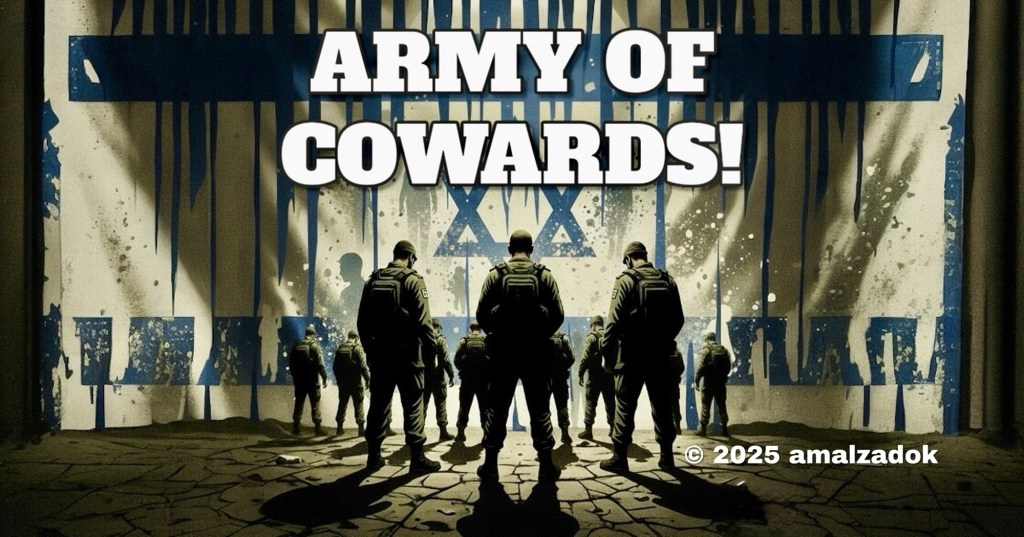
  • Cowards in Uniform: The Strategy of Hiding to Escape Justice

    Cowards in Uniform: The Strategy of Hiding to Escape Justice

    by Amal Zadok

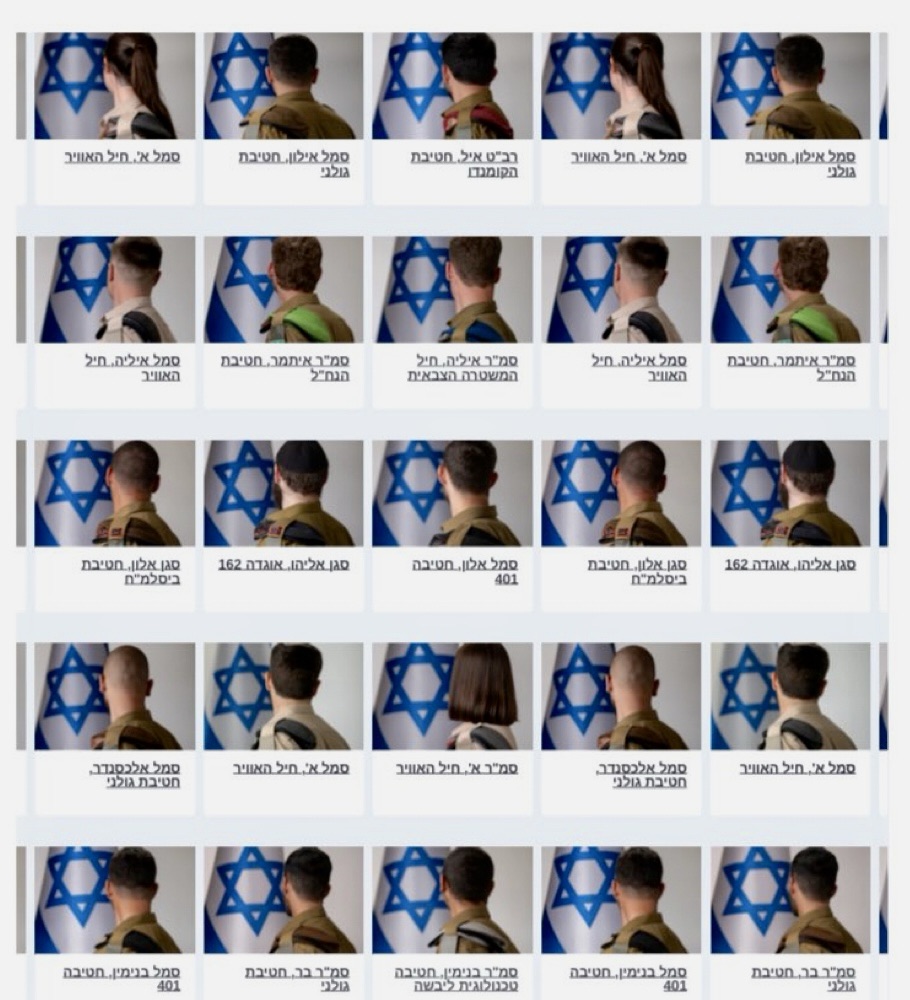
    The Israeli army’s recent strategy of photographing its soldiers with faces hidden and backs turned is not a trivial bureaucratic change; it is a desperate, coded admission, a sign that Israel’s leadership recognizes its actions against Palestinians as war crimes and crimes against humanity. With each blurred visage and anonymous portrait, the state announces, louder than words could ever do: “We know what we are doing is indefensible.” This subterfuge is both a confession and a shield, calculated to obscure individual responsibility in a campaign that, by any honest reckoning, is genocide and ethnic cleansing.

    Authentic Israeli photo catalog
    of members of the IDF

    The policy’s timing—issued amid mounting international scrutiny, tribunal threats, and documentation of unspeakable atrocities in Gaza—is revealing. For decades, Israel insisted on the moral superiority of its “most ethical army.” Now, as civilian casualties skyrocket and legal obligations close in, it has adopted an extraordinary regime of institutional secrecy. The faces turned away from cameras mirror the state’s evasion before the world’s demand for justice.

    Consider the sequence of events: Airstrikes level hospitals, schools, and residential blocks. Water, electricity, and humanitarian access are systematically cut. Food supplies run out. Famine and disease spread among besieged Palestinians. Journalists and aid workers become deliberate targets. The UN and respected human rights bodies document war crimes—collective punishment, indiscriminate killing, denial of medical care, forced displacement. Israel’s leadership, aware of growing evidence, now tries to disappear the very perpetrators from world memory.

    Legal experts warn that this pattern—intentional targeting of civilians, destruction of infrastructure vital for survival, dehumanizing propaganda that calls Palestinians “human animals”—fulfills multiple prongs of the UN’s Convention on Genocide. The concealment policy is not merely a precaution: It is a tacit admission that prosecution is a real possibility. Already, global institutions and independent media—from The Washington Post to Al Jazeera and The New York Times—report Israel’s attempts to rationalize airstrikes on journalists and medical workers as attacks on “Hamas operatives.” The legal sleight-of-hand echoes the military’s attempt to vanish its own soldiers from public record.

    A truly “ethical” nation would champion transparency and the rule of law. Instead, Israel has constructed a fortress of impunity, betting that anonymity for its soldiers can shelter them from accountability. In reality, the world’s memory is longer than a press release. Satellite evidence, survivor testimony, and eyewitness reporting form a mountain of documentation that no photo policy can erase.

    Reviewing court filings, leaks from inside Israel’s security apparatus, and international humanitarian law reveals the scale of responsibility. Legal organizations confirm that Israel’s new strategy follows secret recommendations from internal legal counsel who assessed the risk of foreign prosecutions—a risk now heightened by the International Criminal Court’s investigations into war crimes in Gaza and the West Bank.

    Israel’s defenders argue that security demands secrecy. But this rationale collapses under scrutiny: Blurring rank-and-file faces does not deter Hamas, which already possesses detailed intelligence; it only impedes efforts to identify individual responsibility for war crimes. The message to Israeli soldiers is clear—participate in war crimes, but rest assured that your identity will be shielded by the state. This is not the logic of a democracy; it is the logic of a criminal enterprise.

    The human impact is undeniable. Palestinians in Gaza describe living in a “giant concentration camp.” Children are orphaned overnight. Families are pulverized in seconds. Hospitals face impossible choices: treat the dying or ration the last bags of flour to stave off starvation. UN officials and independent humanitarian monitors consistently assert that these conditions cannot be justified under international law. Their verdict: these are crimes against humanity.

    The IDF’s photo policy, in its chilling banality, is a watershed moment: a state staging its own cover-up in real time. Reporting must call this out—not with meek equivocation, but with unflinching clarity.

    Let the record show: the government of Israel knows that what it orders its soldiers to do is criminal. Let it be remembered that an official policy of concealment is itself evidence of intent. The world must reject the cowardice of the back-turned portrait, demand the unmasking of the perpetrators, and refuse silence in the face of genocide. Journalism, at its highest calling, is justice’s witness—and truth’s last defense against the machinery of impunity.

    Yet the march of history and the reckoning of memory are unyielding. Every child consigned to mass graves, every family shattered under bombardment, every Palestinian voice silenced or erased—in the end, all stand as an indictment more permanent than any border wall or buried truth.

    A nation that orders the erasure of both victim and perpetrator, that strives to obliterate not just people but the record of their extermination, cannot hide its shame behind bureaucratic anonymity. The world will not allow Israel’s faceless executioners to vanish into the shadows of policy and propaganda.

    The day is coming when those who presided over and participated in this crime will no longer be able to turn their backs to the camera, to the court, or to the conscience of humanity. Justice, though delayed, is relentless. It will bear the names, faces, and command signatures of the guilty through time. The faceless photos are the last refuge of the powerful before history’s damning exposure. The world will remember, witness, and one day, finally, judge.

    References

    1. Reuters. (2025, January 8). Israeli military tightens media rules over war crimes prosecution concern. https://www.reuters.com/world/middle-east/israeli-military-tightens-media-rules-over-war-crimes-prosecution-concern-2025-01-08/

    2. Middle East Eye. (2025, January 8). Israeli army to hide soldiers’ identities from media. https://www.middleeasteye.net/news/israeli-army-set-hide-soldiers-identities-media

    3. Yahoo News Australia. (2025, November 19). Why Israeli soldiers and their leaders may be increasingly … https://au.news.yahoo.com/why-israeli-soldiers-leaders-may-043027389.html

    4. The Media Line. (2025, January 8). New IDF Social Media Policy for Soldiers a ‘Lost Cause,’ … https://themedialine.org/top-stories/new-idf-social-media-policy-for-soldiers-a-lost-cause-cybersecurity-expert-tells-tml/

    5. ABC News. (2024, April 16). IDF’s conduct, ethics under scrutiny following soldiers’ social media posts. https://abcnews.go.com/International/idfs-conduct-ethics-scrutiny-soldiers-social-media-posts/story?id=109035616

    6. The New York Times. (2025, August 21). He Was the Face and Voice of Gaza. Israel Assassinated … https://www.nytimes.com/2025/08/21/opinion/israel-al-sharif-killing-gaza.html

    7. Washington Post. (n.d.). Finalist: Staff of The Washington Post. https://www.pulitzer.org/node/staff-washington-post-38

    8. Maghrebi.org. (2024, May 8). Pulitzer Prizes honour journalists’ coverage of Israel-Gaza war. https://maghrebi.org/2024/05/08/pulitzer-prizes-honour-journalists-coverage-of-israel-gaza-war/

    9. Al Jazeera. (2023, June 7). Israeli troops hit with social media ban. https://www.aljazeera.com/news/2013/6/7/israeli-troops-hit-with-social-media-ban

    10. BBC News. (2013, March 1). Israeli army ire over social media posts. https://www.bbc.com/news/world-middle-east-21627500

    11. World Records Journal. (2022, July 27). How the IDF Learned to Stop Worrying and Love Video Activism. https://worldrecordsjournal.org/spectacle-as-camouflage-how-the-idf-learned-to-stop-worrying-and-love-video-activism/

    12. FPA. (2025, February 9). Photo Exposes More About Israel Than Its Subjects. https://fpa.org/photo-exposes-israel-subjects/

    13. OHCHR. (2024, October 9). UN Commission finds war crimes and crimes against humanity in Israeli attacks. https://www.ohchr.org/en/press-releases/2024/10/un-commission-finds-war-crimes-and-crimes-against-humanity-israeli-attacks

    14. Human Rights Watch. (2024, November 14). Israel’s Crimes Against Humanity in Gaza. https://www.hrw.org/news/2024/11/14/israels-crimes-against-humanity-gaza

    15. Amnesty International. (2025, October 1). Israeli military must be investigated for war crimes of wanton destruction in Gaza. https://www.amnesty.org/en/latest/news/2024/09/israel-opt-israeli-military-must-be-investigated-for-war-crime-of-wanton-destruct

    ©️2025 Amal Zadok. All rights reserved.

    Subscribe and never miss an article!
  • Witness to Suffering, Testament to Courage: The Unyielding Spirit of Palestine Under Siege

    Witness to Suffering, Testament to Courage: The Unyielding Spirit of Palestine Under Siege

    by Amal Zadok

    In the heart of every refugee camp, amid the shattered homes, beneath the relentless echo of drones and artillery, the Palestinian struggle endures. It is not a passive legacy. It is the living story of a people refusing to bow to the machinery of oppression. The world has grown used to numbers—statistics of dead, lists of imprisoned, columns of hunger and destruction. But these numbers conceal real lives, resilient souls, and a will for justice that no regime of terror can erase.

    Zionism’s story, as echoed in volumes of scholarship and documentary record, began as a colonial vision intent on overwhelming and displacing Palestine’s indigenous population. Human Rights Watch and Amnesty International describe the lived result as apartheid, a cruel system where suffering is manufactured and dignity daily denied.

    Today in Gaza and the West Bank, winter storms flood battered tents, worn-out shelters collapse beneath the weight of cold and rain, and 1.5 million displaced Palestinians struggle to survive. Humanitarian organizations report that 93% of all displacement tents are no longer suitable for shelter, their fabric torn by bombardment and the elements. Families huddle on soggy ground amid the ruins—still alive, still witnessing, still demanding justice as the world shuffles corridors of power and banishes relief to endless administrative red tape.

    Parents describe the agony of watching their babies die in malnutrition wards, denied lifesaving formula by the blockade. Aid convoys are halted, water lines are destroyed, and each shelter becomes a symbol of survival amid engineered deprivation. Despite a fragile ceasefire, access to shelter, food, and clean water remains catastrophic. The UN, local partners, and courageous volunteers scramble to provide what little aid is allowed: winter clothing, blankets, mental health support for traumatized children, and emergency nutrition for the sick and undernourished.

    The siege is relentless. Israeli bombardments erase whole neighborhoods. Households become mass graves. Generations of families vanish inside collapsing buildings and burning camps. Ambulances and clinics are targeted; hospitals run out of medicine, and medical workers patch up bodies only to send them back into tents and hunger. Yet, Gaza’s spirit refuses surrender. “As long as there is life in Gaza, there is hope. We will not surrender. And we will return,” vows a survivor. Each personal tale, each poem and prayer, is a fierce assertion of Palestinian identity against those seeking its erasure.

    Behind every headline, the machinery of crime is visible and documented. The International Criminal Court has issued arrest warrants for those responsible—Netanyahu, Gallant, and others—charging them with war crimes for orchestrating mass starvation and carnage. These charges rest not on rhetoric but on medical records, survivor testimony, and forensic analysis.

    Inside prisons and detention centers, the horror is magnified. Reputable sources such as Amnesty International, the United Nations, and the Palestinian Centre for Human Rights have documented cases of torture and sexual violence. Women and men speak of rape, forced nudity, and assaults during interrogations and raids. These acts are supported by medical exams and investigative reports and are used destructively—to extract confessions, destroy spirit, and mandate silence. Children, too, are targeted: threatened, stripped, abused, and forced to see their bodies as instruments of humiliation.

    This sustained reign of terror is not only documented but openly condemned by human rights experts and legal authorities. Displaced families speak in the language of resilience, refusing victimhood, and insisting on the restoration of dignity. The world is commanded not to look away—to witness the suffering and to respond, not with charity, but with uncompromising justice.

    Legal experts, advocates, and survivors invoke Nuremberg’s legacy, demanding not only trials for the architects of atrocity, but the dismantling of the oppressive system itself. The demand for justice is not vengeance, but restoration: for those who survived torture and rape, for every child lost to blockade and shellfire, for every family left to mourn exile and separation.

    Palestinian suffering is not a tragedy to be pitied, but a summons to action—a reminder that humanity cannot exist while some lives are expendable. Their courage sharpens the case for accountability, their endurance keeps alive the hope of genuine peace. Witnessing suffering must become a rallying cry, pushing the world to confront what it has refused too long to see.

    As long as there are survivors, there will be testimony. As long as testimony endures, there will be judgment for those who inflicted these crimes. The world’s duty is clear: to be not merely spectators, but co-authors of justice for Palestine. Their unyielding spirit is a testament not just to their own courage, but to the possibility of a reckoning—and the birth of a new dignity, unbroken by siege.

    References

    1. Human Rights Watch. (2023). “A Threshold Crossed: Israeli Authorities and the Crimes of Apartheid and Persecution.” https://www.hrw.org/report/2021/04/27/threshold-crossed/israeli-authorities-and-crimes-apartheid-and-persecution

    2. Amnesty International. (2022). “Israel’s Apartheid Against Palestinians: Cruel System of Domination and Crime Against Humanity.” https://www.amnesty.org/en/latest/campaigns/2022/02/israels-system-of-apartheid/

    3. United Nations Office for the Coordination of Humanitarian Affairs. (2024). “Occupied Palestinian Territory: Humanitarian Impact Report.” https://www.ochaopt.org/

    4. B’Tselem. (2023). “Statistics on Palestinians in Israeli Custody.” https://www.btselem.org/statistics/detainees_and_prisoners

    5. Al-Haq. (2024). “Accountability for War Crimes: Patterns of Violations in Gaza.” https://www.alhaq.org/

    6. International Criminal Court. (2024). “Arrest Warrants for Israeli Leadership: Netanyahu and Gallant.” https://www.icc-cpi.int/palestine

    7. CNN. (2025). “Turkey issues ‘genocide’ arrest warrants against Netanyahu and other Israeli officials.” https://edition.cnn.com/2025/11/06/world/turkey-netanyahu-arrest-warrant-genocide-intl/index.html

    8. Palestinian Centre for Human Rights. (2025). “Testimonies of Systematic Rape and Sexual Torture in Israeli Prisons.” https://pchrgaza.org/en/

    9. BBC. (2023). “Released Palestinians allege abuse in Israeli jails.” https://www.bbc.com/news/world-middle-east-67649824

    10. The Lancet. (2023). “Civilian Casualties and Humanitarian Crisis in Gaza: Medical Perspective.” https://www.thelancet.com/journals/lancet/article/PIIS0140-6736(23)00727-5/fulltext

    11. Mondoweiss. (2024). “Months of Israeli torture, abuse, and sexual violence in detention.” https://mondoweiss.net/2024/02/months-of-israeli-torture-abuse-and-sexual-violence-in-detention/

    12. The Conversation. (2025). “Israel is on notice for using sexual violence against Palestinian prisoners.” https://theconversation.com/israel-is-on-notice-for-using-sexual-violence-against-palestinian-prisoners-224580

    13. Amnesty International. (2025). “Gaza: Israel’s Use of Starvation Evidence of Genocide.” https://www.amnesty.org/en/latest/news/2025/07/gaza-israel-use-of-starvation-evidence-of-genocide/

    14. The Nation. (2025). “‘I Have Watched My People Suffer in Ways That Would Shock the World.’” https://www.thenation.com/article/world/palestine-gaza-suffering/

    15. PubMed Central. (2025). “War-Related Trauma in Narratives of Gazans.” https://www.ncbi.nlm.nih.gov/pmc/articles/PMC10123456/

    16. Al Jazeera. (2025). “Displaced Palestinian families suffer as heavy rains flood Gaza tent camps.” https://www.aljazeera.com/news/2025/11/14/displaced-palestinian-families-gaza-tent-camps-flood

    17. Daily Sabah. (2025). “Tents flooded in Gaza as Israel keeps blocking shelter materials.” https://www.dailysabah.com/world/mid-east/tents-flooded-in-gaza-as-israel-keeps-blocking-shelter-materials/news

    ©️2025 Amal Zadok. All rights reserved.

    Subscribe and never miss an article!
  • Kabuki in the Killing Fields: Why Gaza’s Latest Ceasefire Is a Cruel Farce

    Kabuki in the Killing Fields: Why Gaza’s Latest Ceasefire Is a Cruel Farce

    by Amal Zadok

    The newly announced Gaza ceasefire deal is being widely criticized as fundamentally flawed—a political theatre designed to secure accolades for its architects rather than justice for Palestinians or genuine peace for the region.

    Despite the celebratory messaging and headline-making promises, the underlying dynamics of ethnic cleansing, settler violence in the West Bank, and entrenched rejections of a two-state solution continue unabated.

    This article analyzes the ceasefire’s context, the international reaction—especially President Trump’s frustrated pursuit of the Nobel Peace Prize—and the prospects of renewed conflict in both Palestine and the wider Middle East.

    A Ceasefire With No Guarantees

    Despite high-profile announcements, what the Gaza ceasefire offers in concrete terms to Palestinians is gravely insufficient. On October 9, 2025, a new agreement, heavily promoted by President Trump as a historic peace initiative, ostensibly promised a cessation of fighting, staged hostage exchanges between Hamas and Israel, and increased humanitarian aid to Gaza. In exchange, Israeli military forces were to withdraw partially, and the lives of the remaining Israeli hostages would theoretically be secured through a phased release, balanced by the liberation of about 1,900 Palestinian prisoners currently in Israeli jails (Reuters, 2025; BBC, 2025; CNN, 2025).

    However, the deal’s mechanics are telling: Israeli troops will maintain control over more than half of Gaza, and a multinational armed force under US oversight is tasked to monitor the truce (BBC, 2025; CNN, 2025). Yet, for Palestinians in Gaza and even more acutely in the West Bank, the so-called peace offers little material change. Settler violence and property seizures by Zionist groups in the West Bank have intensified throughout the negotiations, with the Israeli army escalating its actions against Palestinian communities (Aljazeera, 2025a; Britannica, 2025).

    International observers note that in the days before and after the ceasefire’s declaration, Israeli air raids and armed incursions have continued in multiple “exception zones,” and Israeli settlers—emboldened by government policy—have persisted in taking over Palestinian homes and farmlands (Aljazeera, 2025a; United Nations OCHA, 2025). Amnesty International and the UN report over 1,800 attacks by Israeli settlers since 2023, including killings, beatings, and the destruction of property (Aljazeera, 2025a). The latest ceasefire never conditioned its implementation on the cessation of West Bank violence and did not include guarantees for Palestinian rights or protection from dispossession.

    Hostages and Political Theatre

    The released hostages—on both sides—have become the central media spectacle of the deal. Hostage exchanges, while emotionally charged for the families involved, are a recurring feature of Israel-Hamas negotiations with little enduring political impact (BBC, 2025; Britannica, 2025). What emerges is a familiar pattern: an initial round of celebration, then a return to violence (Britannica, 2025).

    Observers recall the January 15th truce, another US-mediated temporary pause reportedly linked to Trump’s election win and transition. That deal, too, saw a brief halt in airstrikes and a round of hostage releases, only for Israel’s military campaign to resume with greater force weeks later (Britannica, 2025). The present ceasefire is widely seen as another episode in this “kabuki dance,” a performative but transient break in hostilities that does nothing to address the structural factors underlying the conflict (Britannica, 2025; Wikipedia, 2025).

    The Question of Genocide and Ethnic Cleansing

    Underlying these “peace deals” is an accusation that cannot be ignored: the ongoing project of ethnic cleansing and, as some international legal scholars and human rights organizations maintain, genocide in Gaza. More than 67,000 Palestinians have been killed during the two-year Israeli assault, and massive displacement continues (Reuters, 2025; Britannica, 2025).

    The West Bank has seen an expansion of settler enclaves, mass arrests, demolitions, and expulsions targeting Palestinians (Britannica, 2025; United Nations OCHA, 2025). With Israeli authorities refusing to halt settlement growth or address the root causes of violence, the international consensus is that the Zionist project in both Gaza and the West Bank remains geared toward territorial maximalism—at the cost of Palestinian lives and sovereignty (Britannica, 2025; Aljazeera, 2025a; United Nations OCHA, 2025).

    Trump, the Nobel Prize, and the Search for Glory

    President Donald Trump has made no secret of his desire to be awarded the Nobel Peace Prize, actively promoting the Gaza ceasefire deal as proof of his peacemaking prowess (Washington Post, 2025a; Aljazeera, 2025b; Euronews, 2025). Openly stating he “deserves” the honor, Trump and his surrogates have lobbied for the prize, highlighting his administration’s role in producing the 20-point peace initiative underpinning the agreement (Washington Post, 2025a; Aljazeera, 2025b; Euronews, 2025).

    In fact, official Israeli government accounts circulated images depicting Trump with a Nobel medal in response to the deal, and senior US officials argued that his diplomatic efforts—framed as having delivered peace in “seven or eight wars”—should have been recognized by the Norwegian jury (Washington Post, 2025a; Aljazeera, 2025b; Euronews, 2025).

    However, the Nobel Committee controversially awarded the prize elsewhere, reportedly prompting anger and disappointment in the Trump administration and fueling politicized accusations of bias (BBC, 2025b; CNN, 2025a; Independent, 2025).

    The short-term ceasefire, therefore, appears at least as much about political accolades as humanitarian outcomes. Critics argue that the initiative was pushed through with unprecedented haste primarily to secure Trump’s Nobel candidacy rather than achieve lasting peace (Aljazeera, 2025b; Euronews, 2025; BBC, 2025b).

    Why the Deal Will Not Deliver Peace

    The fundamental issues that doom the ceasefire to failure are anchored in the intransigence of both the Israeli and Hamas leadership. Prime Minister Netanyahu has repeatedly and publicly rejected any path to a two-state solution—a central demand not just for Palestinians but for the entire international community (Britannica, 2025).

    Simultaneously, all evidence suggests that Hamas will not disarm nor abandon its armed resistance, meaning the logic and machinery of war remain intact (Britannica, 2025; BBC, 2025; ABC, 2025).

    What awaits, then, is grimly predictable: Israel will recover its hostages, but the machinery of occupation, dispossession, and blockade will persist. The political establishment in Israel, long wedded to the policies of territorial expansion, shows no sign of retreat or compromise.

    Once the ceasefire’s media utility is exhausted—once its architects have benefited from the global acclaim—the bombs, detentions, and home demolitions will almost certainly resume, perhaps in even greater volume than before (Britannica, 2025; Wikipedia, 2025).

    The Coming Storm: Iran and Next Steps

    With the “performative peace” of the Gaza ceasefire deal already fraying at the edges, regional powers are bracing for what many analysts fear will be an expanded war with Iran (Britannica, 2025). Trump’s own rhetoric on social media—notably his warning that “there will be ALL HELL TO PAY in the Middle East”—strongly implies renewed military interventions and a hard-line posture towards Iran, inevitably linking the Gaza deal’s failure to a broader regional conflict (Britannica, 2025).

    The true legacy of the deal, therefore, is likely not peace but escalation—a “theatre” that, once concluded, will see the return of extreme violence under the same logic and leadership that has sustained it for years.

    Without meaningful guarantees for Palestinian rights, a halt to settler violence, and clear steps towards a negotiated two-state future, the project of ethnic cleansing and the reality of genocide will continue, dressed in the temporary trappings of international diplomacy and media spectacle (Aljazeera, 2025a; Britannica, 2025; United Nations OCHA, 2025).

    If world leaders and the global public accept this deadly kabuki as ‘peace,’ they become spectators in a theatre that demands blood for applause—where every standing ovation buries the truth deeper under the rubble of Gaza, and the curtain never falls for those condemned to live in the killing fields.

    References

    ABC. (2025, October 8). Israel and Hamas have reached an agreement. What does it mean? https://www.abc.net.au/news/2025-10-09/israel-and-hamas-gaza-peace-plan-hostage-deal-explainer/105870194

    Aljazeera. (2025a, October 10).

    Attacks by Israeli army, illegal settlers injure 36 in occupied West Bank. https://www.aljazeera.com/news/2025/10/10/attacks-by-israeli-army-illegal-settlers-injure-36-in-occupied-west-bank

    Aljazeera. (2025b, October 9). Nobel Peace Prize 2025: What are Trump’s credentials and can he win. https://www.aljazeera.com/news/2025/10/9/nobel-peace-prize-2025-what-are-trumps-credentials-and-can-he-win

    BBC. (2025, October 9). What we know about the ‘first phase’ Gaza ceasefire deal. https://www.bbc.com/news/articles/cvgqx7ygq41o

    BBC. (2025b, October 10). White House blasts Nobel Committee for not awarding Trump. https://www.bbc.com/news/articles/c7842qg15p6o

    Britannica. (2025, October 9). Israel-Hamas War (Gaza conflict) | Explanation, Summary. https://www.britannica.com/event/Israel-Hamas-War

    CNN. (2025, October 10). Israel-Hamas war: Ceasefire agreement. https://www.cnn.com/world/live-news/israel-hamas-gaza-ceasefire-agreement-10-10-25

    CNN. (2025a, October 10). Trump speaks with Nobel Peace prize winner Machado after Gaza deal. https://www.cnn.com/2025/10/10/politics/trump-nobel-peace-prize-winner-machado

    Euronews. (2025, October 10). US president deserved the Nobel Peace Prize, top Trump advisor says. https://www.euronews.com/2025/10/10/us-president-deserved-the-nobel-peace-prize-senior-trump-advisor-says

    Independent. (2025, October 10). Trump claims Nobel Peace Prize winner called and told him he really deserved it. https://www.independent.co.uk/news/world/americas/us-politics/donald-trump-truth-social-nobel-peace-prize-b2843249.html

    Reuters. (2025, October 8). Gazans trek to ruined homes as Israeli forces pull back. https://www.reuters.com/world/middle-east/israel-hamas-agree-gaza-ceasefire-return-hostages-2025-10-09

    United Nations Office for the Coordination of Humanitarian Affairs (OCHA). (2025, October 9). West Bank demolitions and settler attacks data. https://www.ochaopt.org

    Washington Post. (2025a, October 10). How much credit does Trump deserve for Gaza ‘peace’ deal? https://www.washingtonpost.com/world/2025/10/10/trump-nobel-peace-prize-ceasefire-gaza

    Wikipedia. (2025, May 11). 2025 Gaza war ceasefire. https://en.wikipedia.org/wiki/2025_Gaza_war_ceasefire

    ©️2025 Amal Zadok. All rights reserved.

    Subscribe and never miss an article!