Tag: AIPAC

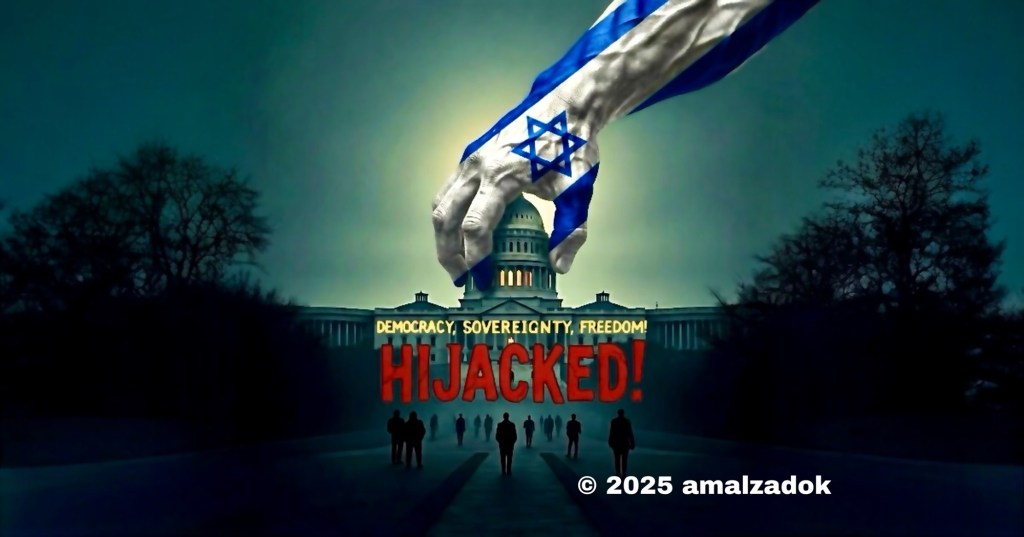
  • Hijacked Democracy: How Israel’s Lobby Captured the Heart of America

    Hijacked Democracy: How Israel’s Lobby Captured the Heart of America

    by Amal Zadok

    For decades, the American public has been comforted by the illusion that they live in a functioning democracy, their interests safeguarded by a government built on checks, balances, and constitutional law. This myth is now unsustainable. At the root of America’s democratic decay lies not abstract forces or vague external pressures, but the concrete, multi-generational influence of Israel and its deeply entrenched lobby—an axis of power so effective, so persistent, that it has rendered the sovereignty, freedoms, and very essence of American democracy subservient to foreign interests.

    The Architecture of Power: How the Israel Lobby Seized Washington

    It is often said that nations are manipulated by shadowy external lobbies, but in the case of the United States, the Israel lobby stands alone as an unparalleled testament to foreign influence. From presidential palaces to congressional offices, AIPAC (American Israel Public Affairs Committee) and allied Zionist organizations operate with impunity. Their methods are no secret: targeted campaign finance, direct threats, networked media pressure, and legal intimidation. Israel’s coalition of advocates have, over decades, built the infrastructure that steers U.S. policy, not for the interests of American citizens, but for the priorities of Tel Aviv.

    This lobby co-opts both political parties. Presidential candidates, congressional hopefuls, senators, and state representatives are repeatedly forced into pro-Israel postures, whether they agree with the policies or not, simply to survive political fundraising and media scrutiny. Careers are built or broken by declarations of loyalty to the Israel agenda. The result is routinized production of legislation, executive directives, and judicial decisions specifically crafted to serve Israel’s security, military, and territorial ambitions.

    Elections Rigged and Freedoms Sold

    Nowhere is the corruption of democracy more evident than in the election process itself. Recent cycles have witnessed an exponential increase in pro-Israel donor spending, reaching nearly $45 million in 2024 alone—triple that of the past two cycles. This flood of cash doesn’t just skew outcomes; it warps the electoral agenda itself. Policy debates avoid mention of Palestinian suffering, Israeli war crimes, or the cost to American lives and treasure. Otherwise promising, progressive candidates who dare challenge the Israel lobby are eliminated—Cori Bush and Jamaal Bowman just recent casualties of coordinated, high-dollar campaigns to silence dissent and preserve operational control.

    Even primary contests are infected, with Republican funding channeled through AIPAC and PACs to distort Democratic races and neutralize critics. Sitting members of Congress live with the constant fear that a single pro-Palestinian comment will spell the end of their careers, drowned out by a blitz of negative advertising, legal threats, and orchestrated scandal. In this climate, the sovereign will of the American people is an afterthought.

    Media Manipulation and the Death of Free Speech

    The Israel lobby’s ingenuity is most brazen in its campaign against American freedoms. Freedom of speech, once a sacred American principle, is now rationed by fear. Journalists, academics, artists, and activists face relentless blacklisting, doxxing, and direct intimidation if they dare raise Israeli abuses or support Palestinian rights. Larger outlets toe the party line, echoing AIPAC-scripted narratives; smaller, independent publications are bullied, derided, or driven out of business. Even social media platforms have come under pressure to shadowban, demonetize, or delete content exposing Israeli aggression or occupation.

    The highly public criticism and targeting of Tucker Carlson offer a powerful example of the methods deployed against voices that challenge the pro-Israel narrative in American media. As one of America’s most recognized commentators, Carlson has repeatedly raised uncomfortable questions about the U.S.-Israel relationship, confronted high-profile figures over unconditional support, and, most controversially, speculated publicly on intelligence connections and censorship related to Israeli interests in Washington. Following outspoken episodes questioning aid, alliances, and American militarism in service of Israel, Carlson has been the subject of one of the most orchestrated campaigns of public denunciation: widely accused of antisemitism, targeted for supposed conspiracy-mongering about Israeli intelligence activities, and relentlessly condemned for platforming perspectives critical of Zionism.

    The backlash has included professional threats, advertiser boycotts, media smears, and legislative scrutiny—reinforcing the chilling effect on other journalists who might otherwise raise critical questions. The controversy surrounding Carlson’s investigations and commentary is not simply a matter of contentious opinion; it is emblematic of how powerful interests shape the boundaries of public debate. His case demonstrates that even widely followed, well-resourced journalists are not immune from the machinery of suppression, which is activated at full force when criticism of Israel penetrates mainstream coverage.

    Anti-Semitism laws have become bludgeons, wielded to criminalize criticism of Israeli policy even when it’s couched in universally accepted terms. College students are expelled, faculty disciplined, and public institutions subject to invasive federal and donor oversight, putting a chill on all forms of pro-Palestine advocacy. The culture of silence is so complete that even moderate voices tiptoe around the real effects of the Israel lobby, lest they be erased from public discourse.

    Sovereignty Subjugated—America as the Proxy

    American sovereignty is now a theoretical construct, as Israel’s priorities dominate not just the foreign policy apparatus but the very laws that govern U.S. autonomy. Every year, billions are shipped to Israel in aid and military hardware, far exceeding assistance to any other nation, without meaningful debate or review. Arms deals flow not in response to genuine U.S. strategic needs, but in service of Israel’s ongoing occupation, with American troops and assets positioned globally to defend Israeli interests even at the expense of critical domestic priorities.

    U.S. presidents, regardless of party, regularly adopt Israel-centric stances and policies—moving embassies, vetoing U.N. resolutions, forsaking international law—all to maintain unshakeable loyalty to Tel Aviv. Legislation is routinely tailored for exemption: business partnerships, visa policies, and intelligence sharing all bend the rules for Israeli benefit. The influence goes well beyond policy: it festers within the military-industrial complex, federal law enforcement, and intelligence, often turning American resources towards defending Israeli aggression and suppressing dissent in the name of “security.”

    Suppression of Dissent and Criminalization of Solidarity

    Every campaign in defense of Palestinian rights faces ruthless legal, financial, and organizational sabotage. The Israel lobby leverages courts, legislatures, and executive branches to ban Boycott, Divestment, and Sanctions actions; to punish protestors and organizers; and to marginalize—even criminalize—advocacy for Palestinian liberation. Constitutional protections for speech and assembly offer little protection in practice; the machinery of state, propelled by Israeli interests, now polices the boundaries of permissible protest.

    Dissent is not just discouraged—it is defined as anti-American. Police crackdowns on pro-Palestine protests, university discipline of activists, and congressional hearings to “defend” Israel all work to delegitimize solidarity movements. The message is clear: American freedom exists only for causes that align with Israel’s narrative, and dissent comes with direct, systemic consequences.

    The Cost of Subservience: What America Has Lost

    There is no single force hollowing out America’s democracy, sovereignty, and freedom more completely than the influence of Israel and its lobby. The cost to American lives, treasure, and the integrity of its institutions is incalculable. Democratic practice, once messy but vibrant, is now little more than a charade, with outcomes and debates determined in advance by distant interests. Sovereignty—once defended as sacred—is exchanged for subservience to an ally whose priorities increasingly diverge from the needs and hopes of most Americans.

    Meanwhile, rights and freedoms once taken for granted have become commodities—offered or withheld by political patrons, media barons, and the legal apparatus that arbitrates permissible dissent. The entire American system now operates in a permanent state of compromise, not to the advantage of its citizens, but in perpetual service to the Israeli state.

    The Uprising and Its Hard Limits

    Momentous change is afoot. As the depth and brazenness of Israeli influence is exposed, younger Americans and liberal activists increasingly reject manufactured consensus, challenging both the mechanics and morality of U.S.-Israel policy. Public opinion is shifting rapidly, with majorities of Jews and non-Jews alike questioning unconditional support for Israel and the machinery that enforces it. The bipartisan, uncritical embrace of Israel is cracking at its foundations. Progressive coalitions, united in their opposition to AIPAC, are rising—yet face the daunting task of dismantling the most sophisticated lobbying machine in American history.

    Legal countermeasures, media campaigns, and mass mobilization intensify—a battle not just for Palestinian liberation, but for the recovery of American democracy itself. Yet the Israel lobby, having mastered the arts of subterfuge and financial pressure, is unlikely to relinquish power without a fight. It continues to invest record sums, to target and destroy critics, to recruit media allies, and to manipulate the boundaries of what Americans are even allowed to debate. The struggle will be long and brutal, with many false starts and bitter defeats.

    Naming the Problem: The Essential First Step

    America cannot restore its democracy, its sovereignty, or its freedom until it honestly confronts the singular influence of Israel and its network of patrons. The problem is not abstract; it is present in every campaign contribution, every forced resignation, every murdered debate, and every law calibrated to benefit a foreign regime at the expense of national interest.

    Only brutal honesty, combined with united grassroots resistance and principled leadership, can begin the process of recovery. The first critical act is to name the Israel problem—without euphemism or self-censorship. Otherwise, the collapse will gather speed, and the last shreds of American liberty will be traded away.

    Soft coup in a progress? What to do?

    In light of these forces, we must ask: Are we witnessing, in real time, a soft coup d’état of the American government and its most valuable institutions—an upheaval not executed by tanks and generals, but by lobbyists, donors, and clandestine influence wielders whose loyalty is to Tel Aviv rather than Washington?

    Should this radical subordination of American sovereignty continue, the coming midterms may become not just another exercise in frustration for a disenfranchised electorate, but a flashpoint for collective reckoning. Will Americans, finally awakened to the theft of their democracy, rise to reject the capture and reclaim self-rule—or will they remain paralyzed, lost in a spectacle designed to obscure the true locus of power? The next ballot may not simply test policymaker popularity, but the strength of American identity itself.

    References

    1. Mearsheimer, J., & Walt, S. (2006). The Israel Lobby and U.S. Foreign Policy.

    2. Cleland, B. (2025, July 1). How Israel’s allies hijacked U.S. democracy. Independent Australia.

    3. Responsible Statecraft. (2025, September 2). Israel’s foreign influence is the most unrelenting in US history.

    4. Mondoweiss. (2025, November 11). AIPAC is suddenly a political liability. Is the Israel lobby in trouble?

    5. World New World. (2025, July 6). The Israeli State and Its influence on U.S. Foreign Policy.

    6. AMUST. (2025, June 28). The corruption of the American political system by Pro-Israel lobby.

    7. Arab American News. (2025, October 31). How pro-Israel advocacy built an influence machine in the West and what it cost.

    8. OpenSecrets. (2025, June 11). Pro-Israel Summary.

    9. UWA News. (2025, April 9). What is the Israel lobby – and why is it so anxious?

    ©️2025 Amal Zadok. All rights reserved.

    Subscribe and never miss an article!
  • The Shattering of the Unholy Pact: America Awakens to Break AIPAC’s Grip and End the Zionist Era

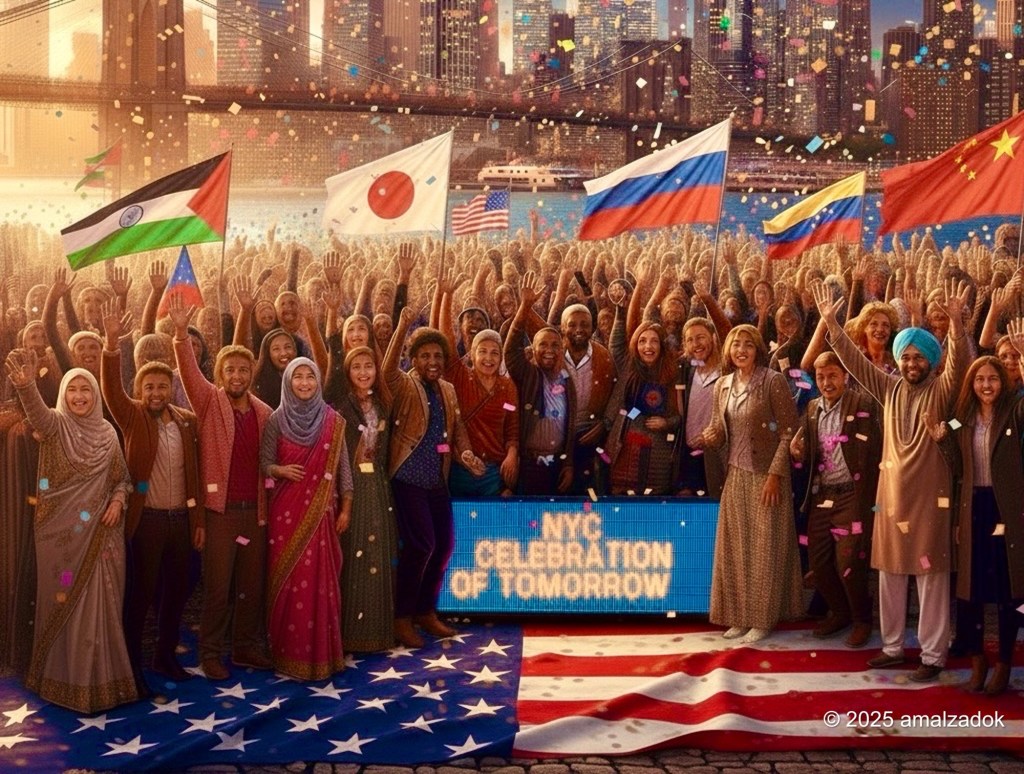
    The Shattering of the Unholy Pact: America Awakens to Break AIPAC’s Grip and End the Zionist Era

    by Amal Zadok

    A profound change is sweeping across the landscape of American politics—one that signals both the growing empowerment of Muslim candidates and a reckoning for the immense influence held by pro-Israel lobbying organizations, most notably the American Israel Public Affairs Committee (AIPAC).

    In the embers of the Gaza crisis and amidst the cries for justice echoed on the streets from Detroit to Dallas, more U.S. voters are decisively steering away from politicians known for their unwavering fealty to the Zionist project. This rising wave of consciousness among the American electorate is shattering decades-old political dogmas, elevating new voices, and sending a stark message to those whose loyalty lies outside the boundaries of national interest and human decency.

    The coming-of-age for Muslim candidates in the United States is not merely a statistical uptick on electoral rolls; it marks a tectonic shift in the public’s willingness to challenge the status quo. What began as scattered efforts in local elections has erupted into a potent movement for genuine representation—one that is unafraid to confront Washington’s hitherto unassailable orthodoxy on Israel.

    In a year marred by the carnage in Gaza and punctuated by the chilling images of Palestinian suffering, the corrupt bargain that has so long bound U.S. politicians to pro-Israel interests is being aired and assailed in the public square like never before.

    The magnitude of this shift became unmistakable with the election of Zohran Mamdani as New York’s first Muslim mayor. “New York will remain a city of immigrants, built by immigrants, powered by immigrants and, as of tonight, led by an immigrant,” proclaimed Mamdani to an electrified crowd of supporters on election night.

    His ascent was not symbolic alone; it was built on tireless grassroots campaigning that brought together working-class, immigrant, and young voters, including first-time Muslim voters whose “story mirrors many of our own,” as voter Minata Lolo told The New York Times. “He is demonstrating we belong in every space, that our stories and values hold significance in shaping the future of the city.” At his campaign’s heart were concrete policies about affordability and equity—universal childcare, a rent freeze, and free public transit—echoing the lived realities of his diverse electorate and uniting communities who had once felt invisible or marginalized.

    America’s youth, especially those galvanized by the Black Lives Matter movement and inspired by the cross-pollination of struggles from Ferguson to Sheikh Jarrah, are leading the charge.

    This shift has also found momentum among dissatisfied MAGA voters who feel betrayed by Donald Trump’s handling of the Jeffrey Epstein case, frustrated by his administration’s choice to withhold key documents after early promises of transparency.

    Large segments of Trump’s base, once fervently loyal, have erupted in outrage over the Justice Department’s memo absolving Epstein and over perceived cover-ups, demanding accountability and feeling let down by his lack of action on what became a central grassroots priority.

    Alongside this, anger simmers over Trump’s failure to deliver on his pledge to withdraw U.S. military involvement from the Ukraine conflict, as well as sabre-rattling and belligerent rhetoric in foreign policy that has left many original MAGA supporters disillusioned.

    These broken promises and political disappointments have fractured the president’s traditional coalition, fueling a wider rejection of establishment narratives and contributing powerfully to the tectonic shift now underway in the broader American electorate.

    They are joined by faith leaders, union organizers, Jewish progressives fed up with “Israel right or wrong” apologetics, and a uniquely diverse coalition that has dramatically altered the terms of debate. For the first time in modern history, it is possible for candidates to run—and win—while loudly denouncing Israeli apartheid, the siege of Gaza, and the very machinery of repression AIPAC so zealously defends.

    This change did not emerge in isolation. The carnage in Gaza, exacerbated by the relentless campaigns of Benjamin Netanyahu—rightly known by the majority of the world as the “Butcher of Gaza”—has served as a moral crucible for Americans of all backgrounds. With social media democratizing access to raw footage and unfiltered narratives from the streets of Khan Younis and Gaza City, the reality of Palestinian suffering could no longer be concealed by tired talking points or mainstream media euphemisms.

    For the first time, a critical mass of American citizens now link the trillions spent by their government—and the political capital expended by their elected officials—to the lived horrors endured by innocent Palestinians under occupation.

    Few institutions embody the establishment’s determination to maintain the status quo more than AIPAC. Boasting deep pockets, legendary organizational discipline, and a history of making or breaking congressional careers, AIPAC has been the architect of an era in which questioning U.S. support for Israel was treated as political suicide. Its infamous scorecards, aggressive primary challenges, and lavish campaign contributions have fostered a climate of fear and compliance among both seasoned incumbents and rising stars alike.

    But the moment of reckoning has arrived. This year, multiple Muslim and progressive candidates posted historic victories in districts once considered safe havens for the “AIPAC class”—those whose rhetorical pirouettes often prioritized Tel Aviv’s priorities over their own constituents’ needs.

    In Virginia, Ghazala Hashmi became the first Muslim woman elected to statewide office, running on a platform of fighting bigotry “and the ‘chaos’ of division,” which she credits to her community’s grassroots organizing. “Over the past 25 years, we have forged a strong coalition that includes our Jewish communities and encompasses Asian, Latino, and Black communities. We can assert that we are above this and will support one another,” said New York City Councilwoman Shahana Hanif, herself a re-elected Brooklyn Muslim progressive advocating strongly for Palestinian rights.

    The desperation of Zionist stalwarts like Mark Levin, Senator Ted Cruz, and Congressman Randy Fine has become palpable—their performative outrage on cable news and social media now resembling the death throes of an ideology rapidly losing moral legitimacy.

    Their attacks have grown ever more hysterical and unhinged, wielding the accusations of antisemitism with reckless abandon, and peddling conspiracy theories about “foreign agents” and “Islamic infiltration.” Yet, these tactics only underscore their impotence in the face of a public no longer cowed into silence.

    Central to this transformation is the growing understanding that support for the Israeli government is not, and never has been, synonymous with support for the Jewish people—a distinction that is finally being made clear in the American mind.

    A generation of young Jews—many horrified by the violence meted out in their name—have joined the chorus demanding accountability for Israel’s actions. Organizations like Jewish Voice for Peace and IfNotNow are shaping an alternative narrative, drawing lines between solidarity with Jews and complicity with apartheid, occupation, and ethnic cleansing. This development further isolates AIPAC, whose “pro-Israel” stance now appears brittle, archaic, and profoundly out of step with the moral arc of the country.

    What makes the current political moment so volatile—and so pregnant with possibility—is that the electorate’s awakening is not confined to Muslim Americans or to progressives alone. A broad cross-section of voters, from war-weary veterans to suburban soccer moms, now recognize the cruel cost of Washington’s blank-check policy toward Israel.

    They have come to see the billions in military aid—sent with no conditions, oversight, or accountability—not only as an affront to American values, but also as a betrayal of economic justice at home. In the wake of spiraling healthcare costs, crumbling infrastructure, and unmet social needs, the manufactured consensus around “shared values” with Israel rings increasingly hollow.

    Poll after poll affirms what was once considered unthinkable: a strong plurality of Americans now support a ceasefire in Gaza and direct measures to curb U.S. military assistance to Israel. The panic gripping AIPAC and its congressional loyalists betrays a fundamental truth—once a mythic force capable of shaping elections with a single press release, their influence is now subject to the unpredictable, dynamic forces of genuine democracy.

    The road ahead is uncharted and rife with challenges. Despite high-profile victories, the obstacles faced by Muslim and anti-AIPAC candidates are daunting—smear campaigns, relentless Islamophobia, and the far-reaching tentacles of the lobbying establishment are formidable foes.

    Yet, for all the money funneled into negative ads and astroturfed outrage campaigns, it is stories—the real, lived experiences of Americans and Palestinians alike—that are turning the tide. Hanif, the Brooklyn Councilwoman, emphasized, “Islamophobic statements should be condemned across the political spectrum, highlighting the ongoing need to combat racism in the United States.” Her sentiment echoes throughout the grassroots.

    The suffering in Gaza, beamed nightly into American living rooms, has pierced the veil of ignorance and indifference. The images of bombed-out hospitals and grieving mothers have rendered empty the old platitudes about “self-defense.” Young voters, in particular, view the complicity of elected officials not as distant geopolitics, but as a searing moral issue woven into the fabric of what it means to be American.

    Their votes increasingly reflect a determination to break free from the grip of lobbies that would make them complicit in injustice abroad and neglect at home.

    It is fitting, then, that this moment of American political reawakening is animated by Muslim candidates—many of whom bear the scars of war, displacement, and discrimination, yet who offer a vision of America reconciled with its own best ideals.

    Their meteoric rise and forthright speech are elevating congressional debate, inspiring grassroots activism, and—perhaps most importantly—forcing a reckoning with uncomfortable truths.

    Each victory declares that the era of uncritical, unconditional support for Israel is fading, and that the time for authentic, human-centered policy is at hand.

    The struggle is hardly over. The forces that have so long dictated Middle East policy in Washington are not planning a quiet resignation.

    If anything, their escalated rhetoric and heedless accusations signal open war on the future.

    But the die is cast—a powerful new contingent in American politics stands ready, not merely to contest elections, but to reclaim the very soul of the nation.

    In doing so, they are helping restore the power and dignity of the immigrant vote, renewing a broader sense of justice and inclusion, and forging unity across racial, ethnic, and cultural lines to halt the nation-breaking divisions that have threatened all American communities—including white Americans.

    This movement points the way toward a future where the country draws strength from its diversity and recommits to true justice for every citizen.

    References

    1. AIPAC and Its Influence on Congress. (2025). The Center for Responsive Politics. https://www.opensecrets.org/news/reports/aipac-influence

    2. “Muslim candidates post historic wins as voters demand change.” The Guardian. (2025). https://www.theguardian.com/us-news/2025/nov/01/muslim-candidates-election-wins-israel

    3. Jewish Voice for Peace – “Change in American Jewish perspective on Israel.” (2025). https://www.jewishvoiceforpeace.org/resources/us-jewish-public-opinion/

    4. Poll: Most Americans Support Ceasefire in Gaza. (2025). Pew Research Center. https://www.pewresearch.org/politics/2025/10/24/americans-support-gaza-ceasefire/

    5. “Social Media and the Gaza Narrative Shift.” Middle East Eye. (2025). https://www.middleeasteye.net/news/us-public-opinion-shifts-israel-gaza

    6. IfNotNow – On the changing role of American Jews. (2025). https://ifnotnowmovement.org/news/change-in-jewish-public-opinion-israel

    7. Black Lives Matter and Palestinian Solidarity. (2025). Al Jazeera. https://www.aljazeera.com/features/2025/10/28/black-lives-matter-palestinian-solidarity

    8. “AIPAC’s electoral strategies falter amid Israel controversy.” Politico. (2025). https://www.politico.com/news/2025/10/25/aipac-influence-midterms-israel-000000

    9. New York Muslims Exult in Mamdani’s Victory. (2025). The New York Times. https://www.nytimes.com/2025/11/05/us/muslim-new-yorkers-mamdani.html

    10. Mamdani makes history as New York City’s first Muslim mayor. (2025). DW News. https://www.dw.com/en/mamdani-makes-history-as-new-york-citys-first-muslim-mayor/video-74635514

    11. Virginia makes history with first Muslim woman elected to statewide office. (2025). 19th News. https://19thnews.org/2025/11/virginia-ghazala-hashmi-muslim-woman-statewide-office/

    12. Young, Muslim, Asian and Socialist: Zohran Mamdani’s New York Win. (2025). Asia News Network. https://asianews.network/young-muslim-asian-and-socialist-zohran-mamdanis-new-york-win-challenges-both-trump-and-democrats/

    13. Mamdani supporters see an opening for more hopeful politics in his win. (2025). NPR. https://www.npr.org/2025/11/05/nx-s1-5578014/mamdani-supporters-see-an-opening-for-more-hopeful-politics-in-his-win

    14. Muslim, South Asian Americans emerge as decisive force in U.S. elections. (2025). Muslim Network TV. https://www.muslimnetwork.tv/muslim-south-asian-americans-emerge-as-decisive-force-in-u-s-elections/

    15. Mamdani’s New York victory sparks Islamophobic backlash in US. (2025). Al Jazeera. https://www.aljazeera.com/news/2025/6/30/mamdanis-new-york-victory-sparks-islamophobic-backlash-in-us

    16. Trump faces backlash as 69% believe Epstein details concealed. (2025). Reuters. https://www.reuters.com/world/us/trump-faces-backlash-69-believe-epstein-details-concealed-reutersipsos-poll-2025-07-17/

    17. Trump supporters angry over Justice Department’s Epstein memo. (2025). ABC News. https://abcnews.go.com/Politics/trump-supporters-angry-justice-departments-epstein-memo/story?id=123567461

    ©️2025 Amal Zadok. All rights reserved.

    Subscribe and never miss an article!