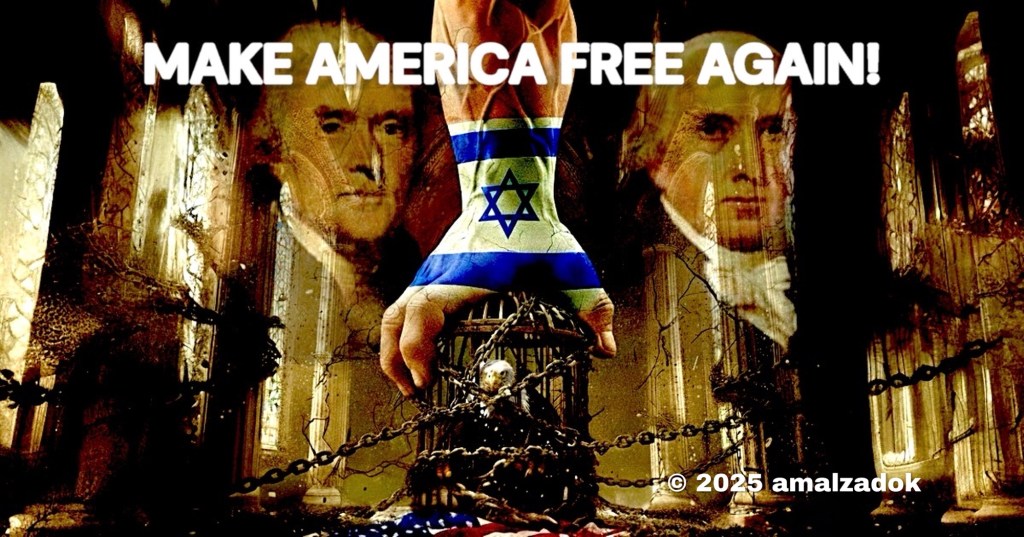
by Amal Zadok
In recent years, a growing chorus of voices has expressed alarm over the perceived intensification of Zionist influence within the highest levels of American government. Some contend that powerful Zionist interest groups are orchestrating what amounts to the final phase of a carefully engineered coup d’état, setting out to achieve full control of the United States’ political institutions, media ecosystems, and cultural foundations. This concern is no longer a matter of fringe speculation but has become an urgent topic for both mainstream and political outsiders, driven by observable patterns of lobbying, pressuring, and suppression aimed at consolidating this unprecedented power.
Historical Foundations of Zionist Advocacy
The ties between Zionist organizations and American politics stretch back through the decades, evolving in complexity and reach since the early 20th century. From the establishment of Israel in 1948, the American Israel Public Affairs Committee (AIPAC) and similarly focused groups have steadily asserted themselves as formidable forces in shaping legislative agendas and fostering a durable pro-Israel consensus across party lines. Presidents, senators, and lawmakers have long been subject to well-organized campaigns of advocacy and, at times, intimidation, should they deviate from the parameters set by these lobbies.
According to academic and policy experts, these groups have developed robust mechanisms by which they fund election campaigns, draft legislation, and mobilize public opinion to favor Israeli interests. Pro-Israel stances have become key litmus tests for political viability in Congress, with dissenters frequently facing adverse consequences ranging from negative press to primary challenges bankrolled by well-funded opposition. The prevailing notion in Washington circles remains: support Israel, or face career jeopardy.
Methods of Influence: Media, Legislation, and Suppression
Beyond the Capitol, Zionist-aligned organizations have expanded their reach into media, academia, and technology. Mainstream news outlets, social platforms, and Hollywood increasingly reflect narratives sympathetic to Israeli objectives, while critiques of Israeli policy or calls for Palestinian rights are often marginalized, censored, or derogated as extremism or antisemitism. Influencers, journalists, and political activists who attempt to challenge this orthodoxy encounter demonetization, bans, and targeted campaigns meant to chill speech and suffocate dissent.
Within America’s legislative framework, these groups have successfully pushed for laws that restrict grassroots activism against Israel, particularly through anti-Boycott, Divestment, and Sanctions (BDS) measures. The result is a climate in which open debate about Israeli policies, U.S. military aid, and the human rights record in the region is not only discouraged but sometimes penalized by law or unspoken force.
Attacks on Opponents and Consolidation of Power
One of the starkest trends amid the rising influence of Zionist lobbying is the methodical targeting of individuals and institutions perceived as hostile or insufficiently supportive. Politicians known for advocating Palestinian rights have been ousted, silenced, or relentlessly attacked both politically and personally. Media personalities and YouTube creators critical of Israel’s policies have found their livelihoods threatened, their credibility undermined, and, in some cases, their platforms removed altogether.
This is not limited to isolated incidents—it reflects a well-organized strategy to neutralize resistance, consolidate ideological control, and enforce conformity. Much as in classic coups, where challengers to the new regime are rapidly disempowered, the campaign underway in the United States leverages both monetary and narrative power to ensure that only approved voices are heard and only sanctioned policies are pursued.
Christian Zionism and the Expansion of the Lobby
A significant but sometimes overlooked factor behind the success of this movement is the alliance with Christian Zionists, particularly within the Republican Party. Evangelical organizations such as Christians United for Israel (CUFI) bring substantial numbers and political fervor to the cause, amplifying the capacity of the Jewish Zionist lobby to sway elections and shape foreign policy. This partnership, especially pronounced since the Trump administration, has solidified a bipartisan environment in which criticizing Israel has become tantamount to apostasy—regardless of party tradition.
Shifting Political Landscapes: The Erosion of Unquestioned Support
Recent years have nevertheless witnessed cracks appearing in the facade of absolute control. Escalating violence in Gaza, expanding settlements in the West Bank, and humanitarian crises have eroded traditional bipartisan support for Israel, especially among younger Americans and progressive activists. New polling and shifting voter attitudes indicate a growing awareness and skepticism of entrenched pro-Israel orthodoxy. Some members of Congress, influencers, and celebrities have dared to speak out, sometimes at great personal and professional risk.
Still, the resistance to change remains formidable. Congressional leaders and many media institutions adhere to the established pro-Israel line, guided by fear of reprisal and the reality of ongoing financial dependency. The influence remains strong enough that even large-scale shifts in public opinion face organized opposition, and anti-Israel voices, though increasing, operate under constant threat.
Framing the Struggle: Is It a Coup d’État?
Observers critical of this phenomenon have described it as nothing less than a coup d’état—a process not marked by tanks in the streets but by decades of targeted pressure, campaign finance manipulation, and ideological policing on a grand scale. This “soft takeover” seeks not only to influence policy but to reimagine what is considered legitimate debate, transform the nation’s priorities, and enforce security for Israeli interests at the direct expense of American autonomy.
Such assertions, while subject to controversy and rebuttal, gain traction nonetheless as the methods and impacts of Zionist influence become more visible. The challenge facing America is to disentangle legitimate advocacy and alliance-building from the spectacle of overwhelming control—a challenge vital to the health of its democracy and constitution.
The Battle for America’s Republic
The result is a profound test for the American people. Will the Republic endure as a nation of independent citizens governed by open debate, free elections, and the rule of law? Or will it surrender sovereignty to a coalition of powerful lobbies and interest groups whose priorities stand in sharp relief to those of its own people? This is no ordinary moment in American history. The core of the Constitution, the promise of self-government, and the dream of genuine pluralism stand threatened by forces far more organized and relentless than any foreign adversary.
If this coup d’état is allowed to reach its conclusion, the America of Jefferson, Madison, and Lincoln may dissolve into myth—replaced by a new order in which independence and free thought are just memories. The cost of complacency is nothing short of the loss of the Republic itself.
At such a decisive moment, the words of Thomas Jefferson resonate across generations: “The time to guard against corruption and tyranny is before they shall have gotten hold of us. It is better to keep the wolf out of the fold than to trust to drawing his teeth and talons after he shall have entered.” Now is the time for Americans to stand up in defense—not just of the abstract ideals of the Republic, but of every politician, writer, YouTuber, journalist, and activist who refuses to be bought or silenced by the Zionist lobbies, those who remain outside the pockets of the powerful forces working against all that Jefferson and Madison desired for America. Are there still any truly patriots in America—courageous enough to defend the Republic, uphold its Constitution, and repel this coup d’état?
References
1. American Israel Public Affairs Committee (AIPAC). (2025-10-18). In Encyclopedia Britannica.
2. Israel lobby in the United States. (2006, August 26). Wikipedia.
3. Vest, J. (2002). The Men From JINSA and CSP. The Nation.
4. Mearsheimer, J.J., & Walt, S.M. (2006). The Israel Lobby and U.S. Foreign Policy. Harvard Kennedy School.
5. Al Jazeera. (2024, June 12). AIPAC & Zionist Lobby Groups.
6. University of Western Australia. (2025, April 9). What is the Israel lobby – and why is it so anxious?
7. BoughtByZionism.org. (2024, June 12). AIPAC & Zionist Lobby Groups.
8. Al Jazeera. (2024, March 11). ‘Reject AIPAC’: US progressives join forces against pro-Israel groups.
9. Kaplan, J. (2000). The Zionist Occupation Government Conspiracy Theory. Wikipedia.
10. The Conversation. (2023, November 29). A brief history of the US-Israel ‘special relationship’ shows how it shapes US Mideast policy.
11. Pinkas, A. (2023, November 29). Biden Won’t Stop Netanyahu’s Judicial Coup. Jewish Currents.
12. World Geostrategic Insights. (2023). Beyond Strategy: The Deeply-Rooted Influences Shaping U.S. Unconditional Support for Israel.
13. Al Jazeera. (2024, November 15). Project Esther: A Trumpian blueprint to crush anticolonial resistance (and anti-Zionist voices).
14. United States Holocaust Memorial Museum. (2024, November 25). An Antisemitic Conspiracy: The Protocols of the Elders of Zion.
15. BBC. (2025, May 5). Americans used to be steadfast in supporting Israel. No more.
16. NPR. (2025, November 6). Support for Israel among U.S. conservatives is cracking.
17. Politics Today. (2025, September 3). Is Israeli Influence over American Politics Finally Eroding?
18. Politico. (2025, August 16). Americans Are Changing Their Views of Israel.
19. Dergipark.org.tr. (2025). Christian Zionism and Its Influence on Trump’s Israel Policy.
©️2025 Amal Zadok. All rights reserved.
Subscribe and never miss an article!
 Think and be Free!
Leave a comment