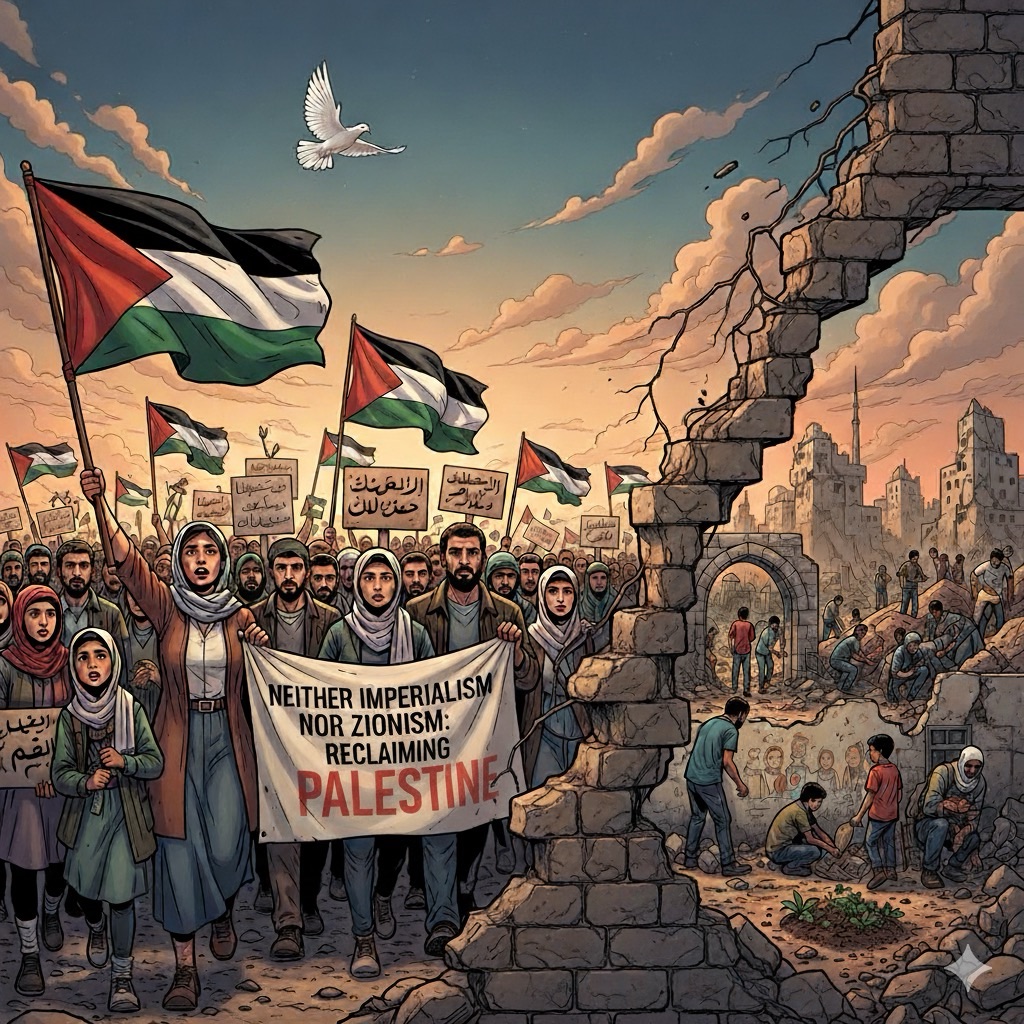
by Amal Zadok
Benjamin Netanyahu’s final act is playing out on the battered streets of Gaza and in the anguished conscience of a nation fracturing before the eyes of the world. Across the barricades of shattered cities and the hushed halls of the Knesset, the self-declared defender of Israel is revealed as its greatest adversary—a leader whose ruthless pursuit of self-preservation now threatens the very existence of the state he claims to protect.
A Sparta Fantasy, A Pariah Reality
On a tense afternoon in Jerusalem, Netanyahu berated financiers and government functionaries, insisting Israel must become a “super-Sparta”—autarkic, militarized, alone. It was a confession, not just of ruinous isolation but of a descent into the historical club of fascist regimes: “This is the club you want to join?” asked a shocked former diplomat. He did not answer. Within hours, tanks thundered into central Gaza. Tens of thousands fled on exhausted feet, while a hundred more people lost their lives in a single day of bombardment. The nurses in Al-Shifa Hospital packed premature infants into one shared incubator. “Gaza is burning,” the Defense Minister crowed; but what burned was not just a city, but the promise of Israel itself.
Witnesses in Ruins
International correspondents, medical workers, and families of hostages became eyewitnesses to Netanyahu’s war. The streets of Gaza filled with displaced families, wandering through dust and debris to nowhere; inside Israel, the sound of protest echoed from outside Netanyahu’s home, where mothers begged for their sons to be saved, for the war to end.
Polls now show that fewer than a third of Israelis support the military occupation. Commanders resist, experts warn, and business leaders openly predict economic collapse. Israeli society is held hostage to one frightened man’s political survival—its scientists, artists, and diplomats banished from global institutions in a wave of unprecedented ostracism.
The ICC and the Weight of Crimes
In May 2024, the International Criminal Court moved to indict Netanyahu for war crimes and genocide, reflecting growing consensus from United Nations investigators and independent human rights organizations. The charges are not abstract: deliberate starvation, systematic displacement, targeted attacks on civilians, and the collective punishment of an entire population. Allies once unwavering now block arms sales and recognize Palestinian statehood. Israelis themselves face discrimination overseas and social stigma at home—the nation transformed into a global pariah under one man’s reign.
Dictatorship’s Shadow and the Betrayal of Democratic Ideals
Netanyahu’s desperation is transparent: fighting war to postpone prosecution, subordinating law to political power. “We’ll have to decide if the law is more important than life,” he intoned—a chilling precursor to moves removing legal officials and rewriting rules to serve personal survival. Democracy cracks as censorship grows. Military officials are threatened. Judges are pressured. Already, soldiers with mental health exemptions are returned to combat amid mounting attrition and social despair.
Gaza’s Agony and Israel’s Lost Soul
The agony of Gaza is documented daily by Palestinian journalists, medical personnel, and international observers. Whole neighborhoods are reduced to dust. Infrastructure is pulverized. Families huddle together for warmth and survival; yet the bombs keep falling. Israeli historians and politicians warn that emulating Sparta does not make a nation strong, only brittle and doomed—“Sparta lost,” they remind. On the ground, a new generation of Israelis and Palestinians see only endless war.
Operation Samson: A Nightmarish Temptation
Cornered by legal peril and social revolt, Netanyahu gestures toward “Operation Samson”—the doctrine that Israel, faced with existential threat, could ignite catastrophic nuclear war. It is the final horror: the threat that a leader with nothing left to lose might choose regional annihilation. Security experts and regional historians warn that such nihilism now feels plausible, not hypothetical, as the regime careens toward collapse.
A Nation Held Hostage, Truths Unmasked
Netanyahu’s downfall is no longer an opposition platform—it is a demand from within Israel and across the world. The people want justice for war crimes, return of the hostages, and an end to occupation. Ordinary Israelis feel the shame of international pariah status: at academic conferences, in business, in travel, and in diplomatic delegations, they are excluded for their country’s actions. Some protest. Others despair. Everyone waits for a reckoning.
The Verdict of History
A regime built on graves and silence cannot escape judgment forever. Netanyahu’s legacy will resound not only in Gaza’s devastation but in the wounded conscience of Israel itself, and in the world’s demand for accountability. As the era of impunity ends, the walls of tyranny begin to crack—from within and without.
Ultimately, what matters most is the testimony of those who have suffered—and survived. Justice calls not only for the end of a failed regime, but for the voices of the oppressed to shape a new history. The world is watching, and history itself is sharpening its pen.
References
Margalit, R. (2025, September 18). Israel’s new occupation. The New Yorker. https://www.newyorker.com/news/the-lede/israels-new-occupation
Global Centre for the Responsibility to Protect. (2025, September 2). Israel and the occupied Palestinian territory. https://www.globalr2p.org/countries/israel-and-the-occupied-palestinian-territory/
©️2025 Amal Zadok. All rights reserved.
Subscribe and never miss an article!
 Think and be Free!
Leave a comment