by Amal Zadok
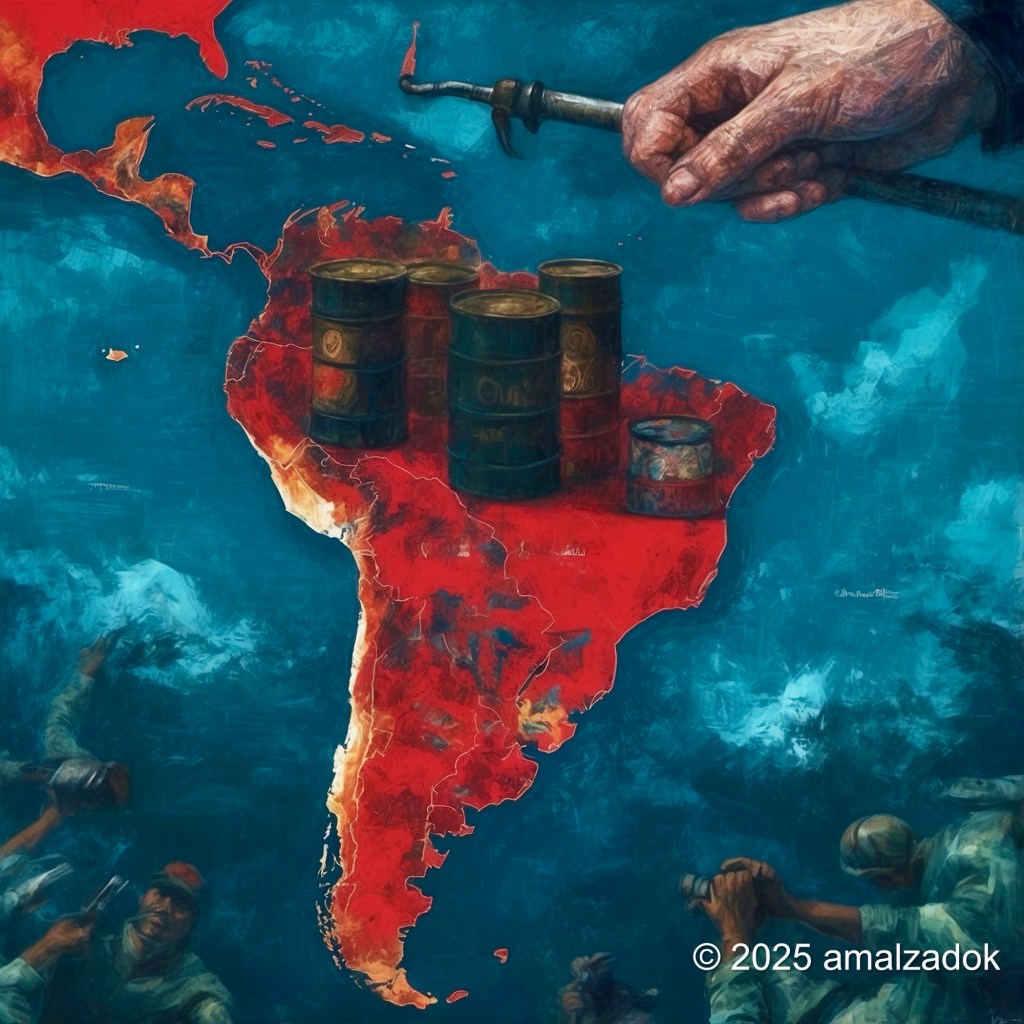
Venezuela’s agony is not about cocaine or democracy. It is the latest chapter in America’s imperial operating system—a ruthless code running on the twin engines of oil and deterrence. The anguish across Caracas, the tanks in Panama: these are not accidents; this is how power asserts itself when the empire feels threatened.
Oil: The Invisible Chain
With the world’s largest reserves of sulfur-rich crude, Venezuela was once central to U.S. energy security. For decades, shipments flowed north, American refineries kept humming, and the status quo was unbroken. The arrangement ended not because of corruption, but because Venezuela’s leaders turned to Russia and China, threatening Washington’s grip.
Sanctions weren’t about reform—they were about disciplining a wayward supplier, keeping the empire’s lifeblood from seeping beyond its reach.
Demonstration Wars: Beyond Drug Cartels
Panama in 1989 was marketed to Americans as the front line in the war on drugs. Venezuela was sold as a fight for liberty. But the truth is starker. Both nations became showcase punishments. Their real sin? Daring to step outside American control. The “drug war” rhetoric was camouflage; overwhelming force was the lesson, a warning for others not to stray from the imperial orbit.
When a state resists, the response is not just retaliation. It is a spectacle, designed for maximum effect—an unmistakable signal that deterrence isn’t abstract, it is pain made public. Each intervention tells the region: obey or suffer.
Empire Doctrine: Now Without Masks
From Israel’s Dahiya Doctrine—total punishment to re-establish deterrence—to the Monroe Doctrine declaring Latin America off-limits to rivals, the strategy is consistent. Under Trump, advisers revived these ideas openly. Venezuela became a test case for a new era of discipline. Oil interests merged with military imperatives; democracy promotion gave cover for raw exercise of power.
The Operating System: Anatomy of Control
Strip away the speeches and the machinery stands exposed:
•Resource Control: Whether oil, rare earths, or canals, access is non-negotiable.
•Punitive Deterrence: Defiance triggers overwhelming reprisal—misery as deterrent.
•Rhetorical Camouflage: Talk of drugs and elections distracts from economic and strategic motives.
Both major U.S. parties employ these tactics; only the actors change. The results do not.
Why Readers Must Care
This issue is urgent for everyone in the region and worldwide:
•Its consequences shape policy, alliances, and lives across borders.
•The mechanics and cost of empire logic are rarely named but felt everywhere.
•Understanding the forces at play is key to resisting cycles of pain and intimidation.
Who’s Next?
Venezuela was never about drugs or democracy. It was, and remains, about empire logic—oil for power, deterrence as the whip.
The message to Latin America today: resist, and there will be no mercy.
But as the U.S. escalates rhetoric against Mexico, deploys warships near Venezuela, and eyes the Amazon’s resources, the question grows urgent across the continent:
Who’s next?
Will Brasil, with its rare earth wealth, strategic defiance, and position as a regional powerhouse, become the next object lesson?
Will Colombia, Ecuador, or Mexico follow? The whip hangs over every nation, and Latin America is holding its breath—because another demonstration war is only a pretext away.
The only way out is to see the operating code for what it is—and to fight for a hemisphere that refuses to be ruled by fear and resource hunger. Until then, the story will repeat—and there will always be a next.
©️2025 Amal Zadok. All rights reserved.
Subscribe and never miss an article!
 Think and be Free!
Leave a comment